
Dental Bur Types and Shapes: A Complete Selection Guide
- , by SurgiMac
- 16 min reading time
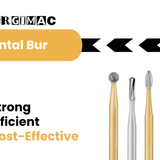
Request a detailed dental bur types and shapes selection guide for your practice. Compare carbide vs diamond, bur shapes, and shank types to improve...
A dental bur is a precision rotary instrument, not a one-size-fits-all accessory. Its material, geometry, flute design, and shank determine how efficiently it cuts, shapes, or finishes tooth structure and restorative materials. Selecting the wrong combination can reduce control, increase heat or vibration, and compromise procedural efficiency.
Dental bur types and shapes should be selected according to the clinical objective, the tooth structure or material being treated, and the handpiece connection. Round burs support initial entry and caries removal, while pear, fissure, and tapered designs address specific preparation and finishing needs. Diamond and tungsten carbide options provide different cutting characteristics.
This guide explains how to evaluate a bur from shank to tip, match common shapes with clinical applications, and choose materials and configurations with greater confidence. Explore SurgiMac's dental bur selection online to find high-quality instruments for your clinical needs. The framework begins with the features that distinguish one rotary instrument from another, including how the working end and shank contribute to performance.
Understanding Dental Bur Types and Shapes from Shank to Tip
Dental burs are rotary cutting instruments used to cut, grind, polish, and finish tooth structure or dental materials. Their performance depends on more than the visible tip. Material, head shape, shank design, and grit work together to determine how a bur enters tissue, removes material, and finishes a preparation. Selecting the correct instrument supports procedural efficiency while helping minimize unnecessary impact on healthy tooth structure. Clinical literature supports the importance of proper bur selection.
Material, shape, and grit
The head material is one of the first classification points. Tungsten carbide burs use flutes to provide controlled cutting and shaping, while diamond burs use abrasive particles bonded to the head. Within either category, the shape determines the working geometry. Common forms include round, pear, fissure, tapered fissure, and inverted cone. A round bur may support initial entry or caries removal, while a fissure bur is suited to shaping straighter cavity walls. Pear and tapered forms help create specific internal contours and preparation geometries.
Grit further changes the cutting behavior of diamond instruments. Coarse grit is generally selected for bulk reduction, whereas fine grit is used for finishing and polishing. For carbide burs, flute count and geometry influence cutting efficiency and the smoothness of the resulting surface. The right combination should match the clinical objective rather than relying on shape alone.
Shank design and handpiece compatibility
The shank connects the cutting head to the handpiece. Friction-grip, or FG, burs are designed for high-speed handpieces, while latch-type burs are retained in contra-angle attachments. Shank length and overall design also affect access, visibility, and control in posterior areas. A properly balanced shank is essential because imbalance can produce vibration during rotation. Confirm the bur's shank type and length before opening a package, particularly when a practice uses multiple handpiece systems.
How numbering systems identify burs
Bur catalogs may reference the SS White, ADA, or ISO classification systems. The SS White system established early shape and size designations. The ADA later simplified that approach, while ISO Specification 6360 organizes more individual characteristics, including head material, shank design, and head shape. Depending on the catalog, examples such as F001, F007, and F030 may identify different bur configurations or series. Always compare the full manufacturer description, not just a familiar number, before ordering. Manufacturers also group instruments into standard and specialty series to make task-specific selection easier.
Carbide vs Diamond: Choosing the Right Bur Material
Material selection should follow the clinical objective, not a blanket preference for one bur category. Diamond and tungsten carbide each support different cutting behaviors, and the right choice can improve control, efficiency, and preservation of healthy tooth structure. Include the handpiece, access, operating speed, and required finish when evaluating dental bur types and shapes.
Diamond burs are effective when rapid reduction is the priority, particularly on hard surfaces such as enamel, porcelain, and ceramic. Their performance depends partly on diamond particle size and shaft design. Coarse grits, including larger-grit options such as F008, support bulk reduction, while fine grits are better suited to finishing and polishing. CVD manufacturing can improve diamond-particle adhesion and coating longevity, which supports more consistent performance over the bur's service life. Clinical research on diamond bur efficiency and cooling also supports using air-water coolant during operation to help limit heat transfer and protect the pulp.
| Material | Best For | Grit Range | Speed | Coolant Required | Durability |
|---|---|---|---|---|---|
| Diamond | Rapid reduction of enamel, porcelain, and ceramic; finishing and polishing. | Coarse for reduction; fine for finishing, including F008 options. | Most effective with the speed specified for the bur and handpiece. | Air-water coolant is typically used for pulp protection during cutting. | Varies with particle size, bonding method, and CVD coating quality. |
| Tungsten carbide | Precise cutting, enamel removal, margin refinement, and restoration removal. | Fluted and cross-cut designs rather than diamond grit grades. | Effective across speed ranges, including lower speeds with controlled pressure. | Follow the procedure, bur, and handpiece protocol; avoid excessive pressure. | High hardness and wear resistance support sharp-edge retention. |
Tungsten carbide burs are generally preferred when precise cutting and carving matter. Their hardness supports enamel removal and helps the cutting edges retain sharpness during restorative procedures. A cross-cut carbide bur can be especially useful for rapidly removing old restorations because its additional cutting features help clear debris from the interface. Carbide can also cut effectively at lower speeds when pressure remains controlled, giving clinicians another option when access, tissue management, or procedural control makes maximum speed inappropriate. The GUDID device information for tungsten carbide burs provides additional material and design context.
Choose diamond for efficient reduction of hard restorative materials or when a particular grit is needed for the transition from cutting to finishing. Choose tungsten carbide for crisp, controlled cutting and margin work. For instrument organization and adjacent precision needs, review SurgiMac's Titanium Black Series instruments alongside the bur specifications. Always follow the manufacturer's recommended speed, pressure, and coolant protocol for the selected bur.

Dental Bur Shapes and Their Clinical Applications
Shape determines how a bur enters, cuts, and leaves a preparation. Matching the geometry to the clinical objective helps preserve healthy tooth structure while maintaining access and control. Round, pear, fissure, tapered, inverted cone, flame, and egg forms each support a different stage of restorative treatment.
Choose precision instruments for controlled shaping with SurgiMac's Slim Series.
Round and pear-shaped burs
Round burs, such as F005, are useful for initial entry, caries removal, and creating retention forms when the preparation design calls for them. Their spherical head supports controlled excavation and helps the clinician work within a localized area.
Pear-shaped burs, including F009, are suited to smaller cavity preparations. The broader head and narrower neck can produce rounded internal line angles, which may reduce sharp transitions within the preparation. This geometry is useful when the restorative design calls for a conservative outline and smooth internal form. These applications align with clinical shape classifications documented in the U.S. device database (FDA GUDID).
Fissure, tapered fissure, and inverted cone forms
Fissure burs, such as F006, have an elongated cutting surface for shaping cavity walls and refining axial surfaces. A straight fissure is useful when wall definition and controlled material removal are priorities. Tapered fissure burs, including F010, alter the wall angle as the bur advances. That makes them appropriate for preparations associated with indirect restorations, including inlays and crowns, where the required path of insertion and wall geometry must be respected.
An inverted cone bur can create undercuts or a relatively flat floor when the preparation design requires those features. Because it removes material aggressively at its wider end. Use deliberate pressure and confirm the floor and walls frequently rather than relying on the bur to establish the final form.
Flame, egg, and finishing geometries
Flame and egg-shaped burs are commonly selected for finishing, contouring, and refining transitions. Their curved profiles can help smooth marginal areas, adjust contours, and polish anatomy without the abrupt contact pattern of a flat-ended instrument. Select the smallest geometry that provides adequate visibility and control for the surface being refined.
Geometry also includes flute count and arrangement. F014 notes that flute design influences cutting efficiency and the smoothness of the resulting surface. Fewer, more aggressive cutting edges may support faster bulk removal, while a finer flute pattern can provide greater control during shaping and finishing. The correct choice depends on the material, handpiece, access, and desired surface, not on shape alone.
Review bur geometry, flute design, and access together before starting cavity preparation.
Friction Grip vs Latch Type: Understanding Bur Shanks
The shank is the connection between a dental bur and the handpiece, so its design determines whether the instrument seats securely and runs as intended. A properly balanced shank is essential for minimizing vibration, maintaining control, and supporting consistent cutting performance. Air Series handpieces can be evaluated alongside the bur specifications to confirm a compatible setup.
Friction grip burs for high-speed turbines
Friction grip, or FG, burs have a 1.6 mm shank and a smooth, free end that is retained inside a high-speed turbine chuck. They are designed for the high rotational speeds used during tooth preparation, restorative reduction, and other procedures requiring efficient tissue removal. The combination of a high-speed handpiece and the correct bur selection can improve removal efficiency while supporting patient comfort, as described in the clinical literature (clinical review).
Match the bur head, material, and length to the procedure rather than selecting an FG bur by diameter alone. Shaft angulation also matters when access is limited. An angled shaft can improve visibility and cutting access in posterior regions, where cheek position, adjacent teeth, and the occlusal plane restrict a straight approach. Confirm the manufacturer's speed and coolant recommendations before use.
Latch-type burs for slow-speed contra-angles
Latch-type burs have a notched or grooved shank that engages the chuck mechanism of a slow-speed contra-angle. This retention design is not interchangeable with an FG shank. Latch burs are commonly selected when the clinician needs controlled, lower-speed cutting, finishing, polishing, or access with a contra-angle attachment. Verify the bur system and chuck style before loading the instrument, particularly when a practice uses multiple handpiece platforms.
Length, balance, and access
Standard and short shank options address different access requirements. Standard lengths may provide useful reach in deeper preparations, while short shanks can improve control and clearance where a longer instrument would contact surrounding anatomy. Shank length should always be selected according to the handpiece and the intended access, not as a universal preference (device specification reference).
Before treatment, inspect the shank for damage, confirm full seating, and run the handpiece briefly to check for unusual vibration. A bur that wobbles, binds, or produces excess vibration should be removed from service. Correct compatibility is one of the most practical ways to make dental bur types and shapes work predictably in the operatory.
How to Select the Right Dental Bur for Your Procedure
A practical selection sequence helps match the instrument to the clinical objective, anatomy, handpiece, and stage of treatment. Proper dental bur selection supports procedural efficiency while helping minimize unnecessary impact on healthy tooth structure (clinical evidence).
-
Identify the clinical task. Decide whether the immediate goal is bulk reduction, precise preparation, or finishing. A bur intended for rapid material removal is not the same choice as one used to refine a margin or smooth a restoration. Define the task before selecting a shape or material.
-
Choose the bur material. Diamond burs are well suited to hard surfaces and rapid reduction, with efficiency influenced by abrasive grain size and shaft design. Tungsten carbide burs maintain a sharp cutting edge and are useful for controlled cutting and enamel work. The clinical goal, such as removing substantial enamel versus refining a precise margin, should determine the material (material selection research).
-
Select the shape for the anatomy. Round burs support initial access and caries removal. Pear-shaped burs suit smaller cavity preparations and rounded internal line angles. Fissure burs help establish and refine cavity walls, while tapered fissure burs are useful when preparing for indirect restorations such as inlays or crowns. Shape versatility allows the instrument geometry to follow the anatomy and restorative design (bur shape reference).
-
Match the shank to the handpiece. Use a friction-grip, or FG, shank with a high-speed handpiece. Choose a latch-type shank for a compatible low-speed contra-angle. Confirm shank length and access requirements as well, especially when working in posterior regions. If your practice is reviewing compatible ergonomic equipment, compare the Air Series handpieces with the burs specified for the procedure.
-
Choose the grit or cutting texture. Coarse diamond grit supports bulk reduction, medium grit helps with shaping, and fine grit is intended for finishing and polishing. Finishing burs should be used with controlled, light pressure rather than forced into the surface (grit guidance).
-
Verify condition and balance before use. Inspect the working surface, cutting edges, shank, and attachment area for wear, debris, distortion, or damage. The shank must seat securely and remain balanced in the handpiece, because imbalance can create vibration and compromise control. Manufacturers commonly organize burs into standard and specialty series, which can make repeat selection easier when the specification is documented (device reference). Store and process each bur according to its manufacturer instructions. For procedures requiring soft-tissue access or incision support, keep the bur selection distinct from products such as MacCut surgical blades.
Best Practices for Bur Care and Sterilization
Proper maintenance protects both the instrument and the patient. Order dental burs and rotary instruments from SurgiMac today to keep your practice supplied with quality tools. After use, remove visible debris promptly so residue does not harden around the flutes or interfere with cutting. Cross-cut features can improve chip and debris removal at the cutting interface, helping the bur work efficiently when the design is appropriate for the procedure. Review the device reference for cross-cut bur design.
Clean, inspect, and sterilize reusable burs
Follow the bur manufacturer's instructions for cleaning, packaging, and autoclaving every reusable bur. Strict sterilization protocols are essential for safe reuse, and inspection should be part of the same workflow. Before placing a bur in service, examine the cutting head, flutes, diamond coating, shank, and connection area for wear, distortion, cracks, corrosion, or other damage. Discard any instrument that cannot maintain secure, balanced operation or predictable cutting performance. Proper sterilization and inspection are recognized as essential to clinical safety and performance (FDA device reference).
Control heat and operating pressure
Use an effective air-water coolant during procedures that generate significant heat, particularly when using diamond burs. Cooling helps reduce the risk of thermal injury to the dental pulp. Maintain a controlled, intermittent cutting motion rather than forcing the instrument through the material. Finishing burs need especially light pressure, which supports smoother surface refinement and reduces unnecessary wear. If a bur begins to vibrate, cut inconsistently, or require excessive force, stop and assess the bur, handpiece, speed, and coolant delivery before continuing.
Extend useful bur life through disciplined handling
Match each bur to its intended material and clinical task, and avoid using a worn finishing bur for bulk reduction. Keep cleaned burs protected from impact and organized so the correct dental bur types and shapes are easy to identify. Consistent debris removal, careful inspection, validated autoclaving, coolant use, and light finishing pressure preserve cutting performance while supporting patient safety and more predictable clinical results.
Frequently Asked Questions
How do I choose between a diamond bur and a tungsten carbide bur?
Start with the clinical objective. Diamond burs are commonly selected for efficient reduction and finishing, with coarse grit supporting bulk reduction and fine grit supporting finishing and polishing. Tungsten carbide burs maintain a sharp cutting edge and are useful when precise cutting or shaping is required. Clinical research supports matching the material to the intended procedure rather than treating one material as universally superior.
Which bur shape is best for initial cavity access?
A round bur is generally appropriate for initial entry, caries removal, and developing retention form. Once access is established, a fissure bur can help shape cavity walls, while a pear-shaped bur can create a smaller preparation with rounded internal line angles. The correct choice depends on the preparation design and the amount of healthy tooth structure that must be preserved.
When should I use a tapered fissure bur?
Use a tapered fissure bur when the preparation requires controlled wall geometry, including certain inlay or crown preparations. Its tapered form can help create the convergence or divergence required by the indirect restoration. Confirm the intended geometry against the preparation design, material, and restorative system before cutting.
How do I match a bur shank to my handpiece?
Verify the shank type and length for the specific handpiece, then confirm that the bur seats securely without excessive runout. Shank length depends on both the handpiece and the access required, particularly in posterior areas. A balanced shank is important because imbalance can produce vibration and reduce cutting control.
How should dental burs be maintained between procedures?
Inspect burs for damage, wear, contamination, or compromised cutting surfaces before use. Follow the manufacturer's cleaning and sterilization instructions, including validated autoclave protocols for reusable burs. During finishing, use controlled light pressure, and provide appropriate air-water cooling when indicated to help manage heat during tooth reduction.
Ready to Choose the Right Dental Burs?
Matching bur material, shape, and shank design to the procedure can support efficient, controlled clinical work. Browse SurgiMac's complete selection of dental burs and rotary instruments or call SurgiMac at (646) 866-7634 to take the next step.
Tags
Blog posts
-
, by SurgiMac A Clinician's Guide to Absorbable Suture Material
-
, by SurgiMac A Clinician's Guide to Dental Composite Resin Kits
-
, by SurgiMac How to Disinfect with Metrex CaviWipes Correctly
