
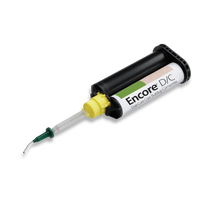
Dental Composite Resin Types: A Professional Buying Guide for Clinics
- , by SurgiMac
- 14 min reading time
Schedule a smarter composite resin procurement strategy. Compare dental composite resin types by filler size, viscosity, and cost per case for your clinic.
For a dental clinic or DSO, selecting composite resin is a procurement decision as much as a clinical one. The right portfolio must support anterior esthetics, posterior load, efficient placement, predictable polymerization, and consistent replenishment across locations. Buying by brand familiarity alone can leave teams with overlapping materials, unused shades, or gaps in procedural coverage.
Dental composite resin types should be selected by filler design, viscosity, placement depth, shade and opacity requirements, clinical application, and expected case volume. Resin-based composites remain among modern dentistry's most versatile restorative materials, supporting both anterior and posterior treatment while enabling minimally invasive preparations (https://pmc.ncbi.nlm.nih.gov/articles/PMC9777426/).
A practical buying framework starts by separating material categories from the workflows they serve. That distinction helps procurement teams compare cost per case, standardize core inventory. And identify where products such as Centrix, Meta Biomed EZ Fil, and Nexcomp Flow can complement one another. The next step is to examine how composition and filler characteristics affect clinical selection.
Understanding Dental Composite Resin Types for Smart Procurement
Classification matters at the purchasing stage because filler size influences polishability, handling, strength priorities, and the procedures a material can support. Resin-based composites are valued for versatility, esthetics, and clinical performance in both anterior and posterior teeth, while their adhesive use can support minimally invasive restorative preparation. A procurement team should therefore evaluate each category against procedure mix rather than selecting products by label alone. Explore SurgiMac's range of dental composite resins to find the right match for your clinical mix.
Macrofills and microfills: historical categories with different priorities
Macrofills contain relatively large filler particles, commonly reported at approximately 10 to 50 micrometers. Their particle profile helped establish early composite systems, but larger fillers can affect surface smoothness and finishing expectations. Microfills emerged in the late 1970s and used much smaller particles to improve surface polish and esthetic refinement. For inventory planning, these distinctions are useful when reviewing legacy protocols or anterior-focused workflows. But they should not replace consideration of the manufacturer's current formulation, indications, and handling characteristics.
When a practice still maintains separate anterior and posterior protocols. Buyers should ask whether a product's documented wear resistance, radiopacity, shade range, and polishing system justify a dedicated SKU. A lower unit price may not reduce cost per case if the material requires additional finishing time or has limited use across the schedule.
Nanocomposites and nanohybrids: broader clinical flexibility
Nanocomposites use particles under 100 nanometers, a scale associated with the pursuit of smooth surfaces and refined esthetics. Nanohybrids combine larger particles, including the 10 to 50 micrometer range, with particles around 40 nanometers. This blended approach is intended to balance handling and mechanical requirements with finish quality. A clinic evaluating a general-purpose restorative may find that a nano hybrid composite resin can reduce the need to stock narrowly specialized materials, provided its instructions for use match the procedures performed.
Product selection still depends on the resin matrix, filler loading, coupling agents, shade system, polymerization requirements, and the operator's technique. Research reviews identify filler morphology and coupling-agent design as continuing areas of composite development. So procurement teams should review current technical documentation instead of relying on category names alone.
Use adoption data to size inventory, not dictate it
One industry overview reports that composites are used in approximately 40% to 52% of posterior direct restorations. That range signals meaningful demand, but it is not a universal utilization target. Buyers should compare it with the practice's restoration volume, anterior-to-posterior mix, shade consumption, curing equipment, and clinician preferences. A practical category review can then identify which products deserve core-stock status, which should be ordered for specific cases. And where a universal or nanohybrid system may simplify replenishment without compromising clinical indications.
Comparing Composite Categories by Filler Size and Clinical Performance
Filler size helps explain why dental composite resin types behave differently during placement, finishing, and service. The categories below are useful procurement shorthand, but product formulations vary within each group. Review the manufacturer's indications, handling instructions, and curing requirements before standardizing a material across operators or locations.
| Composite Type | Filler Size | Key Property | Best Applications | Cost Tier |
|---|---|---|---|---|
| Microfill | Submicron particles; exact ranges vary by formulation | High polishability and smooth surface finish | Anterior restorations where surface esthetics and polish retention are priorities | Moderate to high |
| Microhybrid | Blend of small and larger filler particles | Balanced handling, strength, and esthetics | General-purpose anterior and posterior direct restorations | Moderate |
| Nanohybrid | 10-50 micrometer particles combined with 40-nanometer particles | Combines mechanical support with polishability | Universal restorative workflows, including esthetic anterior and functional posterior cases | Moderate to high |
| Nanofilled/Nanocomposite | Particles under 100 nanometers; Filtek Supreme Ultra is reported with 20-nanometer particles | Fine surface texture, polish retention, and esthetic potential | Anterior esthetic restorations and cases requiring a highly finished surface | High |
| Bulk-Fill | Formulation-dependent; categorized primarily by placement and curing design | Designed for placement in larger increments than conventional layering techniques | Selected posterior restorations where efficient increment placement supports the clinical workflow | Moderate to high |
The particle-size distinctions and nanohybrid formulation details are summarized from Spear Education's review of composite types. They should guide evaluation, not replace clinical judgment. For example, a nano hybrid composite resin may fit a clinic seeking one versatile option, while a microfill or nanocomposite may be justified for a higher-esthetic anterior service line.
For procurement teams, the table connects material characteristics to procedure mix. Compare your case volume and procedural needs against SurgiMac's composite categories to optimize your inventory mix.
Bulk-Fill vs. Conventional Composites: Efficiency and Cost Per Case
For posterior restorations, material selection affects more than handling characteristics. It also influences how efficiently a clinician can complete each case, how consistently the team can support the workflow, and how much restorative inventory is consumed over time. Bulk-fill resin composites are designed for larger increment placement than conventional layered composites, simplifying posterior restorative procedures when the clinical indication and preparation support their use. A recent review of bulk-fill resin composites describes this category as an approach intended to streamline posterior restoration.
Where bulk-fill can improve posterior workflow
Conventional composite placement commonly uses an incremental technique. The clinician places and adapts multiple smaller increments, with curing between layers. This approach remains clinically valuable because incremental techniques can help manage polymerization shrinkage and support shade or opacity control in complex cavities, as documented in the restorative literature. It may also require more placement and curing steps for a straightforward posterior restoration.
Bulk-fill materials permit larger increments, which can reduce the number of placement cycles needed for suitable posterior cases. Fewer increments may mean less time spent dispensing, adapting, curing, and checking each layer. The practical benefit is not simply speed. A more streamlined sequence can reduce chair-time pressure, improve appointment predictability, and make it easier for a high-volume clinic to standardize routine posterior procedures.
Connecting material choice to cost per case
Cost per case should include more than the purchase price of a syringe or compule. Clinic managers and DSO procurement teams should evaluate the amount of material used. The number of handling steps, curing time, clinician time, and the likelihood of remakes or additional adjustments. When bulk-fill reduces placement steps in an appropriate case, the resulting workflow efficiency may improve the total operating economics of the restoration. Even if the unit price differs from a conventional composite.
This comparison should be made using actual practice data. Track the average time for routine posterior restorations, the material consumed per procedure, and the case mix by provider. A material that performs efficiently in one clinic may not produce the same result in another if preparation design, technique, curing equipment, or operator preferences differ.
Why posterior indications still matter
Bulk-fill is primarily associated with posterior applications. Where efficient placement and adequate depth of cure are important and esthetic demands may be less complex than in highly visible anterior restorations. It should not automatically replace conventional composites across the entire inventory. Anterior cases, complex shade layering, and restorations requiring detailed opacity control may still call for an incremental approach and a broader shade system.
For clinics with substantial posterior volume, a balanced purchasing plan is usually more practical than choosing one category exclusively. Stock bulk-fill composite for appropriate routine posterior cases while retaining conventional composite for situations where incremental control is clinically indicated. That approach aligns dental composite resin types with procedure mix, provider technique, and measurable cost-per-case goals.
Flowable, Packable, and Universal Composites: Choosing by Procedure
Viscosity is a practical selection variable because it affects adaptation, contouring, handling, and the amount of manipulation required during placement. The most useful distinction is not which material is universally best, but whether its handling profile matches the preparation and the restoration's functional demands.
Flowable composite for adaptation and conservative preparations
Flowable composite has a lower viscosity than packable material, allowing it to spread into narrow areas and adapt closely to internal cavity walls. That behavior makes it useful for Class V restorations, small conservative cavities, and selected liner or initial adaptation applications. It can also help fill irregularities where a stiffer composite would leave voids or require excessive instrumentation.
Flowability does not eliminate the need for moisture control or appropriate placement technique. The clinician should follow the product's instructions for increment thickness, curing, and indications rather than treating every low-viscosity resin as interchangeable. For practices that need a dedicated option for adaptation-focused procedures, SurgiMac carries the flowable composite resin from Nexcomp Flow.
Packable composite for posterior contour and load
Packable composite is formulated with a stiffer handling profile. That resistance to slumping can support cusp and marginal ridge contouring in Class I and Class II posterior restorations. Where anatomy, contact development, and functional loading are central concerns. Its consistency may also give the operator greater control when shaping a restoration before polymerization.
Packable handling should not be confused with a guarantee of superior clinical performance in every case. Material selection still depends on the manufacturer's indications, the preparation, the curing protocol, and the restorative technique. The goal is predictable placement and adequate adaptation without forcing a material into areas better served by a lower-viscosity resin.
Universal composite for broad restorative coverage
Universal composites are designed to cover a wider range of routine indications and shades with one restorative platform. They are commonly considered for anterior work where esthetic blending, surface finish, and shade selection matter. While also offering practical utility across other direct restorative procedures when the product labeling supports those uses. A universal option can simplify staff training and reduce the number of systems needed for everyday cases. But it should not replace a specialized flowable when adaptation or a packable material when posterior handling is the priority.
For procurement teams, these categories translate into complementary inventory roles. Review SurgiMac's flowable, packable, and universal composite options to see which viscosities match your procedure profile. A clinic may need flowable material for adaptation, packable composite for posterior anatomy, and universal composite for flexible general use. Reviewing procedure mix, shade demand, curing equipment, and reorder frequency before consolidating SKUs helps prevent both overstock and workflow gaps. The next step is to turn those clinical roles into a deliberate composite resin inventory plan.
Building Your Composite Resin Inventory - A Procurement Checklist
-
Audit the procedure mix
Start with actual utilization data rather than a generic catalog. Review three to six months of restorative records and group cases by anterior versus posterior location and by Class I, II, III, IV, and V frequency. Note which clinicians routinely layer conventional composite, use flowable material for adaptation, or prefer bulk-fill techniques. This audit identifies the shades, viscosities, delivery systems, and pack sizes that deserve regular-stock status. It also exposes products that expire before the next reorder cycle.
-
Build a core portfolio around clinical demand
For anterior restorations, prioritize universal or nanohybrid materials that support sculpting, polishability, and esthetic shade selection. Posterior-heavy practices should maintain bulk-fill options for cases where larger increments can simplify placement. Along with packable composite for clinicians who prefer a stiffer material under heavy occlusal load. A balanced inventory can include a nano hybrid composite resin for routine restorative needs and a flowable composite resin for liners, small defects, and adaptation. Avoid stocking every viscosity or shade until procedure data demonstrates demand.
-
Compare suppliers by portfolio reliability
Evaluate suppliers on more than unit price. Confirm consistent availability, lot traceability, packaging integrity, technical documentation, and responsive support for a multi-location account. SurgiMac's composite portfolio includes established options from Centrix, Meta Biomed, and Nexcomp. Giving clinics and DSOs a practical starting point for comparing material formats without fragmenting procurement across too many vendors. A self-cure hybrid composite resin may also be appropriate where the practice's documented clinical protocols call for that category.
-
Calculate cost per syringe, case, and usable month
Compare the delivered cost of each syringe with the quantity used per restoration, not just the package price. Bulk-fill materials may reduce layering time and simplify posterior workflows, but the benefit depends on the clinic's technique and curing protocol. Record shelf life at receipt, minimum order quantities, and average monthly consumption. Set reorder points that protect continuity without creating excess inventory near expiration.
-
Standardize across operatories
Once the core list is approved, use the same preferred systems, shade labels, storage rules, and replenishment thresholds across operatories and locations. Standardization reduces substitution errors, shortens setup time, and makes onboarding easier for new clinicians. Review usage and waste quarterly, then adjust the approved list based on clinical outcomes and purchasing data. A structured approach keeps the right dental composite resin types available while reducing avoidable waste and chair time.
Frequently Asked Questions
What are the main categories of dental composite resin?
The main categories are macrofill, microfill, hybrid, nanohybrid, and nanocomposite materials. They differ primarily in filler-particle size and formulation, which influences polishability, handling, strength, and esthetic performance. Procurement teams should evaluate the intended procedure rather than treating one category as universally appropriate.
What is a nanohybrid composite?
A nanohybrid composite combines nano-sized filler particles with larger micro-sized particles. This formulation is designed to balance mechanical performance, handling, and surface polish, making it a versatile option when a clinic needs both esthetic control and dependable restorative performance.
What is the difference between flowable and packable composite?
Flowable composite has lower viscosity, allowing it to adapt closely to cavity walls, narrow areas, and irregular surfaces. Packable composite is stiffer and provides more body during placement, which can be useful for posterior restorative procedures. Many practices stock both so clinicians can match viscosity to the preparation and technique.
Are all composite resins appropriate for the same procedures?
No. Material selection should reflect the clinical requirement, including anterior esthetics, posterior load, cavity adaptation, depth of the increment, and the clinician's placement technique. A universal or nanohybrid product may support multiple indications, but specialized flowable, packable, or bulk-fill materials can improve workflow for particular cases.
How should a clinic choose composite resin for its inventory?
Start with the procedures performed most often, then compare handling, shade availability, curing requirements, packaging, shelf life, and cost per completed case. A practical inventory commonly includes a versatile restorative composite, a flowable option. And a material suited to posterior or bulk-fill workflows, with purchasing standardized across locations when clinical needs are comparable.
A well-matched composite resin inventory can support consistent restorative workflows across individual practices and DSO locations. Review available viscosities, filler categories, and curing requirements against the procedures your clinicians perform most often. Browse SurgiMac's full selection of dental composite resins to get started with product options for your practice.
Tags
Blog posts
-
, by SurgiMac A Clinician's Guide to Absorbable Suture Material
-
, by SurgiMac A Clinician's Guide to Dental Composite Resin Kits
-
, by SurgiMac How to Disinfect with Metrex CaviWipes Correctly
