
Dental Cotton Roll Sizes: A Practice Buying Guide
- , by SurgiMac
- 14 min reading time
Schedule your absorbent order with SurgiMac. Learn which dental cotton roll sizes fit restorative, endodontic, and surgical workflows.
A dry working field is not just a matter of comfort. It supports visibility, protects procedural access, and helps clinicians work with greater control. The absorbent selected for the site and procedure can influence how often the field must be reset.
Choosing the right dental cotton roll sizes helps dental professionals manage saliva, cheek and lip displacement, and access during restorative, endodontic, hygiene, and surgical procedures. Small rolls suit confined areas, while medium, large, or extended options provide broader coverage when moisture control demands increase.
Dental cotton rolls are single-use absorbents intended to remove moisture from the oral cavity. And they can also provide packing between the cheek or lip and gingiva to improve operative exposure, according to the FDA's AccessGUDID device record. Their performance depends on more than diameter alone. Length, construction, absorbency, placement, and the demands of the procedure all affect field stability. Understanding those factors makes routine purchasing more consistent and helps practices stock absorbents that match clinical use rather than relying on a single default size.
Start by considering how the roll supports isolation, visibility, and efficient chairside workflow.
Why Dental Cotton Roll Sizes Matter for a Dry Working Field
A dry working field supports clearer visualization, more controlled instrument access, and efficient moisture management during restorative and preventive procedures. Dental cotton rolls are single-use absorbents designed to wick saliva from the oral cavity. While their cylindrical shape also allows placement between the lip or cheek and the gingiva to improve examination and operative exposure. FDA device information describes these functions as core uses of the product.
Order the right cotton roll sizes for your practice from the Cotton Rolls collection today.
Size selection affects how well the roll maintains contact with the tissues it is intended to protect and how often it needs to be replaced. A roll that is too small may become saturated quickly or shift during treatment. A roll that is too large can create unnecessary pressure against the cheek or interfere with access, especially in a confined posterior field. Matching diameter and length to the working area helps the dental team maintain isolation without overpacking the vestibule.
Visibility, access, and tissue positioning
During examination and operative treatment, cotton rolls can act as a practical barrier between soft tissue and the tooth surface. Lip and cheek packing improves exposure, while absorption limits saliva pooling near the preparation. That combination can make margins easier to inspect and reduce interruptions for repositioning or suction. Patient comfort also depends on proportion: an appropriately sized roll provides support without excessive bulk or pressure.
When cotton roll isolation is clinically appropriate
Cotton roll isolation is not a universal substitute for every isolation method, but evidence supports its use in selected restorative situations. In a clinical study of composite restorations in primary molars, cotton roll isolation was non-inferior to rubber dam isolation for restoration longevity. The finding supports cotton roll isolation as a cost-effective moisture-control option when the case, tooth position, and clinician judgment make it appropriate. Review the study details in this peer-reviewed comparison of cotton roll and rubber dam isolation.
For routine restorative care, practices commonly begin with a medium roll and adjust based on anatomy, access, and secretion levels. Smaller rolls can suit tighter spaces, while larger or extended designs may be useful when broader cheek, buccal, or parotid-area control is needed. A consistent sizing system also helps assistants prepare trays faster and reduces improvised substitutions during treatment.
Because these products are intended for single use, select sizes that support the procedure without relying on repeated handling or prolonged saturation. Stocking the most frequently used size in adequate volume is the practical baseline. Add smaller and larger options for specific procedures to give clinicians dependable dry-field control while keeping supply costs predictable.
Standard Dental Cotton Roll Sizes and Their Clinical Uses
Choosing a cotton roll by diameter and length helps the clinical team maintain a dry working field without placing unnecessary bulk in the oral cavity. Standard cotton roll sizes are commonly identified by numbered diameter, while longer parotid-style rolls address a different isolation need. The right selection supports visibility, cheek and lip retraction, and efficient chairside replenishment.
Small, Medium, and Large Rolls at a Glance
| Size | Diameter | Length | Best For |
|---|---|---|---|
| #1 Small | 5/16 inch, approximately 0.3125 inch | 1.5 inches | Tight interproximal spaces, pediatric procedures, and endodontic access |
| #2 Medium | 3/8 inch | 1.5 inches | Standard restorative isolation and routine moisture control |
| #3 Large | 1/2 inch | 1.5 inches | Greater absorption and broader areas requiring cheek or lip separation |
| Long or Parotis-type | 4 inches, with Roeko Parotisroll #5 approximately 5/16 inch | 4 inches, typically with a plastic rod | Buccal and parotid control, especially across a posterior quadrant |
Standardize your operatory stock with the cotton roll sizes each procedure requires.
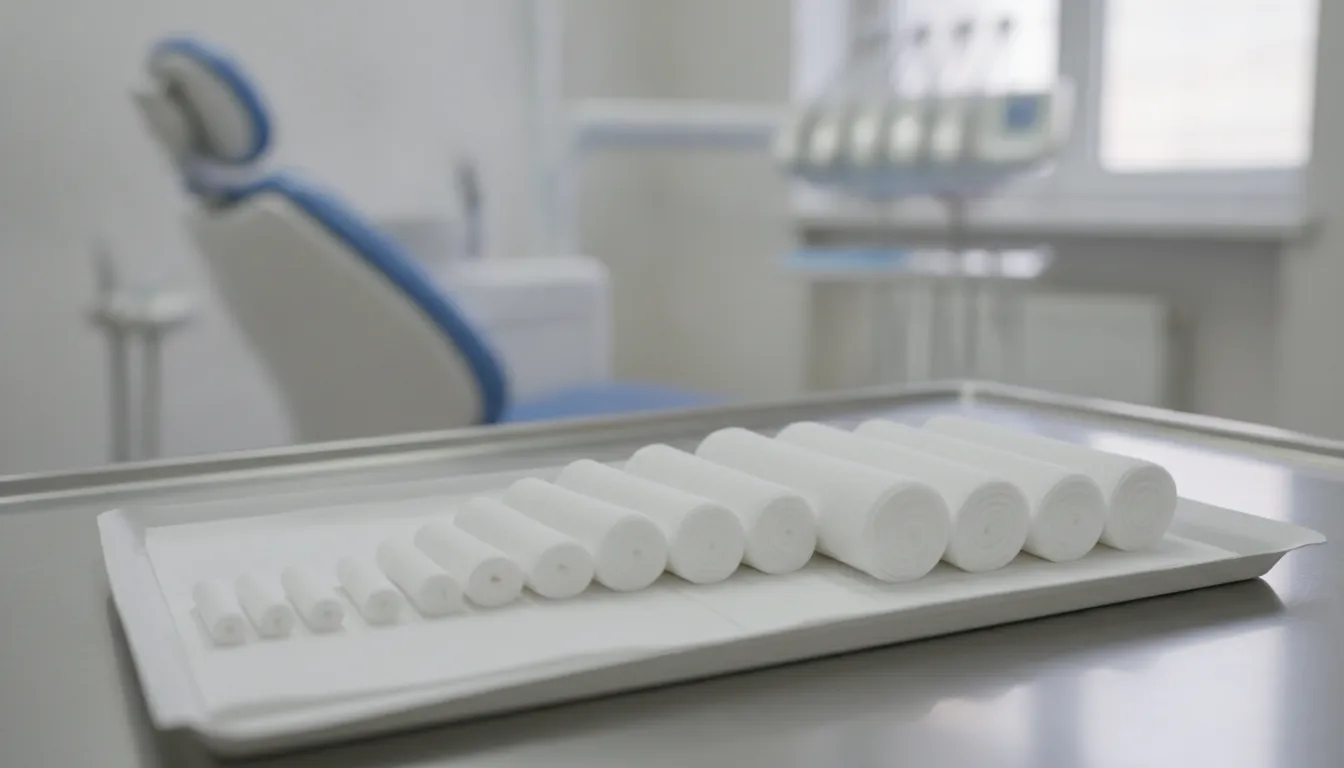
The #2 medium roll is the usual starting point for general restorative inventory. It measures 3/8 inch in diameter and 1.5 inches in length, dimensions reflected across several commonly stocked dental supply products. A smaller #1 roll can fit where a medium roll interferes with access, including narrow interproximal spaces or selected pediatric and endodontic applications. The #3 large roll provides more absorbent material when the treatment area is wider, but its additional bulk should be balanced against patient comfort and instrument access.
Long rolls serve a distinct purpose rather than simply offering a larger version of a standard roll. A 4-inch Parotis-type roll, often supported by a plastic rod. Can extend along the buccal vestibule and help manage salivary flow near the parotid duct or across posterior teeth. Cotton rolls are single-use absorbents intended to manage oral moisture, and they may also be packed between the cheek or lip and gingiva to improve operative exposure. FDA device information describes these functions for dental cotton roll devices.
For practice supply planning, stock #2 medium rolls as the core size, then add #1, #3, and long rolls according to procedure mix. SurgiMac's Cotton Rolls collection can support a more deliberate size-based inventory rather than relying on one diameter for every operatory.
How to Choose the Right Absorbent for Each Procedure
Absorbent selection should follow the moisture risk, access requirements, and amount of field coverage each procedure demands. Match the product to the working area rather than relying on one universal cotton roll size. The result is more predictable isolation, clearer visibility, and fewer interruptions for the clinical team.
-
Restorative Procedures
Procedure: Composite restorations and other restorative treatments often require localized control around an isolated quadrant. Moisture risk: Saliva and crevicular fluid can compromise visibility and contaminate the operative field, particularly around posterior teeth. Recommended absorbent: Use medium #2 cotton rolls for routine cheek, lip, and tongue retraction, supported by cotton pellets for small areas or targeted placement. A #2 roll is commonly about 3/8 inch in diameter and 1-1/2 inches long. Why: The medium profile balances fluid absorption with working space, while pellets help control moisture near a tooth without crowding the field. Cotton roll isolation is also recognized as a cost-effective moisture-control approach for selected composite restorations.
-
Endodontic Procedures
Procedure: Access preparation and canal treatment require close control around a small, restricted operating area. Moisture risk: Saliva can enter around the access opening, while excess absorbent material may obstruct visibility or interfere with instruments. Recommended absorbent: Stock small #1 cotton rolls and cotton pellets. Place the rolls where they can manage cheek or tongue moisture, then use pellets for precise control adjacent to the access opening. Why: Smaller absorbents can be positioned close to the treatment site while preserving access and allowing the assistant to replace saturated material promptly.
-
Surgical Procedures
Procedure: Oral surgery and procedures involving broader tissue exposure require field coverage and dependable packing. Moisture risk: Blood, irrigation, and saliva can accumulate across a larger area, making small rolls inadequate for sustained control. Recommended absorbent: Use 4x4 gauze sponges for broad field management, supplemented by larger or long rolls for packing and buccal or parotid-area control. Review the available gauze sponges when building surgical inventory. Why: Gauze covers more surface area, while long rolls can maintain localized separation and absorb fluid along the cheek.
-
Hygiene Procedures
Procedure: Sealant, fluoride, and hemostatic applications require a controlled, accessible field rather than extensive packing. Moisture risk: Saliva can dilute or displace an applied agent before it contacts the intended surface. Recommended absorbent: Use standard cotton rolls for routine isolation, with cotton tip applicators for precise placement or removal of excess material. Why: The roll manages background moisture, while the applicator supports controlled delivery in pits, fissures, sulci, or other confined areas. For centralized purchasing, compare these needs with house-brand absorbents and set par levels by procedure volume.
Keep all absorbents in closed dispensing containers and treat them as single-use devices. A procedure-based stock plan helps assistants select the right product quickly while reducing unnecessary consumption and avoidable field interruptions.
Braided vs Non-Braided Cotton Rolls: Which Should You Stock?
Braided and non-braided cotton rolls can both support routine saliva management, but their construction affects how they behave during treatment. Braided rolls use a tighter weave that generally holds its cylindrical shape more effectively when positioned against the cheek or gingiva. They also tend to shed fewer loose fibers and maintain a drier working field during procedures that require sustained isolation.
Non-braided rolls are typically softer and can be a practical choice when the clinical need is brief moisture control rather than prolonged field stability. They are commonly used for routine hygiene appointments, short restorative steps, and general saliva absorption. Their lower cost per roll can also make them efficient for high-volume, everyday consumption.
Stock SurgiMac MacSafe #2 cotton rolls for dependable medium-size isolation, with 2,000 rolls per box and case-level economics for practice purchasing.
For longer restorative procedures or situations where repositioning a roll would interrupt workflow, braided construction may offer a useful operational advantage. Better shape retention can reduce premature compression, while lower fiber shedding helps keep the field cleaner. These are directional handling benefits, not a substitute for clinician judgment, patient anatomy, or the isolation requirements of the procedure.
Non-braided rolls remain appropriate when softness, speed, and unit cost matter most. They can provide adequate absorption for short hygiene procedures and routine moisture control, especially when the assistant can replace them easily as saturation increases. The best choice is therefore not either-or. It is a stocking decision based on procedure duration, expected fluid load, access, and how often the roll may need repositioning.
For most dental practices, a sensible baseline is to stock primarily #2 medium braided rolls for restorative and longer procedures. Then maintain a smaller quantity of non-braided rolls for hygiene visits and brief applications. Supply managers should track actual consumption by operatory and procedure type rather than selecting solely on price per box. That approach keeps the core inventory stable while preserving a lower-cost option for cases that do not require extended shape retention or a particularly dry field.
Storing and Handling Absorbents to Protect Sterility
Storage practices affect more than organization. Cotton rolls, gauze sponges, pellets, and applicators can lose their intended cleanliness or handling performance when exposed to moisture, dust, open shelving, or unnecessary contact. Keep packaged absorbents in a clean, dry area at room temperature, away from sinks, chemical splash, direct sunlight, and sources of heat. Closed dispensing containers add another barrier between unused products and operatory contaminants.
Use a first-expiring, first-out rotation system when products carry an expiration date. Check packaging before placing supplies into a dispenser, and remove any item with compromised wrapping, visible soil, moisture damage, or an unreadable label. A clean stock location and consistent replenishment routine also help practice managers standardize ordering across treatment rooms. SurgiMac ships from clean, temperature-controlled distribution, supporting predictable replenishment for practices that want a consistent absorbent-supply process.

Sterile vs. Non-Sterile Absorbents
Packaging status must match the intended clinical use. Gauze sponges are commonly available in sterile and non-sterile configurations, while dental cotton rolls are typically supplied as non-sterile absorbents unless the package specifically identifies them as sterile. Do not treat a closed box as proof of sterility. Verify the manufacturer labeling and follow the practice's infection-control protocol for each procedure. Cotton rolls are single-use devices intended for moisture management during operative care, so discard them after patient use rather than returning unused portions to general stock. FDA device information identifies cotton rolls as single-use absorbents for oral moisture control.
Dispenser Best Practices
Wall-mounted or basin-side dispensers can reduce unnecessary handling while keeping frequently used absorbents within reach. Select a dispenser that protects the remaining supply from splash and dust, then clean and disinfect the exterior according to the product and facility protocol. Refill only with the correct product and size, and avoid topping off older stock with newer boxes. Assigning a standard dispenser location for each operatory makes it easier to monitor usage, rotate inventory, and maintain reliable access to dental cotton rolls during treatment.
Frequently Asked Questions
What are the common dental cotton roll sizes?
Most practices stock #1 Small, #2 Medium, and #3 Large rolls. The #2 size is a practical general-purpose option for routine restorative procedures, while smaller rolls fit tighter areas and larger rolls provide more absorbent material for broader fields. Longer rolls with a plastic rod can support buccal or parotid-area moisture control.
What is the standard size of a #2 dental cotton roll?
A commonly supplied #2 Medium roll measures approximately 1-1/2 inches long by 3/8 inch in diameter. Confirm the package dimensions and pack count before ordering, because product specifications can vary by manufacturer and supplier. Source: dental cotton roll specifications.
How do you choose the right dental cotton roll size?
Match the roll to the working area, expected fluid load, and available space. Use smaller rolls or cotton pellets around tight interproximal or endodontic sites, medium rolls for routine isolation. And larger or extended rolls when the field is broader or saliva control demands more capacity. Replace saturated absorbents promptly.
Are dental cotton rolls braided or non-braided?
Both constructions are available. Braided rolls generally hold their shape more effectively and may shed fewer fibers, which can be useful when maintaining a stable dry field matters. Non-braided rolls remain a common choice for routine moisture absorption. Select based on procedure requirements, handling preference, and total cost per use.
What does a #3 or LG dental cotton roll size signify?
#3 or LG means Large, indicating a larger-diameter roll than the #1 Small or #2 Medium options. It is typically selected for broader clinical areas or when greater absorbent capacity is needed. Size alone does not determine performance, so also review the roll length, construction, packaging, and intended clinical application.
Ready to Stock the Right Dental Absorbents?
Match your practice's procedures with dependable dental cotton rolls and absorbent products selected for consistent moisture control, efficient chairside workflows, and professional clinical use. Review the available sizes and options, then shop dental cotton rolls to stock your practice with the right dental cotton rolls and absorbents.
Tags
Blog posts
-
, by SurgiMac A Clinician's Guide to Absorbable Suture Material
-
, by SurgiMac A Clinician's Guide to Dental Composite Resin Kits
-
, by SurgiMac How to Disinfect with Metrex CaviWipes Correctly
