
Dental Local Anesthetics Comparison: Lidocaine vs Articaine
- , by SurgiMac
- 16 min reading time
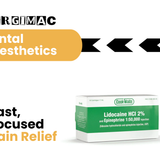
Schedule a consultation. This dental local anesthetics comparison covers lidocaine, articaine, and mepivacaine onset, duration, and dosing.
Choosing an injectable anesthetic is a clinical decision and a procurement decision. The formulation must support the procedure, patient medical history, required depth of pulpal anesthesia, and the consistency a multi-location practice expects from its supply program.
A dental local anesthetics comparison should begin with the clinical role of each agent, not a simple ranking. Lidocaine offers a familiar, predictable reference point; articaine is valued for rapid onset and tissue penetration. And mepivacaine provides a useful option when shorter soft-tissue anesthesia or limited vasoconstrictor exposure is appropriate.
No single local anesthetic fits every case, and success depends on both the agent and the delivery technique, particularly for mandibular anesthesia. The practical distinctions below clarify how lidocaine, articaine, and mepivacaine can support different clinical situations and purchasing decisions.
Contact SurgiMac for wholesale dental anesthetic supply support.
Why a Dental Local Anesthetics Comparison Matters for Your Practice
What is a dental local anesthetic? It is a medication that temporarily blocks voltage-gated sodium channels in peripheral nerves, preventing pain signal transmission from the operative site to the central nervous system. In dentistry, amide local anesthetics are delivered by infiltration or nerve block, sometimes with a vasoconstrictor such as epinephrine to extend pulpal anesthesia and improve operative control. Proper selection and administration require clinical judgment and patient assessment.
When you evaluate supply options, contact SurgiMac for dependable dental anesthetic supply support.
A comparison matters because no single agent is ideal for every clinical situation. Procedure duration, the depth of anesthesia required, and the patient's medical history all influence the most appropriate choice. A short restorative appointment may call for a different profile than extensive surgery, while cardiovascular considerations may affect whether a vasoconstrictor-containing formulation is appropriate. Clinicians should maintain a practical range of options rather than treat one cartridge type as universally interchangeable.
Lidocaine remains the standard reference agent in many comparative dental trials because its safety and clinical performance are well established. That reference point makes it easier to evaluate differences in onset, duration, tissue penetration, concentration, and anesthetic success across agents. The comparison should inform clinical reasoning, not replace it. Dosage, formulation, injection site, and patient-specific risk factors remain essential parts of the decision.
Technique is equally important. Evidence indicates that anesthetic success depends on both the agent selected and the delivery method, particularly in the mandible. An inferior alveolar nerve block and a buccal infiltration do not present the same anatomical or clinical challenge. A disappointing result may reflect injection technique, accessory innervation, inflammation, or tissue penetration rather than a simple failure of the anesthetic molecule.
Comparative evidence illustrates why the distinction matters. A 2010 meta-analysis reported that articaine was approximately 1.5 times more successful than lidocaine for mandibular blocks and approximately 2.78 times more successful for maxillary and mandibular infiltrations. A 2021 meta-analysis also found articaine superior to lidocaine for anesthetic success. These findings support considering articaine when infiltration or difficult mandibular anesthesia is clinically relevant, while still applying dose limits and patient-specific judgment. The broader pharmacology and selection principles are reviewed in SurgiMac's introductory guide to dental anesthetics.
The goal of a dental local anesthetics comparison is therefore not to identify one universal winner. It is to match a clinically appropriate agent and technique to the procedure, anatomy, expected duration, and patient's health profile.
Lidocaine: The Standard Reference Agent in Dental Anesthesia
Lidocaine remains a dependable baseline for evaluating dental local anesthetics because its clinical profile is well established. As an amide local anesthetic, it resists rapid biodegradation associated with ester hydrolysis, supporting a consistent duration when administered appropriately. Its reliable onset and moderate duration make it familiar across restorative, periodontal, and surgical workflows. Clinical pharmacology references continue to identify lidocaine as a standard reference agent in comparative studies.
Clinical profile of lidocaine
Lidocaine produces predictable local anesthesia through reversible blockade of nerve conduction. In routine dental use, the balance between onset and duration is clinically useful: anesthesia develops reliably without creating unnecessarily prolonged soft-tissue numbness for many appointments. The amide structure contributes to stability against rapid hydrolysis, while formulation and injection technique still influence the observed clinical effect.
Adding epinephrine changes the practical profile by reducing local blood flow and slowing vascular uptake. The result can be more profound and sustained anesthesia, with localized hemostasis that is valuable when the operative field must remain visible. For oral surgical procedures, lidocaine with epinephrine is commonly selected when both anesthetic depth and bleeding control are important.
Where lidocaine excels in daily dentistry
Lidocaine is well suited to routine restorative procedures in which a predictable duration supports efficient treatment and recovery. It can serve as a familiar first-line option for procedures such as operative dentistry, crown preparation, and other interventions requiring dependable pulpal anesthesia. Clinicians can select the concentration and vasoconstrictor formulation according to the procedure, injection technique, and patient's medical history.
For procurement teams seeking a commonly used formulation, lidocaine 2% with epinephrine provides a practical reference point for comparing other anesthetic options. Product selection should remain connected to the intended procedure, storage requirements, clinician preference, and the patient's risk profile.
Safety, contraindications, and maximum dose
Safe administration begins with a complete medical history, medication review, weight-based dose calculation, and careful aspiration and injection technique. Cardiovascular disease and other conditions may affect whether epinephrine is appropriate, as well as the concentration and total amount selected. The principle is to use the lowest effective dose that achieves adequate anesthesia, rather than treating a cartridge count as an automatic target.
As a general clinical guideline cited in competitor research. Approximately 13 cartridges of 2% lidocaine with 1:100,000 epinephrine is commonly presented as the maximum recommended dose for a typical adult. This figure is not a substitute for the product labeling, patient-specific assessment, or applicable clinical guidance. Reduce the dose when indicated, account for all local anesthetic sources, and monitor the patient for adverse reactions.
Articaine: Rapid Onset and Superior Tissue Penetration
Articaine occupies a distinct position among injectable amide local anesthetics. Its pharmacologic profile can be especially useful when clinicians need dependable infiltration, rapid pulpal anesthesia, or an alternative approach in areas where conventional techniques are less predictable.
How articaine's structure boosts penetration
Articaine is the only amide local anesthetic with an additional ester group in its thiophene ring. This unusual molecular structure increases lipid solubility and supports penetration through tissue barriers. Its high lipid solubility is also associated with a rapid onset of action. Although clinical results still depend on injection technique, anatomy, inflammation, and the required depth of anesthesia. Comparative research on articaine pharmacology and clinical performance describes these properties as important contributors to its clinical behavior.
Most articaine formulations contain 4% anesthetic, compared with the standard 2% concentration used for lidocaine. That higher concentration provides greater anesthetic density per milliliter, but it does not eliminate the need for careful dose calculation, aspiration, and incremental administration.
Clinical advantages for difficult anesthesia
Articaine's diffusibility may allow it to reach deeper tissue layers and diffuse into cortical bone more effectively than some alternative agents. For that reason, mandibular infiltration can be a practical option in selected cases, even though the mandible has traditionally favored an inferior alveolar nerve block. The agent may also serve as supplemental buccal infiltration when an initial block does not provide adequate anesthesia, including challenging cases involving irreversible pulpitis. The injection method remains decisive: success reflects both the selected anesthetic and the delivery technique.
For practices evaluating supply options, SurgiMac's articaine collection can support standardized product review alongside other local anesthetic choices. Selection should remain clinically driven rather than based on concentration alone.
Contact SurgiMac to compare articaine cartridge options and wholesale pricing.
Articaine dosing and safety profile
Articaine is metabolized through plasma esterases as well as hepatic pathways. This dual route can produce faster systemic clearance than a pure amide structure and may contribute to a lower systemic risk profile at equipotent doses. But it does not make excessive dosing safe. The commonly cited maximum recommended amount is approximately seven cartridges for articaine, compared with approximately 13 cartridges for lidocaine. Cartridge size, patient weight, formulation, vasoconstrictor content, and local prescribing information must be checked before administration.
Use the lowest effective dose and assess medical history, concurrent medications, and cardiovascular considerations before selecting the formulation. Thorough patient evaluation and precise injection technique remain essential safeguards with every local anesthetic.
Mepivacaine: A Reliable Vasoconstrictor-Free Alternative
Mepivacaine gives clinicians a practical option when the clinical plan calls for dependable amide anesthesia without automatically relying on epinephrine. Its plain formulation can be useful for shorter procedures and for patients whose cardiovascular status makes vasoconstrictor selection more complex. As with any dental local anesthetic, the final choice should reflect the procedure, required depth, and individual medical history. Clinical pharmacology guidance supports tailoring anesthetic selection rather than treating one formulation as appropriate for every patient.
Mepivacaine's place in the amide family
Mepivacaine is an amide local anesthetic used in dental injections, with formulations designed for different clinical needs. The distinction that matters most in this comparison is whether the cartridge contains a vasoconstrictor. Without one, 3% plain mepivacaine generally provides a shorter duration than formulations containing epinephrine. That shorter profile can be clinically useful when prolonged numbness offers little benefit or creates an avoidable burden for the patient.
Selection still requires professional assessment. A vasoconstrictor-free formulation does not remove the need to review medical history. Calculate the lowest effective dose, and confirm that the anticipated duration is appropriate for the planned treatment.
When to choose 3% plain mepivacaine
Three-percent plain mepivacaine is commonly considered for shorter procedures and for patients with cardiovascular contraindications to epinephrine. It can also suit patients who strongly prefer less persistent soft-tissue anesthesia after treatment. Faster return of normal sensation may reduce the opportunity for accidental biting or other self-mutilation. Particularly when patients may have difficulty monitoring numb lips, cheeks, or tongues after an appointment.
For practices sourcing this option, 3% mepivacaine plain (Scandonest) provides a product-specific procurement reference. In cases involving severe systemic disease, including uncontrolled arrhythmias, clinicians should follow appropriate medical evaluation and prescribing protocols rather than assuming that plain mepivacaine is automatically suitable.
Mepivacaine with vasoconstrictor: a lidocaine alternative
Plain mepivacaine is not the only formulation worth considering. Mepivacaine 2% with epinephrine offers a duration comparable to lidocaine 2% with epinephrine in many procedures, giving clinicians another option when a vasoconstrictor is clinically acceptable. This can be useful when formulary preference, patient response, or product availability makes an alternative to lidocaine desirable without sacrificing a familiar duration profile.
Compare the specific formulation, concentration, and labeling before ordering or administering it. SurgiMac's Carbocaine mepivacaine listing can support product review and purchasing decisions. The most useful dental local anesthetics comparison is therefore not a simple ranking. It is a formulation-level decision that balances duration, vasoconstrictor considerations, procedural demands, and patient safety.
Lidocaine vs Articaine vs Mepivacaine: Side-by-Side Comparison
Each agent can be appropriate when the formulation, procedure, anatomy, and patient factors align. The comparison below highlights practical distinctions for routine restorative care, surgical procedures, mandibular anesthesia, and cases where limiting vasoconstrictor exposure matters. Final selection and dosing should follow the product labeling, patient assessment, and the clinician's judgment.
| Characteristic | Lidocaine | Articaine | Mepivacaine |
|---|---|---|---|
| Concentration and formulations | 2%, commonly with 1:100,000 epinephrine | 4%, with 1:100,000 or 1:200,000 epinephrine | 3% plain, or 2% with 1:20,000 levonordefrin or 1:100,000 epinephrine |
| Typical onset | About 2 to 3 minutes | Rapid, supported by high lipid solubility and tissue permeability | About 1.5 to 3 minutes |
| Duration with vasoconstrictor | Moderate, approximately 60 to 120 minutes of pulpal anesthesia | Approximately 60 to 75 minutes pulpal anesthesia with 1:200,000 epinephrine | 2% with epinephrine offers a duration comparable to lidocaine 2% with epinephrine |
| Duration without vasoconstrictor | Not represented by the standard 2% with epinephrine formulation | Not represented by the standard epinephrine-containing formulations | 3% plain is shorter acting because it lacks a vasoconstrictor |
| Approximate maximum recommended cartridges | About 13, depending on product labeling and patient factors | About 7, depending on product labeling and patient factors | Use the applicable product labeling and calculate the patient-specific maximum dose |
| Tissue penetration | Reliable for established routine techniques | Highest tissue diffusibility of the three; can support mandibular infiltration | Reliable for conventional infiltration and block techniques |
| Best-fit indications | Routine restorative procedures and surgical hemostasis when paired with epinephrine | Difficult infiltration, supplemental injections, and selected mandibular blocks | Shorter procedures or patients for whom epinephrine should be avoided or limited |
Lidocaine remains the familiar reference agent, while articaine's 4% formulation and diffusion profile can be useful when infiltration depth is a concern. Mepivacaine provides flexibility when a shorter soft-tissue effect or a vasoconstrictor-free option is clinically preferable. Comparative evidence describes articaine's tissue penetration and mandibular infiltration advantages, but technique and patient-specific assessment remain decisive (comparative clinical evidence; clinical pharmacology reference).
Contact SurgiMac for help selecting the right anesthetic formulations for your practice.
How to Select the Right Dental Local Anesthetic for Each Case
Use a consistent clinical screening process rather than selecting an anesthetic by habit. A practical decision should account for patient safety, procedural demands, injection technique, patient expectations, and the products reliably available to the practice.
- Review the patient's medical history and vasoconstrictor risk. Assess cardiovascular conditions, current medications, allergies, and other relevant systemic factors before selecting an epinephrine-containing formulation. The medical history should guide both the type and concentration of vasoconstrictor used, or support choosing a vasoconstrictor-free alternative when clinically indicated. Clinical pharmacology guidance emphasizes careful patient evaluation for safe local-anesthetic administration.
- Estimate procedure length and the required depth of anesthesia. Match the expected duration and pulpal or surgical depth to the formulation and delivery technique. A short restorative visit may not require the same duration as periodontal surgery or a lengthy endodontic procedure. Procedure type, required depth, and patient health are central factors in anesthetic selection.
- Choose the agent that fits the clinical task, using the lowest effective dose. Consider the agent's concentration, expected onset, duration, tissue penetration, and whether a vasoconstrictor is appropriate. Use the minimum amount needed to achieve successful anesthesia, while following the product labeling, patient-specific precautions, and applicable maximum-dose limits. No single amide local anesthetic is ideal for every clinical situation, so clinicians should maintain multiple options.
- Plan supplemental anesthesia for mandibular posterior teeth with irreversible pulpitis. Profound pulpal anesthesia is more difficult when inflammation is present, and an inferior alveolar nerve block may be insufficient. When clinically appropriate, plan an articaine buccal infiltration as a supplemental technique. Research supports articaine as a more successful supplemental buccal infiltration agent than lidocaine or mepivacaine in mandibular posterior teeth with irreversible pulpitis. Review the comparative evidence before adapting the injection plan.
- Account for the patient's preference for soft-tissue duration. When clinically appropriate, 3% mepivacaine plain can provide a shorter duration of soft-tissue anesthesia than formulations containing a vasoconstrictor. This may be useful when patients are concerned about prolonged numbness and accidental biting, provided the formulation offers adequate anesthesia for the planned procedure.
- Standardize procurement around core clinical options. Keep lidocaine, articaine, and mepivacaine available so clinicians can respond to differences in procedure complexity, patient health, and anesthetic response. A defined inventory reduces substitutions at chairside and supports consistent clinical decision-making across providers and locations.
Frequently Asked Questions
Which dental anesthetic lasts the longest?
Duration depends on the specific formulation, injection technique, treatment site, and whether a vasoconstrictor is included. Epinephrine can prolong the action of an amide local anesthetic, while 3% plain mepivacaine generally provides a shorter duration than formulations containing epinephrine. Review the product labeling and select the lowest effective dose for the planned procedure. Clinical reference.
What is the main difference between lidocaine and articaine?
Lidocaine is a widely used reference agent with a predictable onset and moderate duration. Articaine has an additional ester group that increases lipid solubility and tissue penetration, supporting rapid onset and useful diffusion for infiltration. The choice should reflect the required depth, technique, procedure, and patient-specific considerations rather than concentration alone. Comparative evidence.
Is articaine better than lidocaine for dental procedures?
Neither agent is universally better. Articaine may be advantageous when tissue penetration or supplemental buccal infiltration is important, including some mandibular posterior cases. Lidocaine remains a reliable option for many routine procedures. Evaluate the clinical indication, delivery technique, medical history, and dosing requirements before choosing an agent. Comparative review.
What is mepivacaine used for in dentistry?
Mepivacaine is useful when a clinician wants a shorter anesthetic effect or needs an option without epinephrine. Its 3% plain formulation can suit shorter procedures and some patients with cardiovascular considerations. While 2% mepivacaine with epinephrine can provide a duration similar to lidocaine 2% with epinephrine. Assess the patient's complete medical history first. Clinical reference.
How should a practice choose among these anesthetics?
Build the selection around procedure length, required depth of pulpal anesthesia, injection method, patient health status, and the need for vasoconstrictor-assisted duration or hemostasis. Maintain several options rather than relying on one agent for every case, and follow current labeling, contraindications, and professional dosing protocols. Clinical reference.
Contact SurgiMac About Your Dental Anesthetic Supply Needs
Reliable anesthetic sourcing helps dental practices and DSOs maintain the options needed for different procedures and patient considerations. Contact SurgiMac to discuss wholesale dental anesthetic supplies, competitive pricing, and dependable stocking support for your organization. Share your product requirements and purchasing priorities so the next step reflects your practice or DSO's needs. Reach out to SurgiMac through the contact page to begin the conversation with a team member.
Tags
Blog posts
-
, by SurgiMac A Clinician's Guide to Absorbable Suture Material
-
, by SurgiMac A Clinician's Guide to Dental Composite Resin Kits
-
, by SurgiMac How to Disinfect with Metrex CaviWipes Correctly
