
Types of Dental Syringes: A Clinician's Guide
- , by SurgiMac LLC
- 24 min reading time
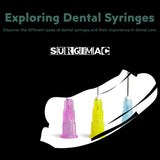
Find out which types of dental syringes suit your clinical needs. Learn about features, safety, and how to choose the right syringe for every procedure.
We've covered how essential dental syringes are for managing patient pain, but what about your control and precision? The right syringe is more than just a tool for delivering anesthetic—it’s a direct extension of your hand, impacting your technique and efficiency with every procedure. Understanding the different types of dental syringes available is crucial for making an informed choice. This guide breaks down the unique features and clinical applications of each, helping you select the best instrument to enhance your workflow and ensure predictable, comfortable outcomes for your patients.
The Role of Dental Syringes in Clinical Practice
In any dental practice, the dental syringe is a fundamental tool, playing a critical role in daily procedures. Its primary function is the precise administration of local anesthetics, which is essential for performing a wide range of treatments, from routine fillings to more complex surgical interventions. Effective pain management is not just a matter of patient comfort; it's a cornerstone of building trust and ensuring a positive clinical experience. When patients feel secure and comfortable, it allows you, the clinician, to work more efficiently and effectively. Understanding the mechanics and types of dental syringes is therefore crucial for delivering the highest standard of care and achieving predictable, successful outcomes in your practice.
Ensuring Patient Comfort and Safety
The primary goal of using a dental syringe is to manage patient discomfort and anxiety effectively. As our comprehensive guide on syringes notes, "Dental syringes are very important for managing pain during dental procedures. They deliver numbing medicine (local anesthesia) to make sure patients are comfortable and less anxious." This process is foundational to modern dentistry. By ensuring a painless experience, you help alleviate common dental phobias and encourage patients to seek regular care. Furthermore, the design of modern syringes, particularly aspirating models, incorporates critical safety features that protect the patient from intravascular injections, making the delivery of anesthetic products not only effective but also remarkably safe.
Anatomy of a Dental Syringe
While it may appear to be a simple device, a dental syringe is an instrument of precision, with each component engineered to work in harmony. A thorough understanding of its anatomy is key to mastering its use and ensuring both safety and effectiveness during procedures. From the barrel that holds the anesthetic to the needle that delivers it, every part has a specific purpose designed to give you maximum control. The main components that work together include the barrel, thumb ring, harpoon, piston rod, and the disposable needle. Let's break down what each part does and why it's important for a smooth and accurate injection.
Barrel
The barrel is the main body of the syringe and is designed to hold the anesthetic carpule securely in place. According to our guide, the barrel’s function is to "hold the medicine cartridge." Most reusable syringes feature an open-sided barrel with a large window, which allows you to see the carpule clearly. This visibility is critical for confirming that you have engaged the carpule correctly with the harpoon and for monitoring the amount of anesthetic being dispensed. It also enables you to watch for a positive aspiration, a key safety step before injecting the solution into the patient's tissue.
Thumb Ring
The thumb ring is a simple yet vital component that gives you control over the syringe. As noted in our guide, its purpose is to "help the dentist control the syringe." By placing your thumb in the ring, you can apply steady, controlled pressure to the piston rod during injection and, just as importantly, retract it during aspiration. The design of the thumb ring and the overall ergonomics of the syringe can significantly impact your comfort and reduce hand fatigue during a long day of procedures. This focus on ergonomic design is a principle we value across all our dental instruments, ensuring they feel like a natural extension of your hand.
Harpoon
The harpoon is the sharp, pointed tip attached to the end of the piston rod. Its specific job is to "poke the medicine cartridge to release the anesthetic." More accurately, it embeds itself into the rubber stopper, or bung, of the anesthetic carpule. This firm engagement is what makes aspiration possible. When you pull back on the thumb ring, the harpoon pulls the stopper with it, creating negative pressure inside the carpule. This action allows you to check for blood entry, confirming that the needle tip is not inside a blood vessel before you proceed with the injection, which is a crucial step for patient safety.
Piston Rod
The piston rod is the long shaft that connects the thumb ring to the harpoon. Its function is straightforward but essential: it "pushes the medicine out." When you apply forward pressure on the thumb ring, the piston rod advances, pushing the harpoon and the rubber stopper of the carpule with it. This action forces the anesthetic solution out of the carpule and through the needle in a controlled flow. The entire assembly—thumb ring, piston rod, and harpoon—works as a single unit to give you complete command over both the aspiration and the deposition of the anesthetic solution during an injection.
Needle
The needle is the component that "carries the medicine into the patient's mouth." It is a sterile, single-use part that attaches to the threaded tip of the syringe barrel. Dental needles are double-ended: one end pierces the patient's tissue, while the other, shorter end penetrates the diaphragm of the anesthetic carpule. They are available in various lengths and gauges (diameters) to suit different injection techniques and anatomical locations. Using a fresh, sharp needle for every injection is a fundamental aspect of infection control and is also key to minimizing patient discomfort during needle insertion.
A Guide to the Types of Dental Syringes
Dental syringes are not a one-size-fits-all tool; several types are available, each with specific features suited for different clinical preferences and applications. The most common type found in dental offices is the reusable, breech-loading, metallic aspirating syringe, prized for its durability and safety features. However, other variations exist, including non-aspirating syringes, self-aspirating models, and disposable plastic syringes. Choosing the right type depends on factors like the procedure being performed, the anesthetic being used, and your personal technique and comfort. Let's explore some of the most prevalent types used in modern dentistry.
The most widely used syringe is the stainless steel aspirating syringe. As our guide explains, "This is a common type. It uses a medicine cartridge and has a special feature ('aspirating') that lets the dentist check if the needle is in a blood vessel before injecting, which helps prevent problems." This safety feature is the standard of care in dentistry. Another, less common option is the glass syringe. This type "uses a bottle for the medicine instead of a cartridge. It's strong and can be used many times, but it needs careful cleaning and handling." Due to this, proper sterilization protocols are absolutely essential when using glass syringes to prevent cross-contamination.
Why Choose Stainless Steel Aspirating Syringes?
Stainless steel aspirating syringes are the most commonly used type of syringe in dental practices. They offer several advantages that make them a preferred choice among dental professionals:
Safety: Stainless steel syringes feature an aspirating capability, allowing dental professionals to check for blood return before administering local anesthesia. This helps ensure the needle is not within a blood vessel, reducing the risk of complications.
Durability: Stainless steel syringes are known for their durability, making them ideal for long-term use. They are resistant to damage and wear, ensuring reliable performance over time.
Compatibility: Stainless steel aspirating syringes are compatible with standard cartridges containing local anesthetic solution, making them widely applicable in dental settings. The cartridges can easily be replaced, ensuring a continuous supply of anesthesia during procedures.

Are Glass Syringes Still Relevant in Dentistry?
Glass syringes provide an alternative option to stainless steel syringes. Here are some key features of glass syringes and considerations when using them:
Reusability: Glass syringes are designed to be reusable, which can be a cost-effective option in the long run. However, proper sterilization and handling are crucial to maintain their integrity and ensure patient safety.
Visibility: Glass syringes offer excellent visibility due to their transparent material. This allows dental professionals to accurately assess the quantity of the local anesthetic solution and make precise adjustments when administering anesthesia.
Sterilization: Glass syringes require thorough sterilization between uses to prevent the spread of infection. It is important to follow proper sterilization protocols to maintain a sterile and safe environment in the dental practice.
When choosing between stainless steel and glass syringes, consider factors such as preference, durability, safety features, and cost-effectiveness to determine which type best suits your practice's needs.

Self-Aspirating Syringes
Self-aspirating syringes are a cornerstone of safe local anesthetic administration. These stainless steel instruments are engineered with a mechanism that allows the clinician to check for blood aspiration before injecting the solution. By gently pulling back on the thumb ring, you can create negative pressure to see if the needle tip has entered a blood vessel. This simple yet critical step significantly reduces the risk of intravascular injection and potential systemic complications, making it an indispensable safety feature in daily practice. Their robust construction ensures they can withstand repeated sterilization cycles while maintaining reliable performance for years.
Irrigation Syringes
Proper site cleaning is fundamental to preventing post-operative infections, and that’s where irrigation syringes come in. These simple, effective tools are used to flush debris, bacteria, and food particles from surgical sites, such as after a tooth extraction or during a root canal procedure. Typically filled with saline or an antimicrobial solution, they allow for gentle yet thorough cleansing of hard-to-reach areas. Using an irrigation syringe helps create a clean environment conducive to healing, making it a vital component of your practice’s infection control and patient care protocols.
Oral Syringes
For administering liquid medications, oral syringes offer unparalleled accuracy and ease of use. Unlike injection syringes, these devices are needle-free and designed for delivering precise doses of medicine directly into the mouth. They are particularly useful for pediatric patients or adults who have difficulty swallowing pills. Whether you’re providing post-procedure pain relief or antibiotics, an oral syringe ensures the patient receives the exact amount of medication prescribed. This eliminates guesswork and helps improve treatment compliance, contributing to better overall patient outcomes and a smoother recovery process.
Needle-Free Injectors
Addressing patient anxiety, especially needle phobia, is a major part of modern dentistry. Needle-free injectors offer a fantastic solution by delivering medication without a traditional needle. These devices use a high-pressure stream of air to propel the anesthetic into the tissue, providing a virtually pain-free alternative for patients. While not suitable for all procedures, they are an excellent option for certain applications where patient comfort is the top priority. Incorporating needle-free technology can help create a more positive and less stressful experience, encouraging even the most anxious patients to follow through with necessary treatments.
Specialty Syringes
Beyond the standard aspirating syringe, a variety of specialty syringes are designed for highly specific dental procedures. These instruments are engineered to provide enhanced control and precision for tasks like delivering anesthetic to a single tooth or performing delicate endodontic and periodontal treatments. Having the right tool for a specialized job not only improves the efficiency of the procedure but also enhances the clinical outcome. From intraligamental injections to targeted irrigation, these syringes are tailored to meet the unique demands of advanced dental work, allowing you to perform with greater confidence and accuracy.
Intraligamental Syringes
When you need to anesthetize a single tooth without numbing the patient's entire lip and tongue, the intraligamental syringe is the perfect instrument. This specialized tool is designed to deliver a small, precise amount of local anesthetic directly into the periodontal ligament. This technique provides rapid-onset, profound anesthesia that is confined to the target tooth. It’s an ideal choice for procedures in different quadrants during the same appointment or for patients who need to return to their daily activities without lingering numbness. The controlled dosage and targeted application make it a highly efficient and patient-friendly option.
Disposable Syringes
In today's clinical environment, disposable, single-use syringes are essential for maintaining the highest standards of infection control. These syringes are designed to be used once and then discarded, completely eliminating the risk of cross-contamination between patients. They are a cornerstone of modern aseptic technique, offering convenience, safety, and peace of mind. Available in various configurations, including Luer lock and safety designs, disposable syringes support a wide range of medical and dental applications while simplifying your sterilization workflow and ensuring compliance with health regulations.
Benefits of Single-Use Syringes
The primary advantage of using disposable syringes is the prevention of healthcare-associated infections. Because each syringe is sterile and used only once, you effectively break the chain of transmission for bloodborne pathogens and other infectious agents. This practice is not just a recommendation but a standard of care in modern medicine and dentistry. Beyond safety, single-use syringes offer convenience by eliminating the need for disassembly, cleaning, and autoclaving. This saves valuable time for your clinical staff and ensures that a sterile, reliable instrument is always ready for use.
Luer Lock Syringes
A secure connection between the syringe and needle is non-negotiable for safe and effective injections. Luer lock syringes feature a threaded tip that allows the needle hub to be screwed on tightly, creating a leak-proof seal. This design prevents the needle from accidentally detaching during an injection, which is especially important when administering viscous fluids or applying higher pressure. The stability offered by the Luer lock system gives you greater control and confidence during the procedure, ensuring that the medication is delivered smoothly and without interruption or waste.
Safety Syringes
Needlestick injuries are a serious occupational hazard in any clinical setting. Safety syringes are specifically engineered to mitigate this risk. These devices incorporate features like a protective sheath that slides over the needle after use or a mechanism that automatically retracts the needle into the barrel. By shielding the contaminated needle immediately after the injection, safety syringes provide an active layer of protection for you and your staff. Adopting these devices is a critical step in creating a safer work environment and complying with OSHA standards for sharps safety.
Prefilled Syringes
Efficiency and accuracy are key in a busy dental practice. Prefilled syringes, which come pre-loaded with a specific medication and dosage, help streamline your workflow significantly. They eliminate the need for manual vial drawing, which saves time and reduces the potential for dosing errors or contamination during preparation. This convenience is particularly valuable during complex procedures or in emergency situations where speed is critical. Using prefilled syringes ensures consistent, accurate dosing every time, allowing you to focus more on the patient and less on medication prep.
Insulin and Tuberculin Syringes
While not used for administering local anesthetic, insulin and tuberculin syringes are important for their ability to measure and deliver very small, precise volumes of fluid. Insulin syringes are calibrated in insulin units for diabetic patients, while tuberculin syringes are marked in tenths and hundredths of a milliliter, making them ideal for tuberculin tests, allergy testing, or pediatric dosing. Their fine-gauge needles and clear, easy-to-read markings ensure maximum accuracy for applications where even a tiny miscalculation could have significant consequences, reflecting the importance of precision across all medical disciplines.
Auto-Disable Syringes
For the ultimate assurance of single-use, auto-disable syringes are the gold standard. These devices are designed with an internal mechanism that automatically locks the plunger or breaks it off after a single, full depression. This feature makes it physically impossible to reuse the syringe, providing a foolproof method for preventing the spread of infectious diseases through syringe sharing. Primarily used in large-scale vaccination campaigns, the principle of guaranteed single-use is a powerful concept for any setting where preventing reuse is a top priority.
Understanding Syringe Sizes and Their Applications
Choosing the correct syringe size is just as important as selecting the right type. Syringes are available in a wide range of volumes, from small 1ml syringes for precise, low-dose applications to large 60ml syringes for irrigation and fluid aspiration. The size you choose directly impacts your ability to accurately measure and administer the required volume of fluid. Using a syringe that is too large for a small dose can lead to inaccuracies, while one that is too small may require multiple injections. Understanding the common applications for each size will help you equip your practice with the right tools for every procedure.
1ml Syringes
When absolute precision with very small volumes is required, the 1ml syringe is the instrument of choice. Its fine, detailed calibration marks allow for accurate measurement of doses as small as 0.01ml. This level of precision is essential for applications like tuberculin skin tests, administering certain vaccines, or delivering low-dose medications to pediatric patients. The slender barrel provides excellent visibility and control, ensuring that even the smallest quantities of fluid are delivered correctly and consistently, which is critical for both diagnostic accuracy and therapeutic effectiveness.
3ml Syringes
The 3ml syringe is one of the most versatile and commonly used sizes in both medical and dental settings. It strikes an ideal balance, offering enough capacity for standard injections, such as intramuscular vaccinations or the administration of local anesthetics, while still being small enough to allow for precise control and easy handling. Its clear markings, typically in 0.1ml increments, make it straightforward to draw up and verify accurate doses for a wide variety of common clinical tasks, making it an indispensable workhorse in any practice.
5ml & 10ml Syringes
For tasks that require slightly larger volumes, 5ml and 10ml syringes are the go-to options. These sizes are frequently used for mixing medications, drawing blood, or performing small-volume irrigation of a wound or surgical site. They provide the necessary capacity without being overly bulky, maintaining a good degree of control for the clinician. For example, a 10ml syringe is often used to flush a periodontal pocket or an extraction socket, delivering a sufficient volume of solution to effectively clean the area in a single application.
20ml to 60ml Syringes
When you need to handle significant amounts of fluid, syringes in the 20ml to 60ml range are required. These large-capacity syringes are essential for procedures like surgical site irrigation, where copious amounts of saline are needed to maintain a clear field of view and remove debris. They are also used for aspiration of fluids, wound drainage, and in some cases, for feeding tube administration. Their larger barrels are designed for a stable grip, ensuring you can manage the volume smoothly and efficiently during critical procedures.
How to Choose the Right Dental Syringe
Selecting the appropriate dental syringe is a decision that directly impacts procedural success, patient safety, and your own comfort. The ideal choice depends on a combination of factors, including the specific task at hand, the need for safety features like aspiration, and ergonomic considerations that can affect your long-term musculoskeletal health. Whether you opt for a reusable stainless steel syringe for its durability or a disposable one for its convenience and sterility, making an informed choice ensures you can perform every procedure with precision, control, and confidence.
Matching the Syringe to the Application
The most fundamental rule in selecting a syringe is to match the tool to the clinical task. For administering local anesthetic, a stainless steel aspirating syringe is the standard of care, providing the critical safety check needed to avoid intravascular injection. For post-extraction care, a simple irrigation syringe is required to keep the site clean. For highly targeted pain control, an intraligamental syringe offers precision that other types cannot. By clearly identifying the procedural need first, you can easily narrow down your options and select the syringe specifically designed to deliver the best outcome.
Considering Ergonomics and Grip
The physical demands of dentistry make ergonomics a crucial consideration for every tool you use, including syringes. A syringe with a comfortable grip, balanced weight, and smooth plunger action can significantly reduce hand fatigue and strain over the course of a busy day. Poorly designed instruments can contribute to repetitive stress injuries and compromise your control during delicate procedures. When evaluating syringes, pay attention to the design of the thumb ring and finger grips, ensuring they fit your hand comfortably and allow for stable, controlled operation.
The Importance of Instrument Design
Exceptional instrument design is about more than just aesthetics; it’s about enhancing clinical performance. This principle is at the heart of SurgiMac’s own instrument lines. For example, our Air Series instruments are crafted for flawless balance and comfort, while the Slim Series features a compact, ergonomic build to reduce fatigue. While these are not syringes, the design philosophy of prioritizing clinician comfort and precision applies. Choosing well-designed tools, including syringes, allows you to work more efficiently and with less physical strain, ultimately benefiting both you and your patients.
Reusable vs. Disposable Options
Your practice’s workflow and infection control priorities will heavily influence the choice between reusable and disposable syringes. Reusable stainless steel syringes are a durable, long-term investment but demand a rigorous cleaning and sterilization process after every use. In contrast, disposable syringes offer the ultimate in convenience and guaranteed sterility, aligning perfectly with modern infection control standards. While the per-unit cost is a factor, many practices find that the time saved on sterilization and the reduced risk of cross-contamination make disposables a more efficient and safer choice overall.
Sourcing Replacement Parts
If you choose to use reusable syringes, having a reliable source for replacement parts is essential to maximizing their lifespan. Components like the harpoon, piston, and thumb ring can wear out or become damaged over time. Working with a trusted supplier like SurgiMac ensures you can easily source high-quality replacement parts to keep your instruments in perfect working order. This not only protects your initial investment but also ensures your syringes continue to function safely and effectively, preventing procedural delays and maintaining the standard of care your patients expect.
Find the Right Dental Syringe with SurgiMac
At SurgiMac, we are committed to providing top-tier dental syringes and accessories to dental professionals. In addition to our SurgiMac branded products, we also partner with reputable manufacturers such as Dynarex, J. Morita, Mark3, Myco, Pierrel Pharma, and Septodont to offer a diverse range of dental syringes.
By partnering with these renowned brands, we ensure that the dental syringes we offer meet the highest standards of quality, performance, and safety. We understand the value of precision-engineered dental instruments in delivering exceptional patient care.
Explore our comprehensive collection of dental syringes and accessories on our website. We strive to offer unparalleled value and reliability, empowering dental professionals with the confidence to perform dental procedures efficiently and effectively.
Visit our Anesthesia Needles Collection to discover our range of dental syringes and other anesthesia-related products. Feel free to contact our team if you have any questions or need assistance in selecting the right dental syringe for your practice.
In conclusion, dental syringes play a vital role in pain management during dental procedures. Choosing high-quality syringes is crucial to ensure patient comfort and satisfaction. At SurgiMac, we pride ourselves on offering top-tier dental syringes from reputable brands, empowering dental professionals with the confidence to deliver optimal patient care. Trust SurgiMac for all your dental syringe needs and experience the SurgiMac difference.
Note: This article is for informational purposes only and should not be taken as professional dental or medical advice. Please consult with a qualified healthcare professional for personalized guidance and recommendations.
Frequently Asked Questions
Why is an aspirating syringe considered the standard for dental injections? An aspirating syringe is the standard because it has a built-in safety feature that is crucial for patient well-being. The ability to aspirate, or gently pull back the plunger, allows you to check if the needle tip has entered a blood vessel before you inject the anesthetic. This simple step helps prevent the anesthetic from being administered directly into the bloodstream, which can cause adverse reactions. It ensures the solution is delivered precisely to the targeted nerve tissue for effective and safe pain management.
Should my practice use reusable stainless steel syringes or disposable ones? The choice between reusable and disposable syringes really comes down to your practice's priorities for workflow and infection control. Reusable stainless steel syringes are a durable, long-term investment, but they require meticulous cleaning and sterilization after every single use. Disposable syringes, on the other hand, offer unmatched convenience and guaranteed sterility right out of the package. Many practices find that the time saved on sterilization and the complete elimination of cross-contamination risk make disposables a more efficient and safer option, aligning with the highest standards of modern infection control.
When would I use an intraligamental syringe instead of a standard one? An intraligamental syringe is a specialty tool you would reach for when you need to anesthetize just one tooth without numbing the patient's entire lip, cheek, and tongue. It delivers a very small, precise amount of anesthetic directly into the periodontal ligament space. This is perfect for situations where you are working on teeth in different quadrants in one appointment or for patients who need to return to their day immediately without lingering numbness. It provides rapid, profound anesthesia that is highly targeted and patient-friendly.
How does syringe size affect my procedure? The size of the syringe directly impacts your precision and efficiency. Using the right volume for the task is key. For example, a small 1ml or 3ml syringe is ideal for administering local anesthetic because its fine calibration marks allow for extremely accurate dosing. Using a large syringe for a small dose can make precise measurement difficult. Conversely, larger syringes, like a 20ml or 60ml, are necessary for procedures like surgical site irrigation, where you need to flush an area with a significant volume of saline solution.
What are the main benefits of using safety syringes? The primary benefit of safety syringes is the protection they offer you and your clinical team from needlestick injuries. These syringes are designed with features like protective sheaths that cover the needle after use or mechanisms that automatically retract the needle into the barrel. By immediately shielding the contaminated sharp, they significantly reduce the risk of accidental exposure to bloodborne pathogens. Adopting safety syringes is a critical step in creating a safer work environment and ensuring compliance with occupational safety standards.
Key Takeaways
- Prioritize Patient Safety with Aspiration: Using an aspirating syringe is the standard of care for administering local anesthetic. This simple but critical step allows you to check for blood return before injecting, which helps prevent intravascular complications.
- Match the Syringe to the Clinical Need: Different dental procedures require specific tools for the best results. Use aspirating syringes for pain management, irrigation syringes for cleaning surgical sites, and specialty instruments for precise, targeted applications.
- Factor in Ergonomics and Workflow: The right syringe should feel comfortable and balanced to reduce hand fatigue. Your choice between durable reusable models and convenient single-use options should also align with your practice's infection control protocols and daily workflow.
Tags
Blog posts
-
, by SurgiMac A Clinician's Guide to Absorbable Suture Material
-
, by SurgiMac A Clinician's Guide to Dental Composite Resin Kits
-
, by SurgiMac How to Disinfect with Metrex CaviWipes Correctly
