
How Long Does It Take Sutures to Dissolve in Mouth?
- , by SurgiMac
- 10 min reading time
Shop MacSuture and learn how long does it take sutures to dissolve in mouth, how materials differ, and when clinicians should reassess healing.
How long does it take sutures to dissolve in mouth tissue? For many absorbable oral sutures, exposed material loosens or disappears within about 7 to 14 days. The clinically relevant timeline depends on the material, procedure, wound tension, and local tissue response. Dental professionals should distinguish visible disappearance from loss of tensile strength and complete absorption.
Explore MacSuture options for dependable wound closure in dental and oral surgery procedures.
This guide helps dental teams set patient expectations, monitor healing, and select appropriate suture materials. Timelines are general educational ranges, not substitutes for the manufacturer's instructions for use or case-specific clinical judgment.
How long does it take sutures to dissolve in mouth?
Most absorbable oral sutures visibly loosen or disappear in roughly 7 to 14 days, but some materials remain longer. The expected interval depends on suture composition, tissue conditions, and the procedure. Complete absorption can continue after the exposed thread is no longer visible.
Oral mucosa generally heals quickly, so dental teams often choose absorbable sutures that provide support during the early phase and then lose strength as the wound stabilizes. A thread that softens or drops away does not necessarily indicate complete absorption. A strand that remains visible is not automatically a complication if the site is healing and the product's expected profile is longer.
Clinicians should document the suture material and size, then communicate a realistic review window. Patients need simple instructions: do not pull loose threads, follow the prescribed hygiene plan, and contact the practice if pain, bleeding, swelling, drainage, or wound separation develops.
| Material category | Typical clinical role | General oral expectation |
|---|---|---|
| Plain gut | Short-term mucosal support | May loosen within about one week |
| Chromic gut | Longer support than plain gut | Often remains about one to two weeks |
| Synthetic absorbable | Predictable strength-loss profile | Varies by polymer and product design |
| Nonabsorbable material | Planned clinician-controlled removal | Does not dissolve and requires follow-up |
These are broad clinical expectations. Product labeling and the manufacturer's instructions remain the source of truth for a particular suture. For a broader overview, see SurgiMac's guide to types of sutures used by dentists.
Why does suture material change the timeline?
Suture composition determines how the body breaks down the thread and how quickly it loses tensile strength. Natural absorbable materials are degraded mainly through enzymatic activity. Many synthetic absorbable materials undergo hydrolysis, which can provide a more predictable strength-loss profile.
The answer to how long does it take sutures to dissolve in mouth tissue starts with material science. Natural collagen-based sutures and synthetic polymers respond differently to saliva, tissue enzymes, and inflammation. Their useful support period may also differ from the time required for complete absorption.
Natural absorbable sutures
Plain gut is selected when short-term support is appropriate. Chromic treatment slows enzymatic breakdown, extending support compared with plain gut. Because enzymatic activity and tissue response vary among patients and sites, natural materials can show a less uniform timeline than some synthetic alternatives.
Synthetic absorbable sutures
Synthetic absorbable sutures are designed with defined performance characteristics. Hydrolysis gradually reduces polymer strength, which can make behavior more predictable. Still, the product's construction, diameter, coating, and local conditions affect handling and clinical performance.
Strength retention versus complete absorption
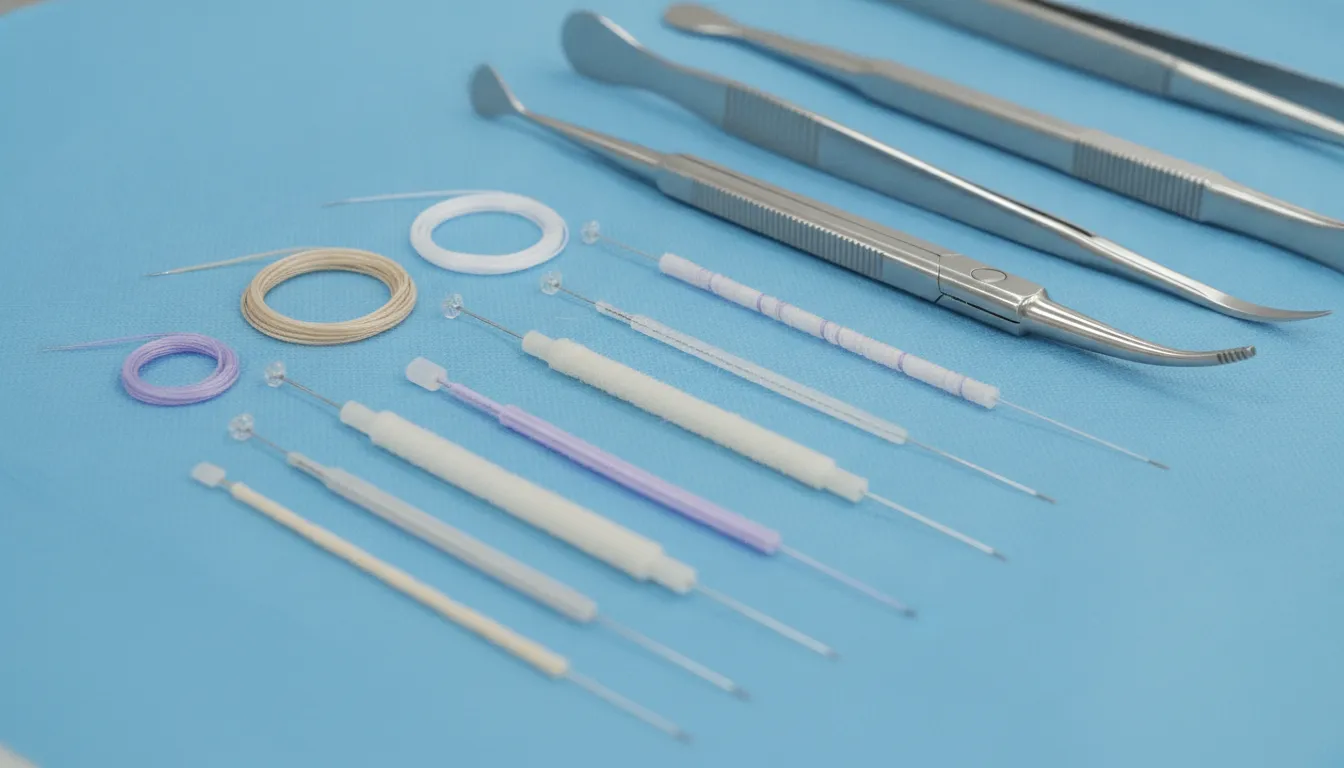
Dental professionals should avoid using "dissolve" as if it describes one instant. A material may first lose meaningful tensile strength, then soften and fragment, and finally be absorbed. The wound must gain sufficient stability before the suture stops providing useful support. This distinction helps teams explain why a small remnant can remain after the wound looks closed.
What affects how quickly oral sutures dissolve?
Material choice is the primary driver, but tissue health, wound tension, saliva exposure, inflammation, plaque accumulation, and patient behavior can change the observed timeline. Clinicians should evaluate the suture and the wound together rather than judging healing by thread visibility alone.
Procedure and wound tension
A simple extraction site, periodontal flap, graft site, and implant procedure do not place identical demands on wound closure. Tissue thickness, flap design, edema, and tension can affect how the material performs. Closure should approximate wound edges without excessive tension, following established surgical principles and the clinician's judgment.
Oral environment and tissue response
The oral cavity exposes sutures to moisture, movement, food debris, and a complex microbiome. Braided and monofilament constructions also interact differently with the environment. A clinical review in PubMed Central discusses tissue reactions and bacterial adherence across commonly used materials.
Patient-specific factors
Healing capacity, oral hygiene, smoking, systemic health, and adherence to post-operative instructions can influence wound status. These factors do not simply make a thread dissolve faster or slower. Instead, they change the context in which the material is functioning. A patient with worsening symptoms needs assessment even when the suture's timing appears typical.
How should dental teams monitor healing?
At follow-up, assess wound-edge approximation, tissue color, swelling, drainage, bleeding, pain trajectory, and suture integrity. Normal softening or loosening can occur as absorbable material loses strength. Persistent or worsening clinical signs should guide reassessment, not the calendar alone.
A practical monitoring plan starts before the patient leaves. Record the material, size, procedure, and intended follow-up interval. Explain what the patient may notice as swelling subsides and the thread begins to soften. Clear instructions reduce avoidable calls while helping the team identify genuine concerns earlier.
Expected observations
- Gradual reduction in post-operative discomfort and swelling.
- Wound edges that remain approximated as the suture loosens.
- Softening or loss of small exposed thread segments.
- No new drainage, persistent bleeding, or spreading swelling.
Findings that warrant reassessment
- Increasing pain after initial improvement.
- Purulent drainage, foul taste, fever, or spreading swelling.
- Persistent bleeding or visible wound separation.
- A retained segment that traps debris or irritates tissue.
- Early suture failure while wound support is still needed.
Patients should be told not to trim, pull, or replace suture material themselves. The treating dental professional can determine whether observation, removal, replacement, or another intervention is appropriate.
Use SurgiMac's suture size guide to support consistent material selection and team training.
How can patients support healing while sutures dissolve?
Patients should follow the treating clinician's written instructions, protect the surgical site, maintain the recommended hygiene routine, and avoid pulling at loose sutures. Diet, rinsing, brushing, and activity guidance must be tailored to the procedure and the patient's clinical needs.
Post-operative guidance should be specific enough to follow and conservative enough to protect the site. Generic advice cannot account for every extraction, graft, implant, or periodontal procedure. When instructions differ from this educational overview, the treating clinician's directions take priority.
- Protect the site. Avoid probing the wound with fingers, the tongue, or other objects.
- Follow the prescribed hygiene plan. Explain when and how to brush, rinse, or use any recommended antimicrobial product.
- Use the recommended diet. Softer foods may reduce mechanical stress during early healing when clinically appropriate.
- Take medications only as directed. Reinforce the prescribed schedule and relevant precautions.
- Know when to call. Give the patient the practice's contact instructions and clear warning signs.
The Harvard School of Dental Medicine provides an example of oral surgery post-operative instructions. Practices should adapt their own instructions to the procedure, material used, and patient risk profile.
Choosing absorbable sutures for dental procedures
Choose a suture by matching the wound's required support period with the material's strength-retention profile, handling, diameter, and tissue response. The best option is procedure-specific. Dental teams should follow product instructions and standardize stocking around their common clinical workflows.
Selection should begin with the tissue and procedural objective, not a preferred thread in isolation. Consider how long wound support is needed, whether removal would be difficult, how the material handles in the intended site, and what size provides adequate strength without unnecessary tissue burden.

Match material to clinical support needs
Fast-healing mucosa may need a different support profile than a site under greater tension or a procedure involving grafted tissue. The material should maintain useful strength during the critical early interval without remaining longer than necessary. Manufacturer specifications are essential when comparing products.
Standardize sizes and inventory
Maintaining a focused range of commonly used sizes can improve setup consistency and reduce waste. Team protocols should identify preferred materials and sizes for routine procedures while preserving options for case-specific needs. SurgiMac's professional MacSuture collection gives dental buyers a product-focused path for reviewing wound-closure supplies.
Review MacSuture products and equip your practice for efficient, precise wound closure.
Build a consistent suture protocol for the practice
A practical suture protocol records the preferred material, size, needle type, expected support interval, and follow-up plan for common procedures. Standardization supports efficient setup and clearer patient instructions. It also preserves clinician discretion for individual cases.
A documented protocol can turn material selection into a repeatable clinical workflow. Begin by listing the procedures the practice performs most often. For each procedure, record the usual tissue characteristics, closure goal, preferred material, alternate material, common sizes, and circumstances that require a different approach. Review each choice against its current product instructions.
Connect product selection with follow-up
The follow-up plan should reflect the material and the case. When the team knows the expected support period, it can give patients a clearer answer about what they may notice and when to contact the practice. The clinical record should make it easy for any team member to identify the material used if the patient calls about a loose or retained strand.
Train the entire dental team
Assistants and front-office staff often receive the first post-operative questions. Training should help them distinguish routine questions from symptoms that require clinician review. Staff can reinforce written instructions, but diagnosis and treatment decisions belong with the treating professional. Periodic protocol reviews also help the practice update stocking decisions as procedures and product preferences change.
Inventory reviews should compare usage, expiration dates, and the range of cases treated. A small, deliberate assortment can simplify setup. Access to appropriate alternatives remains important when a routine selection does not suit a particular wound or patient.
Frequently asked questions
What helps mouth stitches dissolve faster?
Patients should not try to speed up breakdown. Pulling, cutting, or manipulating a suture can disrupt the wound. The safest approach is to follow the treating clinician's instructions and request an evaluation if the material becomes irritating or persists beyond its expected interval.
Can a patient eat normally with dissolvable stitches?
Diet guidance depends on the procedure and site. Softer foods may be recommended during early healing, and chewing directly over the surgical area may need to be avoided. The treating practice should provide case-specific instructions.
How can a clinician tell whether oral sutures are dissolving normally?
Normal changes may include gradual softening, loosening, and loss of exposed segments while the wound remains stable. The full clinical picture matters. Increasing pain, drainage, bleeding, swelling, wound separation, or early failure warrants reassessment.
What if absorbable sutures do not dissolve?
Retained material should be assessed in context. If the wound has healed but a segment traps debris or irritates tissue, clinician-directed removal may be appropriate. Persistent material with concerning symptoms needs prompt evaluation.
Support reliable oral-surgery workflows with MacSuture
Knowing how long does it take sutures to dissolve in mouth tissue helps dental professionals select materials, set expectations, and recognize when follow-up is appropriate. SurgiMac supplies dependable clinical tools and wound-closure products that support precise, efficient care.
Shop the MacSuture collection for professional dental suture options.
Tags
Blog posts
-

, by SurgiMac A Clinician's Guide to Absorbable Suture Material
-
, by SurgiMac A Clinician's Guide to Dental Composite Resin Kits
-
, by SurgiMac How to Disinfect with Metrex CaviWipes Correctly
