
Identifying Counterfeit Dental Surgical Blades
- , by SurgiMac
- 16 min reading time
Identifying counterfeit dental surgical blades: a dental checklist for packaging, labels, suppliers, traceability, and safe escalation.
Dental surgical blades are small, but a purchasing check should go beyond confirming the blade size. Before clinical use, compare package details, labels, purchase records, and supplier information. One irregularity alone does not prove fraud. Surgical blade quality and handling also depend on clear product identity and careful receipt checks.
Identifying counterfeit dental surgical blades means checking product identity, packaging, traceability, and supplier records, then verifying concerns through reliable channels. A mismatch warrants review, but does not prove fraud. FDA's Unique Device Identification system helps identify medical devices through distribution and use, subject to applicable exceptions and alternatives. FDA UDI Basics
That distinction helps a practice protect patients while preserving evidence and avoiding unsupported accusations. A useful review starts by defining what packaging and records can show, and what still needs confirmation from the labeler, manufacturer, or regulator.
Explore MacCut surgical blades
What Does Identifying Counterfeit Dental Surgical Blades Actually Mean?
Identifying counterfeit dental surgical blades means documenting inconsistencies and seeking confirmation from the responsible manufacturer or supplier, not making a verdict from appearance alone. A damaged seal, mismatched label, or unusual package can warrant review, but each is a warning signal. Authentication may require traceability records and assessment by parties with product and supply-chain information.
That distinction matters because an irregularity can have more than one explanation. A package may be damaged in transit. A label may also be altered during legitimate relabeling. A product can have a quality or labeling problem without being counterfeit. Conversely, a convincing appearance does not establish that a blade is genuine. Visual checks identify concerns, but they cannot prove authenticity.
The FDA includes suspected counterfeit products among medical-device product problems, alongside concerns such as defective components, poor packaging or product mix-ups, malfunctions, and labeling issues. Its example of a suspected counterfeit describes comparing the vial, label, and packaging with other lots. That is an example of an investigation trigger, not a universal test or a checklist that can confirm counterfeiting. See the FDA guidance on reporting medical-device product problems.
For a dental practice or purchaser, ask a practical question. Is there a specific, documentable discrepancy to check before stock is accepted or used? An appearance check cannot prove that a blade is counterfeit. Keep the initial assessment factual and proportionate:
- Record what differs, such as packaging condition, label information, or lot details, rather than labeling the product counterfeit.
- Compare like with like where possible, using another package or lot of the same product and information from a reliable source.
- Preserve the packaging and purchase documentation so the supplier or manufacturer can investigate the concern.
A code or database match can support a consistency check, but it is not proof that the physical item is authentic. Likewise, a single discrepancy should prompt verification, not an accusation against a seller or manufacturer. Treat uncertainty as a reason to pause and gather evidence through appropriate supply-chain contacts; reserve a counterfeit determination for confirmation supported by that review.
What Should You Check on the Package and Label?
Inspect the unopened package before the blade enters the clinical workflow. The aim is to identify inconsistencies that warrant follow-up, not to authenticate a device by appearance alone. Packaging quality can be affected during manufacturing, shipping, or storage, and a single visual clue does not prove that a product is counterfeit.
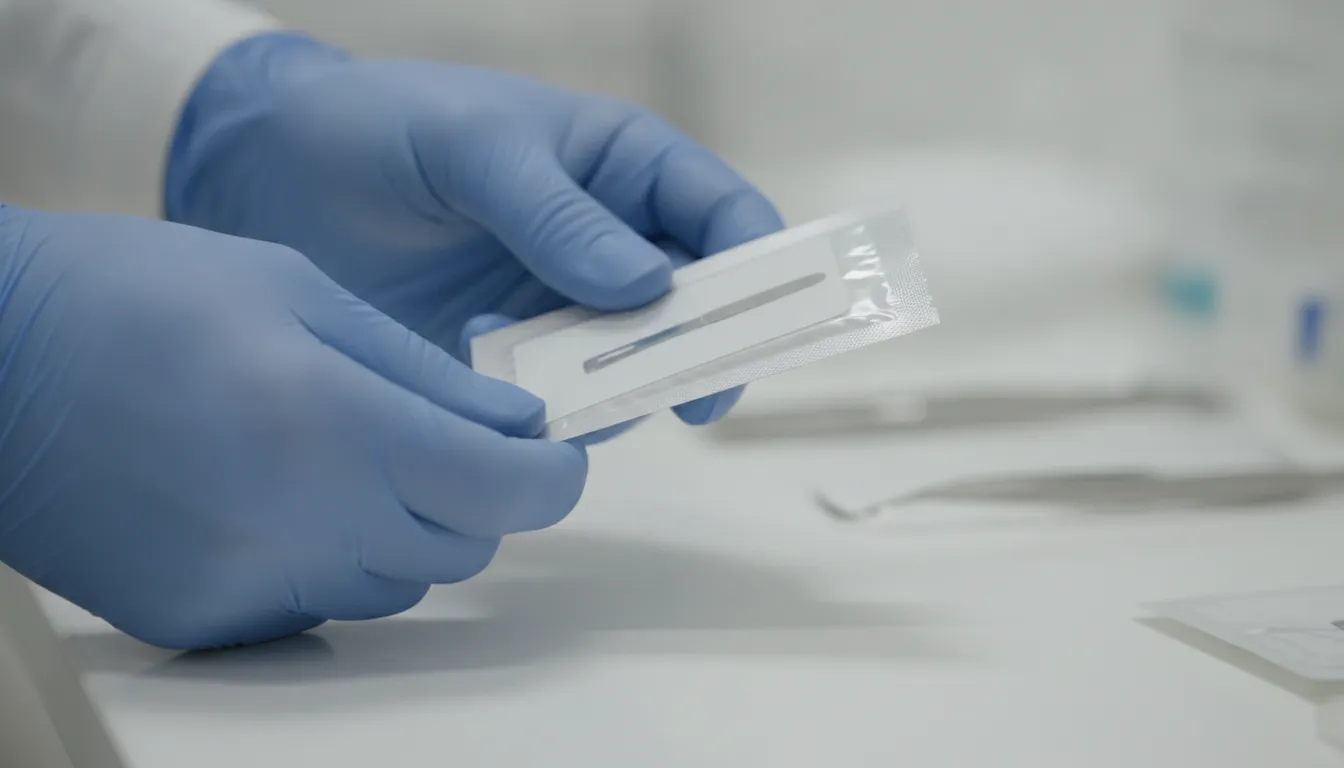
- Check the sterile barrier and seal. Look for punctures, tears, moisture, an open or uneven seal, or signs that the package may have been opened or resealed. If the packaging is compromised, do not treat the item as sterile; follow your practice's handling and safety procedures.
- Compare product and packaging details. Confirm that the blade type, size or model, quantity, and other identifying details match the purchase record and the intended product. Where the device is in an inner package within an outer carton, compare the details shown on both. A mismatch deserves investigation, but could have more than one explanation.
- Review the label for legibility and consistency. Note spelling or printing irregularities, over-labeling, alterations, or obscured information. Check the manufacturer or labeler, and review lot, batch, or date information when shown. Requirements vary by device and package, so a missing field alone does not establish a problem.
- Observe the product only when appropriate. Never open a sterile package just to compare blades. If a package is already open under appropriate procedures, note unexpected differences in finish, shape, or condition against a reliable reference.
The FDA lists suspected counterfeit product, defective components, poor packaging or product mix-ups, device malfunctions, and labeling concerns among medical product problems. Its examples describe examining a suspect item's label and packaging and comparing packaging quality with other lots. These are reasons to document and investigate a concern, not universal diagnostic criteria or proof about a particular seller or brand. See the FDA's Product Problems guidance.
Keep the package intact when possible and photograph the outer and inner labels, seal, lot information, and any discrepancy. For more on sterile packaging and selection, see this guide to sterile surgical blade selection. If details do not align, hold the product for review and verify it through appropriate supplier or manufacturer channels rather than drawing a conclusion from one clue.
| Check | Compare | Action |
|---|---|---|
| Seal | Package tears, moisture, or uneven seals | Review integrity |
| Product | Blade model, size, and order | Confirm shipment |
| Label | Labeler, lot, and dates when shown | Verify details |
These checks identify questions for follow-up. None confirms counterfeit status by itself.
How Does Identifying Counterfeit Dental Surgical Blades Use UDI Checks?
A Unique Device Identifier (UDI) can help a dental practice compare device-label information and maintain a traceable purchasing record. It is a useful cross-check, not a stand-alone counterfeit test. FDA UDI requirements include exceptions and alternatives, so do not assume that every blade or package must display a UDI in the same way. Check the device-specific requirements and ask the manufacturer or supplier about a label that appears inconsistent.
Separate the DI from the PI
A UDI generally includes a Device Identifier (DI) and, when applicable, a Production Identifier (PI). The DI is the fixed portion that identifies the labeler and a specific device version or model. The PI is conditional: when included, it may identify a lot or batch, serial number, expiration date, or manufacturing date. The absence of one of these PI details alone does not establish that a product is counterfeit. See the FDA's UDI Basics for the identifier components and exceptions.
Where UDI labeling applies, the identifier is generally provided in readable plain text and a machine-readable format using automatic identification and data capture (AIDC), such as a barcode. Compare the printed characters with the data scanned from the package. A mismatch, unreadable code, or code that points to a different model is a reason to pause and investigate. It is not proof by itself that the blade is counterfeit.
Cross-check the device record, then follow the lot trail
Search the DI in AccessGUDID, the FDA's public device-information database. Check whether the record's labeler and device description are consistent with the package. A record that does not appear, or details that do not align, warrants follow-up with the supplier or labeler using independently verified contact information.
Keep in mind that GUDID contains the DI, not the PI. It cannot confirm a particular package's lot, serial number, or expiration date. Compare any PI printed on the package against the accompanying documentation and purchase records, and ask the supplier to explain discrepancies.
For a database search, use the DI portion rather than copying the entire encoded UDI string. AccessGUDID's Basic Search instructions explain how to isolate the DI in different formats. If the search result is unexpected, first confirm that the DI was extracted correctly before escalating the mismatch.
A database match supports consistency between the submitted device record and the identifier you searched. It does not authenticate the physical blade, sterile barrier, or package, and a code can be copied onto a different product. Consider UDI checks alongside packaging, labeling, product condition, and supplier documentation. If concerns remain, set the lot aside from clinical use while the practice follows its quality and safety procedures.
How Do You Evaluate a Dental Supply Supplier?
A careful supplier review looks beyond a storefront or a familiar brand name. Build a repeatable procurement check that helps your practice understand who sold the blades, what product was supplied, and how to follow up if questions arise. These checks support traceability; they do not authenticate a blade by themselves.
Confirm seller identity and product provenance
Before ordering, verify the supplier's business identity and use contact details found independently. Ask who manufactured or labeled the product. Request documents that connect the item or model to its stated labeler. FDA says a labeler may be the manufacturer or another entity that applies or changes a device label. A distributor that only adds contact information is not necessarily the labeler. Compare the labeler's identity with product information. When available, check the device record in AccessGUDID. A database match supports consistency, not proof that the physical blade is genuine. See FDA UDI Basics.
For practical questions on seller checks and online purchasing, see SurgiMac's guide to buying dental supplies online. Confirm that product descriptions, labeling, and order documentation refer to the same blade type and model. For product context, SurgiMac's MacCut surgical blades collection shows the collection offered on its storefront; a collection listing is not a substitute for checking the actual package and purchase records.
Keep a complete purchase trail
Retain the order confirmation, invoice, supplier contact details, product name or model, quantity, and purchase and receipt dates. Save manufacturer documentation. At receipt, record lot or batch and date information when shown. Photograph outer packaging and labels if a discrepancy needs review. If a supplier cannot explain a mismatch between the listing, invoice, and received product, pause routine use of affected stock under your practice's quality and safety process. One inconsistent record calls for follow-up, not an automatic conclusion about authenticity.
Use consistent intake controls
Apply the same receiving procedure to each shipment. Compare the product model, package, and identifiers with the purchase record. Note damaged seals, altered labels, or substitutions. Track quantities by lot when that information is available. Store records so staff can connect stock to the order. Unusual availability, incomplete product descriptions, or pricing that seems inconsistent are prompts to ask questions. They are not proof of counterfeiting. Keep verified supplier and manufacturer contact details with the purchasing record. Staff can use them to escalate concerns. These are prudent internal controls, not a claim that a specific format is legally required.
What Should a Practice Do When a Blade Lot Raises Concern?
A packaging or labeling discrepancy is a reason to investigate, not a conclusion that a blade is counterfeit. Use a consistent process that protects patients, preserves useful evidence, and avoids unsupported accusations.
- Pause use and segregate the affected stock. Follow the practice's safety and incident procedures to remove the questionable lot from clinical use while the concern is reviewed. Keep it separate from acceptable inventory and make its status clear to staff. If a device has already been used or a safety event has occurred, promptly follow the practice's escalation process.
- Preserve the evidence. Retain the original package and labeling, including any inserts, seals, lot or batch details, expiration date, and available device identifiers. Record the purchase date, supplier, invoice or order reference, number of units affected, and what prompted the concern. Take clear photographs before packaging is altered further. Note relevant performance or safety observations factually, without guessing at cause.
- Verify through independent contact channels. Contact the supplier and manufacturer or labeler using independently obtained details. Avoid relying only on a questionable label or message. Provide photos, identifiers, and purchase documents. Ask them to review the specific lot and explain any package or label differences. Record whom you contacted, when, and the response. A preliminary response may not resolve the concern, so document any follow-up.
- Document the decision and notify the appropriate practice lead. Share the concern and supporting records with the person responsible for safety, infection prevention, procurement, or incident management under your practice's procedures. Record the disposition of the stock, the basis for that decision, and any next steps. Keep the account factual and avoid describing the product as counterfeit unless that has been established.
- Consider FDA reporting when appropriate. FDA accepts reports about concerns including suspected counterfeit products, product quality, packaging, labeling, performance, and safety through its Product Problems guidance and MedWatch pathway. Healthcare professionals may submit voluntary reports, including for product-quality issues; see FDA's Medical Device Reporting (MDR): How to Report Medical Device Problems. Certain manufacturers, importers, and qualifying device user facilities have mandatory reporting obligations for specified events. Applicability depends on the reporter and circumstances, so route a possible reporting obligation to the practice's responsible safety or compliance lead. An FDA report records a concern for review; submitting one does not establish that a product is counterfeit or prove causation.
Preserve a copy of any report and related correspondence with the lot records. This is operational guidance, not legal or clinical advice.
What Receiving Checklist Can Dental Teams Use for Each Shipment?
A consistent receiving routine helps staff catch discrepancies early and preserve the information needed for follow-up. Assign the check to designated staff, and keep the record with the purchase documentation. Inspect the shipping carton and sterile unit packaging externally; do not open a sterile package as part of receiving inspection.
- Check the order: Compare the purchase order with the shipment for product name, SKU or model, and quantity. Note substitutions or short shipments.
- Inspect the exterior: Check whether the shipping carton and sterile unit packages appear intact. Record visible damage, compromised seals, or signs of alteration without treating one irregularity as proof of counterfeiting.
- Compare product identity: Match the manufacturer or labeler and the product description on the package with the order and available purchasing records.
- Reconcile lot and date details: Record legible lot or batch and date information when provided, then compare it with accompanying records. Escalate missing, inconsistent, or unclear details for review.
- Check identifiers when applicable: If a UDI is present and applicable, compare the readable text with the encoded value using the practice's usual process. FDA guidance recognizes exceptions and alternatives, so do not treat the absence of a UDI by itself as evidence of a counterfeit device. See the FDA UDI guidance.
- Document discrepancies: Photograph the relevant carton, package, or label, and note the shipment date, affected quantity, and purchase reference.
- Hold questions for review: Segregate items with unresolved concerns from routine stock and refer them to the designated staff member under the practice's established process.
- Record the disposition: Document the decision, any follow-up, and the name or role of the staff member who authorizes release into inventory.
Review the checklist periodically and after a receiving issue, supplier change, or workflow change. Update it to reflect the practice's records and escalation process. The checklist improves consistency and traceability; it cannot authenticate a blade on its own. A concern should be assessed with the supplier or manufacturer using independently verified contact information.
Frequently Asked Questions
Does a UDI prove that a surgical blade is genuine?
No. A Unique Device Identifier (UDI) supports device identification and traceability, but it does not authenticate the physical package or blade. When a UDI is present, compare its device identifier and any production details, such as lot or expiration date, with the label and FDA's AccessGUDID. Treat a mismatch as a reason to investigate, not proof of counterfeiting. UDI requirements have exceptions, so an absent code alone does not establish a problem.
What should we do if a sterile blade package is damaged?
Keep the unit out of clinical use if its sterile barrier is torn, punctured, wet, or otherwise compromised. Separate the affected stock, retain the packaging, and photograph the damage and label. Record the product and lot details, then contact the supplier or manufacturer using independently verified contact information for instructions. Damage can warrant review, but it does not by itself establish that a product is counterfeit.
Can a dental practice report a suspected counterfeit blade to the FDA?
Yes. The FDA accepts reports about suspected counterfeit products and other medical-device quality or safety problems through its product-problem reporting guidance, including MedWatch. Healthcare professionals can also submit voluntary reports about significant adverse events or product-quality issues. Include the facts you observed and avoid presenting suspicion as a confirmed finding.
What procurement records should we keep for a questionable lot?
Keep the purchase order or invoice and supplier details. Save package and label photos, device identifiers, and lot or date information. Note purchase and discovery dates, affected quantities, and supplier or manufacturer correspondence. If a safety or performance issue occurred, record what happened and which units were involved. This is a prudent traceability practice, not a claim that every item is legally required in every case.
Choose Dental Surgical Blades Through a Clear Procurement Process
Documented product details and a traceable purchasing process can help your team review blade identity consistently. To compare the available options, review SurgiMac's MacCut surgical blade collection and its product details as part of your procurement review.
Tags
Blog posts
-
, by SurgiMac A Clinician's Guide to Absorbable Suture Material
-
, by SurgiMac A Clinician's Guide to Dental Composite Resin Kits
-
, by SurgiMac How to Disinfect with Metrex CaviWipes Correctly
