MacPrevent 5% Sodium Fluoride Varnish with TC...
SKU 90002-Bx
Use this surgical instrument care guide to build a consistent cleaning, inspection, packaging, sterilization, and storage workflow for dental instruments.
A reliable surgical instrument care guide helps a dental team turn manufacturer instructions and infection-prevention policies into a repeatable process. Cleaning, inspection, packaging, sterilization, and storage each matter; a missed step can undermine the next one. This guide outlines a practical workflow for reusable instruments and the supply decisions that support it. Always follow the instrument and sterilizer manufacturers’ current instructions for use (IFUs), applicable regulations, and your practice’s infection-prevention policies.
Review surgical blades and instruments
Instrument reprocessing is a sequence, not a single sterilizer cycle. The team needs a defined path from point of use through transport, cleaning, inspection, packaging, sterilization, and protected storage. Assigning roles and documenting the process helps staff follow the same steps across shifts.
Begin with the device IFU. Reusable instruments can differ in disassembly, cleaning method, water quality, lubrication, packaging compatibility, and sterilization parameters. A general workflow is a planning aid, not a substitute for those device-specific requirements. If instructions conflict or are unclear, pause and resolve the question with the manufacturer and the person responsible for infection prevention before processing.
| Stage | Primary task | What to verify |
|---|---|---|
| Point of use and transport | Remove gross soil as directed and contain instruments for transport | Use the IFU and exposure-control procedures; prevent drying when instructions call for it |
| Cleaning | Manually clean or use an approved automated process | Correct detergent, device compatibility, cycle, loading, and access to hinged or narrow areas |
| Inspection and preparation | Rinse, dry, inspect, assemble, and lubricate when indicated | Cleanliness, function, corrosion, damage, and IFU preparation requirements |
| Packaging and sterilization | Package compatible sets and run the validated cycle | Packaging compatibility, load configuration, cycle parameters, and monitoring records |
| Storage and release | Protect processed packs and release according to policy | Package integrity, labeling, storage conditions, and required documentation |
At the point of use, follow the device IFU and practice protocol for removing visible soil and preparing instruments for transport. Do not improvise a soak or chemical treatment. An incompatible solution or prolonged exposure may damage an instrument, and dried debris can make subsequent cleaning more difficult.
Contain instruments in a designated, leak-resistant transport container and move them to the reprocessing area using the clinic’s exposure-control procedures. Keep contaminated instruments separate from clean supplies and avoid carrying them uncovered through patient-care areas. The person receiving the load should know what it contains and whether items need disassembly.
Include transport containers and cleaning tools in procurement planning. Select items that are compatible with the workflow, easy to clean, and sized for the instrument load. For clinicians reviewing blade options, the scalpels and blades collection provides a place to compare products; instrument care requirements still depend on the individual device IFU.
Cleaning removes soil and is essential before sterilization. Choose a manual or automated method only when it is permitted by the instrument manufacturer and supported by the practice’s validated process. Automated equipment can standardize parts of a workflow, but the load must still be prepared and placed as directed. Manual cleaning requires appropriate brushes, detergent, PPE, and technique.
Cleaning equipment and accessories should fit the instruments being processed. Procurement decisions should be tied to the reprocessing function rather than choosing a product simply because it is available. Check compatibility and instructions before making a substitution.
The Association of periOperative Registered Nurses describes instrument cleaning and care as an organized process with guidance on cleaning, decontaminating, and transporting instruments. Consult the applicable professional guidance alongside manufacturer IFUs and local requirements: AORN guideline for care and cleaning of surgical instruments.
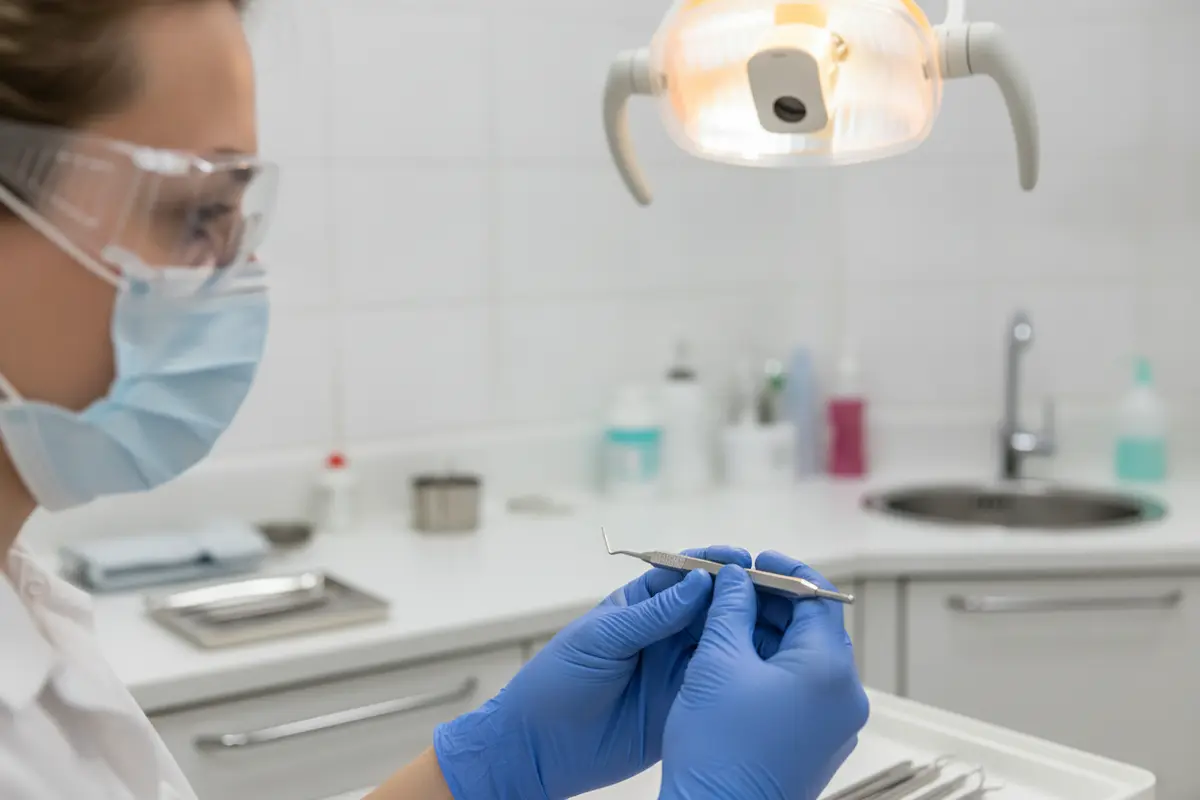
After cleaning, rinse and dry as directed, then inspect each instrument under adequate light. Look for residual soil, staining, corrosion, cracks, loose joints, misalignment, and other damage. Check function, including smooth opening and closing of hinged instruments and secure movement of any locking mechanism. Use magnification when the instrument design or practice protocol calls for it.
If an instrument is not visibly clean, do not package it. Return it to the appropriate cleaning step. If it is damaged or does not function as intended, remove it from the usable set and follow the practice’s repair or replacement process. A tool that looks acceptable at a glance may still be unsuitable if its cutting edge, hinge, or working end is compromised.
Lubricate only instruments for which the manufacturer specifies lubrication, using a compatible product and process. Avoid relying on appearance alone to determine whether an instrument is ready. Include inspection criteria in staff training so team members know what requires recleaning, maintenance, or removal from service.
Choose packaging that is compatible with the instrument and the sterilization method. Follow the packaging manufacturer’s instructions for sealing, labeling, and placement. Assemble sets so sterilant can reach all surfaces as required; do not crowd a pouch or tray beyond its stated capacity. Keep sharp points protected in a way that remains compatible with the packaging system and does not obstruct processing.
Use a sterilization cycle that is authorized by the instrument and sterilizer IFUs. Cycle selection, exposure parameters, drying, and load configuration are equipment- and product-specific. Do not substitute a familiar cycle for a specified one, and do not release a load until the practice’s required monitoring and documentation steps are complete.
Maintain required records for each load, including the information your policy and applicable requirements call for. Review monitoring results before release, and follow established procedures for a failed indicator, wet pack, torn package, or other process concern. Quarantine affected items as directed and investigate the cause before using them.
Dental buyers should compare supplies by compatibility, instructions, package configuration, and fit with the practice’s documented workflow. A low unit cost is not useful if the product is incompatible or staff cannot use it consistently. Build a purchasing checklist around the items the practice actually reprocesses and the equipment already in service.
For cutting procedures, review blade type and compatibility before ordering. SurgiMac’s scalpels and blades collection is a place to assess options. For precision instrument work, compare the CA shank adjustment kit and verify intended use and compatibility before purchase. Product selection does not replace reprocessing instructions or professional judgment.
Most process improvements begin with making the correct sequence easy to follow. Post current, approved workflow instructions at the point of use and in the reprocessing area. Train new staff before they handle instruments independently, and periodically review competency in cleaning, inspection, packaging, and documentation.
When an error occurs, correct the immediate issue and identify why it happened. A short review can reveal whether instructions were unclear, supplies were unavailable, equipment needs attention, or training should be refreshed. Do not change a validated process informally to save time.
Before placing an order, ask for clear identification of the product, unit of sale, and relevant compatibility information. Confirm whether the item is reusable or single-use and review its applicable IFU. For a product that supports cleaning or sterilization, verify that its stated use aligns with the practice’s method and equipment. If a technical question remains, request the manufacturer’s documentation rather than relying on a general product description.
Keep a record of approved products and any device-specific restrictions. This helps staff avoid substitutions that change the process. A supplier can help a practice locate product information, but the dental team remains responsible for choosing and using products in accordance with manufacturer instructions and applicable requirements.
Explore SurgiMac’s MacCut selection
No. Cleaning is a distinct step that removes soil before sterilization. Follow the device and equipment IFUs and the practice’s reprocessing procedures.
No. Instruments can have different cleaning, disassembly, lubrication, packaging, and cycle requirements. Use the current IFU for each device and avoid assuming a general process applies to every item.
Do not package the instrument. Return it to the cleaning step according to the IFU and practice protocol, then inspect it again before preparation.
Follow the manufacturer’s criteria and practice policy when an instrument is damaged, corroded, misaligned, or no longer functions as intended. Segregate it from usable instruments pending the appropriate repair or replacement decision.
A dependable instrument-care process depends on clear IFUs, compatible supplies, trained staff, and documented checks at each stage. Review the workflow whenever devices, equipment, or approved supplies change, and keep patient-care decisions grounded in current manufacturer instructions and applicable requirements.