
Micro Single Edge Scalpel Blade: Dental Guide
- , by SurgiMac
- 14 min reading time
Learn how dental professionals choose a micro single edge scalpel blade. Match profiles to handles, manage sharps safely, and plan purchasing.
In microsurgical dental work, a small blade is not simply a smaller version of a standard scalpel. Edge profile, handle fit, intended tissue interaction, and the team's sharps workflow all influence whether the instrument supports controlled dissection. Selection should begin with the procedure and the manufacturer's instructions for use, not the blade label alone.
A micro single edge scalpel blade is a precision cutting component used for controlled tissue dissection when a compact profile and compatible handle support the planned technique. The correct choice depends on the blade shape, edge design, handle or one-piece format, intended use, and safe disposal requirements.
Those decisions become clearer when the blade's working profile is matched to the access, incision pattern, and level of control required. The following selection framework starts with compatibility and clinical purpose before addressing handling and procurement.
How to Select a Micro Single Edge Scalpel Blade
A micro single-edge scalpel blade is a narrow surgical cutting component designed for controlled tissue dissection where a smaller working profile may be appropriate. For a dental practice, selection should begin with the blade's edge and profile, then move to the handle or unit format. The goal is not to choose the smallest-looking blade, but to match the instrument configuration to the procedure, clinician training, and manufacturer instructions for use.
Start with the blade profile
"Micro" describes the scale and intended precision of the blade, while "single edge" identifies the cutting geometry. Those terms do not, by themselves, specify the tip shape, curvature, length, or handle connection. Several scalpel blade types are available, so buyers should compare the actual profile and intended application rather than rely on a generic micro label. The University of Washington describes the scalpel as a precise tool for tissue dissection and notes that blade selection varies by design and use. Review the clinical handling reference when developing internal selection guidance.
For broader context, SurgiMac's microsurgical blade selection resource can help distinguish general microsurgical options from this narrower single-edge category. A separate scalpel blade size guide is useful when the purchasing team needs to compare common blade dimensions, shapes, and compatible handles.
Confirm the handle and unit format
A scalpel commonly combines a disposable blade with a reusable handle, although one-piece disposable units are also used. That distinction affects ordering, setup, storage, and replacement workflow. Before placing an order, verify whether the listing is for a blade only, a handle-only instrument, a blade-and-handle combination, or a complete one-piece unit. Catalogs may present handle-only products and combo packs as separate product types, so do not assume that a pictured handle is included.
Finally, confirm connection requirements in the product documentation. A micro blade that appears suitable by size may not be appropriate for a particular handle or clinical workflow. Record the exact product description and pack format in the practice's purchasing system, then have the responsible clinician confirm that the selected configuration fits the intended procedure.
What Makes a Micro Single-Edge Blade Different?
A micro single-edge blade is defined less by one universal shape than by the relationship between its cutting edge, profile, working radius, and handle. A low-profile design can support access in a confined field, while an angled blade may change the approach to the tissue. These features should be matched to the procedure, clinician training, and manufacturer instructions for use (IFU), not selected from a name alone.
Product listings for micro blades illustrate several useful selection dimensions. An angled profile may be listed at 10 degrees, while another option may be described as a bendable straight blade. Bendability can affect how the instrument is positioned, but it does not establish a universal technique or guarantee a particular cutting result. A wide straight profile may provide a different working surface from a narrow profile, so the clinician should confirm the intended application and tissue access requirements.
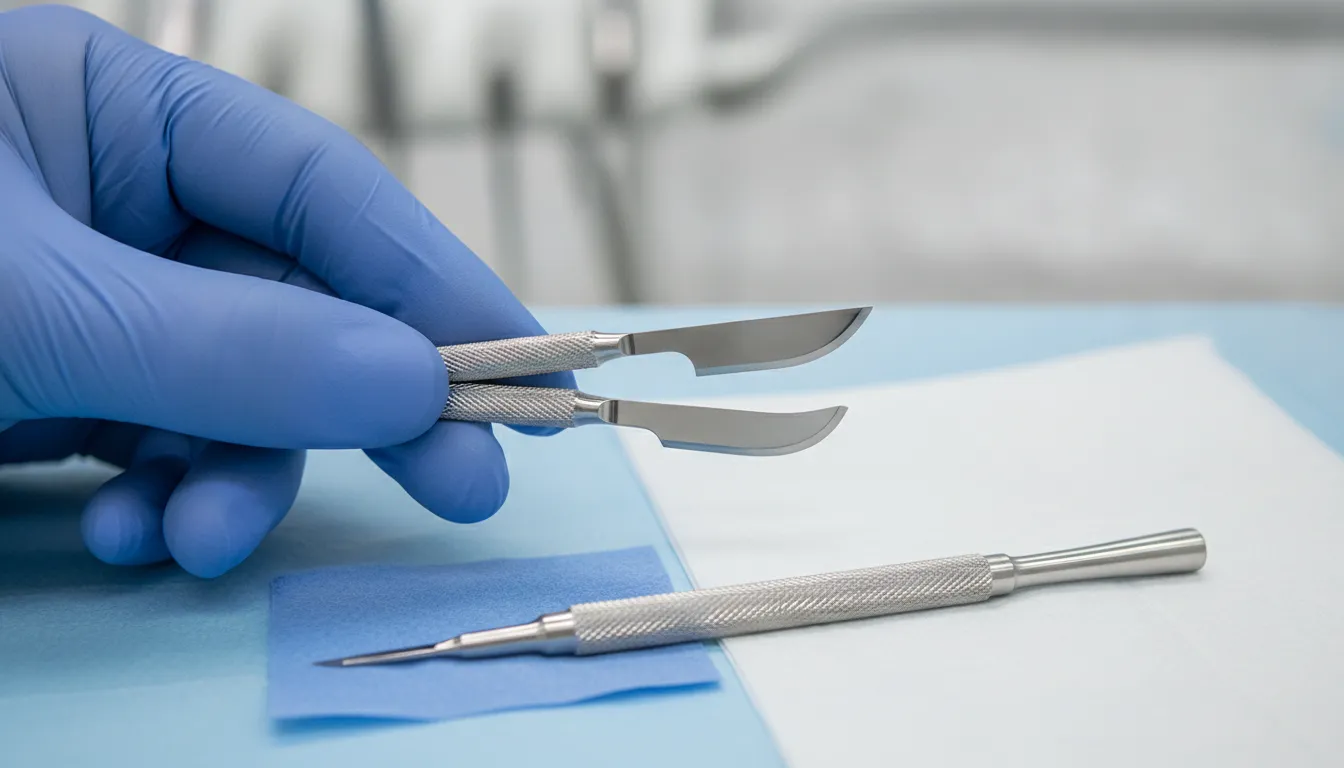
Terms such as full radius and side edge describe how the sharpened geometry extends around the blade. A full-radius edge may be relevant when the working tip and adjacent edge both contribute to controlled tissue contact. A side edge can influence how the blade enters or tracks through a narrow area. Neither term should be treated as a performance standard across manufacturers. Review the actual geometry, dimensions, and intended use in the product documentation.
Also confirm whether the selection is a blade-only format, a low-profile blade supplied for a specific dispenser, or a complete single-use handle-and-blade unit. Compatibility is not implied by a similar appearance. For a dental practice, the safest purchasing decision accounts for the blade profile, access angle, handle connection, packaging, and disposal workflow together. SurgiMac's MacCut surgical blades collection provides a starting point for reviewing available surgical blade options, while the specific product IFU remains the controlling source for use and compatibility.
Which Clinical Uses Fit Micro Scalpel Blades?
A micro single-edge scalpel blade fits clinical work where controlled tissue dissection and a defined cutting profile matter. The University of Washington describes the scalpel as a precise tissue-dissection tool. Compared with scissors or blunt dissection, it can cause less trauma to surrounding tissue when used with appropriate technique. That benefit is not universal or automatic; tissue characteristics, access, clinician control, and the procedure itself all influence the result.
Precision dissection and short, curved incisions
Micro blades may be appropriate for focused dissection in a confined field, especially when the operator needs a clear edge and a short cutting path. A smaller profile can support deliberate movement, but it should never be selected solely because it appears smaller or sharper. Match the blade geometry to the intended incision, the handle, and the technique taught for the procedure.
For short or curved incisions, the #15 blade is commonly identified as a suitable profile. Its rounded cutting edge can support controlled work where a long, straight incision is not the objective. Review the scalpel blade number guide alongside the procedure protocol, rather than treating a number as a standalone recommendation.
When a pointed profile supports puncture access
The #11 blade is commonly associated with stab incisions because its pointed triangular profile is designed for a focused entry point. That use differs from drawing a longer curved incision with a #15. The #11 blade is also extremely sharp and may pass deeper than intended, so depth control and tissue-plane awareness are essential. The compare blade tip profiles guide can help teams review the distinction before selecting supplies.
These examples are educational, not a substitute for procedure-specific training, institutional policy, or the manufacturer's instructions for use. Confirm the blade and handle combination, intended application, and any depth or access limitations in the applicable IFU before use.
How Do Blade Profile and Handle Compatibility Affect Control?
Control depends on more than the number stamped on a blade. Profile, cutting geometry, handle balance, and the intended motion all influence how a clinician positions the instrument and maintains a controlled path. A familiar blade format can still create workflow problems if the handle is not designed for that blade or if the connection is not confirmed by the manufacturer.
The examples below provide a practical orientation for dental teams evaluating blade formats. They are educational and not a substitute for procedure-specific training, the product instructions for use (IFU), or the manufacturer's compatibility documentation. For additional context on shapes, applications, and handles, review this scalpel blade size guide.
| Profile or format | Typical procedural consideration | Handle/workflow check |
|---|---|---|
| #10 | Commonly associated with large, straight incisions. Its broader profile may be considered when a longer, relatively linear cut is required. | Confirm that the handle securely accepts the #10 format and supports the grip and visibility required for the planned incision. Follow the product IFU. |
| #15 | Commonly used for short or curved incisions, where a smaller profile can support more localized cutting. | Check the handle interface, seating, and clinician grip before use. A comfortable, stable connection supports consistent wrist control without implying universal compatibility. |
| #11 | Commonly used for stab incisions. Its pointed shape requires particular attention to depth and the intended direction of entry. | Verify the handle is approved for the specific #11 blade. Confirm secure attachment and establish a controlled workflow before the blade enters the field. |
| Disposable blade with reusable handle | This format separates the cutting component from the instrument used to hold it. It can support established blade-selection and handle-management workflows. | Interchangeability must be confirmed by the manufacturer for the exact blade and handle combination. Do not assume that similar-looking fittings are compatible. |
| One-piece disposable unit | The blade and handle arrive as one assembly, which may simplify selection by removing a separate connection step. | Confirm the unit's intended use, packaging, and disposal process in the IFU. Do not substitute a separate handle or blade unless expressly authorized. |
Before ordering, match the blade profile to the procedural requirement, then verify the handle or one-piece format against current manufacturer documentation. This sequence helps prevent a purchasing team from treating a blade number as a complete compatibility specification.
How Should Dental Teams Handle and Dispose of These Blades?
Safe handling of a micro single edge scalpel blade depends on a controlled workflow from package opening through disposal. NIOSH identifies scalpel contact as a potential source of occupational exposure to bloodborne pathogens and describes sharps injuries as a serious hazard in healthcare settings. Teams should therefore establish role-specific procedures, use appropriate personal protective equipment, and follow the device instructions for use (IFU) and facility sharps policy.
The following sequence is a practical framework. It does not replace procedure-specific training, clinical judgment, or the manufacturer's instructions. For additional selection and practical handling context, review these sterile blade handling practices.
- Open the package at the point of use. Inspect the package and blade before opening. Do not use a blade with compromised packaging, visible damage, corrosion, or an uncertain identity. Keep the sharp edge directed away from the operator and nearby team members while removing it from its packaging.
- Use the blade with the confirmed compatible handle and a deliberate grip. Secure the blade according to the IFU, then verify that it is stable before approaching tissue. For the skin-incision technique described by the University of Washington, hold the scalpel perpendicular to the skin and use one smooth stroke rather than multiple small strokes. That description is technique-specific, not a universal prescription for every dental procedure or tissue plane. The UW resource presents the scalpel as a precise tissue-dissection tool, but clinical use still requires appropriate training and depth control.
- Transfer the sharp only through an agreed passing method. Avoid hand-to-hand passing whenever possible. Use a neutral zone or designated transfer tray if required by the procedure and facility policy. Announce the transfer clearly, keep the point and cutting edge visible to the receiving clinician, and do not leave an exposed blade hidden beneath gauze or instruments.
- Remove the blade without forcing or improvising. Use the handle-removal method specified by the manufacturer and maintain control of both components. A pointed #11 blade, for example, is described by the UW resource as extremely sharp and capable of being passed too deeply, so removal deserves the same deliberate attention as use. Do not bend, recap, or manipulate the blade in a way the IFU does not support.
- Dispose of the blade immediately in an approved sharps container. Place the exposed blade directly into a closable, puncture-resistant sharps container located within reach. Do not place it in regular waste, leave it on the instrument field, or attempt to retrieve it after disposal. Follow the facility's fill-level, closure, transport, and regulated-waste requirements. Disposable blades should not be assigned an unsupported reprocessing or sterilization step; follow the product labeling and institutional policy.
Document and report any sharps injury, near miss, or damaged package through the practice's established occupational-safety process. Consistent setup, transfer, removal, and disposal procedures reduce avoidable handling points without turning a general guide into a substitute for supervised clinical training.
What Should Practices Check Before Ordering?
Before adding a micro single edge scalpel blade to a dental supply order, match the product format to the procedure, instrument set, and handling process. Confirm the format before purchase. A careful review prevents receiving a blade-only pack when handles are needed, or a reusable workflow when the practice requires a single-use option.
Confirm the product and pack details
- Sterile status: Verify whether the blades are supplied sterile or non-sterile, and confirm that the stated status fits the intended clinical workflow. Do not infer sterility from sealed packaging alone.
- Single-use status: Determine whether the item is a disposable blade, a single-use handle, a reusable handle component, or a one-piece disposable unit. Follow the manufacturer's instructions for use rather than creating a reprocessing policy from a product description.
- Pack contents: Check whether the order contains heads only, blades with handles, or a complete combination pack. Example listings show that these formats can be sold separately, and pack quantities can vary.
- Compatibility: Confirm the exact handle connection and intended blade family with the manufacturer or IFU. Do not assume that an interchangeable-looking handle is compatible with every micro blade.
Build traceability into receiving and use
At receiving, inspect the seal, pouch, dispenser, and outer carton for punctures, moisture, crushed corners, or missing identification. Record the lot or batch information, manufacturer, product reference, and expiration details when provided. If packaging integrity or labeling is questionable, quarantine the item and route it through the practice's supply and clinical review process.
Also assess how the blade will move through staff workflow. Confirm that the storage location, dispensing method, sharps container, and staff training support the selected format. The IFU should be available to clinicians and purchasing staff, especially when the product has a specialized profile or handle requirement. MacCut surgical blades can be reviewed as part of that structured selection process, with final use based on the applicable product documentation and clinical training.
Review MacCut surgical blades for your practice
Frequently Asked Questions
What is the smallest scalpel blade?
There is no universal smallest scalpel blade. The practical choice depends on the blade's working profile, cutting edge, handle interface, access requirements, and the procedure-specific instructions for use. Compare dimensional specifications and compatibility rather than selecting by the word "micro" alone.
What are very small surgical blades called?
They may be described as micro scalpel blades, microsurgical blades, precision blades, or procedure-specific blades. These terms are not interchangeable guarantees of size or performance. Confirm the actual profile, intended application, packaging, and compatible handle with the manufacturer before ordering.
What is the difference between scalpel blade types?
Blade types vary by shape, edge geometry, tip, radius, flexibility, and handle format. For example, a #15 blade is commonly associated with short or curved incisions, while a #11 blade is commonly used for stab incisions. Select the profile for the planned tissue access and follow clinical training and the applicable IFU.
Are micro scalpel blades sharper than standard blades?
Do not assume that a micro blade is universally sharper. Sharpness, edge design, and cutting behavior depend on the specific product and its intended use. A #11 blade is described as extremely sharp in the University of Washington scalpel guide, which also cautions about inadvertently passing it too deep. Use controlled technique and follow the product IFU: University of Washington scalpel guidance.
Ready to Review MacCut Surgical Blades?
Choosing the right micro single-edge scalpel blade starts with matching the blade format, profile, and handle workflow to your clinical needs and purchasing requirements. Review SurgiMac's MacCut surgical blade collection to compare available options for professional dental and surgical supply needs. Review the MacCut collection and select the products that fit your team's procedure-specific requirements and manufacturer guidance.
Tags
Blog posts
-
, by SurgiMac A Clinician's Guide to Absorbable Suture Material
-
, by SurgiMac A Clinician's Guide to Dental Composite Resin Kits
-
, by SurgiMac How to Disinfect with Metrex CaviWipes Correctly
