
Surgical Blade Size 22: Uses, Handling, and Selection Guide
- , by SurgiMac
- 17 min reading time

Learn how dental and surgical teams evaluate surgical blade size 22, confirm handle fit, assess sterility, handle sharps, and choose disposal workflows.
Choosing a scalpel blade is a specification decision, not simply a matter of selecting the largest available cutting edge. Dental and surgical teams must match the blade profile to the intended incision, handle system, access requirements, packaging, sterility status, and facility safety procedures.
Surgical blade size 22 is a broad, curved blade pattern used when a clinician needs a larger cutting profile. But the number alone does not establish procedural suitability, handle compatibility, sterility, or expected performance. Those details must be confirmed in the manufacturer specifications and the applicable clinical protocol.
Explore MacCut surgical blades for professional dental and surgical use.
For purchasing teams and clinical staff, the most reliable approach is to treat the blade number as one part of a complete product description. The sections below clarify what the size designation means, how it relates to handles and use considerations, and which checks support controlled selection in professional settings.
What Is Surgical Blade Size 22?
A surgical blade size 22 is a numbered blade pattern used to identify a particular large, broad, curved cutting profile in a scalpel catalog. The number is a size designation, not a complete performance specification. It does not establish a blade's millimeter measurement, sharpness, sterility, handle compatibility, or suitability for every procedure. Clinicians and purchasing teams should confirm the manufacturer's product details before use.
What the number 22 identifies
In professional supply catalogs, the number helps distinguish one blade pattern from other numbered options. A #22 is generally recognized by its broader, curved profile, but the exact dimensions, grind, steel specification, finish, and mounting pattern depend on the product. Those details matter when a facility is selecting a blade for a specific instrument setup or clinical workflow.
The number should therefore be treated as a starting point for product identification. It can help a team find the relevant listing, compare a blade with other common scalpel sizes, and check whether a particular handle or disposable configuration is appropriate. For broader orientation, review this scalpel blade size comparison, then rely on the specific manufacturer's instructions and labeling for final selection.
What size 22 does not establish
A blade designation is not a measurement stated in millimeters. It also does not guarantee a particular level of sharpness or cutting performance. Sharpness can be product-specific and should not be inferred from the number alone. Likewise, a #22 may be sold as a sterile blade, as part of a disposable sterile scalpel, or in another configuration. Sterility must be verified from the package label, product description, and expiration information where applicable.
Finally, size 22 does not establish universal procedural suitability. A blade choice depends on the clinician's judgment, the intended task, the instrument configuration, facility protocols, and the manufacturer's compatibility information. SurgiMac's MacCut surgical blades collection can be used to review product-specific options, but the collection label should not replace the details for the exact blade being ordered.
When Might a Clinician Choose a Size 22 Blade?
A clinician may consider a size 22 blade when the planned incision, available access, and required field of view are compatible with its broad curved profile. Selection should also account for tissue characteristics, technique, handle compatibility, and the exact product label. A size 22 is one option, not a universal choice for dental surgery.
Start with the incision and operating field
Incision design is the primary clinical consideration. The operator should assess the planned length, depth, direction, and curvature of the incision, along with the amount of access needed through the soft tissue. A larger curved cutting profile may be reasonable when the technique calls for a controlled, longer stroke. The blade number alone does not determine whether that approach is appropriate.
Visibility matters as well. Retraction, illumination, tissue tension, and the position of adjacent structures can affect whether a particular blade profile provides a workable view. In a confined dental field, a smaller or differently shaped blade may offer more practical control. The choice should follow the procedure plan and the clinician's judgment rather than a size chart alone.
Account for tissue, technique, and control
Tissue thickness, tissue mobility, the desired incision geometry, and the operator's technique all influence selection. The same procedure category may involve different access requirements between patients, sites, or stages of treatment. A size 22 should not be selected simply because it is associated with a familiar surgical pattern. It should be evaluated against the intended tissue handling and the level of precision required.
For a broader comparison of blade profiles, review this scalpel blade size comparison, then confirm the choice against the procedure protocol and product instructions.
Verify the handle and package information
Before opening a blade, confirm that the configuration matches the intended handle system. Blade and handle pairing requires attention to manufacturer compatibility; a blade number does not by itself establish a secure fit. Teams can review guidance on how to choose compatible scalpel handles.
Package labeling should also be checked for the blade pattern, material, sterile status, quantity, lot or traceability information, and any stated compatibility limitations. For example, the MacCut #22 surgical blades product page describes that specific product configuration. Those details should not be generalized to every size 22 blade. When the clinical plan, handle system, and labeled product specifications align, the clinician can make a more defensible selection.
How Does Size 22 Compare With Other Scalpel Blade Sizes?
Scalpel blade numbers describe a standardized catalog pattern, but the number alone does not establish sharpness, sterility, handle compatibility, or suitability for a particular procedure. Size 22 is commonly grouped with the larger, broader curved blade profiles. The practical comparison is therefore less about ranking one size as better than another. Match the blade geometry, working access, handle system, and product configuration to the clinician's requirements.
| Blade size | General profile | Selection consideration |
|---|---|---|
| Size 10. | Broad, curved cutting edge | Consider when a broader curved profile is preferred over a pointed or narrow pattern. |
| Size 11. | Straight, pointed edge | Consider when a pointed tip and controlled entry are important to the technique. |
| Size 12. | Small, curved hook-like edge | Consider only when the hooked geometry matches the intended technique and access. |
| Size 15. | Small, curved cutting edge | Consider when a more compact curved profile is useful for restricted working areas. |
| Size 20. | Larger, curved edge | Compare its overall dimensions and handle fit with the tissue access available. |
| Size 21. | Larger, curved edge | Review the manufacturer's pattern and compatibility details rather than relying on size alone. |
| Size 22. | Larger, broad curved edge | Evaluate the working profile, access, handle pairing, and sterile or disposable configuration. |
| Size 23. | Larger, curved edge | Compare the exact contour and dimensions with the requirements of the planned technique. |
The table is a starting point, not a universal procedural guide. Neighboring sizes can share broad characteristics while differing in contour, dimensions, or manufacturer specifications. A clinician or purchasing team should verify the product drawing, packaging, and compatibility information before substituting one size for another. Sterility is also product-specific. A size 22 blade may be supplied as a sterile blade-only product or as part of a disposable sterile scalpel. And those configurations should not be treated as interchangeable without checking the label and instructions.
For a broader reference across common patterns, review this scalpel blade size comparison. When a size 22 profile fits the intended workflow, teams can review MacCut surgical blades and confirm the specific product's material, packaging, sterility, and compatibility details before ordering.
What Handle Fits a Surgical Blade Size 22?
A size 22 blade is commonly associated with a No. 4 scalpel handle. That pairing is a useful catalog convention, not a universal compatibility guarantee. Blade patterns, mounting geometry, and manufacturer specifications can vary, so the product label and instructions for use should control the final selection. A blade number alone does not establish that a handle is suitable for every product labeled 22.
Before opening or loading a blade, distinguish the configuration you are ordering. Blade-only products require a compatible reusable handle and a controlled loading and removal process. For example, the MacCut #22 surgical blades are listed as sterile stainless-steel blades, so the facility must pair them with an appropriate handle under its established workflow. A one-piece disposable scalpel already combines the handle and blade. That option removes the separate blade-mounting step, but it still requires verification of the product configuration, package integrity, and disposal procedure.
- Confirm the configuration. Check whether the package contains a blade only or a complete disposable scalpel. Do not assume that a loose size 22 blade and a preassembled size 22 device follow the same handling workflow.
- Verify compatibility. Read the product listing, package labeling, and manufacturer instructions for the intended handle pattern. The usual No. 4 association can guide purchasing, while the manufacturer specification confirms the actual fit. For additional selection factors, review this guide on choosing compatible scalpel handles.
- Inspect before loading. Check the package for damage, confirm the labeled size and configuration, and verify any stated sterile status before use. Do not load a blade that is bent, damaged, contaminated, or inconsistent with the intended product record.
- Load under control. Use the facility-approved technique and appropriate protective equipment. Keep fingers away from the cutting edge, maintain a stable neutral-zone workflow when required, and ensure the blade is fully seated before the instrument is handled or passed.
- Check positioning. Confirm that the blade is aligned, secure, and free from movement before clinical use. If the fit is loose, incomplete, or uncertain, stop and replace the component rather than forcing the connection or modifying the blade.
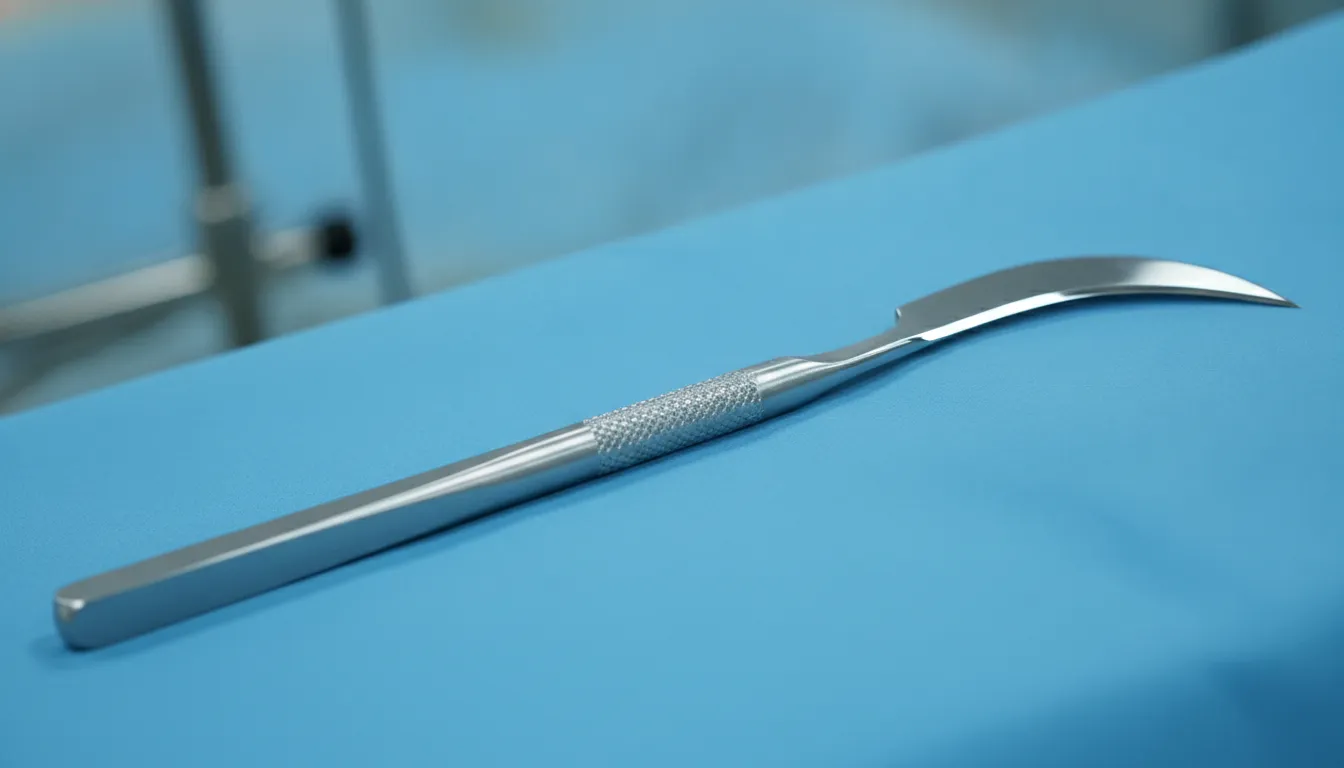
For purchasing teams, the MacCut surgical blades collection can be reviewed alongside the exact product instructions. Compatibility should be documented at the product level, especially when a practice stocks both reusable handle systems and one-piece disposable scalpels.
How Should Teams Inspect and Handle a #22 Blade?
Inspection begins before the package is opened. Confirm that the product identity, blade number, manufacturer, and configuration match the procedure plan and facility purchasing record. A size marking alone does not establish sterility, intended use, handle compatibility, or suitability for a particular patient or technique.
Review the labeled sterility status and use-by information. Check the expiration date, lot or batch identifier, and any required storage conditions. Do not use a package with a broken seal, puncture, moisture intrusion, damaged wrapper, or unclear labeling. Set questionable stock aside according to the facility's quarantine and reporting process rather than trying to restore or relabel it. For example, product pages may describe specific configurations such as MacCut #22 surgical blades, but the package in hand remains the source for its current lot and sterility information.
Use the loading method specified by the manufacturer and the facility. If a separate blade and handle are used, an approved blade-loading instrument can reduce direct hand contact during attachment. Keep the cutting edge oriented away from the operator and other people, and maintain a stable work surface. The person loading the blade should communicate clearly before movement and verify that the blade is fully seated. Never improvise with forceps, fingers, or equipment that is not approved for the configuration.
During transfer, use the facility's neutral-zone or hands-free technique. Announce when the sharp is entering or leaving the zone, place it in a predictable position, and keep the edge visible to everyone who may reach near it. Avoid passing a loaded scalpel directly from hand to hand. Follow the operating room or treatment-area exposure-control plan, including required gloves, eye or face protection, gowns, and other PPE based on the anticipated exposure.
These controls matter because contaminated scalpels can expose healthcare workers to bloodborne pathogens, and the CDC identifies sharps injuries as a serious healthcare hazard. Review the CDC and NIOSH sharps-safety guidance alongside OSHA requirements, state and local rules, manufacturer instructions, and qualified clinical judgment. If the blade is damaged, unstable, unexpectedly dull, or otherwise inconsistent with the labeled product, stop use and follow the facility's incident and disposal protocol.
How Should a Used Surgical Blade Size 22 Be Disposed Of?
Once a surgical blade size 22 has been used, treat it as contaminated sharps waste. The safest workflow is to make the disposal container available at the point of use. This keeps the blade from being carried across the treatment area or left on a tray. Needlestick and other sharps injuries are a recognized hazard in healthcare settings, and contaminated scalpels can expose personnel to bloodborne pathogens. See the CDC/NIOSH sharps-safety guidance and the FDA sharps disposal container guidance for additional background.
Use a closable, puncture-resistant container
Place the used blade promptly into a suitable, closable, puncture-resistant, leak-resistant sharps container that is positioned within easy reach. Select a container appropriate for the facility's waste stream and the type of sharp being discarded. Approved sharps containers are designed to contain discarded blades and other sharps, but the facility must confirm that the selected model meets its own infection-control and regulated-waste requirements.
Do not manipulate the blade unnecessarily
Do not recap, bend, break, or hand-sort a used blade as part of routine disposal. If a blade must be removed from a reusable handle. Use a specific approved removal device and the facility's written procedure rather than fingers, forceps, or an improvised method. A scalpel blade removal device may support a controlled workflow when it is approved for that use and staff are trained on it.
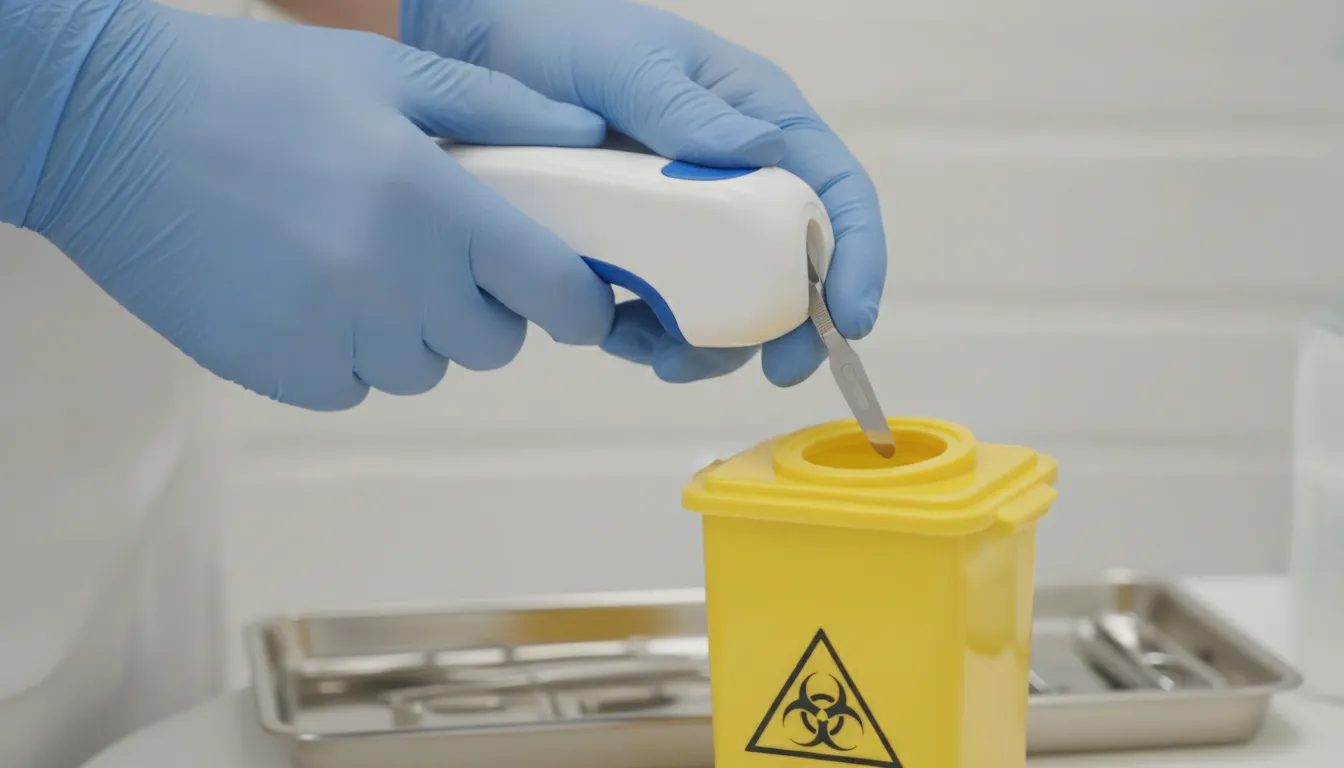
Monitor the container's fill line or maximum capacity. Close and replace it before overfilling, protruding sharps, or compromised closure creates an additional exposure risk. Follow the container manufacturer's instructions, facility policy, applicable OSHA requirements, and all relevant state and local rules for labeling, storage, transport, and final disposal. When requirements differ, the facility's infection-prevention and occupational-safety leaders should determine the approved process.
What Should Purchasing Teams Check Before Ordering #22 Blades?
Compare MacCut size 22 options for your professional supply list.
A reliable order starts with the specification, not the number alone. Before adding a surgical blade size 22 to a purchase order, match the requested blade to the clinician's intended workflow, the facility's equipment, and its handling controls. Use this checklist to prevent substitutions that look similar in a catalog but are not operationally interchangeable.
- Confirm the pattern. Verify that the item is a No. 22 blade, then review the manufacturer's dimensional and compatibility information. Do not assume that every broad, curved blade with a similar label has the same fit or profile.
- Specify material and finish. Record the listed material, such as stainless steel, and any relevant manufacturer specification. Treat material as a product attribute, not a guarantee of performance or suitability for every procedure.
- Check sterile status. Decide whether the order requires sterile or non-sterile blades. For sterile products, confirm the package labeling, intact seals, and expiration or use-by information at receiving. The product page for MacCut #22 surgical blades identifies that specific offering as sterile stainless steel and a box of 100; verify current details before ordering.
- Review packaging and quantity. Confirm whether blades are individually wrapped, bulk packed, or supplied in another configuration. Match the pack size to storage capacity, turnover, and the facility's stock-rotation process.
- Separate blade-only from disposable configurations. A replacement blade requires a compatible handle and a controlled loading process. A disposable sterile scalpel is a complete, product-specific configuration. Do not treat these options as interchangeable without reviewing the manufacturer's instructions.
- Verify handle compatibility. Confirm the handle model, fitting pattern, and loading requirements before approval. The guidance on how to choose compatible scalpel handles can support this review, but the product documentation remains authoritative.
- Build in traceability. At receiving, record the product identifier, lot or batch information, expiration date when provided, quantity, and any damaged-package findings. Quarantine items that cannot be identified or whose sterile packaging is compromised.
- Plan the end of use. Confirm that the clinical area has a closable, puncture-resistant sharps container and an approved workflow for removal and disposal before the order arrives. Include any facility-approved blade-removal device in the workflow where appropriate.
For a broader product review, compare the available MacCut surgical blades against the exact specification required by your facility, then obtain clinical and infection-control approval before standardizing the item.
Frequently Asked Questions
What is a surgical blade size 22 used for?
A size 22 blade is a broad, curved scalpel blade selected when a clinician needs a larger cutting profile than narrower blades provide. The number identifies a blade pattern, not a guaranteed indication. Final selection depends on the planned incision, tissue, access, visibility, technique, and the manufacturer instructions.
What handle fits a size 22 scalpel blade?
Many size 22 blades are associated with a compatible no. 4 scalpel handle, but that convention is not a substitute for verification. Confirm the exact blade pattern, handle fit, and loading instructions on the product packaging or manufacturer documentation. Blade-only products and integrated disposable scalpels may follow different configurations.
Is every size 22 blade sterile?
No. Sterility is a product-specific attribute and must be confirmed from the package labeling, expiration information, and package integrity before use. Do not treat the blade number, material, or appearance as proof of sterility. Follow the facility's clinical and infection-control protocol for sterile handling.
Can dental professionals use a size 22 blade?
A dental professional may consider a size 22 blade only when its profile, compatibility, sterility status, and intended use match the procedure and professional judgment. The blade number alone does not establish suitability for oral surgery or any other dental procedure. Review the product instructions and facility protocol before selection.
How should a used size 22 blade be discarded?
Place the used blade promptly into an appropriate closable, puncture-resistant sharps container at the point of use, following facility policy and applicable requirements. Do not leave it on a tray, pass it hand-to-hand, bend it, or sort it manually. Scalpels are sharps that can expose healthcare workers to bloodborne pathogens, as noted by the CDC.
Ready to Review Size 22 Blade Options?
Confirm the blade pattern, compatibility, sterile status, and packaging requirements for your facility before adding size 22 blades to a professional supply list. Review MacCut size 22 and related surgical blade options to compare relevant products and support an informed purchasing decision.
Tags
Blog posts
-

, by SurgiMac A Clinician's Guide to Absorbable Suture Material
-
, by SurgiMac A Clinician's Guide to Dental Composite Resin Kits
-

, by SurgiMac How to Disinfect with Metrex CaviWipes Correctly
