
What Dental Anesthesia Does Not Have Epinephrine: Guide
- , by SurgiMac
- 14 min reading time
Learn what dental anesthesia does not have epinephrine, compare plain mepivacaine, review label criteria, and support safe sourcing for U.S. dental practices.
Choosing a dental local anesthetic without epinephrine starts with identifying the formulation, not just the generic drug name. A plain solution contains no added vasoconstrictor. Clinicians can then evaluate its role separately from epinephrine-containing cartridges and the patient's medical history.
Explore dental local anesthetic products
For clinicians asking what dental anesthesia does not have epinephrine, the central example is plain 3% mepivacaine. Plain 2% lidocaine and plain 2% prilocaine are also documented epinephrine-free formulations. Product labeling, patient assessment, procedure requirements, and dose calculation should guide final selection. Clinical literature notes that vasoconstrictor-free options may be used in hypertensive patients, while vasoconstrictor solutions are not automatically contraindicated.
The practical decision is therefore more nuanced than choosing an ingredient from a list. The following guide clarifies how to distinguish plain mepivacaine from other options, what tradeoffs matter chairside, and which label details deserve review before ordering or administration.
What dental anesthesia does not have epinephrine?
The clearest example is a plain, or no-vasoconstrictor, local anesthetic. In dental practice, 3% plain mepivacaine is a central example because the formulation does not include epinephrine. A dental team sourcing this option can review SurgiMac's 3% plain mepivacaine dental anesthetic for product-specific concentration and packaging details.
"Plain" means that the local anesthetic solution contains no added vasoconstrictor. Epinephrine is a vasoconstrictor, so a cartridge labeled plain mepivacaine is distinct from a mepivacaine formulation that includes a vasoconstrictor. The active anesthetic and the presence or absence of additives should be confirmed on the current package insert and cartridge label before clinical use.
Plain mepivacaine is the primary formulation to identify
For the question what dental anesthesia does not have epinephrine, 3% plain mepivacaine is often the most direct product-level answer. It is important to distinguish the concentration from the formulation status: the "3%" identifies the anesthetic concentration, while "plain" indicates that no vasoconstrictor has been added. Those details should not be inferred from the product name alone when multiple presentations are available.
Published dental literature also describes lidocaine, prilocaine, and mepivacaine solutions without vasoconstrictor. One review specifically discusses 2% lidocaine, 2% prilocaine, and 3% mepivacaine without vasoconstrictor in the context of hypertension. It also notes that vasoconstrictor solutions are not automatically contraindicated in every hypertensive patient. See the PubMed review on local anesthetics and vasoconstrictors for the supporting discussion. For a separate comparison of anesthetic agents, see SurgiMac's mepivacaine versus lidocaine dental guide.
Other plain options require careful label review
Plain lidocaine and plain prilocaine may also be available as epinephrine-free formulations, depending on the market, manufacturer, and dental product presentation. Their availability, concentration, indications, and labeling can differ from plain mepivacaine. Do not treat the anesthetic name by itself as proof that a cartridge contains no vasoconstrictor. Check the active-ingredient list, concentration, total volume, and package insert.
Final selection is a clinical decision based on the procedure, patient assessment, medical history, dosing requirements, and product labeling. This overview identifies formulation terminology, not a patient-specific recommendation. A plain local anesthetic should be selected and administered only under the responsible dental clinician's judgment and the applicable product instructions.
Why choose a plain local anesthetic formulation?
A plain local anesthetic may be considered when the clinical objective is pulpal or soft-tissue anesthesia without adding a vasoconstrictor. The choice is not based on a single diagnosis or a universal rule. It depends on the patient's medical history, the planned procedure, the expected duration of anesthesia, the need for local hemostasis, and the clinician's assessment of the available formulation.
Review alternatives to epinephrine in dental procedures
Hemodynamic considerations are part of the decision
Vasoconstrictors can influence cardiovascular and hemodynamic responses, so they deserve deliberate review when treating patients with relevant cardiovascular concerns or hypertension. That does not make epinephrine universally unsafe or automatically contraindicated. A review of dental local anesthetic use in hypertensive patients notes that vasoconstrictor-containing solutions are not automatically prohibited. Plain solutions may be preferred in selected situations because of potential hemodynamic effects (PubMed review).
For that reason, clinicians should evaluate the patient's current status, medical history, medications, and the product labeling rather than treating "without epinephrine" as a blanket safety category. Plain mepivacaine can be one option to discuss when avoiding an added vasoconstrictor is clinically appropriate, but the final selection remains patient- and procedure-specific.
Procedure duration and bleeding needs still matter
The absence of a vasoconstrictor can affect how a formulation performs in the operative field. A short procedure with limited soft-tissue manipulation may create different anesthesia and hemostasis requirements than a longer procedure involving extensive tissue handling. When bleeding control is important, the clinician must account for the fact that a plain formulation does not provide the same vasoconstrictor effect as an epinephrine-containing cartridge. That tradeoff may influence product selection and local technique.
Duration also requires realistic planning. The relevant question is not simply whether a product contains epinephrine, but whether its labeled anesthetic profile fits the procedure and the desired recovery of sensation. A plain formulation may be useful when prolonged soft-tissue numbness is not necessary, while another formulation may better fit a procedure requiring a longer anesthetic window. Use the current package insert and clinical judgment to assess that balance, without assuming that every plain or epinephrine-containing product behaves identically.
Soft-tissue anesthesia requires a practical tradeoff
Clinicians should distinguish pulpal anesthesia from soft-tissue anesthesia when planning a plain local anesthetic. The preferred balance may involve adequate anesthesia for the intended treatment while limiting unnecessary duration after the procedure. Patient comfort, procedural efficiency, bleeding expectations, and recovery considerations all belong in that assessment. Plain mepivacaine products, including plain mepivacaine dental cartridges, should be reviewed against the labeled indications and the specific clinical situation before ordering or use.
Plain mepivacaine vs. other epinephrine-free options
When clinicians ask what dental anesthesia does not have epinephrine, the key distinction is formulation. A plain local anesthetic contains no added vasoconstrictor. Plain mepivacaine is a familiar dental option, but it is not the only epinephrine-free formulation that may appear in clinical literature or product catalogs. A review in PubMed discusses 2% lidocaine, 2% prilocaine, and 3% mepivacaine solutions without vasoconstrictor in the context of hypertensive patients. That does not make the products interchangeable or establish a choice for every patient.
| Formulation | Does a plain option exist? | Practical selection context | Verify on the label |
|---|---|---|---|
| Plain mepivacaine | Yes. Dental products may be labeled as mepivacaine without vasoconstrictor. | A commonly sourced epinephrine-free dental formulation when the clinician is evaluating anesthetic selection for the procedure and patient. | Active ingredient, concentration, absence of vasoconstrictor, cartridge volume, route information, lot number, expiration date, storage instructions, and manufacturer labeling. |
| Plain prilocaine | Yes. Plain prilocaine is described as a formulation possibility in the cited review. | Consider only within the clinician's assessment of the patient, procedure, available product, and labeling. Do not substitute it for another anesthetic based on concentration alone. | Exact active ingredient and concentration, whether a vasoconstrictor is present, dosage instructions, cartridge volume, contraindications or warnings, lot number, expiration date, and storage requirements. |
| Plain lidocaine | Yes. Plain lidocaine is also discussed in the cited review. | Its presence as a plain formulation does not mean that it has the same clinical role, labeling, or selection considerations as plain mepivacaine. | Exact formulation, concentration, active and inactive ingredients, vasoconstrictor status, cartridge volume, labeled dosing information, warnings, lot number, expiration date, and storage requirements. |
For procurement, distinguish the product name from the formulation actually supplied. SurgiMac's plain 3% mepivacaine anesthetic page and its Scandonest 3% mepivacaine with no vasoconstrictor page can help practices review available product details. Before ordering or using any cartridge, compare the package and current prescribing information with the clinical record and practice protocol.
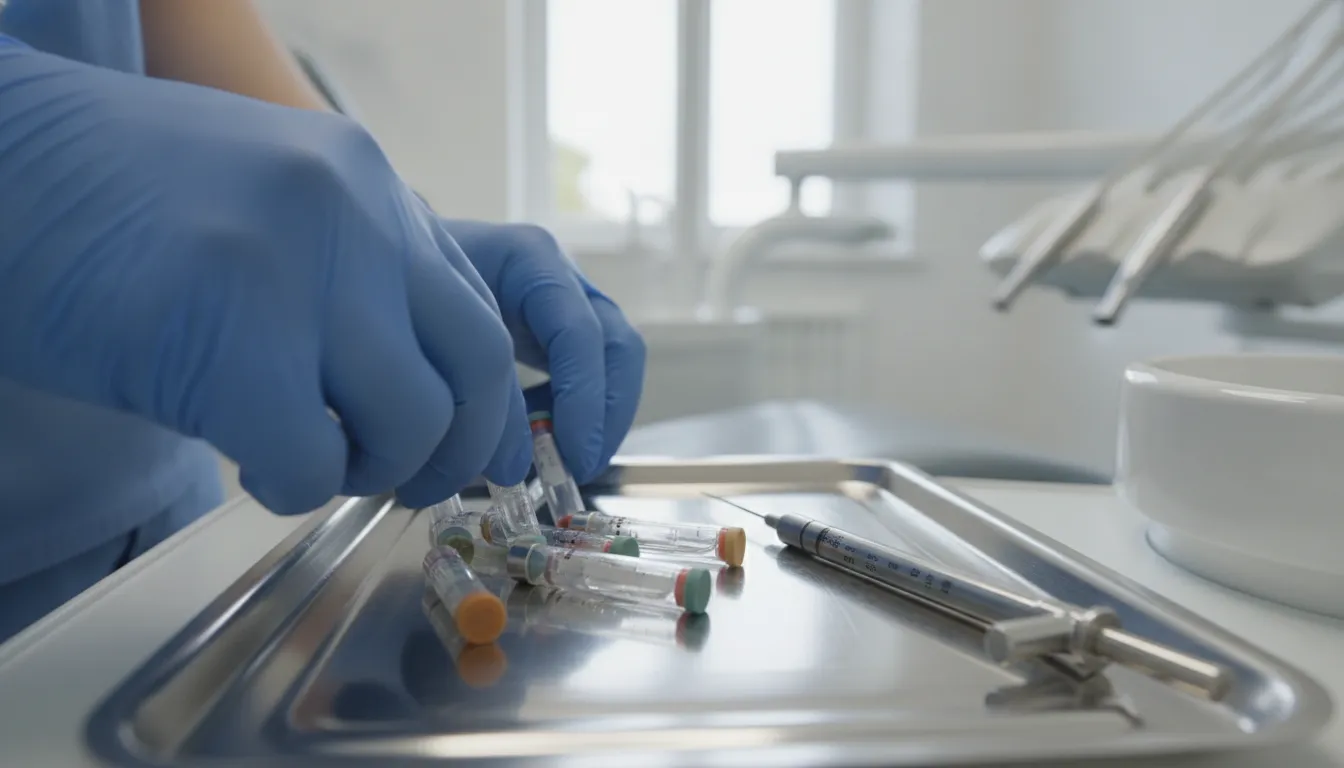
Do not infer duration, maximum dose, indication, or interchangeability from the word "plain" or from a percentage printed in a catalog listing. Confirm the current manufacturer label, calculate dose according to that labeling and the patient's circumstances, and use clinical judgment for the specific procedure. The cited PubMed review also notes that vasoconstrictor solutions are not automatically contraindicated in hypertension. So "epinephrine-free" should be treated as a formulation characteristic, not a universal safety rule.
How should clinicians select an anesthetic without epinephrine?
Selecting a plain local anesthetic is a clinical workflow, not a product-name shortcut. The final choice should reflect the patient's current health information, the procedure, the required degree of hemostasis, and the exact product labeling. Plain formulations may be considered when a vasoconstrictor is not preferred, but epinephrine is not automatically contraindicated in every patient with hypertension or cardiovascular disease. Use clinical judgment and applicable labeling throughout the process. Published dental anesthesia guidance emphasizes evaluating cardiovascular effects as part of safe selection.
- Review the medical history and medication list. Confirm the history is current, including cardiovascular conditions, blood pressure concerns, relevant allergies, pregnancy status when applicable, and medications that may affect anesthetic selection or monitoring. Resolve material discrepancies before treatment. Do not infer suitability from a diagnosis alone, and do not treat a plain formulation as a substitute for medical assessment.
- Assess the procedure and hemostasis needs. Consider the treatment site, anticipated tissue manipulation, duration, and the degree of bleeding control required. A formulation without a vasoconstrictor may fit some clinical situations, while another option may be more appropriate when prolonged anesthesia or stronger hemostasis is important. The procedure assessment should be documented as part of the rationale.
- Verify the product label and concentration. Confirm the active ingredient, concentration, whether a vasoconstrictor is present, route of administration, labeled indications, contraindications, warnings, and storage requirements. Product names can be similar, so check the primary container and package insert rather than relying on memory or a distributor listing.
- Calculate the dose from current labeling. Use the current manufacturer labeling and the patient's relevant clinical parameters to determine the permitted dose. Account for the concentration and the volume of each cartridge. Dental cartridges commonly contain approximately 1.7 to 1.8 mL, but the actual labeled volume must control the calculation. A review of dental local anesthetic cartridges provides context for common cartridge volumes. This workflow does not replace the product label or individualized clinical judgment.
- Inspect the cartridge and storage conditions. Before use, check the container for damage, particulate matter, discoloration, leakage, and an intact seal. Verify the lot information and expiration date. Confirm that storage has remained within the manufacturer's requirements. Do not use a cartridge when its integrity, identity, or storage history is uncertain.
- Aspirate and inject using accepted technique. Follow the accepted local anesthetic administration technique, including aspiration when clinically appropriate, controlled injection, and observation of the patient. Use the product's labeled route and administration instructions. The appropriate technique depends on the treatment plan, anatomy, and clinician training, so this overview is not a substitute for hands-on instruction or an institutional protocol.
- Document the decision and administration. Record the product name, active ingredient, concentration, lot and expiration details when required by practice policy. Along with the amount administered, record the site and technique, patient response, and any adverse event or follow-up instruction. Clear documentation supports continuity of care and makes the clinical reasoning behind a plain formulation easier to review.
What should clinicians review when asking what dental anesthesia does not have epinephrine?
Procurement review should begin with the product label, not the product name alone. A cartridge described as "plain" should be checked for the absence of an added vasoconstrictor. The active ingredient and concentration should match the formulation your practice intends to source. This distinction matters when comparing plain mepivacaine products with anesthetics that contain epinephrine or another vasoconstrictor.
Confirm the formulation and cartridge specifications
- Active ingredient: Verify whether the cartridge contains mepivacaine or another local anesthetic, and confirm the exact concentration stated on the label.
- Vasoconstrictor status: Look for clear wording that identifies the formulation as plain or without vasoconstrictor. Do not infer this from color, packaging, or a shortened product title.
- Cartridge volume: Dental local anesthetic cartridges usually contain 1.7 to 1.8 mL. Confirm the labeled volume because packaging and product specifications can differ. Review the PMC discussion of dental local anesthetic cartridges for supporting context.
- Packaging and presentation: Check the package description, cartridge count, and whether the product is intended for the delivery system used in your operatory.
Inspect traceability, storage, and continuity
- Lot and expiration information: Confirm that lot numbers and expiry dates are legible and recorded according to your practice's inventory procedures. Apply stock rotation so older acceptable inventory is used appropriately.
- Packaging integrity: Examine the outer package and individual cartridges for damage, leaks, cloudiness, particles, compromised seals, or other signs that require quarantine and supplier review.
- Storage requirements: Follow the manufacturer's current labeling for temperature, light exposure, handling, and other storage conditions. Document storage controls where your clinic policy requires it.
- Supply continuity: Compare pack size, routine usage, reorder timing, and available supplier information before standardizing a formulation. This supports consistent inventory without assuming that a product is permanently or universally available.
For a sourcing reference, review SurgiMac's plain mepivacaine product listing and the Scandonest 3% mepivacaine listing. Use the product pages and manufacturer labeling to verify the current formulation, package details, and handling information before ordering. Product selection and use remain subject to the applicable label, practice protocols, and the treating clinician's assessment.
These checks also help distinguish a true no-vasoconstrictor product from a similarly named cartridge that contains epinephrine. Build the verification step into receiving, inventory, and chairside setup rather than relying on a remembered color code or abbreviated purchasing description.
Review plain mepivacaine for your practice
Frequently Asked Questions
What dental anesthesia does not have epinephrine?
A plain local anesthetic does not contain epinephrine or another vasoconstrictor. In dental practice, plain 3% mepivacaine is a common example. Plain lidocaine and plain prilocaine are also available formulations, so clinicians should confirm the active ingredients and concentration on the specific product label.
Does plain mepivacaine last as long as anesthetic with epinephrine?
Not necessarily. Duration depends on the anesthetic, formulation, injection site, dose, tissue conditions, and procedure. Because a vasoconstrictor can alter local blood flow and absorption, plain mepivacaine may provide a different duration and bleeding profile than an epinephrine-containing formulation. Follow product labeling and clinical judgment.
Does hypertension automatically rule out epinephrine in dental anesthesia?
No. Hypertension does not automatically contraindicate a vasoconstrictor. A review notes that plain lidocaine, prilocaine, and mepivacaine solutions can be used in hypertensive patients, while clinicians may favor plain formulations because of potential hemodynamic effects. Selection should reflect cardiovascular status and patient-specific assessment. Review the clinical evidence.
What should clinicians check on a dental anesthetic cartridge label?
Verify the active anesthetic, concentration, whether a vasoconstrictor is present, cartridge volume, lot number, expiration date, storage requirements, and package integrity. Dental cartridges usually contain 1.7 to 1.8 mL, but the product label controls. Confirm that the selected formulation matches the planned procedure and documented dose calculation. See cartridge-volume context.
Source the right plain anesthetic for your practice
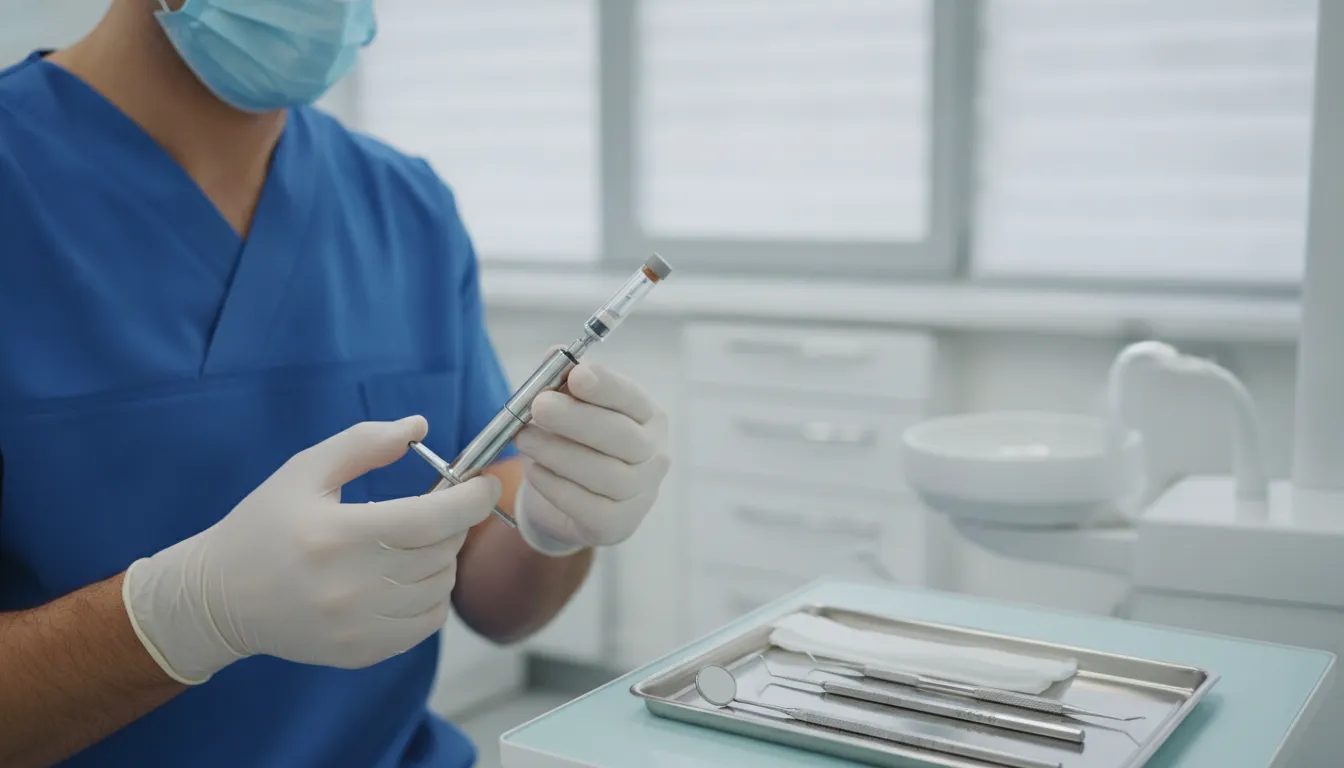
Choosing a no-vasoconstrictor dental anesthetic starts with matching the formulation, concentration, cartridge details, and labeling to your practice's clinical protocols. Review the product information and procurement details for plain mepivacaine, then confirm final selection through patient assessment and professional judgment. Review and source plain mepivacaine for your practice.
Tags
Blog posts
-
, by SurgiMac A Clinician's Guide to Absorbable Suture Material
-
, by SurgiMac A Clinician's Guide to Dental Composite Resin Kits
-
, by SurgiMac How to Disinfect with Metrex CaviWipes Correctly
