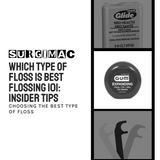
Find out which type dental floss suits your needs best. Compare materials, benefits, and tips to help you choose the right floss for healthier gums and teeth.
You can spot it from across the operatory: the patient who insists they floss, but their gums tell a different story. Often, the problem isn't their commitment—it's their tool. A floss that shreds in tight contacts or feels harsh on sensitive gums is a floss that gets forgotten. The most effective type of dental floss is always the one a patient will use consistently. Let's explore the options so you can match the right dental floss to the right patient, turning that "I forgot" into a daily habit.
So, what is dental floss? It’s a thin, soft thread, often made of nylon or PTFE, that helps clean between your teeth and below the gumline. There are various types of floss available to suit different needs, including waxed and unwaxed floss, flavored and unflavored floss, as well as specialty floss designed for use with braces, bridges, or other dental appliances.
For those with tight spaces between their teeth, waxed floss may glide more easily, while unwaxed floss provides a slightly firmer grip for a deeper clean. If you prefer a fresher experience, flavored floss such as mint or cinnamon can make the task more pleasant.
Ultimately, the key to selecting the right floss is choosing one that aligns with your dental needs and habits, ensuring you stick to a regular flossing routine.

Unwaxed floss is generally considered to be the most effective type of floss, as it cleans more effectively than waxed alternatives where the filaments are bound together. However, some people find unwaxed floss to be more difficult to use because it can fray or shred. Waxed floss is easier to use and slides more easily between teeth, but it may not be as effective at removing plaque.
Ultimately, the best type of floss is the one that you are most likely to use regularly. If you find one type of floss to be difficult or unpleasant to use, you are less likely to floss regularly.
Which Type of Dental Floss Should You Be Using?
So you're faced with an aisle full of floss options: nylon floss, Teflon floss, and even floss made of silk. So what's the skinny?
-
Nylon Floss: Strong but can shred. Affordable.
-
PTFE (Teflon) Floss: Slides easily, doesn't shred. Bit pricier.
-
Silk Floss: A biodegradable option, but not as strong.
Dental Floss Types at a Glance
| Type |
Strength |
Shredding |
Price |
| Nylon Floss |
Strong |
Yes |
Low |
| PTFE Floss |
Strong |
No |
Medium |
| Silk Floss |
Medium |
Yes |
High |
Still can't decide? SurgiMac’s dental floss collection could be your go-to resource for dentist recommended floss.
Dental Floss vs. Dental Tape: What's the Difference?
Tape or floss? The eternal debate rages on. Dental tape is broader and flatter. Floss is more string-like. But hey, both have their merits:
-
Floss: Great for tight spaces.
-
Tape: Excellent for broader gaps.
The consensus? Both work well, so it's more about personal preference and specific oral needs.

A Comprehensive Guide to Dental Floss Materials
Helping patients choose the right dental floss can feel like navigating a maze of materials, textures, and special features. While the best floss is always the one a patient will use consistently, understanding the distinct properties of each type allows you to make tailored recommendations that address specific clinical needs and patient preferences. From traditional nylon to advanced monofilaments and eco-friendly alternatives, each material offers unique advantages. Guiding your patients through these options can significantly improve their home care compliance and overall periodontal health, ensuring they have the right tool to effectively remove interproximal plaque and debris.
Standard Nylon Floss
Nylon has long been the industry standard for dental floss, valued for its strength and affordability. It is a multifilament floss, meaning it consists of many thin strands of nylon twisted together to form a single thread. This construction is key to its cleaning ability, as the strands can separate slightly to cover more surface area and trap plaque effectively. Nylon floss is widely available and comes in two primary forms: unwaxed and waxed. The choice between them often comes down to a balance of cleaning efficacy and ease of use, depending on the patient's specific dental anatomy and personal preference.
Unwaxed Floss
Unwaxed floss is composed of pure nylon filaments twisted together without any coating. Many clinicians consider it the most effective option for plaque removal because the individual strands can spread apart, creating a wider cleaning surface that grips plaque and debris more effectively. This type of floss often provides a distinct "squeaky clean" sound against the tooth surface, which can be a satisfying indicator for patients that the area is clean. However, its primary drawback is a tendency to fray or shred, particularly between tight contacts or around restorations with rough margins, which can be frustrating for some users.
Waxed Floss
For patients who struggle with unwaxed floss, the waxed variety is an excellent alternative. A light coating of wax makes the floss more durable, allowing it to glide smoothly between tight interproximal spaces without shredding or breaking. This ease of use can be a critical factor in promoting daily flossing habits, especially for beginners or those with crowded teeth or extensive restorative work. While the wax binds the filaments, potentially reducing the surface area for cleaning compared to unwaxed floss, its superior handling and comfort often lead to better overall patient compliance, making it a highly effective tool for daily oral hygiene.
Monofilament (PTFE) Floss
Monofilament floss, made from polytetrafluoroethylene (PTFE), is a single-strand material known for its exceptional strength and smooth glide. This is the same material used in high-tech fabrics like Gore-Tex. Because it is a single filament, it is virtually shred-proof, making it an ideal choice for patients with extremely tight contacts, rough fillings, or crowns that tend to snag traditional nylon floss. It slides effortlessly into and out of interproximal spaces, providing a comfortable and frustration-free experience. While typically priced higher than nylon floss, its durability and ease of use can be a worthwhile investment for improving a patient's daily flossing routine.
Dental Tape
Dental tape is another excellent option, distinguished by its broad, flat, and ribbon-like shape. This design gives it a wider surface area compared to standard string floss, making it particularly effective for patients with larger gaps between their teeth, significant gingival recession, or for cleaning around fixed bridgework. The tape covers more of the tooth surface with each pass, efficiently removing plaque and food particles from wider embrasures. While it may be too bulky for individuals with tight contacts, it provides a gentle yet thorough clean for those who need more substantial coverage, making it a valuable part of your oral hygiene toolkit.
Specialty Floss Types
Beyond the standard options, the market offers several specialty flosses designed to address unique clinical challenges. These innovative products are engineered to help patients with specific oral health conditions, such as orthodontic appliances, dental implants, bridges, or significant interdental spacing. Recommending a specialty floss can make a significant difference for these patients, empowering them to clean hard-to-reach areas that standard floss simply cannot manage. This targeted approach ensures that every patient, regardless of their dental work, can achieve optimal interproximal hygiene.
Super Floss
Super floss is a versatile, all-in-one solution designed for patients with braces, bridges, and implants. It features three distinct components in a single strand: a stiffened end for easy threading under appliances, a section of spongy, fibrous floss for cleaning around brackets and in wider spaces, and a segment of regular floss for cleaning below the gumline of adjacent teeth. This multi-functional design eliminates the need for separate tools like floss threaders, simplifying the cleaning process and making it much more efficient for patients with complex dental work to maintain their oral health.
Woven or Braided Floss
Woven floss is crafted from multiple strands of soft material, often cotton or nylon, braided together to create a thicker, more textured thread. Its key characteristic is its ability to expand when wet, allowing it to compress for insertion between teeth and then puff up to fill the interdental space for a comprehensive clean. This sponge-like action is highly effective at grabbing and removing plaque, especially for patients with larger gaps or irregular tooth surfaces. Its soft, cushioned texture also makes it a gentle and comfortable option for individuals with sensitive gums or gingival recession.
Natural and Biodegradable Floss
As environmental awareness grows, many patients are seeking sustainable alternatives to traditional plastic-based oral care products. Natural floss, often made from materials like silk or plant-based polylactic acid (PLA), meets this demand. Silk floss is fully biodegradable, though it is less strong than its nylon counterpart. These eco-friendly options are frequently coated with natural waxes, such as candelilla or beeswax, and are packaged in refillable, non-plastic containers like glass jars. Recommending these products can resonate with environmentally conscious patients, helping them align their oral hygiene routine with their personal values.
Guidance for Effective Flossing
Equipping patients with the right type of floss is only half the battle; proper technique is what truly determines its effectiveness. Many common periodontal issues arise not from a lack of flossing, but from incorrect flossing methods that fail to remove plaque at the critical gumline area or even cause iatrogenic damage. As a dental professional, providing clear, actionable instructions on technique, highlighting common mistakes, and tailoring advice to individual needs is essential. This guidance transforms flossing from a simple motion into a precise clinical procedure that patients can perform at home, directly contributing to the long-term stability of their oral health.
Mastering the Proper Flossing Technique
The cornerstone of effective flossing is the "C-shape" method. Instruct patients to start with about 18 inches of floss, wrapping most of it around one middle finger and a small amount around the other to take up the used floss. They should gently guide the floss between their teeth using their thumbs and index fingers, avoiding snapping it into the gums. Once the floss reaches the gumline, it should be curved into a C-shape against one tooth, sliding it gently into the sulcus. The floss should then be moved up and down against the tooth surface before repeating the process on the adjacent tooth, always using a fresh section of floss for each contact.
Common Flossing Mistakes to Avoid
One of the most frequent and damaging mistakes is snapping the floss directly into the gum tissue, which can cause lacerations, bleeding, and gingival recession over time. Another common error is simply moving the floss in a back-and-forth or up-and-down sawing motion without wrapping it around the tooth. This fails to adequately clean the curved surfaces and can miss significant amounts of plaque. Additionally, patients often forget to floss the distal surface of the last molar in each quadrant. Correcting these habits is crucial for preventing trauma and ensuring a thorough clean every time.
Advising Patients on Specific Needs
A personalized approach to flossing recommendations is key to patient success. For those with orthodontic appliances, a floss threader or Super Floss is non-negotiable for cleaning under wires. Patients with dental implants or fixed bridges require similar tools to maintain the health of the underlying tissue. If a patient has sensitive gums, a soft woven floss or a smooth, waxed tape may provide a more comfortable experience. For those with very tight contacts who experience constant shredding, recommending a monofilament PTFE floss can eliminate frustration and improve compliance. You can find a wide variety of dental supplies to meet these diverse patient needs.
Why You Should Never Reuse Dental Floss
Reuse dental floss? Gross and risky. Bacteria and food particles cling to used floss. It's also less effective the second time around.
Is Flossing Really That Important?
Absolutely. It removes plaque, fights gum disease, and cleans where your toothbrush can't. Can't emphasize this enough!
Can Your Dentist Tell If You Don't Floss?
Not flossing? Trust us, we can tell. Gums don’t lie. Redness, inflammation, and bleeding are dead giveaways. So get that deep clean floss out and put it to use!
Just How Many People Actually Skip Flossing?
- Around 30-40% of Americans don’t floss daily.
- Shockingly, 20% never floss.

Are Dental Picks a Good Substitute for Floss?
Oral B picks vs. floss? We're not fans of disposable floss picks. Sure, they're convenient. But they're not as effective and contribute to waste. SurgiMac’s oral care collection prefers traditional floss.
Potential Risks of Floss Picks
While floss picks are undeniably convenient, and certainly a better option than not flossing at all, they come with clinical drawbacks worth discussing with patients. The primary issue is their design. A short, taut piece of floss on a plastic handle can't effectively wrap around the tooth to create the C-shape needed for thorough cleaning of interproximal surfaces. This limited movement means the floss often only scrapes up and down, potentially missing significant plaque buildup, which is why many professionals find them less thorough than string floss. This design flaw can leave behind biofilm that contributes to caries and periodontal issues.
Another significant concern is the potential for cross-contamination. When a patient uses the same small section of floss between every tooth, they risk simply redistributing plaque and bacteria from one interproximal space to another. Furthermore, improper technique, such as snapping the pick forcefully between tight contacts, can cause iatrogenic damage to the gingiva. This can lead to bleeding, inflammation, or even gingival recession over time. Advising patients on these risks is crucial, as incorrect use can inadvertently harm gums and undermine their oral hygiene efforts.
Cost Breakdown: Floss vs. Picks
| Product |
Floss Price |
Convenience |
| Oral B Picks |
High |
High |
| Oral B Floss |
Medium |
Medium |
| Disposable Floss |
Low |
High |
Beyond the String: Specialty Interdental Cleaning Aids
While traditional string floss is a cornerstone of oral hygiene, it isn't a one-size-fits-all solution. For patients with orthodontics, bridges, implants, or wider interdental spaces, specialty aids can make a significant difference in achieving a thorough clean. Guiding patients toward the right tool for their unique oral landscape is a key part of comprehensive care. These alternatives are functional tools designed to address specific challenges that can make traditional flossing difficult or less effective. Exploring these options can help you tailor home care recommendations that your patients will actually follow, leading to better clinical outcomes and improved oral health between visits.
Water Flossers (Oral Irrigators)
A water flosser, also known as an oral irrigator, uses a targeted, pulsating stream of water to dislodge food debris and disrupt plaque biofilm from between teeth and along the gumline. They are particularly effective for patients who struggle with the dexterity required for string floss or have complex dental work. This makes them an excellent recommendation for individuals with orthodontic brackets, fixed bridges, or dental implants where cleaning around the hardware is notoriously difficult. While they are not a complete substitute for manual flossing, they serve as an excellent adjunct therapy, significantly improving gingival health by flushing out bacteria and reducing inflammation in hard-to-reach areas.
Interdental Brushes
Interdental brushes are the unsung heroes for patients with anything other than perfectly tight contacts. These small, cone-shaped or cylindrical brushes are specifically designed to clean the spaces between teeth. They are indispensable for patients with diastemas, periodontal disease that has resulted in bone loss and larger embrasure spaces, or for cleaning around fixed orthodontic appliances. The key to their effective use is proper sizing; a brush that is too small won't clean effectively, while one that is too large can traumatize the gingival tissue. Advising patients to select a size that fits snugly but comfortably is crucial for achieving optimal plaque removal without causing harm to the interdental papilla.
Floss Threaders and Holders
Sometimes, the biggest barrier to flossing isn't the floss itself, but the ability to get it where it needs to go. Floss threaders are simple, invaluable tools for this exact purpose. A threader consists of a flexible loop that allows you to pull a strand of your preferred dental floss under pontics, around orthodontic wires, or beneath permanent retainers. For patients with limited dexterity, arthritis, or difficulty reaching posterior areas, a floss holder can be a game-changer. These Y-shaped devices hold the floss taut, allowing for one-handed operation and better control, making the daily flossing routine far more manageable and effective.
Electric and Air Flossers
For patients who are resistant to both string floss and water flossers, electric or air flossers present another viable alternative. These devices use rapid bursts of air combined with micro-droplets of water or mouthwash to clean between teeth. They are designed with user-friendliness in mind, featuring ergonomic handles and angled nozzles that make reaching the entire mouth simple. While their cleaning power may differ from a water flosser or perfectly executed manual flossing, they are significantly better than neglecting interdental cleaning altogether. The gentle action can also stimulate the gums, which is an added benefit for promoting gingival health and circulation.
What Happens When You Start Flossing Every Day?
-
Immediate: Plaque and food removal
-
1 Week: Decrease in gum redness
-
1 Month: Significant gum health improvement
And if you're still in doubt, check out SurgiMac’s threader floss for those tricky areas around braces or dental work.
Don't let floss be the sidekick in the oral health saga. Make it the superhero! In the end, the best floss is the one that your patient will actually use. So give them options, from affordable nylon floss to the top-shelf Oral B floss. Remember, a spool a day keeps the cavities away!

Source: SurgiMac, the eco-friendly source for all your dental supply needs. Check out more at SurgiMac.
So, floss like a boss, and make sure your patients do too!
Frequently Asked Questions
My patient complains that floss always shreds between their teeth. What's the best recommendation? Shredding floss is a common frustration that can stop a patient from flossing altogether. This usually happens because of very tight contacts or the edge of a restoration. The best solution is to recommend a monofilament PTFE floss. Since it's made from a single, strong strand, it's virtually shred-proof and glides smoothly through even the tightest spots, making the experience much less aggravating for your patient.
Is there a real clinical difference between waxed and unwaxed floss? While some clinicians prefer unwaxed floss because its individual filaments can spread out to grip more plaque, the practical difference often comes down to patient compliance. Waxed floss is much easier to handle for patients with crowded teeth or extensive dental work, as it slides easily and resists fraying. The most effective floss is always the one your patient will use consistently, so guiding them toward a comfortable, frustration-free option is the best approach.
Can I tell my patients that a water flosser is a complete substitute for string floss? It's best to frame a water flosser as a powerful supplement to their routine, not a replacement. A water flosser is excellent for flushing out debris and cleaning around complex dental work like braces or implants. However, it doesn't replicate the mechanical action of string floss, which physically scrapes sticky plaque biofilm from the tooth surface. For optimal oral health, they work best when used together.
What's the best option for patients with sensitive gums who find flossing painful? For patients with sensitive or receding gums, a soft, woven floss is an ideal choice. Its braided, cushioned texture is much gentler on soft tissue than a thin strand of traditional floss. It also expands slightly to fill wider gaps, providing a thorough clean without causing discomfort. Dental tape can also be a good alternative, as its broad, flat shape distributes pressure more evenly.
How can I simplify flossing instructions for patients with bridges or implants? The key is to give them a tool that makes the job feel less complicated. Instead of teaching them to use a separate tool and floss, recommend an all-in-one product like Super Floss or provide them with a simple floss threader. Products like SurgiMac’s threader floss are designed specifically for this challenge, helping patients easily guide the floss under their dental work without the extra hassle.
Key Takeaways
-
Focus on Consistency, Not a Single "Best" Floss: The ideal floss is whichever one your patient will use daily. Guide them by considering their specific needs—like waxed floss for tight contacts or dental tape for wider gaps—to ensure they build a consistent habit.
-
Match the Tool to the Clinical Situation: Different oral landscapes require different tools. Recommend shred-proof PTFE floss for patients with crowns or tight spacing, and introduce specialty aids like Super Floss or interdental brushes for those with orthodontics, bridges, or implants.
-
Technique is as Critical as the Tool: Reinforce the "C-shape" method to ensure patients are cleaning below the gumline effectively, not just snapping the floss between their teeth. Correcting common mistakes is key to preventing iatrogenic damage and achieving a thorough clean.
Related Articles