
Surface Disinfectant: A Clinician's Guide
- , by SurgiMac
- 32 min reading time
Get expert tips on choosing and using a surface disinfectant in your dental practice. Learn best practices for safety, compliance, and effective infection control.
That quick spray-and-wipe routine between patients might not be doing what you think it is. In a busy dental practice, it’s easy to overlook one of the most critical details of infection control: contact time. Even the most powerful surface disinfectant needs a specific amount of time to remain wet on a surface to effectively kill pathogens like MRSA or SARS-CoV-2. If you’re wiping it away too soon, you’re essentially just cleaning, not disinfecting. This guide is here to refine your technique. We’ll cover the non-negotiable steps for proper application, how to choose a product with a practical kill time, and how to avoid the common mistakes that could compromise the safety of your operatory.
Key Takeaways
- Proper Application is Non-Negotiable: Your disinfectant is only as good as your technique. Always pre-clean surfaces to remove bioburden, maintain the required contact time by keeping the surface wet, and use a systematic method to ensure complete coverage.
- Choose Products Based on Proof, Not Promises: Make informed choices by checking for an EPA registration number on the label. This confirms the product's effectiveness, allowing you to match its kill claims and contact time to your practice's specific infection control needs.
- Build a Comprehensive Safety Protocol: Go beyond the bottle by creating a full safety system. This includes using appropriate PPE like gloves from the MacSafe collection, following correct storage and disposal guidelines, and training your team on every step to ensure consistent, safe application.

What Is a Surface Disinfectant?
In any clinical setting, a surface disinfectant is your first line of defense against the spread of illness. At its core, surface disinfection is the process used to inactivate pathogens on inanimate objects, from countertops to dental chairs. Regularly disinfecting surfaces is a proven method of disease prevention and a non-negotiable part of maintaining a safe, hygienic practice for both your team and your patients. Think of it as a fundamental component of your infection control protocol—the step that ensures harmful microorganisms are dealt with before they can cause harm.
Understanding the Different Types
Not all disinfectants are created equal. They are typically categorized by their chemical composition and the specific pathogens they are formulated to kill. You’ll find that products based on quaternary ammonium compounds, often called "quats," are among the most common types used for hard-surface disinfection in healthcare. These are effective against a broad spectrum of bacteria and viruses.
Many dental practices rely on trusted solutions like CaviCide, Sporox II, and ProCide-D to meet their clinical needs. Each formula has a unique profile, so understanding the active ingredients helps you select the right product for the specific surfaces and potential contaminants in your operatories.
How Do They Actually Work?
While cleaning removes visible dirt and debris, disinfecting takes it a step further. The primary job of a disinfectant is to kill the viruses and bacteria that might remain after cleaning, which significantly lowers the risk of spreading illness. For a disinfectant to be truly effective, it must be used on a surface that has already been cleaned of physical contaminants.
To achieve this, many clinicians follow the "spray-wipe-spray" method. The first spray and wipe is the cleaning step, removing bioburden. The second spray is the disinfecting step, where the solution is left on the surface for its required contact time to kill any remaining pathogens. This two-step process ensures you get the maximum benefit from your chosen disinfectant.
The Critical Role of Surface Disinfectants in Your Practice
In any clinical setting, surface disinfection is more than just a cleaning task—it's a fundamental pillar of patient safety and practice integrity. Every surface, from the dental chair and delivery unit to the countertop, can harbor microorganisms that pose a risk to both your patients and your team. Implementing a rigorous disinfection protocol is a non-negotiable aspect of modern dentistry that directly impacts patient outcomes and your practice's reputation. An effective strategy ensures you are not only meeting regulatory requirements but are also actively creating a safe environment where patients feel confident and protected.
This commitment to safety is built on three core principles: upholding strict infection control standards, prioritizing the well-being of every patient, and diligently preventing cross-contamination. Mastering your approach to surface disinfection demonstrates a dedication to clinical excellence that resonates through every procedure you perform. It’s a critical step in breaking the chain of infection and maintaining a truly sterile and professional space. When you select the right products and follow the correct procedures, you're not just cleaning a room; you're reinforcing the trust that is essential to the clinician-patient relationship. This diligence protects everyone in the operatory and solidifies your practice as a leader in safe, responsible care.
Upholding Infection Control Standards
Meeting established infection control standards is the baseline for any reputable dental practice. Regulatory bodies like the EPA and CDC provide clear guidelines to ensure that clinical environments are safe for everyone. Following these protocols involves using an EPA-registered, intermediate-level surface disinfectant capable of inactivating a broad spectrum of pathogens. Adherence isn't just about avoiding penalties; it's about demonstrating an unwavering commitment to the health of your community. By integrating compliant products and procedures into your daily workflow, you build a practice grounded in trust and professional responsibility, assuring patients that their safety is your top priority.
Prioritizing Patient Safety
Every patient who sits in your chair trusts you with their health. A visibly clean and properly disinfected operatory is one of the most powerful ways to honor that trust. Effective surface disinfectants are your first line of defense against healthcare-associated infections (HAIs). The goal is to use products with proven efficacy and rapid kill times against dangerous pathogens. For example, leading disinfectants can eliminate organisms like MRSA, HIV, HBV, and SARS-CoV-2 in just a few minutes. This diligence directly protects vulnerable patients and reinforces your practice’s reputation for providing care that is not only skilled but also exceptionally safe.
Preventing Cross-Contamination
Cross-contamination is a constant risk in a dynamic dental environment, where instruments, materials, and people are in continuous motion. High-touch surfaces like light handles, bracket trays, and countertops can easily become reservoirs for pathogens. Even the most experienced teams can make small mistakes, and one of the most common is skipping the crucial pre-cleaning step before applying a disinfectant. A "clean-then-disinfect" approach is essential because organic debris can shield microorganisms from the disinfectant. By meticulously cleaning and then disinfecting every clinical contact surface between appointments, you actively break the chain of infection and prevent the transfer of microbes from one patient to the next.
What Pathogens Are You Targeting?
Choosing the right surface disinfectant isn't just about grabbing the first bottle you see; it's about making a clinically informed decision based on the specific microbial threats in your practice. A disinfectant's effectiveness is measured by its "kill claims"—the specific list of pathogens it is proven to eliminate. In a dental setting, where you encounter everything from common bacteria to high-risk viruses, you need a product with a broad-spectrum efficacy that covers the most critical microorganisms. Understanding what you're up against is the first step in building a robust infection control protocol that truly protects your patients and your team.
Common Bacteria and Viruses
Your daily infection control efforts are primarily focused on eliminating common yet persistent bacteria and viruses. Pathogens like Methicillin-resistant Staphylococcus aureus (MRSA), Norovirus, and Mycobacterium tuberculosis can easily contaminate clinical surfaces. Furthermore, the ongoing presence of respiratory viruses, including SARS-CoV-2, means your disinfectant must be virucidal. An effective disinfectant will have a contact time—the time a surface must remain visibly wet—that is both practical for a busy practice and proven to work. For example, some leading products offer protection against over 30 different microorganisms with a contact time of just two minutes, ensuring you can maintain a safe environment efficiently between appointments.
Resilient Spores and Fungi
While your intermediate-level disinfectant will handle most bacteria and viruses, some pathogens are notoriously difficult to eliminate. Fungal pathogens like Candida albicans and bacterial spores such as Clostridioides difficile (C. diff) require disinfectants with specific sporicidal or fungicidal claims. Many common surface disinfectants, particularly quaternary ammonium compounds (or "quats"), are not effective against spores. While critical instruments require heat sterilization in an autoclave, surfaces need a disinfectant that is up to the task. Always check the product label to confirm it is rated to kill these more resilient organisms if they are a concern for your patient population.
High-Risk Bloodborne Pathogens
In dentistry, the risk of exposure to bloodborne pathogens is a constant reality. Hepatitis B (HBV), Hepatitis C (HCV), and Human Immunodeficiency Virus (HIV) are of primary concern. Any surface that could potentially be contaminated with blood or saliva must be treated with a disinfectant proven effective against these viruses. Even the smallest procedural oversight can lead to cross-contamination, making your choice of disinfectant and your technique equally critical. Protecting yourself starts with the right personal protective equipment, like gloves and masks from the MacSafe collection, but it ends with a surface disinfectant that you can trust to eliminate these dangerous pathogens completely.
Choosing Your Disinfectant: Wipes, Sprays, and Concentrates
Selecting the right surface disinfectant involves more than just its chemical composition; the format you choose—be it wipes, sprays, or concentrates—directly impacts your practice’s workflow, efficiency, and overall compliance. Each format offers distinct advantages, and the best choice often depends on the specific surface, the time available between patients, and your team’s protocols. Understanding the practical differences helps you equip your practice with the most effective tools for maintaining a safe and sterile environment. Whether you prioritize the grab-and-go convenience of wipes or the cost-effectiveness of concentrates, aligning the product format with its intended application is key to a successful infection control strategy.
Disinfectant Wipes
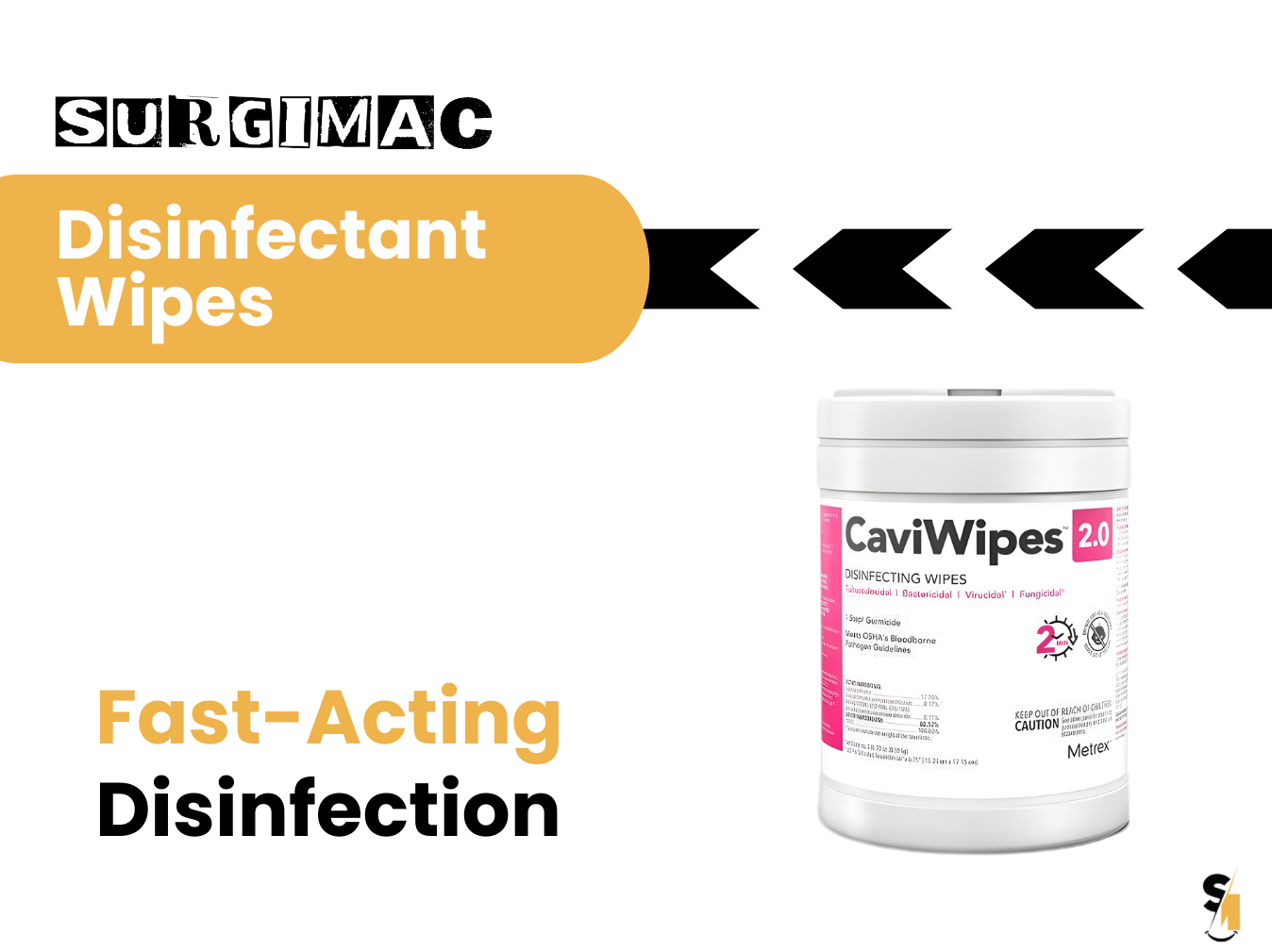
Disinfectant wipes are a staple in modern dental practices for good reason: they offer unmatched convenience. By combining the disinfectant solution and applicator into a single product, they streamline the cleaning and disinfection process, making them ideal for quick operatory turnovers. Wipes are particularly effective for non-porous surfaces like countertops, chairside equipment, and light handles. Products like CaviWipes are popular because they are pre-saturated and have a broad-spectrum kill claim against pathogens like MRSA and SARS-CoV-2. When using wipes, ensure you use enough to keep the surface visibly wet for the entire contact time specified by the manufacturer to achieve proper disinfection.
Disinfectant Sprays
Disinfectant sprays are an excellent choice for covering larger or more complex surfaces that would be difficult to address with a wipe. Think of dental chairs, large countertops, or equipment with irregular shapes. The key to using sprays effectively is strict adherence to the product’s recommended contact time. This means the surface must remain wet for the entire duration, which might require a second application. Sprays provide a reliable and economical way to disinfect broad areas thoroughly. When selecting a spray, look for one with a targeted nozzle to minimize overspray and ensure the solution is applied exactly where it’s needed for effective sterilization.
Concentrated Solutions
For practices focused on cost-effectiveness and reducing packaging waste, concentrated disinfectants are a smart option. These solutions are purchased in a concentrated form and then diluted with water in your facility according to the manufacturer’s instructions. While they offer significant savings, precision is critical. Improperly diluting a concentrate can render it ineffective or, conversely, make it too harsh and damaging to your equipment. It’s essential to have clear, documented protocols and designated mixing stations to ensure your team prepares the solution correctly every single time for consistent and reliable disinfection.
Alcohol-Based vs. Alcohol-Free Formulas
The active ingredients in your disinfectant matter, especially when it comes to surface compatibility. Alcohol-based formulas are known for their rapid, broad-spectrum efficacy against a wide range of microorganisms. However, repeated use of alcohol can dry out and damage sensitive materials like vinyl upholstery, plastics, and tubing. For these delicate surfaces, an alcohol-free formula is a better choice. Products like Sani-Cloth AF3 use alternative active ingredients, such as quaternary ammonium compounds, to provide effective disinfection without the risk of material degradation. Always check your equipment manufacturer’s guidelines before choosing a disinfectant to protect your investment.
Top Surface Disinfectants for Dental Professionals
With so many options on the market, selecting the right surface disinfectant can feel overwhelming. Your choice depends on your practice’s specific needs, the types of surfaces you’re treating, and the pathogens you need to eliminate. To simplify the process, I’ve gathered some of the most trusted and effective disinfectants used by dental professionals today. Each of these products offers a unique set of benefits, from broad-spectrum efficacy to specialized formulas for sensitive equipment. Let's look at the top contenders to help you find the perfect fit for your clinic's infection control protocol.
SurgiMac’s MacSafe Infection Control Solutions
When you need a comprehensive system you can trust, turning to a dedicated line like MacSafe is a smart move. SurgiMac’s commitment to safety, durability, and innovation is clear in every product. Each item is meticulously crafted to meet stringent standards, ensuring you have reliable tools for every step of your infection control process. Beyond surface disinfectants, the MacSafe collection includes essential personal protective equipment like high-quality nitrile exam gloves and disposable lab coats. This integrated approach allows you to standardize your protocols with products designed to work together, protecting both your team and your patients effectively.
CaviCide by Metrex
CaviCide is a powerhouse in the dental world for a reason. It’s a convenient, ready-to-use, intermediate-level disinfectant that’s effective against a wide array of pathogens. CaviWipes are particularly popular because they eliminate organisms like HIV-1, HBV, HCV, MRSA, and even SARS-CoV-2, with a swift 3-minute EPA-approved kill time. This rapid action makes them an incredibly reliable and efficient choice for fast-paced dental settings where quick operatory turnover is essential. When you need to clean and disinfect hard, non-porous surfaces with confidence, CaviCide provides the broad-spectrum coverage required to maintain a safe clinical environment.
Sani-Cloth Products
Versatility is key in a dynamic clinical setting, and Sani-Cloth products deliver just that. The line includes several formulations, but Sani-Cloth AF3 stands out for its unique properties. As a fragrance-free and alcohol-free disinfectant, it’s specifically designed for safe use on moisture-sensitive or alcohol-reactive surfaces. This makes it the ideal choice for delicate equipment, certain plastics, and other materials that could be damaged by harsh chemicals. By having an alcohol-free option in your infection control arsenal, you can ensure every surface in your practice is disinfected properly without risking damage to valuable assets.
Clorox Healthcare
The Clorox name is synonymous with disinfection, and their healthcare-specific products are formulated to meet the rigorous demands of clinical environments. Clorox Healthcare products are known for their proven effectiveness in killing a wide range of pathogens, including many that cause healthcare-associated infections (HAIs). Their bleach germicidal cleaners are a staple in many dental practices for their ability to tackle tough organisms like C. difficile. For clinicians who prioritize brand recognition and a long track record of performance, Clorox Healthcare provides a dependable solution for maintaining a sterile and safe patient environment.
Professional Surface Disinfectant Spray
Sometimes, simplicity and safety are the top priorities. A professional surface disinfectant spray offers an easy-to-use solution that is ideal for busy dental environments. Many of these sprays are designed for maximum safety and require no precautionary statements on the label, which simplifies handling and storage protocols for your staff. This ease of use doesn't come at the expense of efficacy; these sprays are formulated to effectively clean and disinfect in one step, making them a practical choice for daily use on everything from countertops to patient chairs. They offer a straightforward approach to surface disinfection without complex procedures.
How to Verify a Disinfectant's Effectiveness
Choosing a surface disinfectant is about more than just grabbing the first bottle you see. To truly protect your patients and your team, you need to be confident that the product you’re using actually does what it claims. With so many options on the market, how can you be sure your disinfectant is effective? It comes down to knowing what to look for on the product label.
Think of the label as your guide to proper use and proven efficacy. It contains critical information that confirms the product has been tested and approved for clinical environments. By understanding a few key elements—like EPA registration, kill claims, and contact time—you can cut through the marketing noise and make an informed decision. Verifying a disinfectant’s effectiveness isn’t just a best practice; it’s a fundamental part of a successful infection control protocol. Taking a moment to confirm these details ensures your efforts are creating a genuinely safe environment for everyone in your practice.
Check for EPA Registration
The first thing you should look for on any disinfectant label is an Environmental Protection Agency (EPA) registration number. This number is your assurance that the product has been rigorously reviewed by the EPA for safety and effectiveness. The agency evaluates everything from the active ingredients and kill times to surface compatibility, confirming that the manufacturer's claims are backed by scientific data. If a product doesn't have an EPA number, it hasn't been verified for use as a disinfectant in a professional setting. You can typically find this number on the front or back label, often listed as "EPA Reg. No." Using an EPA-registered hospital-grade disinfectant is the standard for maintaining a safe and compliant dental practice.
Understand Kill Claims and Contact Time
A disinfectant’s label will list the specific pathogens it is proven to kill—these are its "kill claims." More importantly, it will specify the "contact time" required to eliminate each one. Contact time, or dwell time, is the amount of time a surface must remain visibly wet with the disinfectant to be effective. This is a critical detail that is often overlooked. Disinfecting isn't an instant process, so if you spray and immediately wipe, you’re cleaning the surface but not actually killing the targeted pathogens. Different microorganisms may require different contact times, so always check the label to ensure you’re allowing enough time for the product to work against your target pathogens.
Look for ASTM Testing Standards
Beyond EPA registration, look for mentions of ASTM International testing standards. ASTM develops and publishes technical standards for a wide range of products, and their testing protocols provide another layer of validation for a disinfectant's performance. When a product states it meets specific ASTM standards, it means it has passed standardized tests for things like virucidal, bactericidal, or fungicidal activity. This verification ensures the product performs reliably under real-world clinical conditions. For dental settings, it's recommended to use an intermediate-level disinfectant that meets these rigorous standards, giving you extra confidence in your infection control protocols.
How to Read the Label Correctly
Putting it all together, reading the label correctly is a simple but vital skill for your entire team. Always check the product label to find the EPA registration number, the list of microorganisms it kills, and the specific contact time required for each. Make sure your staff understands that the surface must stay wet for that entire duration before being wiped down. Products in the MacSafe line, for example, provide clear instructions to help your team achieve effective disinfection every time. Consistent training on how to read and follow these directions is key to preventing compliance issues and, most importantly, protecting the health of your patients and staff.
Mastering the Right Application Technique
Choosing a high-quality surface disinfectant is only half the battle. To ensure you’re actually eliminating pathogens and protecting your patients, your application technique must be flawless. Even the most powerful disinfectant will fail if it’s not used correctly. Following a precise, standardized protocol for every surface, every time, is the key to effective infection control. This means paying close attention to the details, from pre-cleaning to ensuring the surface stays wet for the required duration.
Why You Must Pre-Clean Surfaces
One of the most common mistakes in clinical settings is applying a disinfectant directly to a soiled surface. Disinfectants are designed to kill microorganisms, not to remove physical debris. Bioburden—organic material like blood and saliva—can act as a shield, preventing the disinfectant from reaching and destroying the pathogens underneath. As one health resource notes, "One of the most frequent errors is skipping the cleaning step before disinfecting a surface." To ensure your disinfectant can do its job, you must first clean the surface to remove all visible soil. Use a dedicated cleaner or a two-in-one cleaner/disinfectant wipe for this initial step before proceeding with the final disinfection. This simple but critical action makes your infection control protocol significantly more effective.
Adhering to the Correct Contact Time
Disinfection is not an instantaneous process. Every EPA-registered disinfectant has a specific "contact time" or "dwell time," which is the minimum amount of time the surface must remain visibly wet to kill the pathogens listed on the label. As Reader's Digest points out, "if you spray and wipe, you may be getting a surface clean, but you’re really not doing much in the way of disinfecting." Simply spraying and immediately wiping a surface dry neutralizes the product’s efficacy. Always check the product label to find the correct contact time—it can range from 30 seconds to 10 minutes—and ensure your team allows the surface to stay wet for that full duration before wiping or air drying.
Ensuring Complete Surface Coverage
Pathogens can survive in the smallest untreated areas, so complete and thorough coverage is non-negotiable. A haphazard wipe-down will leave gaps where microorganisms can thrive and lead to cross-contamination. It's essential to use a systematic approach, such as working from top to bottom or in an "S" pattern, to ensure you don't miss any spots. Furthermore, using a single wipe for multiple surfaces is a major source of cross-contamination. As experts advise, "It is essential to use a fresh wipe for each surface to ensure effective disinfection." Use enough disposable wipes or spray to completely wet the entire surface, from chair arms and headrests to light handles and countertops.
Keeping the Surface Wet
Related to contact time is the critical requirement that the surface remains wet for the entire duration. If a disinfectant solution evaporates and the surface dries before the contact time is met, the disinfection process stops. According to one manufacturer, a common mistake is when "the surface being cleaned isn’t staying wet with the disinfectant solution for the required time to be effective." In environments with high airflow or low humidity, you may need to reapply the disinfectant to ensure it stays wet for the full contact time. This step is essential for achieving the kill claims your chosen product promises and for maintaining a truly aseptic environment for your patients and staff.
Common Disinfecting Mistakes to Avoid
Even the most effective disinfectant is useless if not applied correctly. Proper technique is just as important as product selection. Unfortunately, busy schedules and ingrained habits can lead to common errors that compromise patient safety and leave your practice vulnerable. By understanding these frequent missteps, you can refine your protocols, ensure your team is on the same page, and maintain the highest standards of infection control. Let's walk through the most common mistakes and how to correct them for a safer, more compliant clinical environment.
Not Allowing Enough Contact Time
This is probably the most common mistake in any practice. Disinfection isn't instantaneous. If you simply spray and wipe, you might be cleaning the surface, but you aren't giving the chemical agent enough time to kill the targeted pathogens. Every EPA-registered disinfectant has a specific "contact time" or "dwell time" listed on its label—the amount of time the surface must remain visibly wet to be effective. Always check the product label to find out how long the disinfectant needs to work its magic. Ensure your team allows that full contact time to be reached before wiping or lets the surface air-dry completely.
Skipping the Pre-Cleaning Step
Think of disinfection as a two-step process: you must clean before you can disinfect. Applying a disinfectant directly to a soiled surface is a recipe for failure. Organic matter like blood, saliva, and other bioburden can shield microorganisms from the disinfectant, rendering it ineffective. This debris must be physically removed first with a cleaning agent. Many practices use "cleaner-disinfectant" products, but even then, the best practice is to use one wipe to clean away visible soil and a second wipe to disinfect, ensuring you achieve the required contact time.
Mixing Chemicals Improperly
This mistake isn't just ineffective—it can be dangerous. Never mix different disinfectant products. Combining certain chemicals, like bleach and ammonia, can create toxic gases that are harmful to you and your team. Even switching between different types of disinfectants without thoroughly rinsing the surface can leave behind a residue that neutralizes the second product's active ingredients. Stick to one trusted system and ensure your entire team is trained on the proper use of your chosen infection control solutions. Consistency is key to both safety and efficacy.
Using the Wrong Product for the Surface
Not all disinfectants are created equal, and not all surfaces can handle every chemical. Using a harsh or incompatible disinfectant can lead to staining, cracking, or corrosion of your expensive dental equipment and operatories over time. For example, high-alcohol-content formulas can damage upholstery on dental chairs, while certain chemicals can harm sensitive electronic components. Always consult both the disinfectant label and your equipment manufacturer’s instructions for use (IFU) to confirm compatibility. Choosing a product with broad material compatibility can simplify your inventory and reduce the risk of accidental damage.
How to Safely Handle and Store Disinfectants
While surface disinfectants are designed to be tough on pathogens, they are still chemical agents that require careful handling. Establishing clear, consistent protocols for using, storing, and disposing of these products is fundamental to protecting your team and ensuring a safe clinical environment. A well-defined safety strategy minimizes risks like chemical exposure, accidental spills, and improper use, making certain that your infection control efforts are both effective and secure. Following manufacturer guidelines and federal regulations isn’t just about compliance—it’s about creating a culture of safety that every team member understands and practices daily.
Using the Right Personal Protective Equipment (PPE)
When handling disinfectants, it is crucial to prioritize safety by using appropriate personal protective equipment (PPE). The specific gear required can vary, so you should always read and follow the directions on the product label. At a minimum, wear protective gear like gloves or goggles to prevent skin and eye contact with potentially harmful chemicals. High-quality, durable gloves are a must for this task. The MacSafe collection offers reliable nitrile and latex exam gloves that provide excellent barrier protection, allowing your team to handle disinfectants with confidence and safety.
Storing Products Correctly
Proper storage of disinfectants is essential to prevent accidental exposure and ensure their effectiveness. To maintain their integrity, you should store all chemicals out of the reach of children and in a cool, dry place. In a clinical setting, this means using designated, well-ventilated cabinets away from patient areas. It’s also good practice to regularly check expiration dates and ensure all containers are clearly labeled and tightly sealed. This simple precaution helps mitigate risks and keeps your inventory effective and ready for use.
Implementing Clear Staff Training
Training your staff on the correct use of disinfectants is vital for compliance and safety. Even experienced dental teams can make small surface disinfection mistakes that lead to cross-contamination or non-compliance. Regular training sessions can help reinforce best practices and ensure that all team members are aware of the latest guidelines. Use these meetings to review Safety Data Sheets (SDS), demonstrate proper application techniques, and answer any questions to build confidence and competence across your entire team.
Ensuring Proper Ventilation and Disposal
Maintaining proper ventilation while using disinfectants is essential for safety. Always make sure there's good airflow in the room by opening windows or using a fan to reduce inhalation risks. This is particularly important in enclosed operatories or sterilization areas. Additionally, proper disposal is the final, critical step. Always follow the manufacturer’s instructions and local regulations for disposing of used wipes, empty containers, and any residual chemical solutions. This ensures your practice remains compliant while protecting both your team and the environment.
Where to Source Your Surface Disinfectants
Selecting the right surface disinfectant is only half the battle; ensuring a consistent and reliable supply is just as crucial for maintaining your practice's infection control protocols. Where you source your products can directly impact your inventory management, budget, and access to high-quality solutions. A strategic approach to procurement helps you avoid supply chain disruptions and ensures your team always has the necessary tools to protect patients and themselves. By carefully choosing your suppliers, you can streamline operations and focus on what matters most: providing excellent clinical care.
Partnering with a Trusted Distributor
Working with a trusted national distributor simplifies procurement and guarantees product authenticity and quality. A reliable partner like SurgiMac offers a curated selection of infection control products that meet stringent industry standards. With a diverse range of solutions designed for safety and efficacy, you gain access to meticulously crafted items from leading brands as well as high-value proprietary lines. For instance, our own MacSafe collection is engineered to provide maximum protection and procedural efficiency. A dedicated distributor also provides knowledgeable support, helping you select the best products for your specific clinical needs and ensuring you receive consistent, dependable service.
Considering Bulk Orders
For a busy dental practice, running out of essential supplies like surface disinfectants is not an option. Placing bulk orders is an effective strategy for ensuring you always have adequate stock on hand, which minimizes the risk of shortages during critical times. This approach not only provides peace of mind but also often leads to significant cost savings per unit. Reputable distributors can facilitate bulk purchases of popular disinfectant solutions, including brands like CaviCide, Sporox II, and ProCide-D. By consolidating your orders, you reduce shipping costs and the administrative time spent on frequent reordering, allowing your team to operate more efficiently.
Finding Cost-Effective Solutions
The most affordable disinfectant isn't always the most cost-effective. True value comes from a product that balances price with performance. When sourcing your supplies, look beyond the initial cost and evaluate key factors like kill time, active ingredients, safety profile, and surface compatibility. A low-cost product with a long contact time can slow down your turnover rate, ultimately costing you more in lost chair time. Always ensure the products you choose are EPA-registered intermediate-level surface disinfectants. By partnering with a comprehensive provider of dental equipment and supplies, you can compare different options to find a solution that supports both patient protection and practice efficiency.
Frequently Asked Questions
Tags
Blog posts
-
, by SurgiMac A Clinician's Guide to Absorbable Suture Material
-
, by SurgiMac A Clinician's Guide to Dental Composite Resin Kits
-
, by SurgiMac How to Disinfect with Metrex CaviWipes Correctly
