
Chlorhexidine Gluconate 0.12%: A Clinical Guide
- , by Talha Azeem
- 15 min reading time
Chlorhexidine Gluconate 0.12% vs 1.2mg/mL explained—learn why both mean the same, how to use them, and what to expect for gingivitis treatment.
"Is 0.12% the same as 1.2 mg/mL?" It's a question that frequently comes up, causing confusion for both patients and clinical staff. When a patient sees a different number on their prescription bottle, it can lead to unnecessary concern and calls to your office, questioning if they received the wrong medication. The simple answer is yes, they are the same. Both labels represent the standard prescription strength for Chlorhexidine Gluconate 0.12%, the go-to antimicrobial rinse for treating gingivitis. This guide will clear up the confusion for good, breaking down how concentrations are expressed, why this specific strength is the clinical standard, and how to confidently explain it to your patients to ensure compliance and achieve the best treatment outcomes.
Is 0.12% Chlorhexidine the Same as 1.2 mg/mL?
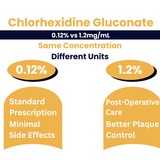
Yes, chlorhexidine gluconate 0.12% and 1.2mg/mL are the same concentration expressed in different units. Both represent the standard prescription strength used for treating gingivitis and maintaining oral health.
In our 10+ years helping patients understand their prescriptions, concentration confusion causes unnecessary worry. Many patients think they received different strengths when their bottles show different numbers, but these are just different ways to express the same amount. Read this guide to understand how concentrations work and when each is prescribed.
Decoding Concentration: % vs. mg/mL
Breaking Down Percentage (%) vs. mg/mL
The 0.12% means 0.12 grams of chlorhexidine gluconate per 100 milliliters of solution. The 1.2mg/mL means 1.2 milligrams per milliliter, which equals the same concentration.
Converting between these units: 0.12% = 1.2 grams per liter = 1.2mg/mL. Different manufacturers use different labeling conventions, but the active ingredient amount remains identical.
What Is the Standard Prescription Strength?
Most dentists prescribe chlorhexidine gluconate mouthwash 0.12% because clinical studies show this concentration effectively treats gingivitis while minimizing side effects.
This strength provides optimal antimicrobial activity without excessive staining or taste changes that occur with higher concentrations.
What is Chlorhexidine Gluconate and How Does It Work?
Chlorhexidine gluconate, often abbreviated as CHG, is a prescription-strength antimicrobial oral rinse that serves as a powerful tool in a dental professional's arsenal. It's primarily prescribed to treat gingivitis, a common form of gum disease characterized by inflammation, redness, and bleeding. Unlike over-the-counter mouthwashes that primarily freshen breath, CHG is a therapeutic agent designed to actively reduce the bacterial load in the oral cavity. Its broad-spectrum efficacy makes it a go-to solution for managing specific periodontal issues and supporting healing after certain dental procedures, helping patients maintain a healthier oral environment under professional guidance.
Mechanism of Action in Treating Gingivitis
At its core, chlorhexidine gluconate works by killing the harmful bacteria that cause gingivitis. Its positively charged molecules bind to the negatively charged cell walls of bacteria, disrupting their membranes and leading to cell death. This action effectively reduces the overall bacterial count in the mouth, which in turn helps to decrease gum inflammation, swelling, and bleeding. It's important to clarify for patients that CHG is not a substitute for mechanical cleaning. It doesn't remove existing plaque or tartar, so diligent brushing and flossing, along with professional cleanings using precise instruments like those in our Slim Series, remain absolutely essential for comprehensive periodontal health.
Role in a Comprehensive Oral Hygiene Routine
Think of chlorhexidine rinse as a short-term, targeted intervention rather than a permanent part of a daily routine. It’s prescribed to get a specific bacterial problem under control. For it to be most effective, it must be used as an adjunct to, not a replacement for, a solid oral hygiene regimen. Patients should continue their regular brushing and flossing habits to physically remove plaque biofilm. Using CHG helps create a less hostile oral environment, allowing the gums to heal more effectively. This integrated approach ensures that both the chemical and mechanical aspects of infection control are addressed, leading to better clinical outcomes.
Other Clinical Applications
Beyond treating gingivitis, chlorhexidine rinse has several other valuable clinical uses. It is frequently prescribed following surgical procedures, such as tooth extractions or implant placements, to prevent infection and promote a clean healing environment. In these cases, it complements the meticulous work done with surgical tools and wound closure products like MacSuture. CHG can also be used to manage painful mouth sores (aphthous ulcers) or to reduce oral complications in immunocompromised patients. In hospital settings, it's even used to help prevent ventilator-associated pneumonia by reducing the colonization of bacteria in the mouth that could otherwise be aspirated into the lungs.
Administering Chlorhexidine Rinse: A Step-by-Step Guide
To get the full therapeutic benefit of chlorhexidine gluconate, proper administration is key. The effectiveness of the rinse can be significantly reduced if it's not used correctly. Providing patients with clear, simple instructions can make all the difference in their treatment success. It’s not just about rinsing; it’s about the dosage, timing, and what to do before and after use. Following this protocol ensures the active ingredient has the best possible chance to work on the targeted bacteria without being neutralized or washed away prematurely, leading to faster healing and better overall results from their prescribed treatment plan.
The Correct Rinsing Protocol
The standard protocol for using 0.12% chlorhexidine rinse is straightforward but requires precision. Instruct patients to use 15 mL of the solution, which is typically marked on the provided dosage cup. They should swish the full-strength liquid vigorously in their mouth for a full 30 seconds, ensuring it reaches all areas, including between the teeth and along the gumline. It's critical to emphasize that the rinse should not be diluted with water or any other liquid. After 30 seconds, they should spit out the entire amount. Remind them never to swallow the rinse, as it is intended for topical use only.
Post-Rinse Instructions and Timing
What a patient does immediately after rinsing is just as important as the rinse itself. To allow the chlorhexidine to remain effective, they must wait at least 30 minutes before doing anything else with their mouth. This means no rinsing with water, no using other mouthwashes, no brushing their teeth, and no eating or drinking. Rinsing with water or using toothpaste too soon can inactivate the CHG, rendering the treatment far less effective. The best practice is to use it after brushing and then wait, making it the last step in their oral care routine before bed and after breakfast.
Guidance on Missed Doses
It’s easy for patients to occasionally forget a dose. The guidance here is simple: if they remember shortly after, they should use the rinse as soon as possible. However, if it’s almost time for their next scheduled dose or if it's close to a meal, it's better to just skip the missed dose and get back on track with their regular schedule. The most important instruction is to never use a double dose to try and make up for the one they missed. Consistency is more important than making up for a single lapse, and doubling up won't provide extra benefits.
A Closer Look at Different Chlorhexidine Strengths
The Role of 0.06% Chlorhexidine
Lower concentrations like 0.06% provide reduced antimicrobial activity. A study comparing 0.06%, 0.12%, and 0.2% chlorhexidine found that commercial products containing these different concentrations had varying effectiveness in preventing plaque and gingivitis.
This concentration may be prescribed for patients who experience significant side effects with standard strength but still need antimicrobial treatment.
Why 0.12% Is the Clinical Standard
The containing chlorhexidine gluconate mouthwash at 0.12% represents the most commonly prescribed concentration. Commercially available concentrations for plaque control are 0.2% used with 10 ml volume and 0.12% used with 15 ml volume.
Clinical studies consistently show this concentration reduces plaque by 50-60% and gingivitis by 30-45% when used as directed.
When Is 0.2% Chlorhexidine Used?
Some patients receive 0.2% chlorhexidine for severe gum disease or post-surgical care. Studies found no significant differences between 0.2% and 0.12% CHX mouth rinses in terms of plaque index and gingival index.
However, research suggests that lower concentrations of CHX should be prescribed to decrease side effects, since higher concentrations do not seem to be more effective in controlling dental plaque and gingivitis.
Matching the Concentration to the Clinical Need
Indications for 0.12% Chlorhexidine Gluconate
Dentists prescribe chlorhexidine gluconate mouthwash 0.12 for routine gingivitis treatment, plaque control, and maintenance therapy. This concentration balances effectiveness with minimal side effects.
Most patients receive this strength for 2-4 week treatment courses to control gum inflammation and bacterial overgrowth.
Prescribing Higher Strengths: Specific Scenarios
Oral surgeons may prescribe 0.2% concentration for post-operative infection prevention or severe periodontal disease. These cases require stronger antimicrobial action despite increased side effect risk.
Patients with compromised immune systems or high infection risk may also receive higher concentrations under careful monitoring.
How Do Different Concentrations Compare in Efficacy?
What the Clinical Studies Reveal
A commercially available mouthwash containing 0.2% chlorhexidine had statistically significant better effect in preventing dental plaque than the 0.12% and 0.06% solutions.
However, the improvement was modest, and most patients achieve excellent results with the standard 0.12% concentration when used consistently.
Comparing Side Effects by Concentration
Higher concentrations cause more tooth staining and taste changes. The 0.12% strength provides the best balance of effectiveness and tolerability for most patients.
The rationale for lowering the concentration of chlorhexidine is to reduce side effects while maintaining comparable efficacy.
Does Dosage Change with Concentration?
Adjusting the Volume for Different Strengths
Different concentrations require different volumes to deliver the same amount of active ingredient. The 0.12% strength uses 15ml per dose, while 0.2% uses 10ml per dose.
This adjustment ensures patients receive appropriate antimicrobial levels regardless of concentration prescribed.
Why Rinsing Frequency Stays the Same
All concentrations typically require twice-daily use for optimal results. The frequency doesn't change, only the volume and concentration.
Potential Side Effects and Critical Safety Precautions
While chlorhexidine gluconate is a powerful tool for managing gingivitis, it’s essential to educate patients on potential side effects and safety measures. Most side effects are manageable and temporary, but clear communication ensures patient compliance and safety. As a clinician, your guidance helps patients navigate their treatment with confidence, understanding what to expect and when to seek help. This proactive approach not only improves outcomes but also strengthens the trust between you and your patient. Let's walk through the common side effects, how to manage them, and the critical safety warnings that every patient needs to know before starting their prescription.
Common Side Effects and How to Manage Them
The most frequently reported side effects of chlorhexidine rinse are extrinsic staining of teeth and other oral surfaces, an increase in tartar formation, and temporary alterations in taste. Some patients may also experience irritation or dryness of the mouth. It's important to reassure them that these effects are typically not serious and can often be managed with simple adjustments to their oral hygiene routine. Setting these expectations upfront helps prevent patients from discontinuing their treatment prematurely. Providing clear, actionable advice for managing these common issues is a key part of the treatment plan and ensures the patient can complete the full course for maximum therapeutic benefit.
Managing Stains and Tartar Buildup
Extrinsic staining is one of the most common patient concerns. You can advise them to mitigate this by brushing thoroughly, ideally three times a day, with special attention to the areas where stains are forming. Using a tartar-control toothpaste and an electric toothbrush can also be more effective at reducing buildup. It's helpful to remind patients that this type of staining occurs on the surface of the teeth and is not permanent. Any residual stains can typically be removed during their next professional dental cleaning, where instruments like our Slim Series scalers can be used to effectively manage tartar and polish away discoloration.
Addressing Temporary Taste Changes
Some patients report that food and drinks taste different while using chlorhexidine. This is a known side effect caused by the rinse's interaction with taste receptors. A simple and effective tip to share with patients is to adjust the timing of their routine: eat their meal first, then brush their teeth, and finally, use the chlorhexidine mouthwash. This sequence minimizes the immediate impact on their palate, allowing them to enjoy their food without interference. Reassure them that this alteration in taste is temporary and should resolve completely once they finish their prescribed course of treatment.
Warning: Rare but Serious Allergic Reactions
Although extremely rare, severe allergic reactions to chlorhexidine can occur and require immediate medical attention. It is critical to instruct patients to stop using the rinse and seek emergency help if they experience any signs of a serious reaction. According to the Mayo Clinic, symptoms include a rash inside the mouth or on the skin, itching, swelling of the face, tongue, or throat, severe dizziness, or difficulty breathing. Educating patients on these warning signs is a non-negotiable part of prescribing this medication. Ensuring they understand the urgency of these symptoms is paramount for their safety and well-being.
Essential Patient Disclosures and Precautions
Before prescribing chlorhexidine, a thorough review of the patient's medical history is essential. Always ask about any known allergies, specifically to chlorhexidine itself or any other medications or ingredients. This conversation helps identify individuals who may be at a higher risk for an adverse reaction. Documenting allergies clearly in the patient's chart is a fundamental step in safe practice management. This diligence protects the patient and reinforces the high standard of care your practice provides, ensuring all treatments are administered safely and effectively.
Emergency Protocol for Accidental Ingestion
Patients should be instructed to use chlorhexidine rinse as directed and to avoid swallowing it. It's also crucial to advise them to store the bottle securely, out of reach of children. In the event of accidental ingestion, the protocol depends on the amount swallowed and the size of the person. For a small child (e.g., 22 pounds or less), swallowing more than four ounces of the rinse is considered a medical emergency requiring immediate help. For minor ingestion, side effects are typically mild, but it's always best to advise patients to contact their doctor or a poison control center for guidance.
Proper Storage and Handling
Proper storage is key to maintaining the efficacy and safety of chlorhexidine gluconate mouthwash. Advise your patients and staff to keep the product in its original, tightly sealed container at room temperature. It should be stored away from direct sunlight, extreme heat, and moisture, as these conditions can degrade the active ingredient. It is also important to prevent the solution from freezing. In a clinical setting, ensuring your dental supplies are stored correctly is a fundamental part of inventory management and patient safety. Storing it in a designated medical cabinet also helps keep it safely away from children and prevents accidental use.
Handling the product correctly in your practice is just as important. Ensure that it is dispensed into a clean measuring cup for each patient to prevent cross-contamination of the stock bottle. By sourcing your clinical products from a trusted national provider like SurgiMac, you can be confident that they have been handled and stored under optimal conditions throughout the supply chain, arriving at your practice ready for safe and effective use. These simple storage and handling protocols are easy to implement and play a significant role in delivering reliable patient care and achieving the best possible clinical outcomes.
Frequently Asked Questions About Concentrations
Is 1.2 mg/mL stronger than 0.12%?
No, these represent the same concentration expressed in different units. Both provide identical antimicrobial strength and effectiveness.
Why do some bottles say 0.12% and others say 1.2 mg/mL?
Different manufacturers use different labeling conventions. Both indicate the same standard prescription strength of chlorhexidine gluconate.
Can I use 0.2% instead of 0.12% for faster results?
Only use the concentration your dentist prescribed. Higher concentrations don't necessarily work faster and may cause more side effects.
Duration of Use for Different Strengths
Treatment duration depends on your condition, not the concentration. Most patients use any strength for 2-4 weeks as prescribed.
Which concentration has fewer side effects?
Lower concentrations like 0.12% cause less staining and taste changes compared to 0.2% while maintaining good effectiveness.
How to Select the Right Chlorhexidine Concentration
Key Factors to Consider for Your Patient
Your dentist considers your gum disease severity, previous treatment response, and side effect tolerance when selecting concentration.
Patients with sensitive mouths often do better with 0.12% strength, while those with severe infections may need higher concentrations.
Aligning Concentration with Treatment Goals
Routine gingivitis responds well to 0.12% concentration. Post-surgical care or severe periodontal disease may require 0.2% strength for optimal results.
Final Thoughts on Chlorhexidine Strengths
Chlorhexidine gluconate 0.12% and 1.2mg/mL represent the same concentration in different units. This standard prescription strength effectively treats most gum disease cases while minimizing side effects.
Higher concentrations like 0.2% offer slightly better plaque control but cause more staining and taste changes. Your dentist selects the appropriate concentration based on your specific needs and treatment goals.
Need reliable chlorhexidine gluconate mouthwash in the right concentration? Surgimac offers pharmaceutical-grade oral care products in all prescribed concentrations
Key Takeaways
- Concentration Labels Are Interchangeable: A 0.12% concentration is identical to 1.2 mg/mL. This is a common point of confusion caused by different manufacturing labels, but both represent the same standard prescription strength.
- 0.12% Is the Standard for a Reason: The 0.12% strength is the clinical standard because it provides an optimal balance, effectively treating gingivitis while minimizing common side effects like tooth staining and taste alteration.
- Proper Patient Instruction Is Key: For maximum efficacy, instruct patients to rinse for a full 30 seconds and then wait at least 30 minutes before eating, drinking, or brushing. This waiting period is critical for the medication to work properly.
Tags
Blog posts
-

, by SurgiMac A Clinician's Guide to Absorbable Suture Material
-
, by SurgiMac A Clinician's Guide to Dental Composite Resin Kits
-
, by SurgiMac How to Disinfect with Metrex CaviWipes Correctly
