


Ultrasonic Cleaning Solution Change Frequency Guide
- , by SurgiMac
- 13 min reading time

Learn how dental teams set ultrasonic cleaning solution change frequency using cleaner IFUs, soil load, visual checks, and protocols.
A busy instrument-processing area may use one ultrasonic bath for many contaminated loads. A calendar rule may not fit every unit or workday. Consider both time in the tank and the exact requirements for the cleaner, detergent, and load.
There is no universal ultrasonic cleaning solution change frequency for every dental practice. Set the interval from the exact cleaner and detergent IFUs and your practice protocol, then change sooner when their conditions or the soil load call for it. Replacing bath solution supports cleaning; it does not disinfect or sterilize instruments.
Keep the applicable instructions accessible to staff. Visible soil or discoloration may prompt a check against the replacement criteria. It does not prove whether the process is effective. CDC guidance places cleaning before disinfection or sterilization and directs practices to follow manufacturers' reprocessing instructions (CDC guidance). Those requirements provide the starting point for setting a workable change schedule.
Explore ultrasonic and enzymatic cleaning solutions for dental instrument workflows.
What Determines Ultrasonic Cleaning Solution Change Frequency?
There is no single replacement interval for every dental ultrasonic cleaner. The right ultrasonic cleaning solution change frequency depends on the exact cleaner and detergent instructions, the bath's workload and soil, and the practice's documented protocol. Do not substitute another office's schedule or a general online rule for those directions.
Start with the equipment and detergent instructions for use (IFUs). They may specify when to discard a bath, including time-based limits, operating hours, visible soil, or other conditions. Check both sets of instructions, since the cleaner's operating guidance and the detergent's preparation or use directions may address different parts of the process. The CDC advises practices to reprocess reusable dental equipment according to manufacturer instructions and to keep instrument reprocessing instructions readily available, ideally near the processing area. If the directions are unclear or appear to conflict, contact the manufacturer rather than improvising an interval. CDC dental infection prevention guidance
Next, consider what the bath is processing. A high-throughput day or instruments carrying blood, saliva, or other organic matter may burden a solution more than a light load. The CDC notes that remaining contamination can shield microorganisms and compromise later disinfection or sterilization. Take soil seriously. Follow any earlier-change conditions in the relevant IFUs and local standard operating procedure (SOP). Do not invent a universal number of cycles or hours.
The SOP should translate the applicable IFUs into a consistent workflow for the specific unit and products in use. It can identify who checks the bath, which manufacturer-defined triggers require replacement, and how staff handle unusually heavy contamination or an uncertain event. Where guidance does not specify an interval, the practice should seek clarification from the manufacturer and document its approved approach rather than treating a generic schedule as authoritative.
Finally, keep bath replacement in its proper role. The CDC describes ultrasonic cleaners as automated equipment for removing debris, and says cleaning must occur before disinfection or sterilization. Replacing solution supports the cleaning process; it does not by itself establish that instruments are clean, disinfected, or sterile. A clear-looking bath is not proof of adequate cleaning, so staff must follow the complete device and instrument reprocessing instructions.
How Should the Cleaner and Detergent IFU Set the Baseline?
Use the instructions for the exact ultrasonic cleaner and detergent in your practice, along with the instrument manufacturers' reprocessing instructions. The CDC advises dental practices to reprocess reusable equipment according to manufacturer instructions and keep those instructions readily available near the processing area. If an IFU is unclear, contact the manufacturer rather than filling the gap with a schedule borrowed from another device.
The BioSonic UC125 owner's guide illustrates why model details matter. For that unit, it directs users to change the tank solution daily, or sooner if it appears soiled or discolored. When using a beaker, the guide says to replace its solution after each use. These are instructions for the UC125, not a universal dental-office interval.
Read the BioSonic UC125 owner's guide for the full model-specific instructions.
The UC125H manual describes a different solution timer recommendation: change the solution at least every eight operating hours, or when it becomes visibly cloudy or soiled. It also instructs users to press the solution reset key after each change. That timer tracks use for the UC125H; it does not set a schedule for other cleaners.
| Guide example | Solution-change direction |
|---|---|
| BioSonic UC125 | Daily, or sooner if soiled or discolored; beaker solution after each use. |
| BioSonic UC125H | At least every eight operating hours, or sooner if cloudy or soiled; reset the timer after each change. |
These examples apply only to the named models. Check the exact cleaner and detergent instructions used in your practice.
Check the detergent IFU as well as the equipment guide. Confirm the required preparation and any product-specific limits, then follow the more applicable instructions for your cleaner, solution and workload. If the detergent's directions and device guidance are difficult to reconcile, ask the manufacturers for clarification and document the practice's approved procedure. A clear-looking bath alone is not a reason to extend a replacement interval beyond the applicable IFUs.
How Does Soil Load Affect the Next Change?
A heavily soiled load may call for a change before the routine point in a practice's procedure. Ultrasonic cleaners remove debris such as blood and saliva. Follow the device and detergent IFUs if the bath collects substantial soil. CDC recommends automated equipment, including ultrasonic cleaners, to remove debris and reduce worker exposure to blood. See CDC dental infection prevention guidance.
Visible soil or discoloration is a practical warning when the applicable IFU identifies it as a change condition. For example, the BioSonic UC125 guide says to change tank solution daily, or sooner if it appears soiled or discolored. That is a model-specific instruction, not a universal interval for other ultrasonic units or detergents. Keep the distinction explicit in the SOP: appearance can trigger a change, but a clear-looking solution is not proof that it remains suitable or that instruments are clean.
Use these practice-level triggers to check the IFU and follow the written protocol:
- Routine interval is due: Replace the bath at the time or use limit specified for the exact unit and cleaning product.
- Visible soil or discoloration: Change it sooner when the IFU says to do so, as the UC125 guidance does.
- Heavy soil load: Apply the practice's established earlier-change rule if heavily contaminated instruments have added substantial debris to the bath. Do not invent a numerical threshold.
- Spill or uncertain contamination: Follow the unit and detergent IFUs and the practice's contamination-response procedure before returning the bath to use.
- End-of-day condition: Change the solution at day-end when required by the IFU or the practice's protocol; do not assume every unit uses the same schedule.
These triggers support a consistent cleaning workflow, not a claim that changing the bath disinfects instruments. CDC identifies ultrasonic cleaners as equipment for debris removal. Cleaning remains a distinct step in reprocessing; continue with the instrument-specific instructions for subsequent steps. If an IFU does not explain what to do after a heavily contaminated load or spill, contact the manufacturer for clarification and document the practice's approved response.
What Should Staff Monitor During the Workday?
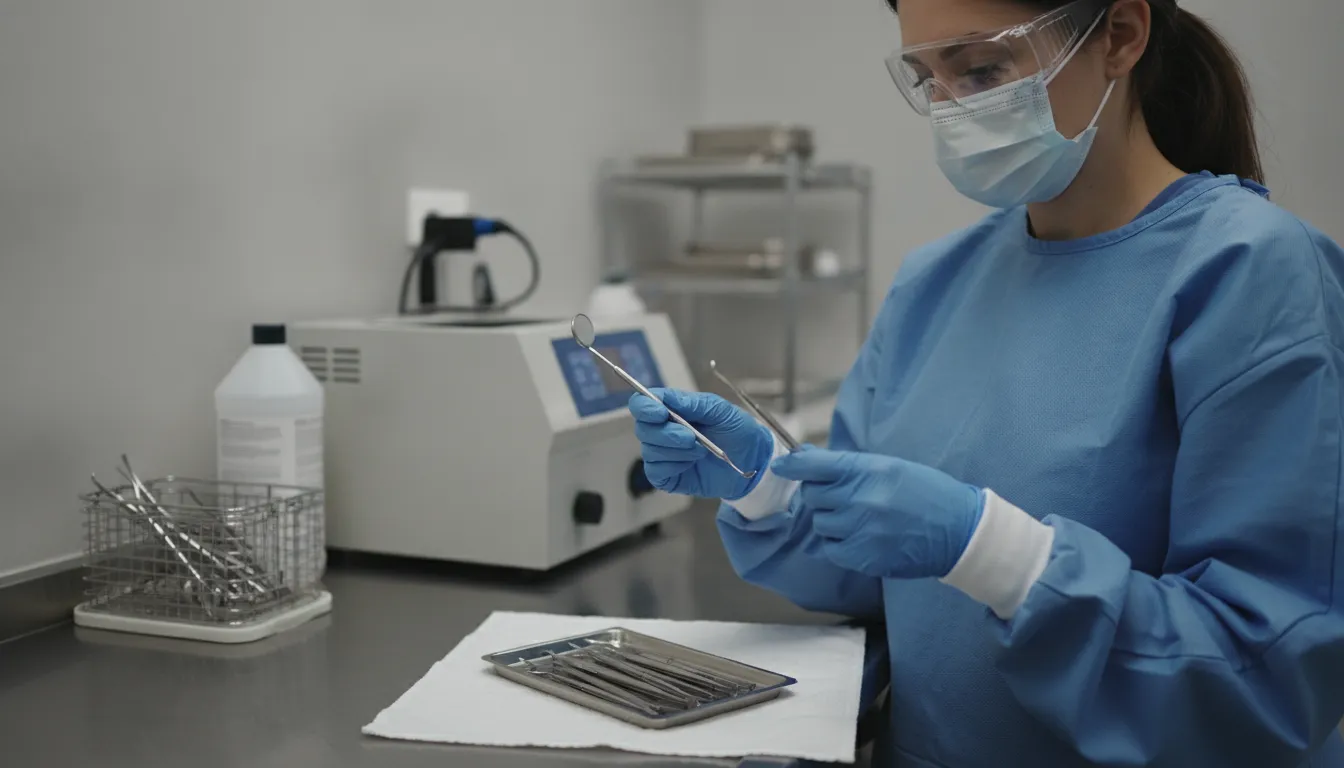
Make solution checks part of the instrument-processing routine rather than relying on memory or waiting for a scheduled change. At the start of use and between loads, staff can look for visible soil, cloudiness, discoloration. Or other changes that the cleaner or detergent instructions identify as a reason to replace the bath. Follow the specific product and device IFUs, along with the practice protocol, for elapsed operating time, cycle tracking, and any change criteria. There is no single visual cue or timer setting that applies to every unit and cleaning solution.
Preparation matters as much as change timing. Prepare the detergent at the dilution and concentration stated in its IFU, and fill the tank to the level specified for the device. Do not estimate a dose or top off a bath in a way that changes the intended concentration. Load instruments in compatible baskets and arrange them according to the equipment and instrument instructions, without overloading or blocking access of the solution to items. If instructions conflict or are unclear, pause and confirm the correct procedure with the manufacturer rather than improvising.
After the cycle, inspect instruments after cleaning and drying for remaining debris, including soil in joints, serrations, or other areas that are difficult to see. The CDC's dental infection-prevention guidance says cleaning should precede disinfection or sterilization and that instruments should be inspected after cleaning and drying. If residue remains, do not treat the load as clean; follow the instrument and cleaner IFUs and the practice's re-cleaning procedure. Personnel assigned to reprocessing should be trained in the required steps.
Use appearance as a trigger for action, not as a test of bath performance. A clear-looking bath does not demonstrate that cleaning was adequate, and visual inspection cannot establish that an instrument is disinfected or sterile. Ultrasonic cleaning is one cleaning method in a larger reprocessing sequence, not a substitute for the required downstream steps. Also distinguish bath monitoring from maintenance of ultrasonic scaler inserts: SurgiMac's scaler insert care guide addresses the insert, not when to replace ultrasonic bath solution.
How Can Teams Document Solution Changes Consistently?
A short, consistent bath-change record helps staff follow the practice's written procedure and hand off the ultrasonic cleaner clearly between shifts. Reviewing entries can help a team spot missed steps or unclear triggers and revise its SOP, but the log itself does not establish a replacement interval. Treat it as an operational aid, not a CDC-mandated ultrasonic-bath form. CDC recommends keeping reprocessing instructions readily available, training personnel for assigned processing tasks, and maintaining sterilization records in accordance with applicable state and local regulations. Those recommendations do not establish a required ultrasonic-bath log template. CDC dental infection prevention guidance also distinguishes cleaning from the later disinfection or sterilization steps.
Use a checklist like this in the practice SOP, adapting fields to the cleaner's and detergent's instructions for use (IFUs) and local policy:
- Identify the event. Record the date and time of the change, plus the ultrasonic unit ID or other identifier used by the practice. If the unit has a solution-use timer or reset function, follow its IFU and note the reset when your procedure calls for it.
- Identify the solution. Enter the product name and lot number if required by local procedure. Record that the solution was prepared according to the product IFU, including any locally required preparation details. Do not rely on memory or an unmarked container to establish what was used.
- Record who completed it. Add the staff member's initials or another identifier specified by the practice. CDC says personnel assigned to reprocessing should be trained in the required steps, so the SOP should be accessible to the staff who perform them.
- Document why the bath changed. Select the applicable trigger, such as the interval or condition specified in the equipment or detergent IFU. Visible soil or discoloration where the IFU or practice protocol says to change it, or a scheduled end-of-shift change. Do not record appearance as proof that cleaning was effective; used ultrasonic solutions can contain bacteria.
- Note follow-up, if needed. Record any corrective action, notification, or unresolved issue under the practice's procedure. If instructions are unclear, consult the manufacturer rather than inventing a schedule.
Keep this bath-change documentation distinct from sterilizer monitoring and sterilization records. CDC advises using mechanical, chemical, and biological sterilization monitors according to the sterilizer manufacturer's instructions and maintaining sterilization records under state and local regulations. Those records document a different process; a bath log does not replace them. For the next stages after cleaning, see SurgiMac's overview of sterilization in the dental office.
Review ultrasonic and enzymatic cleaning solutions for your practice.
How Does Bath Replacement Fit the Full Reprocessing Sequence?
Ultrasonic cleaning is one step in instrument processing. The bath and detergent remove debris and organic matter. They do not disinfect or sterilize instruments. CDC calls cleaning the first step in decontamination. It should come before disinfection or sterilization. Blood and saliva left on instruments can shield microorganisms and compromise later steps. See CDC dental infection-prevention guidance for the full sequence.
After the cycle, follow the equipment and instrument IFUs. CDC says to inspect dried instruments, then wrap, package, or place them in a container before heat sterilization. Visible residue means the instrument needs attention. Do not assume a fresh bath or another cycle is enough. Use the IFUs and practice procedure to decide whether further cleaning is needed. Then continue with required processing.
CDC recommends heat sterilization for critical items that penetrate soft tissue or bone. Most heat-tolerant semicritical items should also be heat sterilized. Instrument classification and manufacturer directions determine the next step, not the bath's replacement time.
When sourcing a detergent, confirm that its label and IFU match the cleaner and intended instruments. SurgiMac's ultrasonic and enzymatic cleaning solutions collection is a relevant place to review products, but product selection and use should follow their directions. For the later stages of the process, see the practice's disinfection and sterilization guide.
Frequently Asked Questions
How often should ultrasonic cleaner solution be changed?
Follow the instructions for the exact cleaner and detergent used in the practice. Replacement limits differ by device and product. Change sooner when the applicable IFU or practice protocol identifies visible soil, discoloration, a use-time limit, or another trigger.
Can ultrasonic cleaning solution be reused?
Reuse only within the conditions and time limits stated in the cleaner and detergent IFUs and the practice SOP. Do not extend use based only on a clear appearance. If the bath is visibly contaminated or the instructions call for replacement, prepare fresh solution before continuing.
What does cloudy or discolored ultrasonic solution mean?
Cloudiness or discoloration can be a replacement trigger when the applicable IFU says so. For example, a BioSonic UC125 guide directs users to change tank solution daily or sooner if it appears soiled or discolored. That instruction applies to that model, not every dental ultrasonic cleaner.
Does an ultrasonic cleaner sterilize dental instruments?
No. Ultrasonic cleaning removes debris as a cleaning step. It does not replace the separate disinfection or sterilization steps required by the instrument's IFU and the practice's reprocessing protocol.
Choose Cleaning Solutions for Your Practice
Review the available ultrasonic and enzymatic cleaning solutions, then confirm the product is appropriate for your equipment and instrument workflow. Follow each product's directions for preparation and use.
Explore SurgiMac's ultrasonic and enzymatic cleaning solutions.
Tags
Blog posts
-
, by SurgiMac A Clinician's Guide to Absorbable Suture Material
-
, by SurgiMac A Clinician's Guide to Dental Composite Resin Kits
-
, by SurgiMac How to Disinfect with Metrex CaviWipes Correctly
