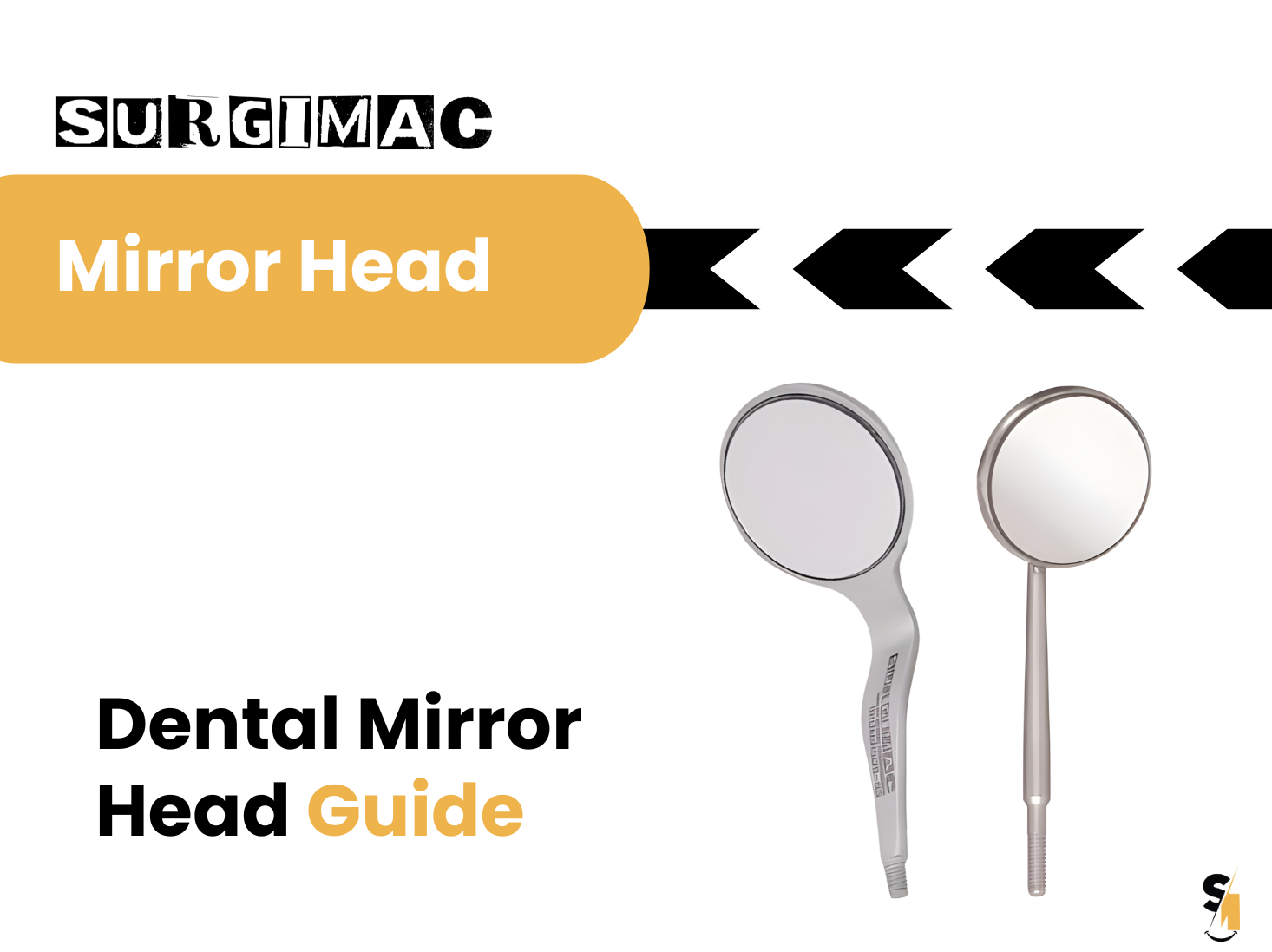
Find out how to choose the best dental mirror heads for your practice, with tips on sizes, materials, compatibility, and trusted brands for clinical success.
Even the most timeless dental instruments are benefiting from modern innovation, and the dental mirror is no exception. Today’s advancements are engineered to solve common clinical frustrations, from the constant battle with fogging to the challenge of achieving clear, shadow-free illumination in posterior regions. With features like anti-fog coatings, integrated LED lighting, and advanced front-surface designs, modern dental mirror heads offer unprecedented clarity and efficiency. These technologies transform a basic diagnostic tool into a high-performance instrument, allowing you to work with greater confidence and precision while reducing eye strain and procedural interruptions.
Key Takeaways
-
Prioritize Technical Specs for Precision: A mirror's performance hinges on more than its size. For the clearest, most accurate view, always select rhodium-coated, front surface mirrors and confirm handle compatibility—cone socket or simple stem—to prevent ordering errors.
-
Adapt Your Tool to the Clinical Task: Use smaller mirror heads (#0-#3) for pediatric patients to ensure comfort, and stick with standard #4 or #5 sizes for adult exams. For posterior work, a rigid, non-flexible mirror head is essential for effective retraction and a stable view.
-
Maintain Mirrors for Peak Performance: Treat mirror heads as semi-consumable instruments to ensure consistent diagnostic quality. Regularly inspect them for scratches or dullness and keep extras on hand for immediate chairside replacement, preventing any disruption to your workflow.
What is a Dental Mirror Head?
A dental mirror head is one of the most fundamental tools in any dental practice, but its simplicity can be deceiving. This small, angled mirror is a critical diagnostic instrument that attaches to a handle, allowing you to see parts of the oral cavity that would otherwise be impossible to view. It’s your go-to for everything from routine check-ups to complex procedures, providing the visibility needed for accurate assessments and precise work.
Think of it as an extension of your clinical vision. A high-quality mirror head doesn’t just show you what’s there; it provides a clear, undistorted image that helps you identify early signs of decay, assess periodontal health, and perform restorative work with confidence. Choosing the right one is a small decision that makes a big impact on your daily practice and patient outcomes.
Key functions in clinical practice
Beyond providing indirect vision, the dental mirror head is a multi-functional workhorse. Its primary role is to give you a clear view of hard-to-see areas, especially the distal surfaces of posterior teeth and lingual surfaces. But it also serves two other vital functions: retraction and illumination. The smooth, rounded back of the mirror head is perfect for gently retracting the tongue or cheek, creating a clear field of view and protecting soft tissues. Additionally, it can be used to reflect your overhead light onto specific surfaces, illuminating dark corners of the mouth for a more thorough examination. The quality of your dental instruments directly impacts diagnostic accuracy, patient comfort, and overall efficiency.
Understanding the components
A dental mirror head consists of two main parts: the reflective surface and the stem, which connects to a separate handle. The best mirrors feature a rhodium-coated front surface, which provides a sharp, ghost-free reflection and superior scratch resistance. This is a significant step up from standard back-surface mirrors, where the reflection can appear slightly distorted. The stem typically uses a cone socket or simple stem design to screw into a handle. This modularity allows you to pair your preferred mirror head with an ergonomic handle, like those found in SurgiMac’s Pro Series, to enhance comfort and control. Because mirror heads can scratch or dull over time, it’s wise to treat them as semi-consumable and always keep replacements on hand.
Exploring Different Types of Dental Mirror Heads
Once you understand the basic function of a dental mirror, the next step is to select the right head for your clinical needs. Mirror heads aren't a one-size-fits-all tool; they come in various designs, each suited for different tasks, patient types, and practitioner preferences. The primary factors to consider are whether you need a single or double-sided mirror, the size of the mirror face, and the material it's made from. Getting these details right ensures better visibility, improved ergonomics, and more efficient procedures.
Single-sided vs. double-sided mirrors
When ordering new mirror heads, it is crucial to specify whether you want single-sided or double-sided mirrors. This simple distinction can prevent costly ordering errors. While single-sided mirrors are the traditional standard for routine examinations, double-sided mirrors offer a significant advantage in efficiency. They allow you to retract the cheek or tongue with one side while using the other for indirect vision, eliminating the need to constantly rotate the instrument. This dual functionality can streamline complex restorative or surgical procedures, saving valuable chair time. Making a conscious choice between the two equips your practice with the right dental instruments for every scenario.
How size impacts clinical use
The size of the mirror head can significantly affect its clinical use. Larger mirrors, such as a #5, provide a broader field of view that is excellent for retraction and general assessment but can be cumbersome in tight spaces. Conversely, smaller mirrors, like a #4, are easier to maneuver in posterior areas or for pediatric patients, though they offer a more limited view. The choice often comes down to balancing visibility with accessibility. Pairing the correctly sized mirror head with an ergonomic handle, such as those found in the SurgiMac Air Series, enhances control and reduces hand fatigue during long procedures, ensuring both precision and comfort.
Comparing materials: stainless steel, glass, and plastic
Dental mirrors are typically made from various materials, including stainless steel, glass, and plastic, each with distinct advantages. Stainless steel heads are highly durable and withstand repeated sterilization cycles, but their reflective quality can be lower than glass. For the clearest, most accurate reflection, rhodium-coated front surface glass mirrors are the clinical standard, providing a sharp, ghost-free image and excellent scratch resistance. For situations prioritizing infection control and convenience, disposable plastic mirrors are a practical option. While they don't offer the same clarity or durability, they eliminate the need for sterilization and are ideal for patient kits or outreach programs.
How to Choose the Right Dental Mirror Heads
Selecting the right dental mirror head goes far beyond simply picking a size. To truly enhance your clinical workflow, you need to consider a combination of factors that impact visibility, ergonomics, and longevity. The ideal mirror head should feel like a natural extension of your hand, providing a clear, undistorted view without causing fatigue. Making an informed choice means looking at everything from magnification and handle compatibility to the durability of the materials and the quality of the surface coating. These details directly influence diagnostic accuracy and procedural efficiency, making your selection a critical part of your instrument toolkit.
Size and magnification
The size of the mirror head you choose directly impacts your field of view and access to different areas of the oral cavity. While larger mirrors offer a broader view, smaller ones are essential for reaching tight posterior spaces. The most common sizes, #4 and #5, are versatile for general examinations. Magnifying mirrors can be helpful for detailed work, but it’s crucial to ensure they provide a true, distortion-free reflection. One common mistake is choosing a mirror with too much head flexibility. For posterior work, a rigid head with a firm 90° angle is recommended to provide the stability needed for precise retraction and indirect vision.
Handle compatibility: cone socket vs. simple stem
Before you purchase replacement mirror heads, it’s essential to confirm their compatibility with your existing handles. One of the most frequent errors is assuming any mirror head will fit any handle, which is simply not the case. The two primary attachment types are cone socket and simple stem. Cone socket heads screw onto a threaded handle, offering a secure, stable connection. Simple stem heads, on the other hand, slide into the handle and are held by friction. Always check which system your practice uses to avoid purchasing incompatible dental instruments and ensure a seamless fit with your preferred ergonomic handles, like those in our Air Series collection.
Durability and sterilization needs
Dental mirror heads are subjected to constant use and rigorous sterilization cycles, so durability is non-negotiable. High-quality stainless steel heads are built to withstand repeated autoclaving without corroding or degrading. It’s helpful to think of mirror heads as semi-consumable items. Over time, even the best mirrors can become scratched, diminishing their reflective quality. To maintain optimal visibility, it’s smart to order extras for quick and easy chairside replacement. Investing in durable, well-made mirror heads ensures they remain a reliable part of your sterilization and clinical workflow, preventing interruptions during patient care.
Surface coatings and scratch resistance
The mirror’s surface coating is what determines its clarity and longevity. For the most accurate diagnostics, front surface mirrors are the gold standard. Unlike back surface mirrors that can create a "ghost" image, front surface mirrors have the reflective coating on the top layer, providing a single, crisp reflection. Rhodium-coated front surface mirrors are highly recommended because they are exceptionally bright, scratch-resistant, and offer a true, color-accurate image. This level of clarity is similar to the enhanced visibility offered by our Titanium Black Series instruments, which are designed to reduce glare and improve focus during delicate procedures.
Selecting the Best Mirror Head Size
The size of your dental mirror head directly influences diagnostic accuracy, procedural efficiency, and patient comfort. Choosing the right size isn't a one-size-fits-all decision; it requires a thoughtful approach based on the patient's age, the specific procedure, and the area of the mouth you need to visualize. A mirror that’s too large can be uncomfortable for the patient and difficult to maneuver, while one that’s too small may not provide an adequate field of view. By tailoring your selection to each clinical scenario, you can improve visibility, reduce chair time, and ensure a better experience for everyone involved. Let's break down how to select the perfect size for different patient needs.
Sizing for pediatric patients
Working with children requires tools that are adapted to their smaller anatomy and unique needs. For pediatric patients, smaller mirror heads—typically sizes #0 through #3—are essential for comfortable and effective examinations. These sizes allow for easy maneuvering within a small oral cavity without causing gagging or discomfort. It’s also helpful to think of mirror heads as semi-consumable, especially in a busy pediatric practice. As one industry publication notes, "Extra mirrors should be ordered for quick and easy chairside replacement as needed." Having spares of your essential dental instruments on hand ensures you’re always prepared, helping to keep appointments running smoothly and creating a more positive dental experience for your youngest patients.
Sizing for adult examinations
For routine adult examinations, sizes #4 and #5 are the industry standard. A #5 mirror head provides a wider field of view, making it ideal for general check-ups and retracting the cheek. A #4 mirror offers a slightly smaller profile, which can be advantageous for accessing specific areas with greater precision. When working in the posterior region, the rigidity of the instrument is just as important as its size. A common mistake is "selecting a mirror with excessive head flexibility. For posterior work, a rigid 90° angle is recommended." This stability is crucial for clear, undistorted indirect vision. Pairing the right mirror head with a durable handle from a trusted line like SurgiMac's Pro Series ensures you have a reliable tool for accurate diagnostics.
Ensuring posterior access
Visualizing the distal surfaces of molars is one of the most challenging aspects of a dental exam, and your mirror head size is a critical factor for success. A properly sized mirror allows you to gently retract the tongue and cheek to gain clear, unobstructed access. If the mirror is too large, it can be difficult to position correctly; if it's too small, it won't provide enough retraction or a sufficient viewing area. It's also vital to ensure your mirror head and handle are compatible. As we've covered in our guide on cone socket vs. simple stem heads, "assuming that any mirror head will fit any handle...is simply not the case." Matching the right components and choosing an ergonomic handle, like those in our Air Series, can significantly improve your control and comfort during these demanding procedures.
A Closer Look at Mirror Head Materials
The material of your dental mirror head directly impacts its performance, durability, and even patient comfort. From the rugged reliability of stainless steel to the brilliant clarity of coated glass, each option offers distinct advantages for different clinical scenarios. Understanding these differences is key to selecting a tool that not only provides a clear view but also stands up to the demands of daily sterilization and use. Let’s break down the most common materials to help you make an informed choice for your practice.
The pros and cons of stainless steel
Stainless steel is the workhorse of the dental world for a reason. Mirror heads made from this material are incredibly durable, resistant to corrosion, and can withstand repeated sterilization cycles without degrading. This makes them a cost-effective and reliable choice for general use. The primary drawback, however, is their weight. A heavier mirror head can contribute to hand and wrist fatigue during longer procedures. To mitigate this, consider pairing a stainless steel head with an ultra-light, ergonomic handle, like those found in our Air Series instrument line, to create a more balanced and comfortable tool for daily practice.
Why glass offers superior clarity
When it comes to diagnostic accuracy, nothing beats the optical quality of glass. Glass mirror heads provide a perfectly clear, sharp, and distortion-free reflection, which is essential for identifying subtle details like incipient caries, calculus deposits, or hairline fractures. Unlike plastic alternatives that can warp or scratch easily, glass maintains its integrity, ensuring you get a true image every time. For precise restorative and diagnostic work, the superior clarity of glass is non-negotiable. Investing in high-quality glass mirrors is an investment in your clinical confidence and diagnostic precision, forming a core part of your dental instrument toolkit.
The premium performance of rhodium-coating
For the absolute best in visibility and durability, rhodium-coated mirrors are the top-tier choice. Rhodium, a precious metal, is applied as a thin layer over the glass surface, creating a mirror that is exceptionally bright, sharp, and scratch-resistant. This coating significantly enhances light reflection, making it easier to see in the dark posterior regions of the mouth. It also prevents the tarnishing that can occur with standard mirrors over time, ensuring a long service life. This premium option is ideal for clinicians who perform highly detailed procedures and demand the highest level of performance from their instruments.
When to use plastic mirrors
While glass offers superior optics, plastic mirror heads have their own important role in a clinical setting. Their main advantages are that they are lightweight and completely shatterproof. This makes them an excellent and safe option for pediatric dentistry, where a child might unexpectedly move or bite down. They are also ideal for patient education, outreach programs, or as single-use disposables to support infection control protocols. Though they may not provide the same level of clarity as glass and can scratch more easily, their safety and affordability make them a practical choice for specific situations where durability and patient safety are the top priorities.
Common Mistakes to Avoid When Buying Mirror Heads
Selecting the right dental mirror head seems straightforward, but a few common missteps can lead to clinical frustration, wasted budget, and compromised patient care. Even small details, like the connection type or handle weight, can impact your daily workflow. By being aware of these potential pitfalls, you can make more informed purchasing decisions that support efficiency and precision in your practice. Let's walk through the most frequent errors clinicians make and how you can easily sidestep them.
Assuming universal handle compatibility
One of the most common mistakes is assuming any mirror head will screw onto any handle. Unfortunately, not all threading is created equal. The two primary styles are cone socket and simple stem, and they are not interchangeable. Purchasing a case of mirror heads only to find they don't fit your existing handles can bring your schedule to a halt. Before placing an order, always confirm the connection type of both your handles and the mirror heads you intend to buy. This simple check ensures you get a secure, stable fit every time, preventing wobbly mirrors and procedural delays.
Choosing the wrong flexibility
While a bit of flexibility might seem useful, a mirror head that is too pliable can be a significant disadvantage, especially when working in the posterior region. For retracting the tongue or cheek while examining molars, a rigid 90° mirror head provides the stability and control you need for a clear, unobstructed view. An overly flexible mirror can bend under pressure, causing you to lose sight of the treatment area and potentially leading to inefficient work. Always consider the primary use case; for most diagnostic and restorative procedures, a firm, reliable mirror head is the superior clinical choice.
Forgetting to stock replacements
It’s easy to think of mirror heads as permanent tools, but they are best treated as semi-consumable items. Surfaces can get scratched over time, diminishing their reflective quality and diagnostic clarity. A mirror head can also be accidentally dropped or damaged during sterilization. Waiting until your last one is compromised to order more can disrupt your workflow. A smart practice is to always order extra mirrors so you have replacements ready for a quick chairside swap. This ensures you always have a clear, pristine mirror on hand without any downtime.
Overlooking ergonomics
Clinician comfort is not a luxury—it's essential for preventing musculoskeletal strain and maintaining precision throughout the day. Overlooking the ergonomics of your instruments, including your dental mirror, is a mistake that can lead to fatigue and discomfort. The weight, balance, and handle diameter all contribute to how the tool feels in your hand. When selecting mirror heads, consider pairing them with lightweight, well-balanced handles. For example, instruments from SurgiMac’s Air Series are designed with hollow handles to reduce hand fatigue, allowing you to perform procedures with greater comfort and control.
A Review of Leading Dental Mirror Head Brands
When you're selecting dental mirror heads, the brand name on the package is more than just a label—it’s often a direct reflection of quality, durability, and clinical innovation. Different manufacturers prioritize specific features, whether it's superior ergonomic design, advanced optical clarity, or unique modular systems. Understanding what each leading brand brings to the table helps you equip your practice with tools that align perfectly with your clinical standards and procedural demands. A reliable mirror is a fundamental component of accurate diagnostics and treatment, making this choice a critical one for every practitioner. Getting it right means better visibility, reduced chair time, and improved patient outcomes. Let's look at a few of the most trusted names in the industry and what sets their products apart, so you can make an informed decision for your practice.
SurgiMac's precision mirror solutions
SurgiMac offers a range of ergonomic mouth mirrors designed for exceptional clarity and precision. Tailored to meet the demands of busy dental professionals, these mirror heads ensure optimal visibility for every procedure, from routine examinations to complex restorative work. Their focus on high-quality materials means you get a durable, autoclavable tool that resists scratching and distortion. When paired with a well-balanced handle, like those found in the Air Series instrument line, these mirrors help reduce hand fatigue and improve control, allowing you to perform at your best throughout the day.
Innovations from Hu-Friedy
Hu-Friedy is a name synonymous with consistent craftsmanship in the world of dental instruments. As a key player in the market, their commitment to quality and innovation has made them a trusted choice for generations of dental professionals. Their mirror heads are known for their longevity and reliable performance, providing clear, sharp reflections that stand up to the rigors of daily sterilization. SurgiMac is proud to be a distributor of leading brands like Hu-Friedy, ensuring practices have access to the premium tools they need to deliver excellent patient care.
The clarity of Crystal HD mirrors
For clinicians who prioritize visual acuity above all else, Crystal HD mirrors are an excellent choice. These mirrors are reportedly 40% brighter than standard rhodium-coated mirrors, which significantly enhances visibility in the oral cavity. This improved brightness helps reduce eye strain and fatigue during long procedures. Furthermore, their surfaces are highly scratch-resistant, ensuring a long-lasting, clear view. The superior clarity offered by Crystal HD mirrors can make a noticeable difference in diagnostic accuracy, allowing for the early detection of caries and other subtle oral health issues.
Zirc's quality and design
Zirc stands out for its focus on customization and efficiency. The company offers many different kinds of mirror heads, allowing clinicians to mix and match components to create a unique mirror tailored to their specific preferences. This flexibility ensures that every dental professional can find the perfect fit for their hand size, grip style, and procedural needs. Zirc's commitment to smart, practical design extends to their entire line of dental instruments, providing solutions that help streamline workflows and keep the operatory organized and efficient.
Modern Innovations in Mirror Head Technology
The dental mirror might seem like a simple tool, but modern advancements are transforming its functionality. These innovations focus on solving common clinical challenges like fogging, poor lighting, and image distortion. By integrating new materials and technologies, today's mirror heads offer unprecedented clarity and efficiency, allowing you to perform procedures with greater confidence and precision. Let's look at the key developments that are setting new standards for intraoral visualization.
Anti-fog coatings and treatments
The constant battle with mirror fog is a familiar frustration that interrupts workflow. Exhaled breath and aerosol-generating procedures can instantly obscure your view, forcing you to pause and wipe the mirror. Modern anti-fog coatings and disposable treatments offer a practical solution. Products like Fogheadz are designed to create a surface that resists condensation, ensuring a consistently clear view throughout the procedure. This simple innovation saves valuable time, reduces procedural interruptions, and allows you to maintain focus on the patient. By eliminating the need for frequent wiping or air-drying, anti-fog technology supports a smoother, more efficient clinical experience and is a must-have feature in a busy practice.
Integrated LED lighting
Proper illumination is critical for accurate diagnosis and treatment, yet achieving a clear, shadow-free view of the entire oral cavity can be challenging with overhead lighting alone. A major advancement is the integration of LED lighting directly into the dental mirror. These illuminated mirrors provide bright, focused light exactly where you need it, enhancing visibility in hard-to-reach posterior areas. This direct illumination improves procedural outcomes by revealing fine details that might otherwise be missed. It also helps reduce eye strain and fatigue for the clinician over the course of a long day. This technology is a perfect example of how smart design can elevate a fundamental dental instrument into a high-performance tool.
Front surface vs. back surface design
The location of the reflective coating on a mirror head significantly impacts image quality. Traditional mirrors are often "back surface," where the reflective layer is behind the glass. This design can create a faint double image, or "ghosting," because light reflects off both the front surface of the glass and the back reflective layer. For clinical precision, this is unacceptable. High-quality dental mirrors use a front surface design, where the coating is on the top of the glass. This provides a single, crisp, and distortion-free reflection. Rhodium-coated front surface mirrors are the industry standard, ensuring you see a true, accurate image for precise diagnostic and restorative work.
Advanced reflective coatings
Beyond the front surface design, the coating material itself is a key area of innovation. While rhodium has long been the go-to for its brightness and durability, newer coatings offer even greater performance. Advanced options, such as Crystal HD, are engineered to be significantly brighter—sometimes up to 40% more than rhodium—and offer superior scratch resistance. This enhanced brightness reduces eye strain and fatigue by reflecting more light, making it easier to see details without needing to adjust your overhead lamp. Investing in mirror heads with these advanced coatings means you get a clearer view and a longer-lasting instrument, supporting the high standards of your practice. You can find a variety of high-quality dental supplies to complement these tools.
How to Maintain and Sterilize Your Mirror Heads
A high-quality dental mirror is an investment in diagnostic precision, but its lifespan and performance depend entirely on how you care for it. The biggest enemies of your mirror are improper cleaning and handling. Establishing a consistent maintenance routine protects the reflective surface, ensures patient safety, and extends the usability of your instruments. Proper care isn't just about cleanliness; it's about preserving the clarity that is essential for accurate examinations and procedures. By following a few key steps, you can keep your mirrors in optimal condition and know exactly when it’s time for a replacement.
Following proper cleaning protocols
Effective cleaning begins immediately after use to prevent bioburden from drying on the surface. Gently rinse the mirror head under running water, then use a soft brush and a neutral pH enzymatic cleaner to remove any remaining debris. Avoid abrasive pads or harsh chemicals, as these can permanently scratch or damage the mirror's coating. Adhering to a strict infection control protocol is non-negotiable for patient safety and instrument longevity. Always consult the manufacturer’s instructions for specific cleaning agents compatible with your mirror heads to ensure you don’t inadvertently void a warranty or degrade the material.
Ensuring sterilization compatibility
Before purchasing mirror heads, confirm they are compatible with your practice’s sterilization methods, whether that’s an autoclave, chemiclave, or another system. Most high-quality stainless steel mirrors are designed to withstand repeated heat sterilization, but the process inevitably causes wear over time. Repeated exposure to high temperatures can degrade reflective coatings and seals, leading to dullness or moisture intrusion. To maintain a seamless workflow, it’s wise to have a well-stocked inventory of sterilization supplies and extra mirror heads ready for a quick and easy chairside replacement as needed.
When to replace your mirror heads
Think of mirror heads as semi-consumable tools. Even with perfect care, they will eventually need to be replaced. The critical signs of wear to watch for are scratches, persistent fogging, or a noticeable loss of reflective clarity. A compromised mirror surface can distort your view, making it harder to spot subtle details like early-stage caries or calculus deposits. Using a worn-out mirror not only reduces diagnostic accuracy but can also lead to clinical inefficiency and eye strain. Regularly inspect your dental instruments and replace mirror heads as soon as you notice their performance starting to decline.
Smart Buying Strategies for Your Practice
Making smart purchasing decisions for your dental mirror heads—and all your supplies—comes down to a few key strategies. By focusing on reliable sources, strategic ordering, and the right balance between cost and quality, you can equip your practice for success while managing your budget effectively.
Sourcing from trusted distributors
Where you buy your instruments is just as important as what you buy. Sourcing your dental mirror heads from a reputable distributor is essential for guaranteeing you receive authentic, high-quality products that perform as expected. Reputable suppliers provide reliable service and ensure that every item meets stringent clinical standards. Partnering with a trusted national provider of dental equipment and supplies protects your practice from substandard materials that could compromise procedural accuracy and patient safety. This diligence ensures that the tools you rely on every day are safe, effective, and built to last, giving you confidence in every procedure.
The benefits of ordering in bulk
It’s helpful to think of mirror heads as semi-consumable items. Having extras on hand for quick and easy chairside replacement is a smart workflow practice. Ordering in bulk not only keeps your operatories stocked but also offers significant financial advantages. Many suppliers provide incentives like free shipping on larger orders, which lowers your overall cost per item. For example, you can get free shipping on SurgiMac orders over $200. By bundling your mirror head purchase with other essential dental disposables or MacSafe gloves, you can easily meet the threshold and reduce your overhead costs while ensuring your clinic is always prepared.
Balancing budget and performance
Every practice operates on a budget, but compromising on the performance of your diagnostic instruments is a risk not worth taking. Even experienced clinicians can make purchasing mistakes, such as choosing a mirror with too much head flexibility, which can hinder visibility during posterior work. Instead of defaulting to the cheapest option, consider the long-term value. SurgiMac’s instrument collections offer solutions for every need; the Pro Series delivers exceptional reliability and balance, while the Eco Series provides a sustainable option without sacrificing quality. Investing in well-made instruments ensures optimal performance, enhances patient care, and prevents the frequent replacement costs associated with lower-quality tools.
Related Articles
- SurgiMac Octagonal Mirror Handle, Simple Stem, Stainless Steel, Eco Series, 1/Pk - SurgiMac Dental Supply
- SurgiMac Mouth Cheek Lip Retractor, Stainless Steel, Eco Series, 1/Pk - SurgiMac Dental Supply
- SurgiMac #10 Davis Root Tip Pick, Stainless Steel, Air Series, 1/Pk - SurgiMac Dental Supply
- SurgiMac #34 Seldin Elevator, Straight, Stainless Steel, Air Series, 1/Pk - SurgiMac Dental Supply
Frequently Asked Questions
Why should I invest in a rhodium-coated, front surface mirror? Think of it as the difference between standard and high-definition. A front surface mirror places the reflective coating on the top layer of the glass, which eliminates the slight double image or "ghosting" you get from standard back surface mirrors. Adding a rhodium coating makes that reflection incredibly bright and scratch-resistant. This level of clarity is essential for spotting subtle details during diagnostics and ensures your instrument has a longer, more reliable service life.
How can I tell when it's time to replace a mirror head? Even the best mirror heads are semi-consumable and will wear down over time. The most obvious signs are visible scratches on the surface that can distort your view. You might also notice the reflection becoming dull or that the mirror fogs up more easily than it used to. Once a mirror's clarity is compromised, it can affect your diagnostic accuracy and cause unnecessary eye strain, so it's best to swap it out for a new one.
Does the type of handle I use with my mirror head really make a difference? Absolutely. The handle is all about ergonomics and control. A heavy, poorly balanced handle can contribute to hand and wrist fatigue, especially during long or complex procedures. Pairing your preferred mirror head with a lightweight, ergonomic handle, like those in our Air Series, creates a balanced instrument that feels like a natural extension of your hand. This improves your comfort and allows for more precise movements.
What's the biggest mistake to avoid when ordering new mirror heads? The most common and frustrating mistake is assuming all mirror heads fit all handles. They don't. You must confirm whether your handles use a cone socket (threaded) or simple stem (friction grip) connection before you order replacements. Checking this one detail will save you from the headache of receiving a case of mirror heads that are completely incompatible with your existing instruments.
Are double-sided mirrors worth it for a general practice? For many practices, they are a fantastic tool for improving efficiency. A double-sided mirror allows you to use one side for retraction of the tongue or cheek while simultaneously using the other for indirect vision. This eliminates the need to constantly rotate the instrument, which can streamline your workflow and save valuable chair time, especially during restorative or surgical procedures.