
Dental Bone Grafting Material With Growth Factor
- , by SurgiMac
- 15 min reading time

Learn how dental bone grafting material with growth factor is evaluated for indication, evidence, handling, documentation, and professional practice sourcing.
When a grafting case involves a biologic component, the key question is not simply which graft class is being used. Clinicians and purchasing teams should determine what provides the scaffold, what supplies or claims growth-factor activity. And how the material is intended to be handled in the planned procedure.
Review SurgiMac bone grafting materials
Dental bone grafting material with growth factor should be evaluated by separating its scaffold properties from its biologic adjunct. Then matching both to the defect, procedure, labeling, and handling requirements. Growth-factor approaches can have context-dependent effects, so product selection should rely on the indication, evidence, storage instructions, and lot traceability rather than a blanket superiority claim.
That framework also helps prevent a common error: treating autologous blood-derived concentrates and products with associated biologic claims as interchangeable. Before reviewing workflow controls, it is useful to define exactly what this terminology means and which clinical functions it describes. For foundational categories, see SurgiMac's general bone graft material guide.
What Does Dental Bone Grafting Material With Growth Factor Mean?
A dental bone grafting material with growth factor combines a physical scaffold with a biologic element intended to support the local healing environment. The scaffold provides space and a structure for tissue integration, while the growth-factor component refers to signaling molecules or a blood-derived concentrate associated with cellular activity. These functions should be evaluated separately rather than treated as a single measure of graft quality.
This distinction matters after extraction because the alveolar ridge undergoes substantial remodeling, with notable resorption reported during the first 3 to 6 months. A grafting material may help maintain a space or support bone formation, but the material's role depends on its composition, handling, intended use, and the clinical defect. The phrase "with growth factor" alone does not define the scaffold or establish a specific clinical outcome.
Scaffold and biologic adjunct are different functions
A scaffold is the structural component of the graft. Depending on the product, it may be selected for characteristics such as particle form, porosity, handling behavior, and ability to occupy or maintain a defect. A biologic adjunct is different: it is intended to influence cellular signaling or the local healing response. In procurement and clinical review, the team should identify what provides structure and what provides the claimed biologic activity.
Growth-factor terminology can describe several arrangements. Concentrated growth factors and plasma rich in growth factors are derived from autologous blood. Reported growth-factor families include platelet-derived growth factor (PDGF), transforming growth factor beta (TGF-beta), vascular endothelial growth factor (VEGF). And insulin-like growth factor (IGF), which have been discussed in relation to cell proliferation, angiogenesis, and osteogenesis. These terms should be tied to the preparation method and product documentation, not used interchangeably with a packaged scaffold.
Read efficacy language in context
Growth-factor approaches can have context-dependent effects on osteogenic differentiation. That makes blanket claims of superiority inappropriate. A product-associated growth-factor statement also should not be assumed to mean that the material contains an autologous platelet concentrate. For a precise review, compare the label, composition, intended use, preparation requirements, and evidence supporting the specific formulation. The neutral review in this peer-reviewed discussion of growth factors in bone regeneration provides useful background while reinforcing the need for context.
How Should Clinicians Evaluate a Growth-Factor Graft Material?
Evaluation should begin with the surgical indication and defect, not with the phrase "growth factor" on a package or product page. A clinician should determine what the site requires, how the material will be used, and whether the biologic rationale is supported by appropriate evidence. This keeps a dental bone grafting material with growth factor within a documented, procedure-specific decision rather than treating the claim as a guarantee of performance.
Match the material to the defect and intended use
Review defect morphology, available containment, site dimensions, and the planned procedure. Consider whether the material is being selected primarily for scaffold characteristics, such as handling. Space maintenance, and osteoconductive support, or whether a biologic adjunct is also part of the intended use. These are related but distinct questions. A growth-factor claim should not replace evaluation of the material's physical format, preparation requirements, or fit with the operative technique.
The indication and labeling should describe the intended clinical use in terms the team can apply to the case. Confirm that the product is appropriate for the relevant procedure and anatomical context. If the label provides specific preparation, storage, or handling instructions, those instructions belong in the practice workflow and should be available to the clinician and assisting team.
Separate biologic rationale from outcome assumptions
Growth-factor terminology can refer to different categories. Concentrated growth factors and plasma rich in growth factors may be prepared from autologous blood, while other products may use biologic language associated with the product itself. These categories are not interchangeable. The team should identify whether the claimed factor is part of an autologous preparation, associated with a manufactured material, or simply discussed as a proposed mechanism.
Evidence also requires careful interpretation. A peer-reviewed review notes that growth-factor approaches can produce context-dependent effects on osteogenic differentiation, so blanket superiority claims are not appropriate (peer-reviewed review of growth-factor approaches). Look for evidence that matches the material, preparation method, indication, and clinical setting. Laboratory rationale alone does not establish that every product or case will produce the same clinical result.
Verify label, traceability, and preparation status
Before ordering, record the exact product identity, intended use, storage conditions, expiration requirements, and lot-traceability process. For an autologous preparation, document the preparation method and case-specific source. For a product-associated claim, retain the current labeling and lot information. This distinction supports defensible procurement and prevents a broad growth-factor statement from being carried into the chart as an unsupported product characteristic.
Which Handling and Documentation Controls Matter?
For any dental bone grafting material with growth factor, the control process should be as specific as the surgical plan. A growth-factor reference on a label does not replace verification of intended use, preparation requirements, storage conditions, or traceability. These controls help the clinical and procurement teams work from the same product information.
- Confirm the label and intended use. Record the exact product name, material type, manufacturer, labeled indication, formulation, and package size. Distinguish a scaffold from an autologous blood-derived concentrate or another biologic adjunct. These categories are not interchangeable, and the product label should govern the permitted use.
- Verify storage before opening. Check the package instructions for temperature, light, moisture, and other handling conditions. Confirm that the package is intact and that the material has remained within the required storage range. If storage history is uncertain, quarantine the package and follow the practice's supply and quality procedure rather than relying on appearance.
- Check expiration and lot information. Document the expiration date and lot or batch number before the material enters the sterile workflow. Lot traceability connects the package used in a procedure to purchasing records, inventory controls, and any later manufacturer communication. The same information should be retained in the case record according to practice policy.
- Follow preparation instructions exactly. Review the manufacturer-supplied directions for reconstitution, hydration, mixing, timing, and required equipment. Do not substitute a preparation step or infer compatibility from a different graft product. Keep the instructions available to the team and document any required preparation details.
- Control the sterile-field handoff. Confirm the package and lot with the circulating or assisting team member before opening. Transfer the material using the practice's sterile technique, then record when it was opened and whether the full package or only part of it was used. This is a workflow control, not a substitute for clinical judgment.
- Complete the procedure documentation. Record the material, lot, expiration, quantity opened or used, preparation, and disposition of any remainder. Include the product documentation in the case file when required. A concise record supports inventory reconciliation and makes the material used in the procedure identifiable.
Evidence should also be documented without overstating performance. Reviews have reported positive histomorphometric effects from biologics. While a separate review found no superior clinical or radiographic outcomes in the evaluated alveolar ridge augmentation interventions compared with control therapies. Use the evidence and label language to frame the material's role, rather than promising a universal advantage. When sourcing supplies, SurgiMac's bone grafting material collection can be reviewed alongside the product documentation and your practice's purchasing controls.
Compare professional bone grafting materials
How Does Material Choice Fit the Operative Workflow?
Material selection should support the entire operative sequence, not only the moment of placement. For a dental bone grafting material with growth factor, the team should confirm how the product arrives. How it is prepared and contained, which instruments support access, and how material identity is documented from setup through closure.
Coordinate site preparation and delivery format
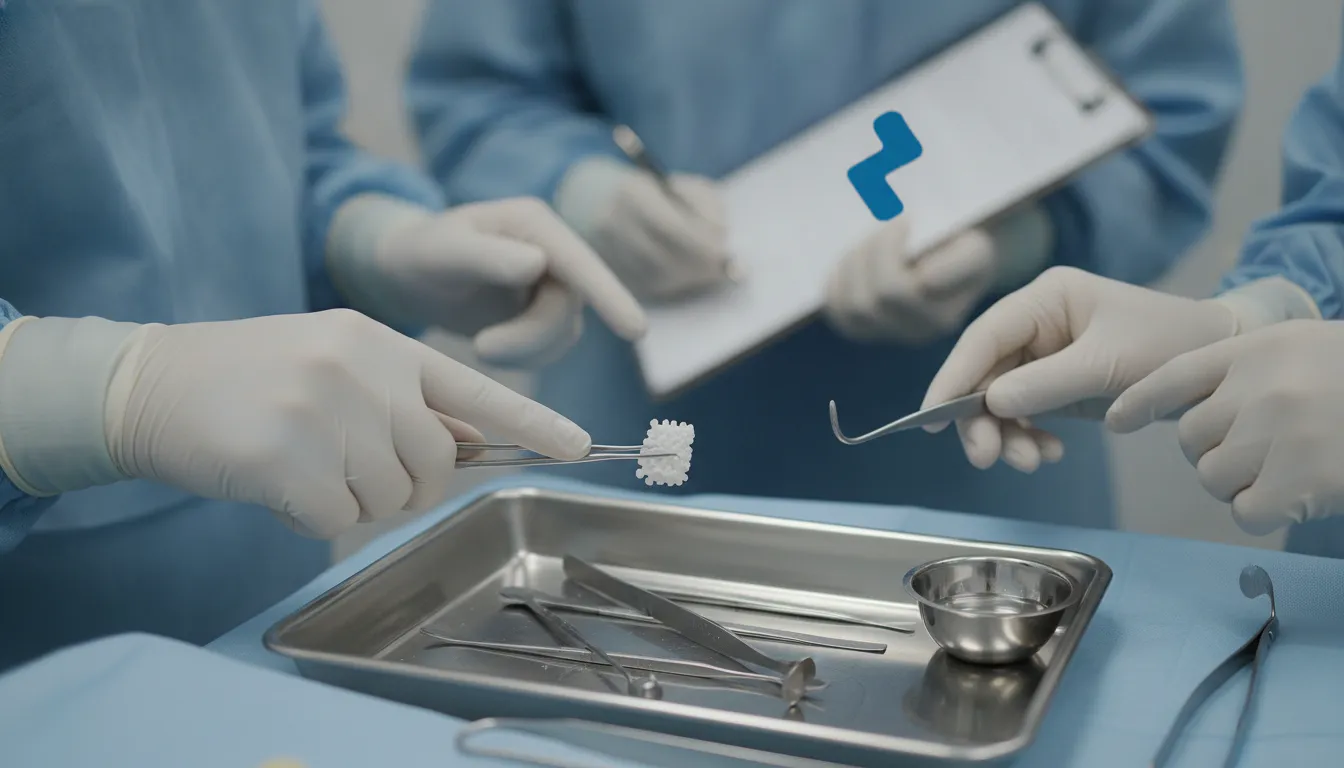
Before opening the material, align site preparation with the product's labeling and intended use. The operative team should know whether the material is supplied as granules, a putty-like preparation, a preformed format, or another delivery form. That detail affects how it is transferred, positioned, and contained within the prepared site. It also determines which accessories must be available before the procedure begins.
Access and visualization matter as much as the graft material itself. A well-selected periosteal elevator for oral surgery can support soft-tissue reflection and instrument control within the planned workflow. The choice should remain consistent with the procedure, the clinician's technique, and the instrument's intended use rather than being treated as a substitute for site assessment.
Plan containment and closure as connected steps
Graft containment should be considered before material preparation. The team can verify the required barriers, carriers, syringes, or other accessories against the procedure plan and product instructions. This reduces avoidable interruptions and helps maintain clear separation between sterile supplies, prepared material, and packaging.
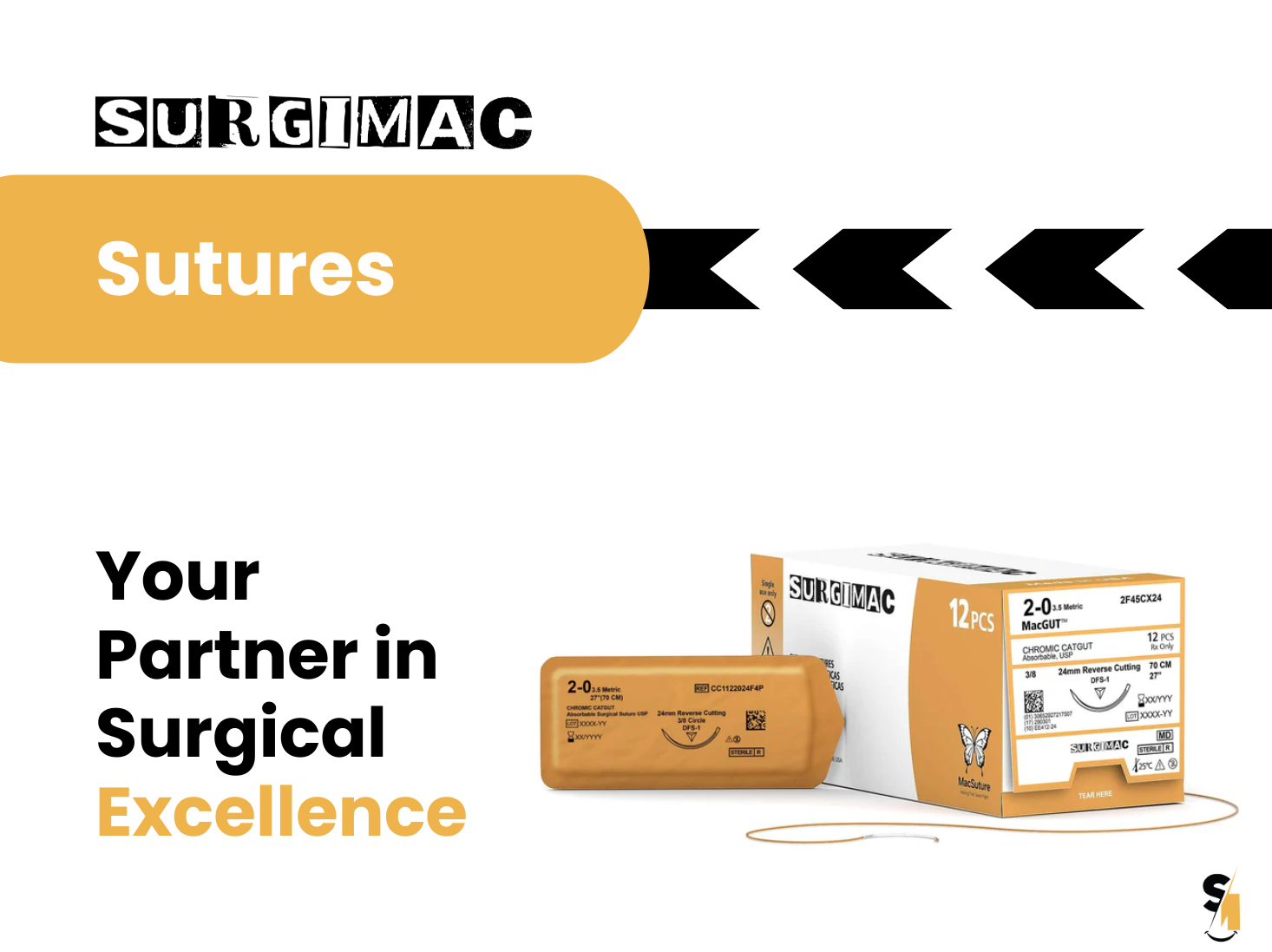
Soft-tissue management and closure are also part of the workflow. They should be planned around the operative site and the clinician's established technique, without assuming that a material guarantees a particular healing result. A reference on absorbable sutures for graft closure can help the team review suture terminology and product considerations before selecting supplies.
Document the material and team handoff
At setup and after use, record the material identity, lot information, expiration check, storage verification, preparation steps, and site-specific use. These details support traceability and help the clinical and purchasing teams reconcile what was selected with what was opened. A concise handoff should also identify unused material, disposal requirements, and any variance from the planned workflow. Keep documentation factual and tied to the product label, operative record, and practice procedures.
When Should a Practice Source These Materials?
Source a growth-factor-related graft material when the product can be evaluated against the procedure, the defect, and the practice's documented workflow. A product page alone is not enough. The clinical lead and purchasing team should be able to verify how the material is identified, handled, recorded, and used without relying on vague biologic language.
| Evaluation area | What to verify | Workflow implication |
|---|---|---|
| Documentation | Intended use, indications, directions, warnings, storage requirements, and preparation instructions. | The clinical team can align the material with the planned procedure and maintain a consistent receiving and preparation process. |
| Biologic language | Whether the product describes a scaffold, a biologic adjunct, or an autologous blood-derived concentrate. Confirm what the label actually states. | Staff avoid treating different categories as interchangeable or assuming a growth-factor claim establishes clinical superiority. |
| Handling profile | Storage conditions, preparation steps, reconstitution requirements, and any time-sensitive handling instructions. | Assistants can prepare the material safely and identify storage or preparation issues before the procedure begins. |
| Format | Particle form, delivery format, package size, and compatibility with the intended site and containment approach. | The operator can select a format that fits the defect and the planned delivery sequence rather than adapting the procedure at the chair. |
| Lot control | Lot or batch identification, expiration date, receiving record, and traceability process. | The practice can document the exact material used at a site and support a reliable inventory and recall process. |
| Evidence | Claims supported by appropriate evidence and clearly separated from general statements about growth factors or regeneration. | The clinical lead can set expectations from documented information instead of marketing language or blanket claims. |
| Team fit | Whether the material, instruments, preparation steps, and documentation requirements fit the practice's standard operating procedure. | Ordering becomes part of a repeatable workflow shared by clinicians, assistants, and purchasing staff. |
Use the bone grafting materials collection to compare available navigation paths, then review the PuraGraft materials collection and DM Bone bone replacement material page for product-specific documentation. These links support product review; they do not establish that every item contains growth factors.
The best sourcing decision is the one the team can defend clinically and reproduce operationally. Record the selected product, lot, expiration, storage check, preparation details, and site-specific use in the practice's documentation.
What Questions Should the Team Ask Before Ordering?
Before placing an order, the clinical lead, buyer, and dental assistant should review the same material record. The goal is not to assume that a product described with growth-factor language belongs to a particular biologic category. The goal is to confirm that its documented characteristics fit the planned procedure and the practice's controls.
Clinical and labeling questions
- What is the intended use, and does it match the planned site, defect, and procedure?
- Does the label clearly identify the material, its composition, and any growth-factor or biologic claim? Is that language supported by the manufacturer's instructions for use?
- What evidence is supplied for the stated use, and does it justify a bounded clinical rationale rather than a blanket superiority claim?
- Is the material a scaffold, an autologous blood-derived concentrate, or another biologic adjunct? These categories should not be treated as interchangeable.
Handling and traceability questions
- What storage conditions apply from receipt through procedure, and can the practice maintain them consistently?
- What is the expiration date at receipt and on the scheduled procedure date?
- Will the package provide a lot or batch identifier that can be recorded in the patient and inventory documentation?
- What preparation steps, delivery format, hydration requirements, or aseptic controls must the assistant review before opening the package?
Workflow and recordkeeping questions
Confirm that the material is compatible with the planned instruments, containment approach, and closure sequence. The team should also decide who verifies the package before use and who records the material identity, lot number, expiration check, preparation steps, and site-specific use. For broader sourcing context, review the bone grafting materials collection and compare documentation before ordering.
A final pre-order check should capture the selected material, quantity, storage location, responsible staff member, and any unresolved labeling question. If the record is incomplete, pause the purchase and request clarification rather than inferring composition or expected outcomes.
Review a bone replacement material option
Frequently Asked Questions
What is dental bone grafting material with growth factor?
It is a grafting system that combines a scaffold, which supports space maintenance and cellular ingrowth, with a biologic component intended to influence healing or bone formation. The growth-factor component may be an autologous blood-derived concentrate or a product-associated biologic claim, so the label and preparation method should be reviewed carefully.
How does a biologic adjunct differ from a scaffold?
A scaffold is the structural material placed at the site, while a biologic adjunct is intended to modify the local healing environment. They are related but not interchangeable. Selection should account for defect morphology, containment, intended procedure, handling requirements, and the specific claims supported by the product documentation.
How should clinicians evaluate the evidence for a growth-factor material?
Review evidence for the same procedure, defect type, material configuration, and outcome measures being considered. Avoid assuming that a growth-factor claim establishes superiority. A systematic review of dental biologics reported substantial study heterogeneity and found that results varied by intervention and outcome; read the full evidence and product labeling together.
What should the team document when using this material?
Record the material identity, lot number, expiration date, storage check, preparation steps, intended site, and operator handoff. If the material involves autologous blood processing, document the collection and preparation workflow according to the practice protocol. Keep the record aligned with the product labeling and applicable office procedures.
Are autologous platelet concentrates the same as growth-factor graft products?
No. Autologous platelet concentrates are prepared from the patient's blood, whereas a graft product may carry its own biologic description or be used with a separate adjunct. These categories should not be treated as equivalent without reviewing composition, intended use, preparation, and supporting evidence.
Ready to Review Bone Grafting Materials?
A focused review of product format, labeling, handling requirements, and lot controls can help your team align material selection with the planned procedure and your practice workflow. Review SurgiMac's professional bone grafting materials and related surgical supplies to compare relevant options and supporting details. Review bone grafting materials for the information your clinical and purchasing teams need before ordering.
Tags
Blog posts
-
, by SurgiMac A Clinician's Guide to Absorbable Suture Material
-
, by SurgiMac A Clinician's Guide to Dental Composite Resin Kits
-
, by SurgiMac How to Disinfect with Metrex CaviWipes Correctly
