MacPrevent 5% Sodium Fluoride Varnish with TC...
SKU 90002-Bx
Get your dental unit waterline maintenance guide covering CDC standards, biofilm prevention, treatment protocols, and water quality testing for dental...
Neglected waterlines can turn a routine cleaning into a serious bacterial risk for patients. Failing to monitor these hidden systems often leads to dangerous microbial growth that compromises clinical safety.
Dental unit waterline maintenance is a critical component of infection control that protects patients and clinical staff. Because dental units use long, narrow tubing with low flow rates, they are prone to rapid biofilm formation. Untreated lines can harbor up to 1,000,000 CFU/mL of bacteria, which is 2,000 times higher than the EPA safety limit of 500 CFU/mL. Common pathogens like Legionella and Pseudomonas thrive in these environments and pose real health risks. According to the American Dental Association, practices must follow a consistent routine of shocking, treating, and testing their waterlines to remain compliant. Effective maintenance protects your practice from liability and ensures every procedure meets the highest standards for clinical purity.
Shop dental water management products at SurgiMac to find everything you need for a compliant waterline maintenance protocol.
Maintaining clean water is more than a regulatory hurdle. It is a fundamental duty for every modern dental team. To build a truly compliant protocol, you must first recognize the biological challenges living inside your equipment.
Biofilm in dental unit waterlines is a slimy layer of bacteria that forms inside narrow tubing. It develops when microbes attach to the inner walls of waterlines and multiply within a protective matrix. Untreated biofilm can push bacterial counts past 1,000,000 CFU/mL, far exceeding the EPA safe limit of 500 CFU/mL for drinking water.
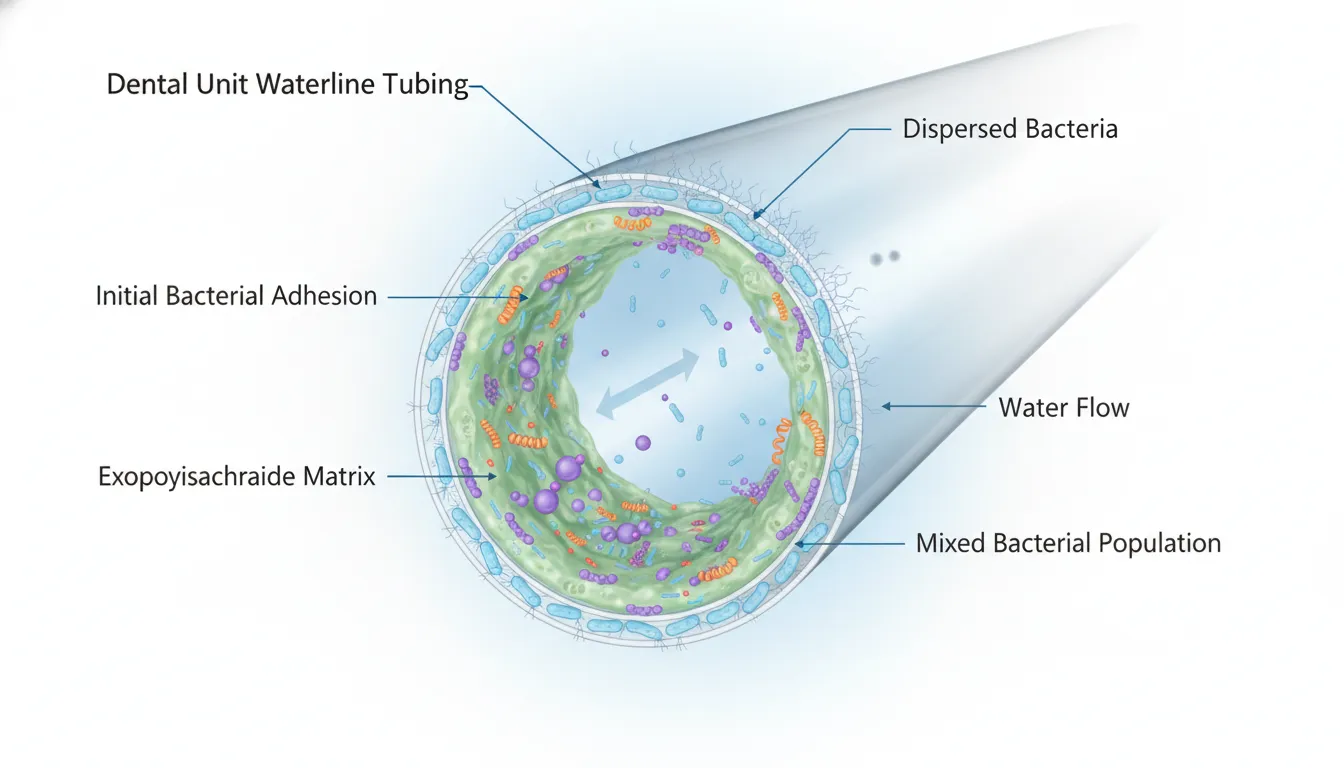
Dental unit waterlines are prone to biofilm growth due to their design. These lines use long, narrow tubes with a small diameter. Because water moves slowly or sits still, bacteria can easily attach to the inner walls. Over time, these microbes form a sticky layer that is hard to remove. This dental unit waterline maintenance challenge is a constant concern for clinics. Without proper care, untreated lines can harbor up to 1 million colony-forming units per milliliter (CFU/mL). That level is 2,000 times higher than the safe limit set by the CDC for dental water.
The small size of the tubing creates a large surface area for bacterial attachment. Low flow rates and frequent stagnation give microbes time to settle and grow. Within just a few days, a biofilm layer can reach a thickness of 30 to 50 micrometers. Once established, the biofilm acts as a protective shield for the bacteria inside. This makes it difficult to kill the microbes with simple water flushing. Using the right treatment solutions is essential to break down this layer and keep the lines clean.
Biofilm is not a single species. It is a complex community of many bacterial types. Studies have found over 50 species of bacteria in dental waterline biofilms. These microbes thrive in wet environments, share nutrients, and protect each other from chemical treatments. The biofilm continues to develop even when the dental unit is not in use. This is why daily and weekly care is critical for every practice.
Browse the Liquid Ultra waterline shock treatment set at SurgiMac for an EPA-registered solution that effectively removes biofilm.
The CDC requires dental water used in nonsurgical procedures to contain no more than 500 CFU/mL of heterotrophic bacteria. This matches the EPA drinking water standard. For surgical procedures, sterile water or sterile saline is required. The ADA reinforces these guidelines and recommends regular testing to confirm compliance.
Meeting clear safety standards is a central part of dental unit waterline maintenance for any clinic. The Centers for Disease Control and Prevention and the American Dental Association set specific requirements to protect patients from waterborne pathogens.
For most dental procedures, the water must maintain a very low bacterial count. The CDC states that dental water should have 500 or fewer colony-forming units per milliliter. This safe water standard aligns with the EPA regulations for drinking water. Keeping water at this level prevents bacterial overgrowth inside the narrow tubes of the dental unit.
Some dental procedures demand even cleaner water than a standard examination. When a clinician performs oral surgery, the water must be sterile. Sterile water or sterile saline eliminates the risk of introducing bacteria into surgical sites. Following the ADA standards for surgical water prevents deep tissue infections and ensures patient safety during complex treatments.
In October 2022, the CDC issued a health alert emphasizing the need for rigorous waterline care. This alert followed cases where children developed infections after exposure to contaminated dental water. The advisory directed dental teams to follow established protocols for daily cleaning and regular testing. The DentaPure 365-day cartridge from SurgiMac provides a reliable solution for maintaining compliant water quality between tests.
A complete dental unit waterline treatment protocol has three parts: shock treatment to remove existing biofilm, daily maintenance to prevent regrowth, and regular testing to verify water quality. Each step plays a specific role in keeping bacterial counts below the 500 CFU/mL safety threshold.
A safe practice depends on a clear plan for managing water quality. Most experts recommend a three-step protocol to keep bacterial levels low and prevent biofilm growth. This process includes shocking the lines, daily maintenance, and regular testing to confirm the water meets safety standards.
The standard approach involves three main steps. First, you must shock the lines with a concentrated disinfectant to kill existing biofilm. Second, you apply a daily treatment to prevent new bacteria from colonizing the tubing. Third, you test the water to confirm your regimen is effective. According to CDC guidelines, nonsurgical water must contain no more than 500 CFU/mL of bacteria.
Shocking is the most critical step for lines that have not been treated or have failed a water test. This process uses high-concentration chemicals such as chlorine dioxide or hydrogen peroxide. Research shows that chlorine dioxide is highly effective at removing established biofilm from narrow tubing. You should shock your lines at least once a month, or more often if test results show elevated bacterial counts.
After a shock treatment, daily maintenance keeps the water clean between shocks. This often involves placing a tablet, straw, or liquid solution into the water reservoir. These products release a low dose of disinfectant that is safe for patients but prevents bacteria from aggregating. Clinical teams should also verify that hardware components are functioning correctly. Anti-retraction valves, for example, prevent oral fluids from flowing back into the unit lines.
Filtration provides another layer of water quality protection. Point-of-use filters can trap bacteria before they reach the handpiece or air-water syringe. However, filters do not remove biofilm that has already formed inside the lines. For this reason, you must continue the shock and treat cycle even when using filtration systems.
Check out the DentaPure 365-day water management cartridge at SurgiMac for a low-maintenance approach to consistent water quality.
Choosing the right method for your clinic depends on your team workflow and equipment design. Some protocols use tablets, while others use liquid solutions or long-term straws. Each option has advantages regarding cost, ease of use, and duration of protection. The table below compares the most common treatment approaches.
| Treatment Type | Primary Use | Common Chemicals | Key Benefit |
|---|---|---|---|
| Shock Treatment | Remove biofilm | Chlorine dioxide | Highly effective on established buildup |
| Daily Tablets | Ongoing maintenance | Silver or iodine | Simple once-per-day dosing |
| Water Straws | Long-term care | Iodine or silver | Lasts up to one year |
| Filtration | Final barrier | Microbial filters | Extra protection at the point of use |
Regular water quality testing is the only way to confirm your treatment protocol is working. The CDC recommends testing at least once per month using in-office test strips, ATP meters, or mail-in laboratory services. Results above 500 CFU/mL require immediate shock treatment and protocol reassessment.
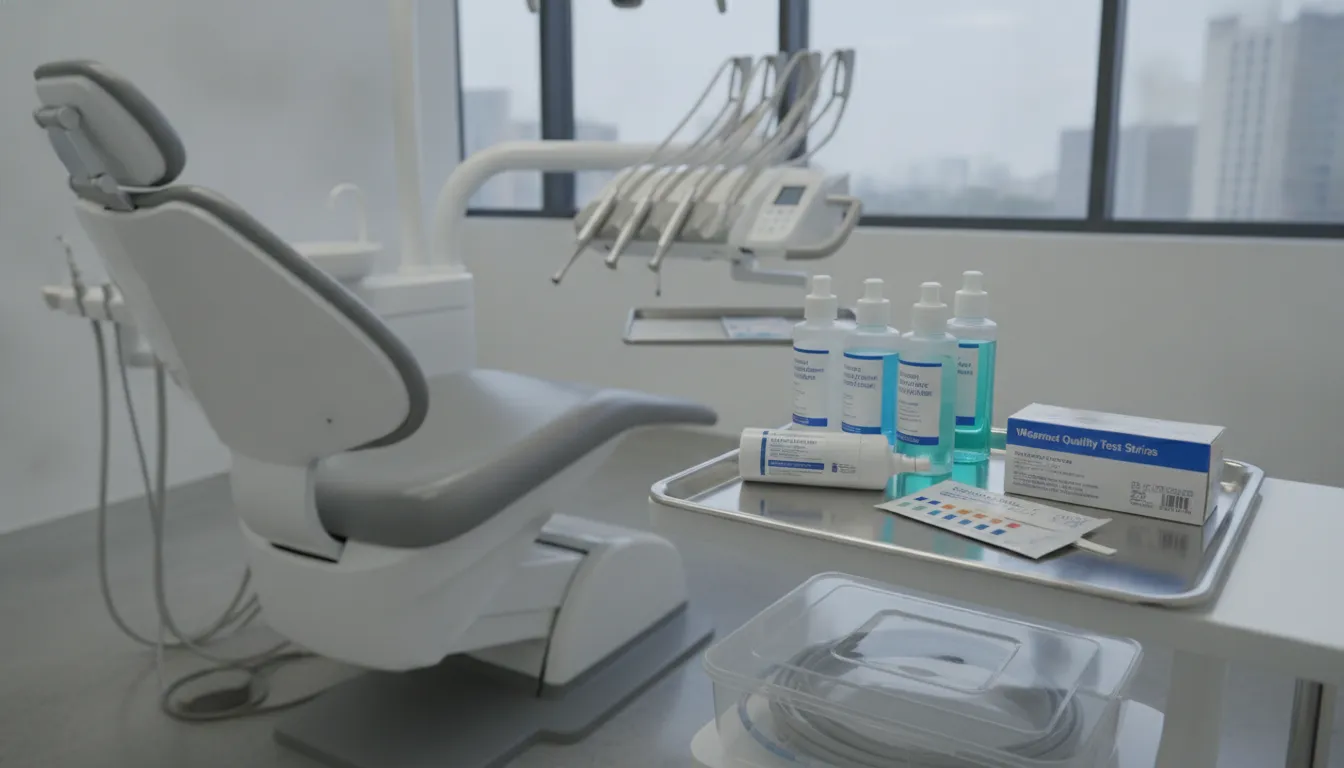
You cannot see bacteria in your waterlines. Testing is the only reliable way to determine whether your maintenance protocol is working. The CDC specifies that dental water must meet the same microbial standard as drinking water, keeping bacterial levels at 500 CFU/mL or below. Without regular testing, biofilm can grow unchecked.
Several testing options are available. In-office test strips provide a simple and low-cost choice. You dip a strip into a water sample and wait for a color change. This method shows whether you are above or below the safety limit. While easy to use, these strips are less precise than other methods.
ATP testing is a faster option. This method measures adenosine triphosphate, a molecule present in all living cells. A handheld meter reads the sample and provides results in seconds. Many offices prefer this approach because it identifies biofilm issues immediately.
Mail-in laboratory tests offer the highest accuracy. You send a water sample to a certified lab where technicians culture the bacteria and provide a full colony count. These tests create a permanent record for your compliance files. Labs typically deliver more granular data than in-office kits, which is valuable for larger practices or high-risk settings.
The ADA recommends testing at least once per month. This regular check ensures your cleaning plan remains effective. If a test shows more than 500 CFU/mL, you must act immediately. Most protocols call for shocking the lines and retesting after treatment. If results remain high, you may need to adjust your daily maintenance routine.
Keeping accurate records is essential for infection control audits. You should log the date, method, and results of every water test. These records demonstrate that your practice follows state and national regulations. Good records also help you identify trends in water quality over time. Using quality products supports compliance with testing requirements.
Explore the Sterisil Straw V2 for year-round waterline protection at SurgiMac to simplify your daily maintenance routine.
A consistent maintenance routine is the foundation of effective dental unit waterline management. Daily steps include a 2-minute morning purge, 20-30 second flushes between patients, and daily treatment application. Weekly or monthly shocking removes biofilm buildup. Monthly testing confirms bacterial levels stay below 500 CFU/mL.
Consistency is the key to safe waterlines. Biofilm grows quickly when water sits still. By following a structured routine, you can prevent bacteria from establishing a foothold. Each step builds on the next to create a comprehensive water safety program.
Every day should begin with a morning purge. Flush all waterlines for 2 minutes before seeing the first patient. This clears out bacteria that may have multiplied overnight. Between patients, flush the lines for 20 to 30 seconds. This simple step keeps water fresh for every visit.
Flushing alone does not kill bacteria. It physically removes stagnant water and loose debris. You must still use a daily treatment such as a tablet, straw, or liquid solution to maintain low bacterial counts throughout the day. These treatments are safe for your equipment and your patients.
Even with diligent daily care, deep cleaning is necessary. Shocking the waterlines with a concentrated chemical breaks down biofilm that daily treatments cannot remove. Most manufacturers recommend shocking once per week or once per month depending on water quality and usage volume.
The optimal interval depends on your water source, unit usage, and test results. Shock treatment targets the biofilm matrix so bacteria cannot quickly recolonize the tubing. Always follow the specific instructions provided with the shock product you select.
Proper documentation is a regulatory requirement for dental infection control. Practices must maintain logs of water quality tests, shock treatments, and daily maintenance activities. These records serve as proof of compliance during inspections and help identify water quality trends before they become problems.
Keeping your practice safe means more than performing waterline treatment. You must also produce evidence that your water meets safety standards. The CDC and ADA both emphasize that clear records are a fundamental part of any infection control plan.
A testing log is your strongest defense during a regulatory review. Record the date, method, and result of every water quality test you perform. The ADA notes that documentation of results is essential to demonstrate due diligence. Your logs should also note when you shocked the lines and which products you used.
Using a standardized form simplifies this task for your team. When records are organized in one location, you can quickly produce them during inspections. Consistent logging also helps you detect trends so you can address small issues before they escalate.
Consistency is the foundation of effective water care. Maintain a written schedule for daily flushing, weekly or monthly shocking, and monthly testing. Documenting each step ensures that no part of the protocol is overlooked when staff members change or the clinic becomes busy. This documentation also supports your warranty coverage for dental unit equipment.
Municipal water quality events require special attention. During a boil water advisory, all dental unit water that contacts patients must meet sterile standards. You should use bottled or distilled water in your unit reservoir and avoid using municipal tap water until authorities confirm it is safe. Documenting these actions protects your practice during health department inquiries.
Dental unit waterlines should be tested at least once per month. The CDC recommends maintaining bacterial counts below 500 CFU/mL. More frequent testing may be necessary if your practice treats immunocompromised patients or after a failed test result.
Shocking uses a high-concentration disinfectant to remove established biofilm from waterlines and is typically done weekly or monthly. Daily treatment uses a lower-dose product to prevent new bacteria from forming biofilm between shock treatments. Both are necessary for a complete protocol.
Yes. Contaminated dental waterlines have been linked to infections, particularly in immunocompromised patients. Pathogens such as Legionella pneumophila, Pseudomonas aeruginosa, and nontuberculous Mycobacteria have been found in dental water systems. The CDC issued a health alert in 2022 emphasizing the importance of waterline maintenance after pediatric infections were traced to contaminated dental water.
The CDC standard for dental water used in nonsurgical procedures is 500 CFU/mL or less. This matches the EPA drinking water standard. For surgical procedures, sterile water or sterile saline must be used instead of treated tap water.
Biofilm can begin forming within hours of water stagnation and reach a thickness of 30 to 50 micrometers within a few days. The protective matrix becomes more difficult to remove the longer it remains undisturbed. This is why daily flushing and treatment are essential.
Implementing a complete waterline maintenance program protects your patients, your staff, and your practice's reputation. SurgiMac offers a full range of EPA-registered treatment solutions, long-term filtration cartridges, and infection control products designed for dental professionals who take compliance seriously.
Request your dental water management products from SurgiMac today and equip your practice with the tools needed to meet CDC and ADA water quality standards.