

Prophy Paste Samples: A Dental Practice Buying Guide
- , by SurgiMac
- 17 min reading time

Evaluate prophy paste samples for grit, formulation, handling, packaging, and workflow fit. Standardize supplies with a clearer dental practice review.
A paste that feels efficient in one operatory may create different concerns in another. Before a dental practice standardizes a prophylaxis product, the evaluation should cover more than flavor or immediate chairside preference. The useful question is whether the paste fits the practice's clinical objectives, materials, workflow, patient experience, and purchasing requirements.
Review SurgiMac prophy paste options
Prophy paste samples should be compared using consistent conditions, including abrasive grit, formulation, handling, splatter, rinsing, packaging, and observed patient response. Review the product labeling and indications, then consider how the paste performs with the enamel and restorative materials your clinicians encounter most often.
A disciplined trial turns informal impressions into a repeatable purchasing decision. It also helps separate a genuine workflow advantage from a preference that may not hold across clinicians or operatories. Start by defining what each sample is meant to reveal and how those observations will be recorded.
What Should a Practice Learn From Prophy Paste Samples?
Prophy paste samples are most useful when a practice treats them as a controlled evaluation, not as a collection of free products. A sample should answer a practical purchasing question. Does this formula support the procedures your clinicians perform, the restorative materials they encounter, and the workflow your team can reproduce across operatories?
Start by defining the decision before opening the first cup. A practice may be comparing polishing behavior, packaging, flavor, or the fit of a formula with its existing prophylaxis protocol. Sample programs vary. Some suppliers offer a trial before purchase, while others limit the number of samples or route requests through an online form, paperwork, or customer service. Those logistics matter for planning, but they are not evidence that one paste is clinically superior. Record the product name, lot or label information, grit designation, and any stated indications so the team knows exactly what was evaluated.
Use a consistent practice trial
Ask more than one clinician to evaluate each sample under comparable conditions. Keep the polishing instrument, cup type, approximate application amount, and chairside sequence consistent with the office protocol. The purpose is not to reproduce a laboratory study or create a universal clinical protocol. It is to reduce avoidable variation when the team compares handling, cleanup, surface feel, and workflow fit.
Document observations immediately after each trial. Useful fields include pickup from the cup, control during application, splatter or rinsing behavior, ease of removal, flavor acceptability, and whether the product fits the intended appointment. Separate direct observations from preferences. For example, "required repeated rinsing during this procedure" is more actionable than "felt messy," while a clinician's flavor preference should remain clearly identified as a preference.
Connect polishing to patient and material needs
Polishing should be selective rather than automatic. A review of prophylactic polishing describes these pastes as widely used to clean teeth and dental restorations. It also emphasizes patient need and cautions that superficial tooth-structure wear can be relevant. Use the sample trial to ask where polishing adds value in your practice, not simply whether a paste feels effective on every surface. Follow the product labeling, clinical indications, and office protocols for each patient and procedure.
Material awareness is equally important. Research on CAD/CAM materials evaluated surface roughness and color before and after paste application and found that both paste and material type affected outcomes. This supports a practice-level boundary: a favorable result on natural tooth structure does not automatically establish equivalent performance on every restoration. Note the surfaces represented in the trial, flag procedures involving restorations for focused review, and avoid treating one sample experience as a blanket compatibility claim.
The final lesson from prophy paste samples is disciplined documentation. A short, repeatable trial with recorded observations gives the dentist, hygienists, and purchasing team a shared basis for standardization. It also preserves a clear reason for keeping more than one formula when patient, material, or procedure needs genuinely differ.
Which Formulation and Grit Criteria Matter in Prophy Paste Samples?
A useful sample comparison separates the polishing objective from the product label. Record the paste's stated grit, abrasive system, fluoride status, dye status, flavor, and intended use. Then test each sample with the same cup, handpiece settings, contact time, and clinical surface whenever your office protocol permits. This helps your team distinguish a formulation difference from a technique difference.
| Criterion | What to inspect | Why it matters |
|---|---|---|
| Fine, medium, coarse, or extra-coarse grit | Confirm the labeled grit. Note whether it is intended for light stain removal, routine polishing, or heavier deposit removal. Compare fine-grit prophy paste cups with coarse prophy paste cups and an extra-coarse prophy paste option when those distinctions fit the practice. | Grit changes the balance between cleaning efficiency, surface contact, and finishing feel. A single grit should not be assumed appropriate for every patient, tooth surface, or restorative material. |
| Abrasive type and behavior | Review the ingredient statement and product directions. Note whether the paste feels consistent during use and whether residue rinses as expected. For broader background, see this guide to prophy paste ingredients. | In a study of CAD/CAM materials, researchers recorded roughness and color before and after prophylactic polishing, then evaluated specimens after coffee immersion. Material type and paste type both affected the measured outcomes. Read the CAD/CAM materials study. |
| Enamel and restorative-material considerations | Define which surfaces your clinicians will evaluate: natural enamel, direct composite, indirect composite, porcelain, or CAD/CAM composite. Document the cup or brush used, rather than attributing every result to the paste alone. | In vitro research found that prophylaxis method influenced immature-enamel roughness, and the paste-and-rubber-cup combination produced the smoothest tested surface in that study. The authors also cautioned against extrapolating brush findings to immature or newly erupted teeth. Review the enamel study. These findings are not a universal chairside protocol. |
| Fluoride or fluoride-free labeling | Record whether fluoride is present, the stated concentration if provided, and the indication or office preference behind the choice. Compare the label with your clinical protocols and documentation requirements. A fluoride option is listed as fluoride prophy paste. | Fluoride status is a formulation and workflow decision, not a reason to make unsupported prevention or sensitivity claims. One bonding study evaluating a 1.23% sodium fluoride prophy paste reported no significant difference in mean micro-shear bond strength versus control groups under its tested conditions. Read the bonding study. |
| Fluoride-free and dye-free labeling | Verify both claims on the current package or technical documentation. Note whether the absence of fluoride or dye supports a specific patient, material, or office preference, without inferring an indication the manufacturer does not state. | Clear labeling supports consistent selection, informed patient communication, and purchasing controls. It also prevents staff from confusing a sample's marketing position with a clinically established advantage. |
| Flavor and sensory profile | Record flavor, intensity, aftertaste, texture, and patient response using a simple standardized note. Keep flavor separate from polishing performance. | Flavor can affect patient acceptance and clinician willingness to use a product repeatedly. Sample programs commonly distinguish flavors, but a favorable description is not evidence of universal preference. |
Use the comparison to narrow the field, then review the complete prophy paste selection guide for broader selection context. The final choice should match the surfaces treated, the paste's labeling, the operator's technique, and the practice's documented protocols.
How Should Clinicians Test Handling and Patient Experience?
A useful chairside trial should make each sample earn its place in the practice workflow. Do not rely on a single impression after opening a cup. Use the same operator, operatory setup, prophy angle or handpiece conditions, and approximate quantity for every candidate. Record observations while the experience is fresh, then separate measurable handling notes from individual flavor preferences.
Prophylactic polishing pastes are used to clean teeth and dental restorations, so the evaluation should also stay within the product label and the intended clinical indication. Published research shows that these pastes can affect the surface features and discoloration of CAD/CAM materials, and that outcomes may vary by both paste and restorative material. That makes disciplined observation more useful than a broad claim that one sample is universally better. Review the restorative-material evidence when your practice routinely treats patients with indirect or CAD/CAM restorations.
- Standardize the setup. Assign the same clinician, or a small defined group of clinicians, to the comparison. Use the same cup or handpiece settings, prophy angle, water availability, lighting, and patient-positioning routine. Portion a consistent amount for each trial. Note the product name, grit or formula, lot information when available, and the date. Sample programs may offer only a limited number of products, so document exactly what arrived rather than assuming the requested option was supplied. Sample availability and substitutions can vary by supplier.
- Evaluate pickup and control. Observe how easily the paste transfers from the cup or container to the instrument. Record whether it stays where placed, loads evenly, or requires repeated pickup. During use, note splatter, cleanup burden, moisture tolerance, and whether the paste maintains a consistent working texture. These are workflow observations, not universal product claims.
- Assess rinsing and finish. Use the same rinsing and evacuation sequence for each candidate. Record whether residue clears readily, whether additional rinsing is needed, and whether the clinician can distinguish the intended polishing endpoint. If restorative materials are part of the trial, identify the material and follow office protocols. The research literature specifically evaluates surface roughness and color before and after paste application, reinforcing the value of material-specific notes rather than relying only on visual impressions. The CAD/CAM paste study reports its controlled surface and color measurements.
- Capture flavor and patient feedback. Ask a consistent, neutral question after treatment, such as whether the flavor and aftertaste were acceptable. Record comments without turning a small sample into a population-wide conclusion. Supplier sample descriptions may distinguish flavor options, application formats, and ingredient positioning such as xylitol or gluten-free formulas. Treat those as label-level comparison points, and verify the current package labeling before making a purchasing or clinical decision. Flavor and formulation details should be checked against the supplied label.
- Review the label and decide whether to advance the sample. Confirm indications, directions, warnings, ingredients, storage requirements, and any stated restrictions. Then have the evaluating clinicians compare notes on pickup, splatter, rinsing, consistency, flavor, patient response, and cup usability. Advance only products that fit the practice's documented clinical and operational requirements. Keep the raw observation sheet with the purchasing review so the eventual standard reflects repeatable chairside evidence, not the strongest first impression.
How Do Packaging and Inventory Affect Standardization?
Packaging is not a minor purchasing detail when a practice is comparing prophy paste samples. The package format determines how easily each operatory can prepare for a procedure, how consistently the product is portioned, and how much inventory staff must monitor. A formula that performs well during a controlled trial may still be a poor practice standard if it creates avoidable handling or replenishment problems.
Match the format to the operatory workflow
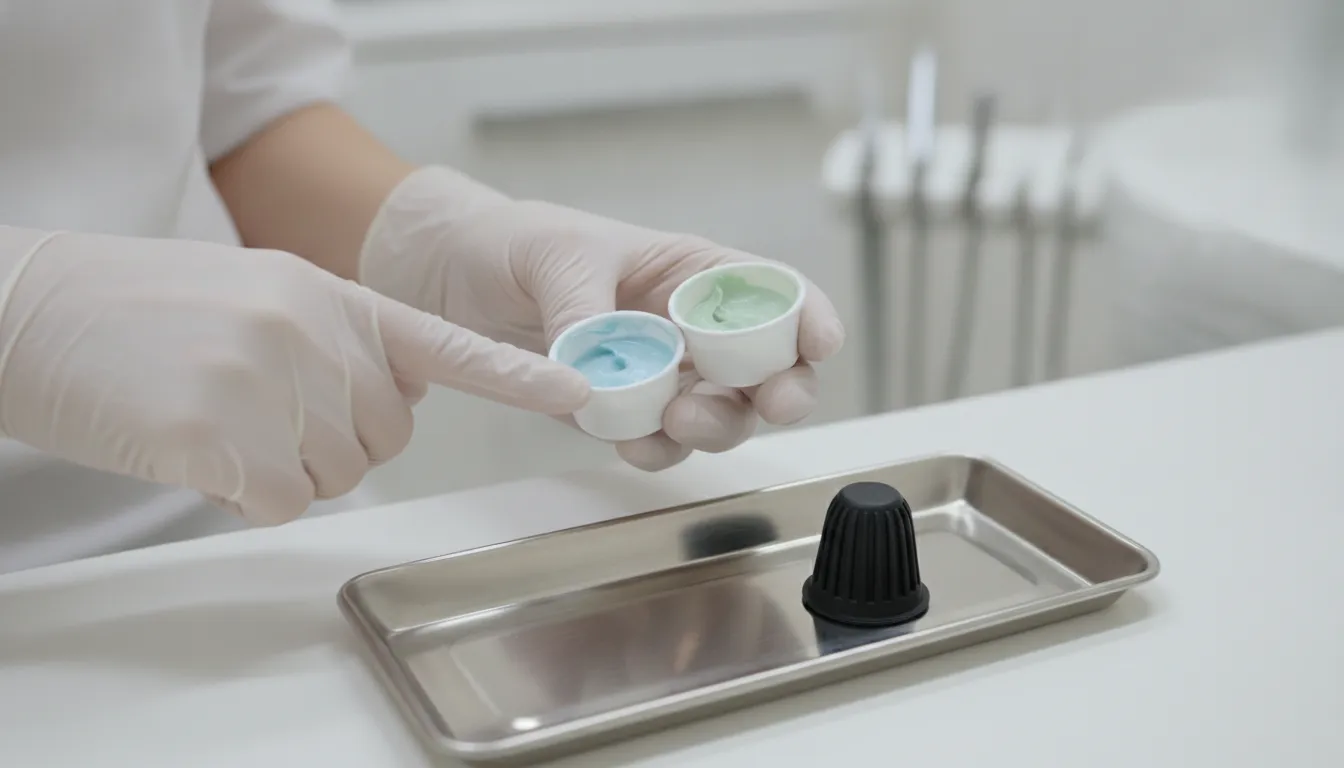
Individual cups support fast chairside setup and provide a consistent portion for each patient encounter. They can also reduce the need to move a shared jar between operatories. During a sample review, ask whether the cups open cleanly, remain stable on the tray, and fit the way hygienists already organize prophylaxis instruments. SurgiMac lists individual-cup options in 100- and 200-unit presentations, including mint fine-grit, coarse, and extra-coarse products. Compare the listed fine-grit prophy paste cups and coarse prophy paste cups according to the procedures and operatories that would use them.
Larger containers or bottle presentations may suit a workflow that prefers dispensing product as needed, but they require a defined method for portioning, closing, labeling, and preventing cross-contamination. Do not assume that a larger format is more efficient. Observe how much time the team spends opening, dispensing, and cleaning up during the trial. The best choice is the format that supports the office protocol without adding untracked variation.
Plan storage, replenishment, and availability
Standardization depends on reliable access. Map where supplies are stored, how many operatories use the product, and who checks stock. Set a reorder point based on actual consumption rather than waiting until the last box is opened. If the practice operates across multiple locations, document the approved format and substitute rules. Purchasing teams should not replace an individual-cup product with a different presentation without clinical review.
Sample programs can limit selections or substitute items based on availability, so record exactly what was evaluated. Flavor, grit, and formula details should be copied from the product label and compared with the corresponding listing. SurgiMac's prophy paste collection lists options by presentation and formulation, including flavor and grit distinctions, as well as fluoride-free and dye-free options. If a fluoride-containing format is part of the review, document it separately, such as the listed fluoride prophy paste, rather than treating all samples as interchangeable.
Use label and lot review as part of consistency control
Before distributing a selected product across operatories, confirm the product name, grit, flavor, formulation, package count, and lot information against the received units. Keep the sample notes with the purchasing record so the team can distinguish the approved standard from a similar-looking alternative. This simple check protects consistency when staff reorder, train new clinicians, or expand the product to another location.
How Can a Practice Score Samples Before Choosing a Standard?
A useful scorecard turns impressions from prophy paste samples into a repeatable purchasing decision. The goal is not to identify one universally superior paste. It is to determine which product fits your patient mix, restorative materials, operator preferences, and supply workflow under the conditions your practice actually controls.
- Define the decision before opening the samples. Select the formulations or grits you want to compare, identify the procedures in scope, and choose the clinicians or hygienists who will participate. Set the same evaluation period and record the product name, lot information, labeled indications, format, and any relevant precautions. A simple five-point scale can work, but every number should represent a defined observation. For example, a score of 1 for handling might mean difficult pickup or excessive splatter, while 5 means the operator can dispense and use it consistently. Do not score a product on a criterion that your team has not defined.
- Control the chairside variables. Use the same type of prophy angle or cup and a comparable quantity of paste. Maintain similar water and suction settings, along with the same general polishing sequence when the clinical situation permits. Record exceptions rather than treating them as product failures. Published in-vitro studies illustrate why this matters: one enamel study compared paste with a rubber cup. Paste with a brush, brush-only treatment, and controls, using a specified speed, pressure, and duration. Those conditions were research protocols, not universal clinical instructions. Follow the paste labeling and your office protocol instead of copying a study setting. See the enamel prophylaxis study for its controlled methods and limitations.
- Score the criteria that affect both care and workflow. Have each participant record clinical fit, handling, patient experience, packaging, supply continuity, and staff acceptance. Under clinical fit, note whether the formula and grit suit the intended indication and the surfaces encountered. Under handling, assess pickup, consistency, rinsing, splatter, and cleanup. Patient experience can include flavor, perceived comfort, and tolerance, without turning a small office trial into a claim about every patient. Packaging should cover cup usability, dispensing control, storage, and label readability. Supply continuity includes ordering options, available formats, lead time observed by purchasing, and whether a substitute would disrupt the protocol. Staff acceptance should reflect repeated use, not one first impression.
- Separate material-specific observations from general preference. Do not assume that performance on enamel predicts performance on every restoration. Research on prophylactic polishing pastes has measured surface roughness, color, and related changes before and after application, and found that both paste and CAD/CAM material type affected outcomes: review the CAD/CAM materials study. If your practice routinely sees direct composite, indirect composite, CAD/CAM composite, porcelain, or other restorative surfaces, document observations by material category. Avoid unsupported conclusions when your pilot does not include a particular surface, and follow manufacturer instructions for restoration care.
- Review the scorecard as a team, then run a limited pilot. Discuss disagreements and identify whether they reflect operator technique, patient selection, or a genuine product difference. Choose the option with the best overall fit for your defined priorities, not simply the highest average. Before changing every operatory, use the selected product in a limited pilot, confirm that staff can obtain the same result across shifts, and monitor replenishment and patient feedback. Keep the decision reversible until the pilot supports standardization. Document why the product was chosen, which conditions were tested, and when the practice will reassess the standard.
Compare SurgiMac prophy paste formats
Frequently Asked Questions
Where can dental professionals request prophy paste samples?
Start with dental suppliers that explicitly offer professional sample requests, then confirm eligibility, available formats, and request limits. Some programs use an online form, while others direct offices to customer service or an authorized distributor. Policies vary, so document the supplier, sample format, and date requested before beginning your practice evaluation.
How many prophy paste samples should a practice evaluate?
Evaluate enough formulas and grits to represent the procedures, restorative materials, and operator preferences in your practice, but keep the comparison controlled. A focused pilot is more useful than collecting every available flavor. Use the same cup, handpiece setup, application time, and assessment criteria for each product, and follow each product label and office protocol.
Should clinicians test prophy paste on restorative materials?
Yes, when those materials are routinely encountered in the practice. Prophylactic polishing pastes are used on teeth and dental restorations, and research indicates that paste and material type can affect surface features and discoloration in CAD/CAM materials (PMC study). Record observations separately for enamel, composite, porcelain, and other relevant surfaces rather than assuming one result applies to all materials.
What should a practice record during a prophy paste trial?
Record grit, formula, packaging, pickup, splatter, rinsing, cup usability, flavor, and patient feedback. Also note the polishing objective, visible residue, and whether the product fits existing infection-control and inventory workflows. Separate direct observations from preferences, and review the final shortlist with hygienists, dentists, and purchasing staff before standardizing one product.
Ready to Review Prophy Paste Options?
A structured sample evaluation can help your dental practice compare handling, grit, formulation, packaging, and workflow fit before choosing a standard product. Review the available options, then align your selection with clinician preferences, procedural needs, product labeling, and office protocols.
Review SurgiMac prophy paste options for your practice's evaluation and purchasing workflow.
Tags
Blog posts
-
, by SurgiMac A Clinician's Guide to Absorbable Suture Material
-
, by SurgiMac A Clinician's Guide to Dental Composite Resin Kits
-
, by SurgiMac How to Disinfect with Metrex CaviWipes Correctly
