
How to Choose Disinfectant Wipes and Sprays
- , by SurgiMac
- 30 min reading time
Find the best disinfectant wipes and sprays for dental practices. Protect your equipment and ensure effective infection control with these top-rated solutions.
Your dental operatory is full of critical investments, from the patient chair to sensitive electronics. But the wrong disinfectant can slowly cause irreversible damage. Over time, harsh chemicals lead to cracked vinyl, discolored plastics, and corroded metal. Choosing the right disinfectant wipes and sprays is a decision that protects both your patients and your assets. A powerful disinfectant doesn’t have to be destructive. This guide will help you find products that deliver hospital-grade efficacy while being compatible with your equipment, ensuring your infection control strategy doesn’t come at the cost of your gear.
Key Takeaways
- Choose a Clinically Proven Disinfectant: Ensure any disinfectant you use is EPA-registered, has a tuberculocidal claim for broad-spectrum efficacy, and is confirmed to be compatible with your operatory surfaces to prevent costly damage.
- Master the Two-Step Disinfection Process: Effective disinfection requires two key actions. First, always pre-clean surfaces to remove bioburden, then apply the disinfectant and let it remain visibly wet for the full manufacturer-specified contact time.
- Use the Right Tool for the Job: Streamline your workflow by using pre-saturated wipes for quick, targeted disinfection of high-touch points and smaller equipment, while reserving sprays for efficient coverage of larger surfaces like patient chairs and countertops.

How to Choose an Effective Clinical Disinfectant
Not all disinfectants are created equal, especially when patient and staff safety are on the line. In a dental practice, the products you use to clean and disinfect surfaces are your first line of defense against cross-contamination. Choosing the right one isn't just about grabbing any bottle off the shelf; it's about understanding the science behind what makes a disinfectant truly effective in a clinical environment. A reliable disinfectant is a cornerstone of your practice's infection control protocol. To ensure you're providing the safest care possible, let's walk through the four key criteria every disinfectant should meet before it earns a place in your operatory.
Verify Its Broad-Spectrum Efficacy
An effective clinical disinfectant must have broad-spectrum efficacy, meaning it’s proven to kill a wide range of microorganisms. Your practice is exposed to everything from common bacteria and fungi to resilient viruses, so you need a solution that can handle them all. Look for products that are specifically labeled as bactericidal, virucidal, and fungicidal. For a true measure of strength, check for a tuberculocidal claim. Because Mycobacterium tuberculosis is notoriously difficult to kill, a disinfectant that can eliminate it is considered hospital-grade and capable of inactivating most other pathogens of concern, including HBV, HCV, and HIV. This is a non-negotiable standard for any dental setting.
Understand the Active Ingredients
The active ingredients listed on a disinfectant's label are what give it the power to eliminate pathogens. Common agents like phenols and alcohols are effective, but their compatibility with every surface in your operatory isn't guaranteed; alcohol, for example, can dry out and crack upholstery over time. Other powerful ingredients include quaternary ammonium compounds ("quats"), hydrogen peroxide, and peracetic acid. It's important to recognize that the formulation matters just as much as the primary agent. Many modern disinfectants use a synergistic blend, such as isopropyl alcohol combined with quats, to provide strong disinfection while remaining gentle on materials. This approach ensures you get hospital-grade cleaning without compromising the integrity of your valuable equipment.
What Is the Required Dwell Time?
A disinfectant’s power is only realized if it’s given enough time to work. "Contact time," also known as dwell time, is the minimum amount of time a surface must remain visibly wet with the disinfectant to kill the targeted pathogens. This can range from 30 seconds to 10 minutes, depending on the product and the microorganism. In a busy practice where quick room turnover is essential, a shorter contact time is a major advantage. Always read the product label carefully to understand the required contact time and ensure your entire team follows the instructions precisely. Wiping a surface dry too soon can render the disinfection process completely ineffective.
Is It Safe for Your Equipment and Surfaces?
What good is a powerful disinfectant if it damages your expensive equipment? The chemicals in some disinfectants can be corrosive or degrading to certain materials over time, causing vinyl on dental chairs to crack, plastics to discolor, or metals to tarnish. Before committing to a product, confirm it’s compatible with the various surfaces in your operatory. Most manufacturers provide this information on the label or in a technical data sheet. Protecting your investment in high-quality dental equipment and supplies is just as important as keeping them sterile, so always choose a disinfectant that is both potent and material-friendly.
Consider Formulation and Packaging
Beyond a disinfectant's kill claims and contact time, its formulation and packaging play a huge role in how easily and effectively your team can use it day-to-day. The right choice can streamline your workflow, reduce waste, and create a more pleasant environment for both staff and patients. On the other hand, the wrong one can introduce risks like improper dilution or leave behind unwanted residue on your expensive equipment. Thinking through these practical details ensures your chosen disinfectant fits seamlessly into your practice’s operations and supports a consistent infection control protocol.
Ready-to-Use vs. Concentrate
Disinfectants typically come in two formats: ready-to-use (RTU) or concentrate. RTU products, like pre-saturated wipes and sprays, offer maximum convenience and safety. They eliminate the risk of human error from improper dilution, ensuring the solution is at the correct strength every single time. This makes them ideal for fast-paced environments and for disinfecting high-touch surfaces between appointments. Concentrates, however, can be more economical for high-volume needs and reduce packaging waste. While they are a cost-effective way to manage your inventory of dental disposables, they require precise mixing and clear protocols to ensure your team prepares the solution correctly for it to be effective.
Scent and Residue
The sensory aspects of a disinfectant shouldn't be overlooked. While a fresh scent might seem appealing, strong fragrances can be irritating to patients and staff with chemical sensitivities or allergies, making a low-odor or unscented product a safer choice for the clinical environment. It’s also important to consider the residue a product might leave behind. Some formulations can create a sticky or hazy film on surfaces, which not only looks unprofessional but can build up over time. Always look for a disinfectant that evaporates cleanly to protect the appearance and integrity of your chairs, countertops, and other critical dental equipment.
Is It EPA-Registered?
In the United States, all legitimate surface disinfectants must be registered with the Environmental Protection Agency (EPA). An EPA registration number on the product label is your assurance that the disinfectant has been rigorously tested and that its efficacy and safety claims are scientifically proven. This isn't just a recommendation; using EPA-registered, hospital-grade disinfectants is a key component of meeting OSHA standards and state dental board regulations. You can find the registration number on the product label and use it to look up detailed information on the EPA's official website. This simple check gives you peace of mind that your chosen product is both effective and compliant.
Look for Eco-Friendly and Safer Formulations
Beyond sheer power, the composition of your disinfectant matters for the long-term health of your staff, patients, and equipment. Many modern formulations are designed to be less harsh without sacrificing efficacy, reducing the presence of volatile organic compounds (VOCs) that can contribute to poor indoor air quality. Choosing products with a focus on safety and sustainability is no longer a compromise on clinical standards; it’s an enhancement to your overall practice environment. This approach aligns with a broader commitment to wellness and responsible infection control, ensuring your workspace is as healthy as it is clean.
When evaluating products, look for specific indicators of a safer, more environmentally conscious formula. Check for certifications like the EPA's Safer Choice label, which helps identify products made with ingredients that are safer for human health and the environment. Many disinfectant wipes are now made from biodegradable materials, reducing their environmental footprint. Furthermore, opting for formulations free of harsh chemicals like alcohol and phosphates can prevent respiratory irritation among your team and protect sensitive surfaces from degradation over time, creating a more pleasant and sustainable clinical setting for everyone.
Top Disinfectant Wipes for Your Dental Practice
In a busy dental practice, efficiency and safety are paramount. Disinfectant wipes offer a convenient, single-step solution for cleaning and disinfecting surfaces between patients, which is critical for a fast-paced clinical workflow. Unlike sprays, pre-saturated wipes eliminate the risk of overspray and aerosolizing contaminants, providing better control over the application area. They are an indispensable tool for maintaining a compliant and hygienic environment, especially for high-touch surfaces like countertops, dental chairs, light handles, and equipment controls.
Choosing the right wipe involves more than just grabbing any container off the shelf. You need a product with a kill time that matches your turnover speed, a formula that is compatible with your equipment, and broad-spectrum efficacy against clinically relevant pathogens. A reliable wipe simplifies your infection control protocols, ensuring every surface is properly treated without damaging expensive materials. The following options are trusted by dental professionals for their performance, reliability, and ability to meet the stringent demands of a modern dental office. Each one offers a unique set of benefits to help you keep your practice safe for both your team and your patients.
Clorox Healthcare Bleach Germicidal Wipes
Clorox Healthcare Bleach Germicidal Wipes are a powerhouse for disinfection, trusted in healthcare settings for their ability to kill a wide range of microorganisms, including tough-to-kill C. difficile spores in minutes. The 1:10 bleach solution is EPA-registered to handle dozens of pathogens commonly found in clinical environments. While their potency requires careful handling and checking for surface compatibility—especially with metals and sensitive finishes—they are an excellent choice for terminal cleaning or disinfecting areas with known contamination. Their distinct formulation makes them a go-to for situations demanding the highest level of antimicrobial action, ensuring your practice is prepared for any infection control challenge.
PDI Sani-Cloth Germicidal Disposable Wipes
PDI Sani-Cloth wipes are a staple in medical and dental facilities for good reason. They come in several formulations, allowing you to choose the right product for specific needs. The Sani-Cloth AF3, for example, is an alcohol-free and fragrance-free option that is ideal for use around patients and staff with sensitivities, while still offering a 3-minute kill time for numerous pathogens. Other versions, like the Sani-Cloth Bleach, provide targeted efficacy against spore-forming bacteria. This versatility, combined with their reputation for quality and compliance, makes PDI a dependable choice for daily use on a wide array of dental disposables and surfaces.
Caviwipes Surface Disinfectant
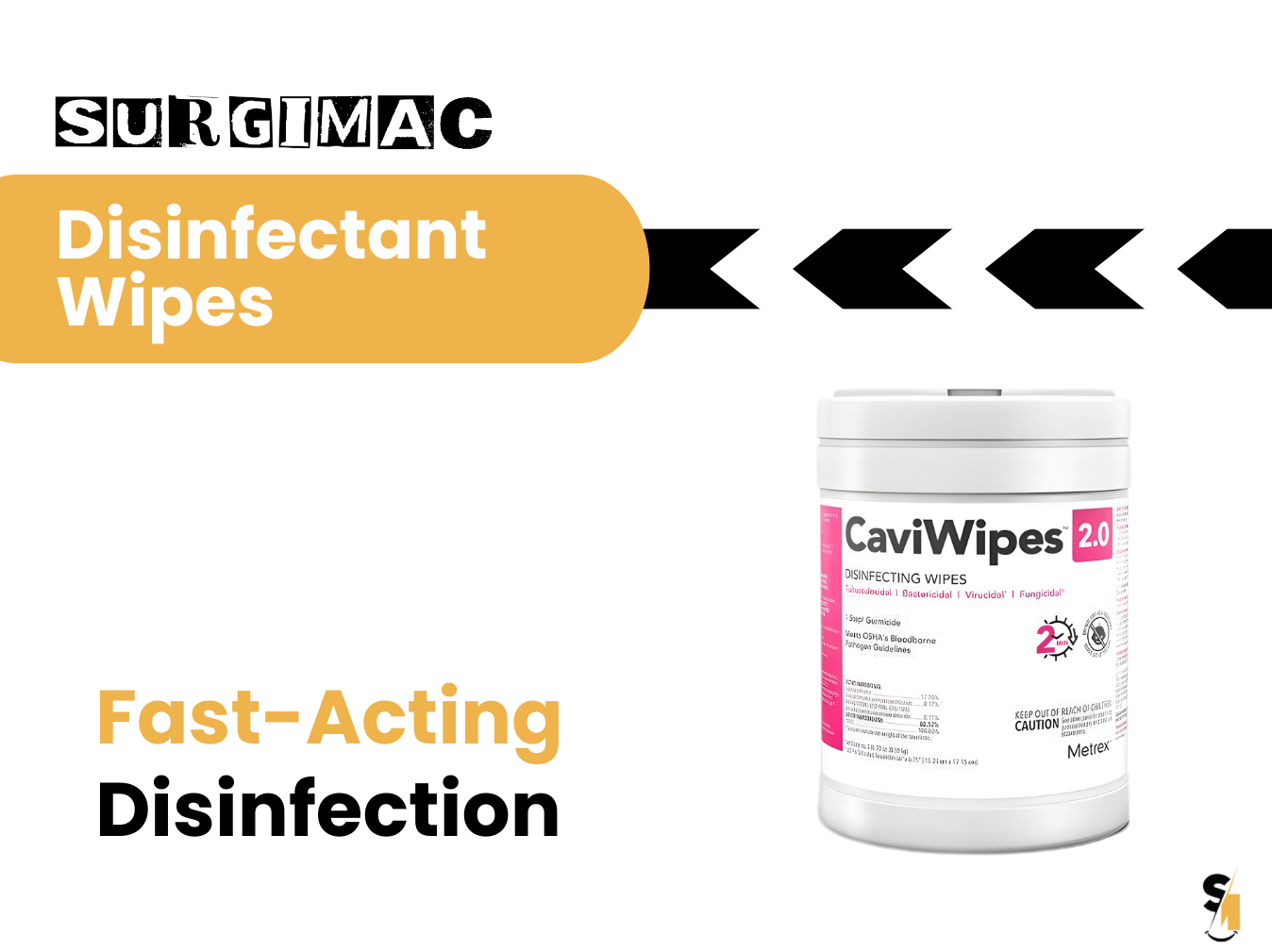
Known for their fast and effective kill times, CaviWipes are a popular choice in practices where rapid room turnover is essential. These pre-saturated towelettes act as a cleaner and disinfectant in one, simplifying your workflow. They are effective against TB, MRSA, HIV, and many other viruses and bacteria in as little as one to three minutes. The low-alcohol formula is non-abrasive and suitable for use on most non-porous surfaces found in a dental operatory. CaviWipes help your team work efficiently without compromising on disinfection standards, making them a practical and effective tool for daily sterilization and hygiene protocols.
Top Disinfectant Sprays for Your Dental Practice
Disinfectant sprays are a cornerstone of any effective infection control protocol, offering a practical way to cover large or irregularly shaped surfaces that are difficult to wipe down. From patient chairs and countertops to equipment housings, a reliable spray ensures that your disinfectant reaches every necessary area. The key is to find a product that delivers broad-spectrum efficacy without damaging your valuable equipment. When selecting a spray, always consider its chemical composition, contact time, and compatibility with the materials in your operatory. The right spray streamlines your turnover process, allowing you to maintain a safe, clean environment for every patient with confidence and efficiency. Below, we explore some of the most trusted and effective disinfectant sprays available to dental professionals, each with unique features suited for the demands of a clinical setting.
Lysol IC Quaternary Disinfectant Cleaner
Lysol is a household name for a reason, and its professional-grade products carry that same reputation for reliability into the clinical space. The Lysol IC Quaternary Disinfectant Cleaner is specifically formulated for healthcare environments. It is "a trusted choice in dental settings, known for its efficacy in killing a wide range of pathogens when used correctly on environmental surfaces." Its quaternary ammonium-based formula is effective against bacteria, viruses, and fungi, making it a versatile tool for disinfecting non-critical surfaces like countertops, cabinetry, and patient chairs. This formula is also known for being less harsh than bleach-based alternatives, helping to protect the finish on your equipment over time.
Virex TB One-Step Disinfectant Cleaner
Efficiency is paramount in a busy dental office, and Virex TB One-Step Disinfectant Cleaner is designed to simplify your workflow. This product cleans and disinfects in a single step, saving valuable time during operatory turnover. It is "recognized for its broad-spectrum activity, effectively eliminating bacteria, viruses, and fungi, making it a reliable option for non-critical surfaces in dental practices." As a tuberculocidal disinfectant, it meets a key benchmark for use in healthcare settings. Its ready-to-use formula ensures consistent dilution and effectiveness every time you spray, providing peace of mind that your surfaces are not just clean, but clinically disinfected.
Dispatch Hospital Cleaner Disinfectant
For situations requiring powerful, fast-acting disinfection, Dispatch Hospital Cleaner Disinfectant is a formidable option. Containing sodium hypochlorite (bleach), this spray is highly effective against a wide range of difficult-to-kill pathogens, including bacteria and viruses. It is "formulated to provide effective disinfection against a variety of pathogens, ensuring safety and cleanliness in clinical environments." The one-step formula cleans and disinfects simultaneously, and its fast contact times help expedite your cleaning protocols. Due to its bleach content, it's best used on compatible, non-porous surfaces to avoid discoloration or damage, making it ideal for specific applications where maximum strength is required.
Simple Green Pro 3 Plus Disinfectant
If you're looking for a disinfectant that balances power with a more favorable safety profile, Simple Green Pro 3 Plus is a strong contender. This product "is noted for its fast-acting properties and effectiveness against a broad spectrum of microorganisms, making it suitable for various surfaces in dental practices." It provides hospital-grade disinfection without the harsh chemicals found in many traditional formulas, often using an active ingredient like citric acid. This makes it a great choice for general use throughout the office, as it’s less likely to cause material degradation or produce strong fumes. It effectively cleans and sanitizes, supporting a clean and safe environment for both your team and your patients.
Getting the Best Value from Your Disinfectants
Keeping your practice well-stocked with effective disinfectants is a non-negotiable part of infection control, but the costs can add up. Getting the best value isn’t just about finding the lowest price tag; it’s about maximizing efficiency, minimizing waste, and choosing products that work as hard as you do. A smart purchasing strategy ensures you get the clinical efficacy you need without straining your budget. By looking beyond the initial cost and considering factors like usage, volume, and product function, you can make choices that support both patient safety and your practice's financial health.
Calculate Your Cost-Per-Use
The price on the canister or bottle can be deceiving. To understand the true cost, you need to think in terms of cost per use. For example, many disinfectant sprays require a two-step "spray-wipe-spray" method—the first to clean, the second to disinfect. This means you're using the product twice on every surface. A seemingly cheaper spray might be less concentrated, requiring more product to achieve the necessary contact time, which ultimately drives up your cost. Take a week to track how many wipes or sprays your team uses to turn over an operatory. This simple audit will give you a clear picture of your actual consumption and help you compare different infection prevention products more accurately.
Should You Buy Disinfectants in Bulk?
Once you’ve found a disinfectant that meets your clinical standards and is compatible with your equipment, buying in bulk is one of the easiest ways to save money. The per-unit cost is almost always lower, and it also reduces the administrative time spent on frequent reordering and processing shipments. This approach is perfect for high-turnover items that your practice relies on daily. For example, stocking up on trusted essentials from the MacSafe line ensures you have a reliable supply on hand while taking advantage of better pricing. Just be sure you’re confident in the product before committing to a large quantity—you don’t want to be stuck with cases of something that doesn’t meet your needs.
Choose Products That Clean and Disinfect
Why use two products when one will do the job? Many modern disinfectants are formulated to work as both a cleaner and a disinfectant, streamlining your entire workflow. These one-step solutions save valuable time during operatory turnover, reduce the number of products you need to store, and simplify staff training. Instead of pre-cleaning a surface with one chemical and then disinfecting with another, your team can do it all in a single pass. According to established surface disinfection strategies, using a dual-purpose wipe or spray can significantly improve efficiency without compromising on safety, making it a smart and cost-effective choice for any busy dental practice.
What Do Your Peers Say About Top Disinfectant Brands?
When it comes to infection control, dental professionals rely on products that are both effective and practical. While personal preference plays a role, conversations in forums and at industry events often circle back to three core criteria: proven performance, ease of use during a busy day, and compatibility with expensive equipment. Your colleagues are looking for solutions that kill a broad spectrum of pathogens without disrupting their workflow or damaging their operatories.
Experienced clinicians know that a disinfectant's value goes beyond the brand name on the label. They share insights on which products live up to their kill claims, which ones save precious minutes between appointments, and which ones won't degrade chair upholstery over time. This peer-to-peer feedback is invaluable because it reflects real-world application, not just lab data. Understanding what your colleagues prioritize can help you cut through the marketing noise and select the best infection control products for your practice’s specific needs, ensuring you maintain a safe environment for both your patients and your team.
Peer Ratings on Performance and Efficacy
For any dental professional, a disinfectant’s performance is the top priority. Your peers consistently emphasize the importance of a product’s spectrum of activity—its proven ability to kill a wide range of microorganisms, including bacteria, viruses, and fungi. A disinfectant that is fast-acting and effective against clinically relevant pathogens is considered a cornerstone of any infection control protocol. Clinicians look for products with clear, reliable efficacy data and EPA registration to ensure they meet federal standards. Ultimately, the goal is to trust that the chosen solution is actively protecting everyone in the clinical environment from potential cross-contamination.
Does It Simplify Your Clinical Workflow?
A disinfectant can have the best kill claims in the world, but if it’s difficult to use, it won’t be effective. Your colleagues value products that seamlessly integrate into their fast-paced schedules. Pre-saturated wipes, for example, are popular because they simplify the standard “wipe-discard-wipe” technique, saving time and reducing the risk of procedural errors. Sprays are often favored for their ability to quickly cover larger surfaces. Any product that combines cleaning and disinfecting steps without requiring complicated procedures is a winner in a busy practice. The easier a disinfectant is to use correctly, the more likely it is that your team will achieve consistent and compliant surface disinfection.
Feedback on Surface Compatibility
Dental equipment and surfaces are a significant investment, and protecting them is a major concern among your peers. A common topic of discussion is finding a disinfectant that is tough on germs but gentle on materials. Harsh chemicals can cause vinyl chairs to crack, plastics to yellow, and metal surfaces to corrode over time. For this reason, clinicians often seek out products specifically formulated for use in healthcare settings, like those in the MacSafe line. They look for disinfectants that are non-corrosive and compatible with a wide range of non-critical surfaces found in the modern operatory, ensuring that their infection control efforts don't inadvertently shorten the lifespan of their valuable equipment.
Common Disinfectant Myths, Debunked
In a busy dental practice, it’s easy to fall back on assumptions about your infection control routine. But when it comes to disinfectants, what you think you know can create gaps in your safety protocols. Misinformation can lead to improper use, which compromises the health of both your patients and your team. Let's clear up some of the most common myths and ensure your approach to disinfection is based on facts, not fiction. Getting this right is fundamental to maintaining a safe clinical environment and delivering the highest standard of care. By understanding how these products truly work, you can refine your protocols for maximum effectiveness.
Myth: All Disinfectants Are Created Equal
It’s tempting to grab any container that claims to kill 99.9% of germs, but that marketing slogan doesn’t tell the whole story. The reality is that disinfectants are highly specialized. A product’s effectiveness depends entirely on its chemical formulation and its intended use. Some are formulated to kill a broad spectrum of bacteria, while others are specifically designed to inactivate tough-to-kill viruses or tuberculosis. For a dental setting, you need a hospital-grade, EPA-registered disinfectant that explicitly lists the pathogens you’re targeting. Always check the label to ensure the product meets the specific demands of your operatory, from chairs and countertops to sensitive equipment.
Myth: Cleaning and Disinfecting Are the Same Thing
This is one of the most critical distinctions in any infection control protocol. Cleaning is the physical act of removing visible debris, soil, and bioburden like blood and saliva. Disinfecting is the chemical process of killing microscopic pathogens. You cannot effectively disinfect a dirty surface. Why? Because organic matter can shield microorganisms from the disinfectant or even neutralize its active ingredients. Think of it this way: you wouldn't use hand sanitizer on muddy hands and expect them to be clean. Always perform thorough surface cleaning with a proper cleaning agent before applying your disinfectant to ensure it can do its job properly.
Myth: Disinfectants Work Instantly
The idea of a quick spray-and-wipe is a major misconception. Every disinfectant requires a specific "contact time"—also known as dwell time—to work effectively. This is the amount of time the surface must remain visibly wet for the chemical to kill the pathogens listed on its label. This can range from 30 seconds to 10 minutes or more, depending on the product and the microorganism. Wiping the surface dry before the contact time is up means you’ve only cleaned it, not disinfected it. Always read the manufacturer’s instructions for use (IFU) to ensure you’re allowing the proper dwell time for true disinfection.
Myth: "Natural" Always Means Safer or Better
While plant-based and "natural" cleaners have their place in general housekeeping, they are rarely appropriate for a clinical setting. The term "natural" is not regulated and doesn't guarantee safety or efficacy against healthcare-associated pathogens. Many natural ingredients lack the broad-spectrum killing power required to decontaminate a dental operatory where exposure to bloodborne pathogens is a risk. For patient and staff safety, your practice must rely on professional, hospital-grade disinfectants that have been rigorously tested and registered with the EPA. These products, like those in the MacSafe line, are formulated and proven to meet the stringent demands of a healthcare environment.
How to Use Disinfectants for Maximum Effectiveness
Choosing a high-quality disinfectant is only half the battle. To ensure you’re actually eliminating pathogens and protecting your patients and staff, proper application is critical. Following a consistent, evidence-based protocol turns a great product into a reliable infection control strategy. Even the most powerful disinfectant can fail if it isn't used correctly. Integrating these steps into your daily routine will help you achieve consistent and effective surface decontamination, keeping your practice safe. Here are the essential steps to get the most out of your disinfectant wipes and sprays.
Always Pre-Clean Your Surfaces
One of the most common misconceptions is that disinfecting and cleaning are the same thing. In reality, disinfectants are designed to work on surfaces that are already free of visible debris. Bioburden—contaminants like blood, saliva, and other organic matter—can shield microorganisms from the disinfectant and even neutralize its active ingredients. Before you disinfect, you must pre-clean the surface with a separate wipe or cloth to remove all visible soil. This simple two-step process ensures your chosen disinfectant can make direct contact with pathogens, allowing it to work as intended and supporting your practice’s infection control protocols.
Apply According to Label Directions
Every disinfectant has specific instructions for use (IFU) provided by the manufacturer, and following them is non-negotiable for achieving the claimed efficacy. Whether you’re using wipes or a spray, ensure the surface is thoroughly wetted. Avoid the temptation to use a single wipe for multiple surfaces, as this can lead to cross-contamination. The best practice is a "pull-wipe-discard" method for each distinct area. For sprays, apply the solution evenly from the recommended distance to avoid aerosolizing contaminants.
Don't Shorten the Contact Time
Contact time, or dwell time, is the period a disinfectant must remain visibly wet on a surface to kill the targeted microorganisms. This is arguably the most critical and overlooked step in the disinfection process. If you wipe a surface dry before the required contact time is up, you are not achieving disinfection. This time can range from 30 seconds to 10 minutes depending on the product and the pathogen. Always check the product label and allow the surface to air dry. This ensures the chemical has enough time to break down and destroy viruses, bacteria, and fungi, making your sterilization and disinfection efforts truly effective.
Prioritize High-Touch Areas
In a busy dental practice, some surfaces are touched far more frequently than others, making them hotspots for cross-contamination. To maximize your efficiency and impact, prioritize the disinfection of these high-touch areas between every patient. This includes light handles, chair controls, bracket tables, countertops, keyboards, and doorknobs. Creating a checklist for your team can help ensure these critical points are never missed. Consistent disinfection of these surfaces is a cornerstone of breaking the chain of infection and protecting the health of everyone in your clinic. It ensures the dental instruments and materials you use remain uncontaminated during procedures.
Disinfectant Wipes vs. Sprays: Which Is Right for Your Practice?
Choosing between disinfectant wipes and sprays often feels like a matter of personal preference, but the best choice really comes down to the specific task at hand. Both formats are effective tools in your infection control arsenal, but they shine in different scenarios. The key is to understand their unique strengths and how they fit into your practice’s workflow. An efficient protocol often involves using both, allowing your team to clean and disinfect every surface thoroughly and efficiently, from large countertops to delicate equipment. By matching the right product to the right job, you ensure compliance, safety, and peace of mind for both your staff and your patients. Ultimately, a well-stocked and well-thought-out infection control strategy is your best defense against cross-contamination.
When to Choose Disinfectant Wipes
Disinfectant wipes are the champions of convenience. Their biggest advantage is that they come pre-saturated with the correct amount of disinfectant solution, which takes the guesswork out of the process. This makes them perfect for quick room turnovers and for disinfecting smaller, high-touch surfaces like light handles, drawer pulls, and control panels. When used correctly, disposable wipes are highly effective for cleaning and disinfecting environmental surfaces in your operatories. Many modern wipes are also designed to both clean and disinfect in a single step, saving valuable time between appointments. Just remember to use enough wipes to ensure the surface remains visibly wet for the entire contact time specified by the manufacturer.
When to Choose Disinfectant Sprays
Disinfectant sprays are your go-to for covering large or irregularly shaped surfaces efficiently. Think countertops, dental chairs, and large equipment. Sprays can be more economical for broad application and are essential for executing the proven "spray-wipe-spray" technique. This method involves an initial spray and wipe to remove bioburden, followed by a second spray that is left to air dry for the full contact time, ensuring true disinfection. The best medical disinfectant sprays are fast-acting and effective against a broad spectrum of microorganisms. They are a critical component of end-of-day cleaning protocols and for situations where you need to ensure complete coverage on complex surfaces that a wipe might miss.
Why a Combination Approach Is Often Best
For most dental practices, the ideal strategy isn’t choosing one over the other but integrating both into a comprehensive protocol. Wipes offer speed and precision for high-touch, non-critical surfaces between patients, while sprays provide the thorough coverage needed for larger areas and terminal cleaning. This hybrid approach creates a highly effective and efficient system. For example, your team can use wipes on chairside computers and curing lights while using a spray for the entire patient chair. This ensures every surface is addressed with the appropriate tool.
Frequently Asked Questions
Related Articles
Tags
Blog posts
-
, by SurgiMac A Clinician's Guide to Absorbable Suture Material
-
, by SurgiMac A Clinician's Guide to Dental Composite Resin Kits
-
, by SurgiMac How to Disinfect with Metrex CaviWipes Correctly
