
Dental Impression Material: Alginate vs VPS Guide
- , by SurgiMac
- 22 min reading time
Get dental impression material for your clinical workflow. Compare alginate and VPS by accuracy, stability, tear resistance, and ideal use.
Selecting the wrong dental impression material can lead to avoidable chairside errors, distorted casts, and poorly fitting appliances. The right choice starts with understanding where alginate and vinyl polysiloxane (VPS) perform best.
Shop dental impression materials for a more dependable clinical workflow.
The dental impression material you choose defines the quality of your models, crowns, and surgical guides. Dentists mostly pick between traditional alginates for simple models and VPS for high-precision work. While alginate costs less and is easy to use, VPS options offer better tear strength and stay stable for much longer. Research shows that addition-based silicone (VPS) models provide the highest level of accuracy when compared to other options. Modern items like MacImpress deliver high precision for permanent crowns, while AlgiMac offers a reliable substitute for quick diagnostic work. These technical details help dental teams stop errors and ensure a perfect fit for every patient. Matching the tool to the clinical need saves time and ensures the best results.
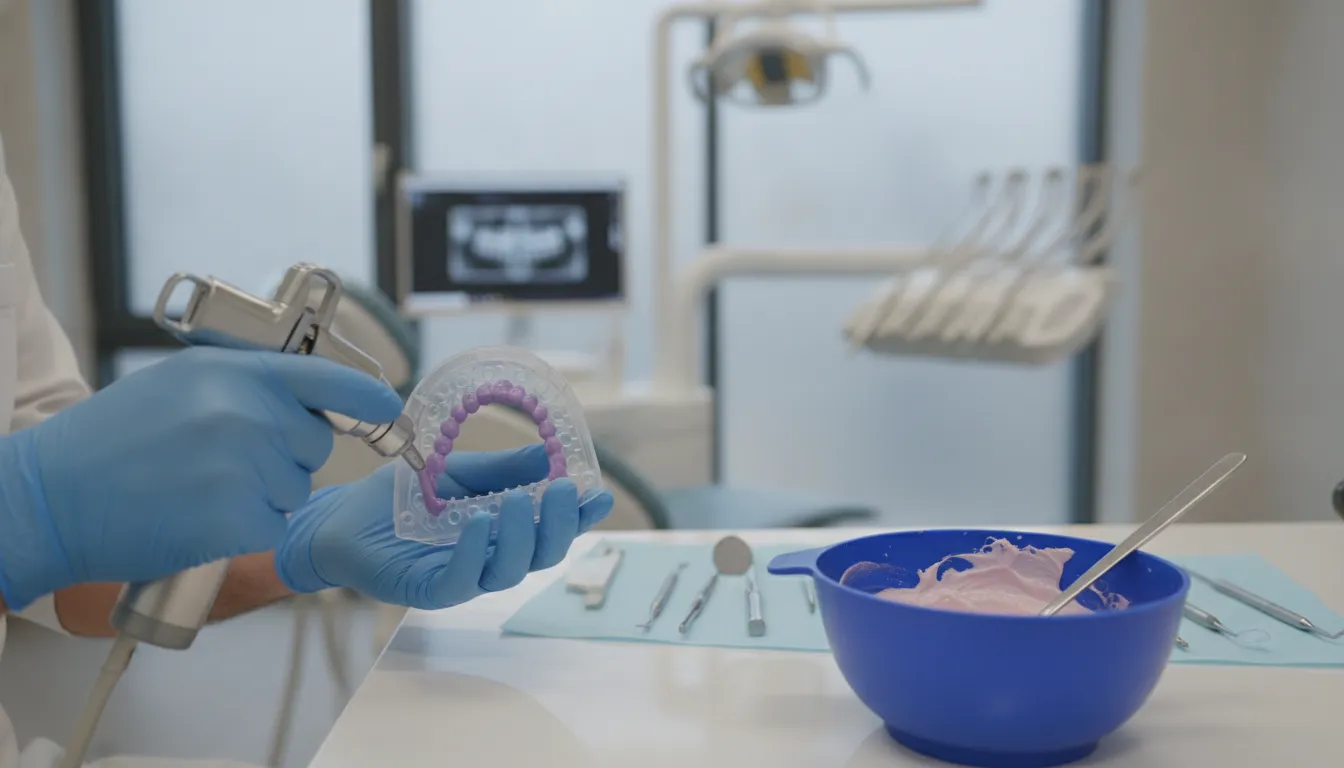
Dentists must weigh the costs and benefits of each tool to pick the best one for their needs. Finding the specific strengths of each type is the first step toward better patient care. Our comparison of Dental impression material: alginate vs VPS at a glance breaks down the facts you need to know. The path begins with the core differences.
Dental impression material: alginate vs VPS at a glance
Picking the right dental impression material is key for your clinic. You likely use both alginate and VPS in your daily work. Each one has its own strengths and limits.
Alginate is a classic choice for many basic tasks. Vinyl Polysiloxane (VPS) is a top elastomer that gives more detail. Knowing when to use each helps you work faster and get better results.
Precision and detail levels
Accuracy is the main goal when you take an impression. Addition-based silicone, or VPS, is known for high accuracy in dental tasks. It captures small details well because it is an elastomer. This makes it a great choice for jobs that need a tight fit.
Alginate is also an elastic material. It was first made during World War II when agar was hard to find. It is a hydrocolloid that works well for many basic clinic needs. While it works for some jobs, it does not record fine detail as well as VPS.
For the best results, you may want to look at modern options like MacImpress. This brand offers a premium level of detail for clinic use. Most pros use a VPS impression material guide for crowns and bridges. It helps avoid remakes and saves time in the chair.
Stability and storage needs
How well a material holds its shape over time is called dimensional stability. VPS is very stable and can wait for a long time before you pour it. It does not shrink or change size easily. Alginate has lower dimensional stability than silicone.
This is because alginate is mostly water. If it sits in the air, it loses water and shrinks. If it sits in water, it can swell up. This means you must pour most alginate models right away to keep them from shrinking. But some new types can last longer.
Some extended-pour options can stay accurate for five days if you store them the right way. This gives your lab more time to work. Using a alginate alternative impression materials can help bridge this gap. It gives you the ease of alginate with more stability.
Choosing by workflow
The choice often comes down to cost and what you need for the patient. Alginate is cheap and easy to mix. It is perfect for check-up casts and simple dental tools. It also feels good in the mouth for the patient because it is cool and quick to set.
VPS costs more but it is stronger and holds its shape better. It has high tear strength, so it won't break when you pull it from the mouth. This is vital for deep margins or complex cases. If you need a perfect fit for a gold crown, VPS is the best choice.
You should pick your dental impression material based on the specific case. For a simple night guard or a bleaching tray, alginate is usually enough to get the job done. For any fixed prosthetics, the high accuracy of VPS is worth the extra cost. It ensures the final piece fits the first time.
| Feature | Alginate | VPS |
|---|---|---|
| Accuracy | Good for basic use | Highest precision |
| Stability | Low (must pour soon) | High (stable for weeks) |
| Tear Strength | Low to moderate | Very high |
| Best Use | Study models | Crowns and bridges |
| Cost | Very low | Higher |
Which material provides better accuracy and detail?
Picking the right dental impression material depends on the level of detail you need. For some jobs, a simple mold is enough. For others, every small line in a tooth must be perfect. If the mold is not exact, the crown or bridge will not fit well. This can lead to more work for the dentist and less comfort for the patient. You must think about the task before you choose your tool.
Exactness of silicone tools
Silicone-based tools like Vinyl Polysiloxane (VPS) are known for high exactness. Tests show that VPS models show better detail than older types like alginate. This means they capture fine marks with more ease. Because of this, VPS is the best choice for hard tasks like crowns and bridges. It helps make sure the final piece fits the tooth just right.
VPS also stays steady over time. It does not shrink or change size much after it sets. This lets dental labs pour the mold days later and still get a good fit. When you need a trusted VPS impression material, look for types that resist tears. This helps keep the thin edges of the mold safe when you pull it out of the mouth. A strong mold leads to fewer errors in the lab.
Detail and alginate molds
Alginate is a common pick for many dental offices. It works well for making checkup casts and basic tools like mouth guards. But it is not as steady as silicone. It can lose water and shrink, which changes the size of the mold. To get the best results, you must pour the cast soon after you take the mold. If you wait too long, the mold will no longer be true to the patient's mouth.
New options like AlgiMac help solve these issues. You can use a high-quality AlgiMac alginate substitute to get better steadiness. These tools are easy to handle but still cost less than VPS. They give enough detail for most routine checkups and treatment plans. They are also easy on the patient and set fast to save time.
Choosing for the dental job
The choice often comes down to the goal of the work. For high-stakes repair work, VPS is usually the winner. Its power to work in moist areas helps it find small details that other types might miss. Some VPS options even have special traits that help them flow into tight gaps around the gums. This makes them a top pick for modern clinics that want the best results.
For basic study models, alginate is still a strong pick. It is fast and easy for patients to take. If you store it the right way, some alginate types can stay exact for up to five days. But for most crown or implant work, the extra detail from a type like MacImpress is worth the swap. Always check the needs of the case before you start the mix.
How dimensional stability affects the dental workflow
Dimensional stability is the ability of a material to keep its shape over time. In a dental clinic, this factor rules your daily plan. It sets how fast you must pour a stone model from your reliable VPS impression material or alginate. If a material shifts even a small amount, the final crown or bridge may not fit. This leads to costly remakes and lost chair time. Knowing how these tools react to the air helps you plan your work with more ease.
The challenges of water loss in alginate
Standard alginate is a hydrocolloid. This means it holds a lot of water to stay elastic. Because of this, it is very prone to change based on the room air. Two main paths can alter its shape. These are syneresis and imbibition. Syneresis happens when the material loses water and shrinks. On the other hand, imbibition occurs when the material sits in water and swells. Both events change the size of your mold and ruin the fit of the final piece.
Most dental teams must pour these casts right away to avoid these issues. If you wait more than ten or fifteen minutes, the accuracy starts to drop. This creates a rush in the office. A staff member must stop other tasks to mix stone and pour the model. This tight schedule can be hard to manage when you have many patients. However, using a high-quality AlgiMac alginate substitute can help. These products offer more leeway for offices that cannot pour models at once. They keep their shape for much longer than old-style powders.
The stability and flexibility of VPS
Vinyl polysiloxane (VPS) is a silicone known for high accuracy. Unlike alginate, VPS does not need water to keep its shape. It stays stable for a much longer time because of its strong chemical bonds. Research shows that dental impression material made of silicone can keep its form for several days. This stability is a big win for your office workflow. It means you do not have to rush to the lab bench as soon as the patient leaves the chair.
This benefit changes how you work with outside labs. You can take a mold in the morning and ship it at the end of the day. The material will not warp or shrink during the trip. Many VPS types also let you pour more than one model from the same mold. This is helpful if the first stone cast breaks or if you need a second model. This is not possible with alginate. Alginate is usually ruined after the first pour. This feature of VPS saves time and costs for complex cases.
Matching your material choice to the task
Your choice of material should match the needs of the case and your office pace. For quick study models, alginate is a common pick. It is low in cost and sets fast. But the need to pour it right away is a trade-off. If your office is short on staff, this rule can slow you down. You might find that a stable VPS material is a better fit for your routine. These choices give your team more control over their time and reduce stress.
Stability also affects how you store your work before it is poured. Alginate must stay in a moist towel inside a sealed bag to keep its water. If the bag is too wet, the mold swells. If it is too dry, it shrinks. VPS is much easier to store. It handles changes in the air and heat well. This reliable nature reduces the risk of errors during the "pour" phase. By picking a material with high stability, you ensure that your work stays accurate from the chair to the lab.
Review SurgiMac VPS impression material for precision-focused cases.
Tear resistance, elasticity, and removal from the mouth
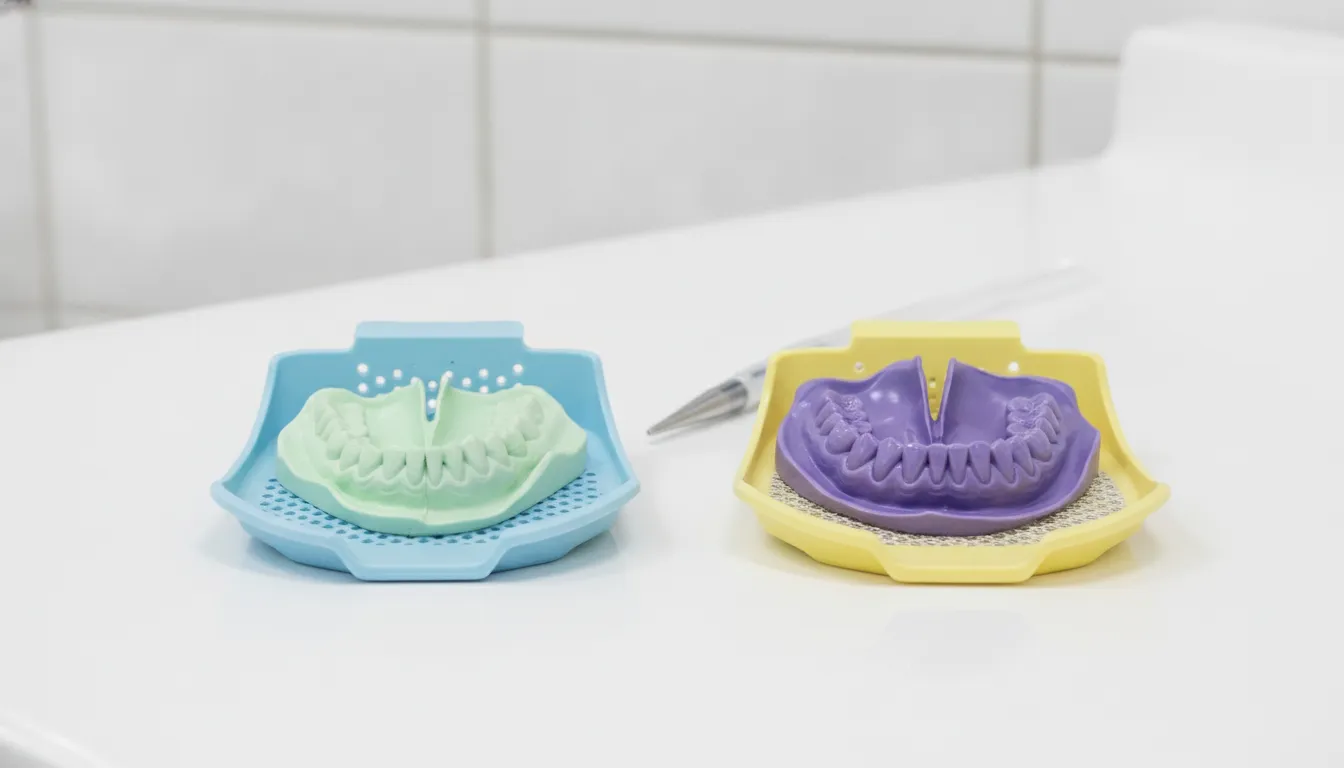
Success in clinical work starts with how a dental impression material acts when you pull it out. Tear resistance and elasticity are key traits for any tray. These traits help you get a clear and clean record of the patient's teeth.
If a material lacks strength, it might break in thin spots. This leads to gaps in your model and poor fits for your lab work. You need a tool that can handle the stress of removal without failing.
Dentists must choose materials that match the task at hand. For some jobs, a fast set is best. For others, detail is the top goal. In both cases, the physical limits of the gel will rule the quality of the final piece.
Knowing these limits helps you avoid errors that waste time and money. It also leads to a better time for the patient. Right molds reduce the need for repeat visits and extra costs.
Understanding tear strength in the oral cavity
Tear strength is how well a tool resists breaking as you pull it away from the teeth. When you work with deep gum lines or narrow gaps, the material gets very thin. A high tear strength is vital to keep these fine edges whole.
Without it, you might leave small bits of material behind in the mouth. This can cause pain for the patient and force you to start over. Most dentists look for a balance in their tools.
You want a tool that stays tough but still feels soft enough to move into every gap. Modern options like MacImpress give you this blend. These tools help you capture every line and curve without fear of a tear.
Using a reliable VPS impression material often gives you better results in these tight spots than standard gels. It holds onto fine detail even when the space is very small.
The role of elasticity in deep undercuts
Elasticity is the power of a tool to stretch and then snap back to its first shape. This is a must when you deal with undercuts. An undercut is a spot where the tooth is wider than its base.
As you pull the tray, the material must stretch to pass over these wide parts. Once it is out, it must return to the exact size of the tooth. This ensures your final model is right.
Studies show that silicone-based tools often have a more precise fit than older choices. If the material stays stretched out, the cast will be wrong. This is why high-end VPS options are so popular for crowns and bridges.
They have a "memory" that helps them hold their shape even after a hard pull. For quick tests, a high-quality AlgiMac alginate substitute can also offer great stretch for simple test models. It provides the flex needed for basic diagnostic work.
Managing tray removal and distortion risks
How you remove the tray is just as vital as the material itself. A slow pull can cause more stress than a quick, firm snap. When you pull too slow, you give the material more time to warp.
This "creep" can lead to changes in the shape. You want to break the seal with one steady motion. This helps the tool pass over any blocks without losing its form or tearing.
Warping is the enemy of a good fit. Even a small change can make a crown feel tight or loose. Check your tray for thin areas after removal.
If you see light through the material, it may be too thin to hold its shape for a long time. Always store your impressions in a cool, dry place to keep them stable. This preserves the work you did and makes sure the lab gets a perfect copy of the mouth.
When should a practice choose alginate or VPS?
Choosing the right dental impression material depends on the goals of the work. Most dental teams keep both types of material on hand to meet many needs. While both materials can record the shape of a patient's mouth, they have other strengths. A dentist must judge which one will give the best result for each case. Cost, speed, and how long the mold needs to last are all things to think about before you start.
Choosing for diagnostic and study models
For tasks like study models, diagnostic casts, or making bleach trays, alginate is often the top choice. It is a cost-effective material that is very easy to use. Most clinics use it for early work because it sets fast and feels fine to the patient. You can use it to create models for patient talks or to plan future dental work. Some high-quality AlgiMac alginate options even fix some of the common flaws of old-school alginate. These materials can produce accurate casts for several days if they are stored in the right way. This gives the lab more time to work without the mold losing its shape.
Alginate is also great for making mouth guards or simple trays. It flows well and picks up enough detail for these types of jobs. Since it uses water to set, cleaning up after the job is quick and simple. But it can dry out fast if left in the open air. This means you must pour your stone models soon after taking the impression. For most daily dental office tasks that do not need a perfect fit to the micron, alginate is a solid and trusted tool.
Choosing for crowns and bridges
When you need to make a crown, a bridge, or a dental implant, you must have the highest level of detail. For these exact jobs, VPS is the best material. Studies show that addition-based silicone materials (VPS) have better accuracy than alginate. This accuracy is vital because even a small error can cause a crown or bridge to fit poorly. Poor fit leads to more chair time and more stress for the patient. Using a reliable VPS impression material helps you get it right the first time.
Another big plus for VPS is its high tear strength. When you pull the mold out of the mouth, it needs to stay in one piece, mostly near the thin edges of a prep. VPS is much stronger than alginate and will not rip as easily. It also keeps its shape for weeks, not just days. This means you can send the mold to a lab across the country without worry. Many dentists also find that VPS is easier to use for final impressions because it comes in many speeds and weights. This allows for more control during complex cases.
Choosing for orthodontic work
Orthodontic cases often require many sets of models over time. Alginate is the standard for making orthodontic appliances and retainers. It was first used as a fix for agar shortages and has been a favorite ever since. It is flexible enough to pull over brackets and wires without causing pain or damage. Most kids and teens find the taste and feel of alginate better than heavier silicone materials.
Even so, some high-tech orthodontic tools might need more detail than alginate can give. For clear aligners or complex fixed tools, a lab might ask for a VPS impression or a digital scan. VPS provides a very stable base for the lab to build these tools. When you choose your material, think about how much detail the lab needs and how long the patient can sit still. By matching the material to the task, you ensure that every case ends with a happy patient and a job well done.
How to select the right impression material for each case
Choosing a dental impression material is a key step. The right choice leads to a better fit for crowns and dentures. It also saves time for the dentist and the patient. You must match the material to the needs of the case. Factors like the type of work will guide your pick.
Identify clinical goals and detail needs
Start by looking at your goals. For study models, you may not need extreme detail. Standard materials work well here. But for crowns, you need more detail. Studies show that addition-based silicone materials offer the highest accuracy for dental models. This accuracy is vital for a good fit in the mouth.
Think about how long the model must stay stable. If you cannot pour it right away, you need a stable material. Many silicones keep their shape for days. Alginate can lose its shape fast if stored poorly. Choosing a material that stays stable helps avoid errors. This ensures the final work matches the patient's teeth.
Evaluate moisture and tissue health
The state of the patient's mouth also matters. Some materials do not work well with spit or blood. If you cannot keep the area dry, look for a material that likes water. These are called hydrophilic materials. They can flow into small gaps when moisture is present. This helps you get a clear image of the prep site.
Tear strength is another big factor. You need a material that will not break when you pull it out. This is a common issue with deep undercuts. High tear strength is a critical property for dental impression material work. Choosing a tough material prevents re-takes. It makes the process smoother for everyone.
A step-by-step picking plan
Follow these steps to find the best material for your task. This plan helps you pick the right tools every time. It ensures you use the best products for each clinical need.
- Define the level of detail you need for the case. Choose the best materials for crowns and bridges. Use simpler options for study casts or night guards.
- Check for deep undercuts or soft tissue issues. Pick a material with high tear strength to avoid breakage. This keeps the impression whole during removal.
- Assess the moisture levels in the prep area. Use a hydrophilic material if the site is hard to keep dry. This helps the material record fine margins.
- Select the right viscosity and tray type. Use a heavy body for the tray and a light body for the teeth. This dual-mix method yields the best results.
- Follow the timing rules from the maker. Use a timer to track the mix time and the set time. Do not pull the tray out too soon.
- Inspect the final impression under good light. Look for voids, drags, or tears in the margin area. If it is not perfect, take it again.
At SurgiMac, we offer many top tools for your clinic. You can use our high-quality AlgiMac alginate substitute for daily diagnostic work. It sets fast and stays stable. For complex cases, you may need a reliable VPS impression material like MacImpress. These options help you give the best care.
Frequently asked questions about dental impression material
Is VPS more accurate than alginate?
VPS generally reproduces finer detail and offers greater dimensional stability, making it the preferred option for final impressions for crowns, bridges, and other precision restorations. Alginate remains appropriate for many diagnostic casts and preliminary impressions.
How quickly should an alginate impression be poured?
Conventional alginate should usually be poured promptly according to the manufacturer instructions because water loss or uptake can distort it. Extended-pour materials may permit a longer interval, but teams should follow the specific product storage and timing directions.
Can VPS impressions be poured more than once?
Many VPS materials remain dimensionally stable enough for multiple pours. Whether repeated pouring is appropriate depends on the product, disinfection method, storage conditions, and laboratory workflow, so verify the manufacturer instructions.
Which impression material is best for study models?
Alginate is often the practical choice for study models because it is economical, fast setting, and sufficiently accurate for many diagnostic uses. VPS may be preferred when greater detail, tear resistance, or delayed pouring is required.
Ready to find the best dental impression materials?
Shop VPS impression material from SurgiMac.
Pick the right tools for your clinic today. If you use poor molds, you will waste both time and money. Every mold you must retake keeps you from seeing new patients and slows your day. You do not have to deal with these costs when you use MacImpress and AlgiMac. These tools help you get a great fit on the first try so you can avoid errors. Waiting to upgrade your stock only hurts your bottom line and your patient trust. You can see better results and work faster by getting the right supplies now. Do not let old materials hold your practice back. Make the smart choice for your team and your clinic by acting today. Your next case will be easier when you have the right materials in hand.
Ready to shop dental impression materials? Check out our online catalog to shop dental impression materials and improve your practice workflow today.
Tags
Blog posts
-
, by SurgiMac A Clinician's Guide to Absorbable Suture Material
-
, by SurgiMac A Clinician's Guide to Dental Composite Resin Kits
-
, by SurgiMac How to Disinfect with Metrex CaviWipes Correctly
