

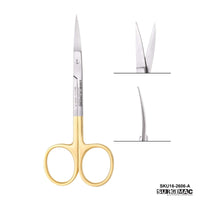



Extraction Forceps SlideShare: A Clinical Guide
- , by SurgiMac
- 33 min reading time
Get expert tips and visuals in this extraction forceps slideshare. Learn clinical techniques, instrument selection, and best practices for dental extractions.
Even the most routine extraction can present unexpected challenges, from a fractured root tip to sudden hemorrhage. While an "extraction forceps slideshare" might illustrate a perfect, uncomplicated procedure, real-world clinical practice requires you to be prepared for anything. This guide focuses on building that preparedness. We will walk through how to manage potential complications by having a clear plan and the right tools ready before you even begin. Being equipped to handle issues swiftly and confidently not only ensures patient safety but also reinforces their trust in your care. This includes having everything from specialized forceps to reliable closure materials like MacSuture immediately accessible.
Key Takeaways
- Match the forcep to the tooth's anatomy: Using an instrument designed for a specific tooth and arch is non-negotiable. This ensures a secure grip on the root, allows for precise force application, and dramatically lowers the risk of complications like root fractures.
- Master the sequence of movements: An extraction is a sequence, not a single action. Always use elevators for initial luxation before applying forceps, then use controlled apical, buccal, lingual, and rotational pressures to expand the socket for a gentle, atraumatic delivery.
- Plan for success and potential complications: A smooth procedure starts with a thorough pre-operative assessment and ends with clear post-operative care. Being prepared for potential issues, like root fractures or hemorrhage, with the right instruments and materials ready is just as important as the extraction itself.

What Are Extraction Forceps?
Extraction forceps are a fundamental tool in every dental operatory, designed specifically for exodontia, or the removal of teeth. At their core, these instruments allow clinicians to grasp a tooth securely, apply controlled force, and remove it from the alveolar bone. While the concept is straightforward, the execution requires precision, which is why forceps are not a one-size-fits-all solution. They consist of three main components: the handles, a hinge, and the beaks. The beaks are meticulously shaped to conform to the anatomy of a specific tooth, ensuring a firm grip on the root structure below the cementoenamel junction. This design allows you to apply leverage and rotational forces effectively, facilitating a clean and efficient extraction. Understanding the mechanics and variety of these essential dental instruments is the first step toward mastering extraction techniques and ensuring positive patient outcomes. From single-rooted incisors to multi-rooted molars, there is a uniquely designed forcep for nearly every tooth in the mouth.
The Anatomy of an Extraction Forcep
Every extraction forcep is composed of three distinct parts: the handles, the hinge, and the beaks. The handles are where you apply pressure, and their design is critical for grip and control. The hinge, or joint, connects the handles to the beaks and transfers the force you apply. Finally, the beaks are the working ends of the instrument. They are designed to be concave and adapt precisely to the tooth’s root surface. For example, forceps for single-rooted teeth will have beaks that are equally concave on both sides. The overall design, from the handle length to the beak curvature, provides the mechanical advantage needed to luxate and lift a tooth from its socket with minimal effort and maximum precision.
Forceps vs. Other Extraction Instruments
While forceps are the primary tool for removing a tooth, they are rarely the first instrument used in the process. Extractions typically begin with dental elevators. An elevator is used to sever the periodontal ligament and create initial mobility, or luxation, of the tooth within its socket. Once the tooth is sufficiently loosened, the extraction forceps come into play. The forceps are used to grasp the tooth firmly and apply the final rotational and tractional forces needed to guide it out of the socket. Think of it as a two-step process: elevators do the initial loosening, and forceps perform the final lift. Using them together creates a smoother, more controlled, and less traumatic extraction for the patient.
What Defines a Quality Forcep?
A quality extraction forcep is defined by its material, design, and durability. Premium-grade stainless steel is the industry standard, as it provides the necessary strength to withstand the significant forces of an extraction without bending or breaking. The design should be both ergonomic and functional. Look for forceps with textured, non-slip handles that reduce hand fatigue and ensure a secure grip, even when wearing gloves. SurgiMac’s Pro Series instruments, for instance, are crafted from high-grade stainless steel to ensure reliability and balance. Furthermore, specialized collections like the Hexa Series feature ergonomic hollow handles that enhance tactile sensitivity, giving you greater control during delicate procedures. Ultimately, a quality forcep feels like a natural extension of your hand, allowing you to work confidently and efficiently.
A Guide to Extraction Forcep Types
Selecting the correct extraction forcep is fundamental to performing a successful and atraumatic extraction. Forceps are not interchangeable tools; each is engineered with specific anatomical considerations in mind, from the curvature of the beaks to the angle of the handles. Using the right instrument for the designated tooth and arch minimizes the risk of complications like root fractures, damage to adjacent teeth, or trauma to the surrounding bone and soft tissue. A well-organized operatory is equipped with a comprehensive range of forceps to address the unique challenges presented by each tooth, whether it's an anterior, premolar, or molar. Understanding these variations allows you to apply force effectively and predictably, ensuring a smoother procedure for both you and your patient. High-quality instruments, like those in SurgiMac’s extensive dental instruments collection, provide the reliability and precision needed to handle any clinical scenario with confidence.
Upper Anterior Forceps
Designed for maxillary incisors and canines, upper anterior forceps typically feature straight or very slightly curved handles and beaks. This linear design aligns with the long axis of the anterior teeth, allowing for a direct and intuitive application of force along the path of withdrawal. The beaks are shaped to conform snugly to the labial and lingual surfaces of the tooth just below the cementoenamel junction. This secure grip is essential for performing the gentle rotational and apical-ward movements required to luxate the tooth effectively. For these precise applications, instruments from the Pro Series offer the balance and tactile sensitivity needed for controlled and predictable extractions.
Upper Premolar Forceps
Extracting maxillary premolars requires a forcep that can navigate past the anterior teeth and lower lip. Upper premolar forceps feature a distinct "S" curve in their design. This shape allows the handles to remain outside the mouth and parallel to the floor, while the beaks reach the target tooth without awkward maneuvering. The beaks themselves are slightly broader than those of anterior forceps to accommodate the larger crown size of premolars. This ergonomic design provides excellent visibility and access, ensuring you can establish a firm grip and apply controlled buccal and palatal forces for a clean extraction.
Upper Molar Forceps
Upper molar forceps are a prime example of anatomy-specific engineering. Because maxillary molars are typically trifurcated, these forceps are designed with asymmetrical beaks to achieve a stable grip. They come in left and right pairs. The palatal beak is smooth and concave to adapt to the large, singular palatal root. In contrast, the buccal beak features a pointed tip designed to fit precisely into the bifurcation between the two buccal roots. This creates a secure, multi-point contact that prevents rotation and slipping during luxation. The robust construction of our Hexa Series forceps provides the strength required for these demanding extractions.
Lower Anterior and Premolar Forceps
Forceps for mandibular anterior and premolar teeth are designed with beaks set at approximately a 90-degree angle to the handles. This perpendicular orientation is crucial for accessing the lower arch while allowing the clinician to maintain a firm, comfortable grip from above. The beaks are typically narrow and symmetrical, designed to securely grasp the smaller crowns of the lower incisors, canines, and premolars. The design facilitates controlled rotational and figure-eight movements, which are effective for expanding the alveolar socket and severing the periodontal ligament in the dense mandibular bone.
Lower Molar Forceps
Lower molar forceps are characterized by their powerful build and symmetrical, pointed beaks. Since mandibular molars are bifurcated with mesial and distal roots, both beaks are identical and designed to engage the bifurcation on the buccal and lingual surfaces. This dual-point contact provides a powerful and stable grip, allowing the clinician to apply the significant force needed to luxate these large teeth. The handles are robust, providing the leverage necessary for the strong buccal-lingual and rotational movements required to expand the socket and lift the tooth. The durability of premium-grade stainless steel ensures these instruments can withstand high procedural forces.
Specialized Forceps: Bayonet, Root Tip, and Cowhorn
Beyond standard forceps, specialized designs are essential for managing complex or challenging extractions. Bayonet forceps feature a significant offset, allowing them to reach posterior teeth like third molars or retained roots with improved visibility. Root tip forceps have long, fine beaks perfect for grasping small fractured root fragments without causing additional trauma to the socket. Cowhorn forceps, designed for lower molars, have sharp, curved beaks that slide into the bifurcation to engage the tooth and lift it coronally from the socket, making them particularly useful when the crown is severely decayed.
How Are Extraction Forceps Classified?
Extraction forceps are highly specialized instruments, and selecting the right one is critical for a smooth, atraumatic procedure. They are not interchangeable tools; each is engineered for a specific tooth in a specific location. Understanding how they are classified helps you build a versatile and effective surgical kit. Forceps are generally categorized by three main features: the shape of their beaks, the tooth they are designed to extract, and the style of their handles. This system ensures that you can find an instrument with the perfect anatomy to match the tooth you're working on, allowing for a secure grip and predictable results.
By Beak Shape and Jaw Design
The design of the beaks, or the working ends of the forceps, is the most critical feature. Each beak is shaped to precisely adapt to the cervical line and root surface of a specific tooth. Some forceps have straight beaks, which are ideal for anterior teeth where direct access is possible. Others feature curved or S-shaped beaks designed to reach posterior teeth without impinging on the opposing arch or lips. The goal is to achieve a firm, positive grip on the root structure, not the crown, to apply controlled luxating forces effectively. A well-designed jaw ensures maximum surface contact, minimizing the risk of root fracture or damage to adjacent tissues.
By Tooth Position and Arch
Forceps are designed for specific quadrants and tooth types. You’ll find distinct instruments for maxillary (upper) and mandibular (lower) arches, as well as for incisors, canines, premolars, and molars. For example, upper molar forceps often have one pointed beak to fit into the buccal bifurcation, while lower molar forceps have two pointed beaks to grip the mesial and distal roots. This anatomical specificity allows you to apply force along the long axis of the tooth, facilitating a cleaner extraction. Building a comprehensive set with tools like the SurgiMac Hexa Series ensures you have the right instrument for every scenario, from simple incisors to complex wisdom teeth.
By Handle Design and Size
The handle design directly impacts your control, leverage, and comfort during an extraction. Forceps are typically made from high-grade stainless steel for strength and durability. Handles come in different sizes and styles, often categorized as American or English patterns, with variations in grip texture and shape. An ergonomic handle reduces hand fatigue, which is especially important during difficult or lengthy procedures. Collections like the SurgiMac Pro Series prioritize both balance and grip, providing the confidence you need to apply firm, controlled movements. The right handle feels like a natural extension of your hand, translating your force precisely to the beaks.
What to Look for When Selecting Extraction Forceps
Choosing the right extraction forceps is about more than just finding a tool that fits the tooth; it’s about selecting an extension of your own hands. The ideal instrument enhances your control, minimizes patient trauma, and reduces your own physical strain during a demanding procedure. A successful extraction depends on a confident grip and precise application of force, and the forceps you use are central to achieving that. When your instruments work with you, you can focus entirely on technique and patient care.
When evaluating forceps for your practice, there are four key areas to consider: ergonomic design, tip texture, appropriate sizing, and material quality. Each factor plays a vital role in the instrument's performance and longevity. Investing in high-quality tools not only improves procedural outcomes but also reflects a commitment to clinical excellence. At SurgiMac, our instrument collections are designed with these principles in mind, ensuring every tool from our Pro Series to our Hexa Series delivers the reliability and precision you depend on.
Ergonomic Design and Grip
An extraction can be physically demanding, and an instrument with poor ergonomics will only add to the strain. Look for forceps with a handle that fits comfortably in your hand and provides a non-slip grip. This is essential for maintaining control and applying measured force without causing hand fatigue. An ergonomic design allows you to work more efficiently and safely, especially during complex or lengthy procedures. For example, instruments with features like the ergonomic hollow handles found in our Hexa Series are specifically engineered to reduce weight and improve balance, giving you greater tactile sensitivity and control from start to finish.
Tip Texture for a Secure Hold
The beaks of your forceps must provide a secure, positive grip on the tooth to prevent slippage or fracture. Look for forceps with textured or serrated tips designed to firmly grasp the tooth surface. This feature is critical for transferring force directly to the root, allowing for effective luxation and removal without damaging the crown or adjacent structures. A secure hold minimizes the risk of iatrogenic injury and ensures the force you apply is productive. This focus on a secure hold is a hallmark of well-crafted dental instruments, as it directly contributes to safer and more predictable patient outcomes.
Sizing for Adult vs. Pediatric Use
One size does not fit all in dentistry, and this is especially true for extraction forceps. While many forceps are designed with versatility in mind, having instruments specifically sized for adult and pediatric patients is crucial for optimal performance. Pediatric teeth have different anatomical considerations than adult teeth, and using properly scaled forceps ensures a better fit and a more effective grip. Stocking your practice with a range of sizes ensures you are prepared for any patient, allowing you to adapt your technique to the unique anatomy you are treating and perform extractions with greater precision and safety.
Key Quality and Material Standards
The quality of your extraction forceps comes down to the material they are made from and the standards they are held to. Premium-grade stainless steel is the industry benchmark for a reason: it offers exceptional durability, corrosion resistance, and the ability to withstand repeated sterilization cycles without degrading. Instruments that meet established quality standards ensure they are fit for their clinical purpose. SurgiMac’s Pro Series and Hexa Series instruments are crafted from high-quality materials to provide the reliability and balance you need for every procedure, ensuring your investment lasts for years to come.
A Step-by-Step Guide to Forceps Technique
Mastering forceps technique is a fundamental skill that blends anatomical knowledge with precise, controlled movements. A successful extraction minimizes trauma, reduces complications, and sets the stage for smooth patient recovery. While every case is unique, following a systematic approach ensures consistency and confidence. From the initial assessment to final confirmation, each step builds upon the last. Using reliable, ergonomically designed instruments, such as those in the SurgiMac Hexa Series, provides the control needed to execute these steps effectively.
1. Perform a Pre-Extraction Assessment
Before you pick up a single instrument, a comprehensive assessment is your most important tool. This foundational step allows you to anticipate challenges and plan your approach. Start by carefully reviewing recent radiographs to evaluate the tooth’s root morphology, its proximity to vital structures like nerves and sinuses, and the condition of the surrounding bone. Clinically, you’ll want to assess the tooth’s mobility, the integrity of the crown, and its accessibility within the oral cavity. A tooth with extensive decay may fracture easily, requiring a different strategy than a structurally sound one. This thorough evaluation dictates your instrument selection and overall extraction plan.
2. Optimize Patient and Chair Positioning
Proper positioning is essential for operator ergonomics, visibility, and the effective application of force. For maxillary extractions, the patient should be reclined so the maxillary arch is at a 45 to 60-degree angle to the floor. Your operating height should allow you to keep your arms close to your body. For mandibular extractions, position the patient more upright, so the occlusal plane is parallel to the floor when the mouth is open. This setup allows you to use gravity to your advantage and apply force more directly. Correct positioning prevents operator strain and gives you the stable base needed for a controlled procedure.
3. Use Elevators for Initial Luxation
Before applying forceps, elevators are used to begin the luxation process. The primary goal is to sever the periodontal ligament fibers and create space between the tooth and the alveolar bone. Begin by carefully inserting a sharp, appropriately sized elevator into the periodontal ligament space. Apply slow, steady pressure to expand the socket and gently displace the tooth. This initial loosening makes the subsequent use of forceps significantly easier and less traumatic for the patient. Using high-quality dental instruments with sharp working ends is critical for an efficient and atraumatic luxation.
4. Establish a Firm Grip and Finger Rest
Your grip on the forceps directly translates to the control you have over the extraction. Use a firm palm grasp, holding the handles securely. This allows you to transfer force from your shoulder and arm, rather than relying on less stable wrist and finger movements. Equally important is establishing a stable finger rest with your non-dominant hand on an adjacent tooth or a solid area of the jaw. This provides stability, protects adjacent teeth, and gives you tactile feedback throughout the procedure. This controlled approach minimizes the risk of slippage and unintended damage to surrounding structures.
5. Apply the Five Core Extraction Movements
Once the forceps are properly seated on the tooth, a combination of five distinct movements facilitates the extraction. Start with apical pressure to seat the beaks securely and displace the center of rotation. Next, apply slow and deliberate buccal and lingual forces to expand the bony socket. For single-rooted teeth, rotational pressure can help sever the remaining periodontal fibers. Finally, a gentle tractional force is used to deliver the tooth from the socket. The key is to use controlled, sustained pressure rather than sharp, jerky motions. Mastering this sequence makes extractions more predictable and less forceful.
6. Protect Surrounding Soft Tissue
Throughout the extraction, your non-dominant hand plays a crucial protective role. Use it to retract the patient’s lips, cheeks, and tongue, ensuring clear visibility and preventing accidental injury to the soft tissues. This hand also provides counter-pressure to stabilize the patient’s jaw, particularly during mandibular extractions. This support absorbs some of the extraction forces and provides comfort to the patient. Maintaining a clean and dry field with proper infection control protocols, including the use of reliable protective gear from the MacSafe line, is also essential for patient and practitioner safety.
7. Confirm a Clean Extraction
After delivering the tooth, your work isn’t quite finished. Carefully inspect the extracted tooth to ensure its roots are intact and that no fragments have been left behind. Next, examine the socket for any debris and gently curette it if necessary. Smooth any sharp bony edges to promote comfortable healing. If the extraction site requires closure to control bleeding or protect the blood clot, high-quality sutures are essential. Using a reliable product like MacSuture ensures predictable resorption and optimal tissue approximation, providing a strong foundation for healing.
Common Extraction Mistakes to Avoid
Even the most routine extraction requires precision and a clear understanding of potential pitfalls. Avoiding common errors is fundamental to ensuring a smooth procedure, minimizing patient trauma, and preventing post-operative complications. By focusing on proper technique and preparation, you can protect the patient’s surrounding tissues, reduce chair time, and achieve consistently successful outcomes. From instrument selection to patient management, every step matters. Let’s walk through four frequent missteps in extraction procedures and discuss how to steer clear of them for a more predictable and professional experience.
Selecting the Wrong Forceps
Using the right tool for the job is a core principle in any clinical procedure, and extractions are no exception. Each extraction forcep is specifically designed with a particular tooth shape, size, and location in mind. For example, using a molar forcep on an incisor can prevent you from getting a firm, apical grip, increasing the risk of crown fracture or slippage that could injure soft tissue. It’s essential to have a comprehensive set of dental instruments to match the anatomy of every tooth you treat. Investing in high-quality, specialized forceps, like those in the Pro Series or surgical-focused Hexa Series, ensures you can apply force correctly along the tooth's long axis, leading to a cleaner, more efficient extraction.
Skipping Preliminary Luxation
Applying forceps should not be the first step in mobilizing a tooth. Before you even reach for your forceps, a dental elevator is needed to sever the periodontal ligament and begin loosening the tooth from its socket. Skipping this crucial step forces you to use excessive or improper force with the forceps, which can lead to root fractures, damage to the alveolar bone, or trauma to adjacent teeth. A properly used elevator does most of the work, making the final lift with the forceps much gentler. Using an ergonomic elevator from a collection like the Air Series provides the control and tactile feedback needed to perform effective luxation while preserving surrounding structures.
Applying Incorrect or Excessive Force
Forceps are designed to provide leverage, but they are not tools for brute strength. The goal is to use slow, steady, and controlled pressure to expand the alveolar socket and gently lift the tooth out. The most common error is applying uncontrolled, jerking motions or excessive force, which can fracture the root, the jaw, or damage the maxillary sinus. Remember the five core movements: apical, buccal, lingual, rotational, and tractional pressure. Each should be applied deliberately. Instruments from the Titanium Black Series can help by reducing glare and enhancing tactile sensitivity, allowing you to feel the tooth’s movement and respond with appropriate, measured force.
Overlooking Patient Anesthesia and Comfort
A successful extraction begins and ends with the patient’s comfort and safety. Before starting, you must ensure profound local anesthesia is achieved. While patients may feel pressure, they should never feel sharp pain. Take the time to test the area and communicate with your patient to manage their anxiety. Post-procedure care is just as important. Providing clear instructions and ensuring proper wound closure with reliable materials like MacSuture can prevent complications like dry socket. Additionally, maintaining a sterile environment with proper infection control supplies from the MacSafe line protects both you and your patient from start to finish.
How to Manage Potential Extraction Complications
Even with the most careful technique, complications are a reality of clinical practice. The key isn't just knowing how to perform a perfect extraction; it's knowing how to respond when things don't go as planned. Managing patient expectations from the start is crucial. It's always better to explain that a procedure is complex than to call it "simple" and encounter an issue. Being prepared means having a clear plan and the right tools ready for any potential scenario. This includes everything from precision root tip picks to reliable suturing materials.
A well-organized operatory is your first line of defense. Before you begin, ensure you have immediate access to hemostatic agents, sterile gauze, and a variety of surgical instruments beyond the primary forceps. Having high-quality, dependable tools like those in the Hexa Series can make a significant difference when you need to adapt your technique mid-procedure. By anticipating potential challenges, you can address them swiftly and confidently, maintaining patient safety and trust.
Addressing Root Fractures
A fractured root tip can turn a routine extraction into a complex surgical procedure. Your first step is to assess the situation. For small, non-infected fragments (less than 5mm) located deep within the socket, leaving them in place may be the most prudent option to avoid extensive bone removal or damage to adjacent structures. This decision must be clearly communicated to the patient and documented in their chart.
If retrieval is necessary, it requires finesse and the right instruments. Avoid aggressive or blind probing. Instead, use good lighting and magnification to visualize the fragment. Delicate instruments, such as those found in our Slim Series, or specialized root tip picks and elevators are essential for gently teasing the fragment from the socket without causing additional trauma.
Handling Soft Tissue and Bone Trauma
Slippage is a constant risk when applying force with elevators or forceps. An instrument can inadvertently damage adjacent teeth, fracture the alveolar bone, or lacerate the gingiva and oral mucosa. The best way to prevent this is by maintaining controlled force, using a secure finger rest, and ensuring your instruments are properly seated before applying pressure.
If soft tissue trauma does occur, the priority is to control any bleeding and assess the extent of the injury. Minor lacerations can often be managed with direct pressure, while larger tears may require suturing for proper healing and to prevent food impaction. Having a reliable suture material like MacSuture on hand allows you to close the wound effectively, promoting faster and more comfortable recovery for your patient.
Responding to Sinus Perforations
Oroantral communication is a known risk when extracting maxillary posterior teeth, especially if the roots are long or the sinus floor is thin. Pre-operative radiographs are invaluable for assessing this risk. If you suspect a perforation during the procedure, you can confirm it by having the patient gently perform the Valsalva maneuver while observing the socket.
Management depends on the size of the opening. Small perforations (2mm or less) often heal spontaneously with the formation of a stable blood clot. For larger openings, you may need to create a buccal flap and suture it over the socket to ensure closure. In these cases, providing clear post-operative instructions, such as avoiding nose-blowing and using a straw, is critical to prevent complications.
Controlling Hemorrhage
Post-extraction bleeding is expected, but excessive or prolonged hemorrhage requires immediate action. The first step is always to apply firm, consistent pressure with a sterile gauze pack directly over the socket. This is often sufficient to control bleeding from small vessels in the gingiva and bone.
If pressure alone is not effective, you may need to use a hemostatic agent or suture the socket to stabilize the clot. It’s also a moment to reinforce your practice’s infection control protocols. Using fresh, sterile supplies and personal protective equipment, such as gloves and masks from the MacSafe line, protects both you and the patient from cross-contamination, ensuring the bleeding is managed in a clean and safe environment.
Preventing Dry Socket
Alveolar osteitis, or dry socket, is a painful complication that results from the premature loss of the blood clot in the extraction site. While the exact cause isn't fully understood, prevention is centered on two key areas: performing an atraumatic extraction and providing clear patient education. Minimizing surgical trauma reduces inflammation and promotes the formation of a healthy, stable clot.
After the procedure, thoroughly explain post-operative care to your patient. Emphasize the importance of avoiding smoking, not using straws, and practicing gentle oral hygiene around the extraction site for the first 24 to 48 hours. If a patient does develop dry socket, management involves gentle irrigation of the socket and placing a medicated dressing to soothe the exposed bone and promote healing.
Mastering Your Forceps Technique
Mastering forceps extraction is a continuous process of refining your skills. It’s about moving beyond simply knowing the steps to developing an intuitive feel for the instruments and anatomy. True proficiency comes from a deep understanding of how forcep design, patient anatomy, and clinical technique intersect. By focusing on a few core principles, you can build the confidence and skill needed to handle extractions with precision and predictability, ensuring better outcomes for your patients and a more efficient workflow for your practice. This section will break down the key elements that bridge theoretical knowledge with practical mastery.
Why Visual Learning Is Key
Visual learning is essential for mastering extraction forceps because it allows you to connect an instrument's design to its specific function. Seeing the anatomical curves of a forcep’s beaks helps you understand why it’s suited for a maxillary molar versus a mandibular incisor. This visual understanding is critical for performing extractions safely and effectively. When you can visualize how the beaks will adapt to the root structure below the gumline, you can apply force more confidently and minimize the risk of root fracture or damage to adjacent structures. Exploring collections like the Hexa Series allows you to visually compare different designs and appreciate the subtle engineering that makes each tool perfect for its job.
Core Concepts for Clinical Confidence
The principle of using the right tool for the right tooth is the bedrock of clinical confidence in exodontia. Each forcep in your toolkit is designed for a specific tooth or area of the mouth, and a thorough understanding of these functions is vital for safe and predictable procedures. This knowledge eliminates hesitation and allows you to work more decisively. When you can confidently select the correct instrument, you are setting yourself up for a successful extraction before you even apply the beaks to the tooth. This confidence is not just felt by you; it’s communicated to the patient, creating a calmer and more controlled clinical environment. Having a well-organized set of high-quality dental instruments makes this selection process seamless.
Bridging Theory with Hands-On Practice
Theoretical knowledge provides the "what" and "why," but hands-on practice provides the "how." Understanding the principles of exodontia, including the parts of a forcep and the five core extraction movements, is the first step. However, mastering the tactile skill of applying firm, controlled pressure and executing precise luxation and rotation movements only comes with experience. This is where you bridge the gap between textbook diagrams and real-world clinical application. Your hands-on skill also extends to the final steps of the procedure, ensuring optimal healing. Closing the site with reliable closure materials, such as our sterile MacSuture line, is a critical part of a successful extraction from start to finish.
Equip Your Practice with SurgiMac
Mastering forceps technique is a critical part of clinical excellence, but your skill is only as effective as the tools in your hands. Equipping your practice with high-quality instruments, sutures, and protective supplies is fundamental to achieving predictable outcomes, ensuring patient safety, and working with confidence. From the initial extraction to post-operative care, having reliable materials streamlines your workflow and supports optimal healing. SurgiMac offers a comprehensive suite of products designed to meet the demands of modern dental surgery, helping you deliver the highest standard of care at every step. By choosing instruments and supplies engineered for performance, you invest in the efficiency of your practice and the well-being of your patients.
Pro Series & Hexa Series for Surgical Demands
When performing extractions, the right forceps can make all the difference. Your instruments must provide a secure grip, excellent tactile feedback, and an ergonomic design that minimizes hand fatigue. The SurgiMac Pro Series offers premium-grade stainless steel instruments that deliver exceptional balance and control, while the Hexa Series is built for advanced procedures with ergonomic hollow handles and non-slip grips. Investing in well-crafted tools is more than a matter of preference; research published in the Journal of Surgical Research confirms that the use of high-quality surgical instruments00123-4/fulltext) significantly reduces the risk of complications and improves patient outcomes. These instruments are designed to withstand the rigors of daily use and sterilization, providing long-term value and reliability for your practice.
Ensure Optimal Healing with MacSuture
A successful extraction doesn’t end when the tooth is removed. Proper wound closure is essential for controlling hemorrhage, preventing contamination, and promoting a smooth recovery. The choice of suture material00045-1/fulltext) can directly influence healing time and reduce the incidence of post-operative complications. SurgiMac’s MacSuture line provides sterile sutures engineered for excellent handling, knot security, and biocompatibility. Available in both absorbable and non-absorbable varieties, MacSuture ensures you have the right material for every clinical scenario, from simple closures to more complex surgical sites. By using sutures designed for durability and optimal tissue integration, you can help facilitate faster, more comfortable healing for your patients.
Prioritize Safety with MacSafe Supplies
Maintaining a sterile environment is non-negotiable in any surgical setting. A rigorous approach to infection control protects both you and your patients from cross-contamination and surgical site infections (SSIs). The MacSafe collection offers a full range of protective supplies, including high-quality nitrile and latex exam gloves and disposable lab coats. A comprehensive review in the American Journal of Infection Control found that implementing stringent safety measures00234-7/fulltext), which includes using reliable personal protective equipment, can significantly reduce infection rates. By integrating MacSafe products into your protocols, you reinforce your commitment to safety and create a clinical environment where you can perform procedures with complete confidence.
Frequently Asked Questions
Q: Should I use forceps as the first instrument to remove a tooth?
A: No, extractions should typically begin with an elevator rather than forceps. Elevators are used first to sever the periodontal ligament and create initial luxation, helping loosen the tooth within the socket. Once adequate mobility is achieved, forceps can then be applied to grasp and deliver the tooth more safely and efficiently. This stepwise approach minimizes unnecessary trauma and improves control during the extraction.
Q: What makes forceps for upper and lower molars so different?
A: The design differences reflect the anatomy of the teeth being extracted. Maxillary molar forceps are asymmetrical because upper molars generally have three roots, including a palatal root and two buccal roots. Mandibular molar forceps, by contrast, are more symmetrical because lower molars typically have two roots. The beak configurations are specifically shaped to engage root bifurcations securely and provide optimal leverage for each arch.
Q: Besides the shape, what defines a high-quality extraction forcep?
A: High-quality forceps are characterized by durable stainless steel construction, precise beak alignment, balanced weight distribution, and ergonomic handle design. A well-made instrument provides strong gripping power without flexing, while comfortable handles reduce hand fatigue and improve tactile control during extractions. Consistent manufacturing quality is especially important for maintaining performance through repeated sterilization cycles.
Q: What's the most common mistake when using forceps, and how can I avoid it?
A: The most common mistake is using excessive force instead of controlled, deliberate movements. Forceps are designed to apply gradual leverage, not brute strength. Sudden jerking motions increase the risk of root fracture, bone damage, or soft tissue trauma. Successful extractions rely on slow, steady application of apical pressure, buccal and lingual expansion, controlled rotation when appropriate, and gentle traction once the tooth is adequately mobilized.
Q: What should I do if a root tip breaks off during an extraction?
A: The first step is to remain calm and carefully assess the situation. Good visualization and, when necessary, radiographic evaluation help determine the fragment’s position and proximity to important structures. Small, stable fragments may sometimes be left in place if retrieval would create excessive trauma. If removal is indicated, fine root tip picks or delicate elevators should be used with gentle movements to avoid unnecessary damage to the surrounding bone and soft tissues.
Related Articles
Tags
Blog posts
-
, by SurgiMac A Clinician's Guide to Absorbable Suture Material
-
, by SurgiMac A Clinician's Guide to Dental Composite Resin Kits
-

, by SurgiMac How to Disinfect with Metrex CaviWipes Correctly
