
Hemostat vs Needle Driver: What's the Difference?
- , by SurgiMac
- 40 min reading time
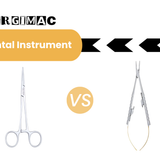
Get clear answers on hemostat vs needle driver. Learn key differences, clinical uses, and how to choose the right instrument for your dental practice.
You wouldn’t use a wrench to turn a screw, right? The same principle applies in the clinic, especially when it comes to the hemostat vs needle driver debate. At first glance, they look like close cousins, but their designs are engineered for entirely different tasks. A hemostat is your go-to for controlling bleeding, with jaws made to clamp vessels securely. A needle driver, however, is a tool of precision, built to grip a suture needle without slipping or causing damage. Using the wrong one can lead to instrument wear, poor suture placement, and unnecessary tissue trauma. This guide breaks down exactly what sets them apart, so you can work more efficiently and confidently.
Key Takeaways
- Distinguish instruments by their design and function. A hemostat uses long, serrated jaws to clamp vessels for hemostasis, whereas a needle driver has short, sturdy jaws designed to securely grip a suture needle for precise wound closure.
- Always use the right tool for the job. Interchanging these instruments is a critical error; using a hemostat for suturing damages the needle and compromises healing, while using a needle driver to clamp tissue can cause unnecessary trauma.
- Prioritize quality and diligent maintenance. The performance and lifespan of your instruments depend on selecting high-grade materials and adhering to strict cleaning, sterilization, and inspection protocols to ensure both patient safety and clinical reliability.

What Is a Hemostat and How Does It Work?
A hemostat, often called a hemostatic forceps, is a fundamental surgical instrument designed for one primary purpose: to control bleeding. Think of it as a specialized clamp used to grasp and secure blood vessels, preventing blood loss during dental and medical procedures. Its simple yet effective design makes it an indispensable tool in any clinical setting, from routine extractions to complex oral surgeries. Having reliable surgical and dental instruments is the first step to ensuring procedural success, and the hemostat is a cornerstone of any well-equipped practice.
Alternative Names: Artery Forceps and Ring Forceps
You’ve likely heard hemostats called by a few different names around the clinic, and for good reason. Terms like "artery forceps" and "hemostatic clamps" are often used interchangeably, as they directly describe the instrument's primary role: clamping arteries and other vessels to achieve hemostasis. This name highlights its function in controlling blood flow during surgical procedures. Another common name is "ring forceps," which refers to its design. The finger rings, similar to those on scissors, allow for a firm, controlled grip, which is essential when handling delicate vascular tissue. No matter what you call it, the instrument’s purpose remains the same—to provide a secure, reliable hold. That’s why quality is key; instruments like those in our Pro Series are built from high-grade stainless steel to ensure they perform reliably every time.
How Hemostats Stop Bleeding
The main function of a hemostat is to achieve hemostasis, which is the process of stopping blood flow. During a procedure, a clinician can use a hemostat to firmly clamp a severed or leaking blood vessel. This is done to obstruct the flow of blood by compressing the vessel walls, providing a clear, blood-free surgical field for greater visibility and precision. By temporarily halting bleeding, hemostats give you the time needed to ligate, cauterize, or suture the vessel properly. This control is critical for ensuring patient safety and maintaining a smooth, efficient workflow during any invasive procedure.
What Makes a Hemostat's Clamp So Effective?
What makes a hemostat so effective is its specific design. The instrument features two jaws, which can be straight or curved, that are lined with fine serrations for a secure, non-slip grip on tissue. The most critical feature is the locking mechanism, known as a ratchet, located near the finger rings. This allows you to clamp the jaws onto a vessel and lock them in place, freeing your hands for other tasks. With each click of the ratchet, the jaws gradually come together, allowing you to apply precise, controlled pressure. High-quality instruments from collections like the SurgiMac Pro Series ensure this mechanism is both durable and dependable for consistent clinical performance.
What Is a Needle Driver and Why Is It Essential for Suturing?
A needle driver, also known as a needle holder, is a specialized surgical instrument designed for one primary purpose: to securely grasp and guide a suturing needle through tissue. While it may resemble a hemostat at first glance, its design is fine-tuned for the delicate and precise task of wound closure. Using the correct tool is fundamental for achieving clean, accurate stitches that promote optimal healing. A needle driver provides the control and stability necessary to work efficiently, ensuring that each pass of the needle is deliberate and precise. This is where it fundamentally differs from a hemostat, which is built for clamping and occluding vessels, not for the nuanced movements required in suturing.
This instrument is an indispensable part of any surgical or dental kit. Its function is to act as an extension of the clinician's hand, allowing for meticulous manipulation of the needle without causing damage to the suture material or the surrounding tissue. The right needle driver not only makes the suturing process smoother but also contributes directly to better patient outcomes by enabling secure and well-placed stitches. For any procedure requiring wound closure, from routine dental extractions to complex surgeries, a high-quality needle driver is not just helpful; it's essential for maintaining procedural integrity and ensuring the best possible healing environment for your patients.
Alternative Names: Needle Holders and Needle Forceps
You’ll often hear the terms “needle holder” and “needle forceps” used interchangeably with “needle driver,” and for good reason—they all refer to the same essential tool. The name you use might come down to where you trained or simply personal preference, but the instrument’s critical function remains unchanged. Its sole purpose is to securely grasp a suturing needle and guide it with precision through tissue, a task that demands a specialized design. Unlike a hemostat, which is built for clamping, a needle driver provides the firm, controlled grip needed for accurate wound closure. Whether you're working with delicate tissues or in a tight space, having a dependable instrument, like those found in the SurgiMac Hexa Series, ensures every stitch is placed exactly where it needs to be for optimal healing.
How Needle Drivers Ensure Precise Control
The design of a needle driver is entirely focused on control. Its short, sturdy jaws are specifically engineered to grip a surgical needle firmly. Unlike the longer, more delicate jaws of a hemostat, a needle driver’s jaws often feature a cross-hatched or textured surface, sometimes with tungsten carbide inserts, to prevent the needle from slipping or rotating. This secure grip allows you to guide the needle through tissue at the exact angle and depth required for a perfect stitch. This level of control is critical, especially when working in tight spaces or with delicate tissues where precision is paramount. The robust construction ensures that the instrument can withstand the pressure needed to pass a needle through tough fascia without bending or losing its grip.
Why Accurate Suturing Depends on the Right Driver
Accurate suturing is the foundation of effective wound closure, and the needle driver is the key to achieving it. This instrument allows you to handle suturing needles with confidence while closing incisions and wounds. The precise control it offers is ideal for delicate tissue handling, ensuring that tissue edges are brought together neatly to minimize scarring and support proper healing. When you pair a reliable needle driver from our Pro Series with premium sutures like MacSuture, you create a system that supports clinical excellence. The instrument’s design allows for smooth, controlled movements, making it easier to perform various suturing techniques effectively and ensuring every stitch contributes to a secure and stable wound closure.
Common Types of Hemostats and Needle Drivers
Just as there are different types of scalpels for different incisions, hemostats and needle drivers come in various designs tailored to specific clinical situations. The size of the vessel, the type of tissue, and the delicacy of the procedure all influence which instrument is the right choice. Understanding these variations is key to building a versatile and effective surgical toolkit. Choosing an instrument from a reliable collection, like SurgiMac’s Pro Series, ensures you have high-performance tools, but knowing which specific type to reach for is what truly refines your technique and improves procedural outcomes. Let's explore some of the most common variations you'll encounter in clinical practice.
Common Hemostat Variations
While all hemostats are designed to clamp and hold, their differences lie in their size, jaw curvature, and serration patterns. A hemostat designed for delicate vascular work in a tight space will look and feel very different from one intended for clamping large tissue bundles. The two most common types you'll find in almost any surgical or dental setup are Kelly clamps and Mosquito clamps. Each serves a distinct purpose, and having both on hand ensures you are prepared for a wide range of scenarios, from controlling minor bleeding to managing more significant vessels during complex procedures.
Kelly and Crile Clamps
Kelly and Crile hemostats are the workhorses of the surgical world. They are larger and more robust than their delicate counterparts, making them ideal for clamping larger blood vessels or grasping tissue bundles. Kelly hemostats are easily identified by their serrations, which only cover the distal half (the outer half) of the jaws. Crile hemostats, on the other hand, have serrations that run the entire length of the jaw, providing a more comprehensive grip. Both are indispensable in general and vascular procedures where firm, secure clamping is required to maintain a clear surgical field and control bleeding effectively.
Mosquito Clamps
When you need a more delicate touch, Mosquito hemostatic forceps are the instrument of choice. These are significantly smaller than Kelly or Crile clamps, featuring short, fine jaws designed for precision. Their delicate construction makes them perfect for clamping very small blood vessels, particularly in minor surgeries, pediatric dentistry, or procedures involving fine, fragile tissues. The fine tips allow for precise application with minimal trauma to the surrounding area, making them essential for any procedure where meticulous hemostasis is critical to success. Their precision is a perfect example of why specialized dental instruments are so crucial.
Common Needle Driver Variations
Just as hemostats vary, needle drivers are also designed for specific applications, ranging from general wound closure to highly specialized microsurgery. The primary differences are found in the jaw design, handle mechanism, and overall size. A needle driver for closing a simple extraction site will be quite different from one used in periodontal plastic surgery. The goal is always the same—to hold a suture needle securely—but the instrument's design dictates how much force can be applied and the level of precision that can be achieved. Understanding these variations ensures you can suture with confidence and accuracy in any situation.
Mayo-Hegar and Olsen-Hegar Needle Drivers
The Mayo-Hegar needle driver is one of the most common types used in both dental and medical settings. It features broad, sturdy jaws with a distinct cross-hatched pattern that provides an excellent grip on curved needles. Many high-quality versions include tungsten carbide inserts for enhanced durability and grip. The Olsen-Hegar model offers a convenient two-in-one design by incorporating scissors just behind the jaws, allowing you to suture and cut without switching instruments. Both are staples for general suturing tasks, providing the reliability needed for consistent and secure wound closure with sutures like those from our MacSuture line.
Castroviejo and Mathieu Needle Drivers
For procedures that demand the utmost precision, specialized needle drivers like the Castroviejo and Mathieu are essential. Castroviejo needle holders are delicate instruments with a spring-loaded, pencil-like grip, designed for microsurgery involving fine needles and sutures, such as in ophthalmology or vascular procedures. Mathieu needle drivers feature a plier-style handle with a ratchet lock that is engaged by squeezing the handles together, allowing for quick grasping and release. These are often used in orthodontic and dental applications where fine, repetitive movements are necessary. Instruments like our Titanium Black Series are designed with this level of precision in mind, reducing glare and enhancing visibility for delicate work.
Hemostat vs. Needle Driver: What Sets Them Apart?
At first glance, hemostats and needle drivers share a similar scissor-like appearance, but a closer look reveals critical design differences tailored to their distinct functions. These variations in the jaws, serrations, and handles are not arbitrary; they are engineered to provide either the delicate control needed for suturing or the secure clamping required for hemostasis. Understanding these structural nuances is key to selecting the right tool for the job, ensuring procedural efficiency and optimal patient outcomes. Each component is intentionally crafted to interact with either suture needles or biological tissues in a very specific way.
A Closer Look at Their Jaws and Grips
The most telling difference between these two instruments lies in their jaws. Needle drivers are built with short, stout jaws to provide a strong, concentrated grip on a suture needle. This robust design prevents the needle from slipping or twisting during suturing, allowing for precise placement through tissue. In contrast, hemostats feature longer, more slender jaws. This design allows them to reach and clamp blood vessels without causing unnecessary trauma to surrounding tissues. The goal of a hemostat is to gently occlude a vessel, and its elongated jaws are perfectly shaped for that task, providing control without crushing force.
Serration Patterns: Parallel vs. Cross-Hatched
The differences don't stop at jaw shape; the texture inside the jaws is a critical design distinction. Hemostats are crafted with parallel serrations that run horizontally or longitudinally along the jaw. This pattern is ideal for gripping blood vessels or soft tissue because it provides a secure hold along a surface without puncturing it. The straight grooves distribute pressure evenly, allowing for effective clamping. However, this design is not suited for holding a hard, cylindrical object like a suture needle, which can easily slip or rotate between the parallel lines, leading to a loss of control during suturing.
Conversely, needle drivers feature a distinct cross-hatched or criss-cross serration pattern. This diamond-shaped texture creates multiple points of contact, providing a superior, multi-directional grip that firmly secures a suture needle and prevents it from twisting. This design is essential for maintaining precise control over the needle's angle and movement through tissue. High-performance instruments, such as those in the SurgiMac Pro Series, often incorporate tungsten carbide inserts with this pattern for an even more tenacious grip and enhanced durability. This specialized surface is precisely why a needle driver is the only appropriate tool for suturing.
Why Their Surface Patterns Are So Different
The gripping surface of the jaws also tells a story. Needle drivers typically have a cross-hatched or diamond-dusted pattern. These shallow, intricate serrations create maximum friction to hold a small, smooth object like a needle securely from multiple angles. Some even feature a small groove to accommodate the needle’s body. Hemostats, on the other hand, have simpler, deeper serrations that usually run horizontally or diagonally. This pattern is designed to firmly grasp and hold soft tissue or vessels without puncturing them, ensuring a secure clamp that effectively stops blood flow. This fundamental difference in texture is why using one for the other’s job is so problematic.
Specialized Features: Needle Grooves and Tungsten Carbide Inserts
Beyond the basic jaw shape and surface texture, many high-performance needle drivers incorporate features designed for ultimate precision. One of the most significant is the inclusion of tungsten carbide (TC) inserts in the jaws. This extremely hard material provides an unparalleled grip on the suture needle, preventing any slipping or rotation and significantly extending the instrument's lifespan. You can often spot these premium drivers by their gold-plated handles. Additionally, some needle drivers feature a small, longitudinal groove within the jaw surface. This groove acts as a perfect cradle for the needle's body, offering another layer of stability for precise placement. These specialized enhancements are exclusive to needle drivers, as they are meticulously engineered for the demands of suturing—a task for which hemostats are simply not equipped. Investing in instruments with these features, like those found in the SurgiMac Pro Series, ensures you have the control needed for accurate and reliable wound closure.
Handles and Locks: Designed for Different Tasks
Both instruments feature finger-ring handles and a locking ratchet mechanism, but their feel and function are fine-tuned for their specific tasks. The ratchet on a needle driver is designed for controlled release and application of pressure, allowing you to securely grasp a needle with just enough force. The lock on a hemostat is built for secure, sustained clamping. Once locked, it maintains consistent pressure on a vessel without requiring continuous force from your hand. High-quality instruments, like those in the SurgiMac Pro Series, feature finely calibrated ratchets that provide both reliability and tactile feedback for confident procedural control.
Function in Practice: Bleeding Control vs. Suturing Precision
While a hemostat and a needle driver might look like close cousins in your instrument tray, their functions are fundamentally different. Think of it as using a wrench versus a screwdriver; both are hand tools, but using one for the other’s job leads to inefficiency and potential damage. The primary distinction between these instruments comes down to their core purpose: one is designed for clamping and controlling bleeding, while the other is engineered for the precise art of suturing. Understanding this functional difference is key to executing clean, effective, and safe clinical procedures. Choosing the right tool not only improves your workflow but also directly impacts patient outcomes by ensuring every action, from hemostasis to wound closure, is performed with the appropriate instrument.
How to Use a Hemostat to Control Bleeding
The primary role of a hemostat is right in its name: achieving hemostasis, or the cessation of bleeding. During surgical or dental procedures, a hemostat is used to securely clamp blood vessels, effectively controlling blood flow. This function is critical for maintaining a clear and visible surgical field, allowing you to work with greater accuracy and safety. The instrument’s design allows it to grasp and lock onto vessels without slipping, providing reliable control when you need it most. Whether you're managing minor bleeding or clamping larger vessels during a complex extraction, a dependable hemostat from a collection like the Pro Series is an indispensable tool for managing the surgical environment.
Mastering Sutures with a Needle Driver
A needle driver, on the other hand, is a tool of precision, specifically designed for suturing. Its function is to firmly grasp and guide a suture needle as you close a wound or incision. The control and stability it offers are essential for placing accurate, evenly spaced stitches, which is vital for proper healing and minimizing scar tissue. Unlike a hemostat, a needle driver provides the specific grip needed to handle a small, curved needle without damaging it or letting it slip. When paired with high-quality sutures like MacSuture, a well-designed needle driver ensures that every stitch is placed exactly where you intend, making the wound closure process smooth and predictable.
How Each Instrument Handles Tissue
The functional differences are most apparent in how each instrument’s jaws are designed to interact with materials. A hemostat features longer, thinner jaws with fine, interlocking serrations. This design is perfect for grasping and clamping soft, delicate tissues like blood vessels without causing unnecessary trauma. In contrast, a needle driver has shorter, sturdier jaws with a cross-hatched or textured surface. This robust design is engineered to securely grip a hard, smooth suture needle, preventing any rotation or slipping during stitching. Using a hemostat on a needle can damage the needle and the suture, while using a needle driver to clamp a vessel can apply excessive force and crush the tissue. For delicate work requiring enhanced visibility, instruments from the Titanium Black Series can offer an advantage.
When Should You Use a Hemostat?
A hemostat is a fundamental instrument in any surgical or dental kit, designed primarily for one critical task: hemostasis. Its locking handles and fine, serrated jaws make it the go-to tool for controlling blood flow. But its utility doesn't stop there. Understanding the specific scenarios where a hemostat excels will help you work more efficiently and ensure better patient outcomes. Let's look at the three main situations where you'll reach for a hemostat.
For Clamping and Ligating Blood Vessels
This is the hemostat's classic role. During surgical procedures, from extractions to implant placements, you often need to temporarily stop blood flow from a small artery or vein. A hemostat allows you to precisely clamp and occlude the vessel, keeping the surgical site clear and minimizing blood loss. The instrument’s locking mechanism holds it securely in place, freeing your hands to continue the procedure. For these demanding tasks, you need an instrument that won't fail. The reliable construction of our Pro Series instruments ensures you get a firm, consistent grip every time you need to achieve hemostasis.
For Managing Acute or Emergency Bleeding
Unexpected bleeding can complicate any procedure. When a vessel is nicked, a hemostat is your first line of defense for gaining immediate control. Its ability to quickly grasp and lock onto the source of bleeding is invaluable in urgent situations. This rapid response helps stabilize the patient and allows you to properly assess and address the issue without a compromised field of view. Having dependable tools like the instruments in our Hexa Series on your tray is essential for managing these high-stress moments with confidence. Their ergonomic design and non-slip grips provide the control you need when every second counts.
For Grasping and Manipulating Tissue
While its main job is clamping vessels, a hemostat is also versatile enough for general tissue handling. You can use it to grasp and hold small, tough tissues like fascia or to remove small fragments from the surgical site. The fine tips of a mosquito hemostat, for example, are perfect for delicate work. However, it's important to remember that the crushing force of the jaws can damage delicate tissues. Always use a light touch and reserve hemostats for tissues that can withstand the pressure. For more delicate manipulation, you may want to explore other specialized dental instruments designed specifically for that purpose.
When Should You Use a Needle Driver?
While a hemostat is designed for clamping and controlling bleeding, a needle driver is the indispensable tool for suturing. Its entire design is centered on one primary function: to securely grasp and manipulate a suturing needle with absolute precision. Think of it as an extension of your hand, engineered to provide the grip, control, and stability required for accurate wound closure. Using the right instrument is non-negotiable for achieving optimal healing outcomes, minimizing tissue trauma, and ensuring the integrity of your sutures.
From routine extractions to complex periodontal surgeries, the needle driver is a fundamental part of your surgical toolkit. Its specialized jaws and locking mechanism work together to prevent the needle from slipping or rotating, allowing you to guide it through tissue smoothly and predictably. This control is what separates a clean, well-approximated closure from a challenging and potentially compromised one. Choosing a high-quality needle driver from a trusted line of dental instruments is the first step toward mastering any suturing task.
For Performing Precise Wound Closure
The most fundamental use for a needle driver is guiding a needle during wound closure. As one source notes, "Needle drivers are used to hold suturing needles while stitching wounds." Their jaws are specifically designed with tungsten carbide inserts or cross-hatched patterns to grip the curved body of a needle without causing damage or slippage. This secure hold allows you to pass the needle through tissue at the precise angle and depth required for proper approximation. When paired with high-quality sutures like those in the MacSuture collection, a reliable needle driver ensures every stitch is placed with confidence, promoting clean healing and predictable results for your patients.
For Tasks Where Precision is Non-Negotiable
In procedures where precision is paramount, such as periodontal flap surgery or implant site closure, a needle driver is essential. These instruments are "ideal for suturing and delicate tissue handling," allowing you to work with finesse and minimize trauma to surrounding structures. For these high-stakes tasks, an instrument that feels balanced and comfortable in your hand can make all the difference. The ergonomic designs of the Slim Series offer exceptional control in tight spaces, while the Titanium Black Series reduces glare for enhanced visibility, ensuring your focus remains entirely on the surgical site.
In Specialized Surgical Contexts like Ligation and Laparoscopy
In more advanced procedures, the distinction between these instruments is even more critical. During ligation, a hemostat is essential for achieving hemostasis by securely clamping the target vessel. This provides the clear, blood-free field necessary to accurately place and tie a ligature. In contrast, during laparoscopic surgeries where space is extremely limited, a needle driver's function is paramount. Its design is entirely focused on control, allowing you to securely grasp and guide a suturing needle with precision through a small incision. The robust grip ensures the needle doesn't slip, which is crucial when working with indirect visualization. For these demanding applications, instruments from the Hexa Series provide the ergonomic control and reliability needed to perform with confidence.
For Adapting to Different Suturing Techniques
Different clinical situations call for specific suturing techniques, and a needle driver provides the control needed to execute them flawlessly. Whether you are performing simple interrupted sutures or a more complex continuous stitch, the instrument’s locking mechanism allows you to maintain consistent tension and handle the needle with accuracy. Surgeons depend on needle holders for "handling the suturing needles while stitching wounds and incisions" because they provide the stability required for intricate maneuvers. A dependable instrument, like one from our Pro Series, ensures that the needle remains firmly in place as you articulate your wrist, giving you the confidence to perform any technique your procedure demands.
Can You Use a Hemostat as a Needle Driver?
It’s a question that comes up often, especially in fast-paced clinical settings: can you grab a hemostat to place a suture? While it might seem possible in a pinch, the short answer is no. Using a hemostat as a needle driver is not recommended because each instrument is engineered for a completely different function. A needle driver is designed to securely grip a suture needle for precise wound closure, while a hemostat is built to clamp blood vessels and manage tissue. Interchanging them compromises procedural integrity, patient safety, and the longevity of your instruments.
Why Improvising Is a Bad Idea
Using the wrong tool for the job introduces unnecessary risks. While you might be able to physically hold a needle with a hemostat, it’s far from ideal and can easily damage both the needle and the instrument itself. The jaws of a hemostat are not designed to withstand the hardness of a suture needle, which can cause them to wear down or misalign. This damage can render the hemostat ineffective for its primary purpose of controlling bleeding. More importantly, a hemostat cannot provide the stable, secure grip needed for suturing, increasing the risk of the needle slipping. This can lead to inaccurate suture placement or inadvertent injury to the patient or clinician.
The Risk of Bending or Breaking Your Instruments
Beyond just poor performance, forcing an instrument to do a job it wasn't designed for can cause permanent physical damage. The jaws of a hemostat are engineered to clamp soft tissue, not to grip a hard, steel suture needle. When you clamp down on a needle with a hemostat, you're putting immense pressure on a very fine point. This can easily cause the instrument's delicate tips to bend, misalign, or even break. Once the jaws are compromised, the hemostat loses its ability to provide a secure, even clamp, rendering it unreliable for controlling bleeding. This not only shortens the lifespan of your valuable tools but also compromises patient safety. Protecting your investment in high-quality dental instruments starts with using them correctly for their intended purpose.
How Misuse Affects Needles and Suture Quality
A hemostat’s grip can be unforgiving on a delicate suture needle. Its serrations are designed for soft tissue, not hard steel, and can easily bend, dull, or even break the needle. A damaged needle requires more force to pass through tissue, causing unnecessary trauma and potentially compromising the healing process. This lack of control also affects the quality of your suturing. Proper wound closure depends on precise needle entry and exit, which is difficult to achieve without a dedicated needle driver. For the best outcomes, always pair high-quality MacSuture products with an instrument designed specifically for the task.
Debunking a Common Surgical Myth
The idea that hemostats and needle drivers are interchangeable is a common myth that needs to be addressed. The fact is, their designs are fundamentally different. Needle drivers have short, sturdy jaws, often with a tungsten carbide insert, to securely grip a needle without causing damage. In contrast, hemostats have longer, more delicate jaws with fine serrations designed to clamp vessels and handle tissue without crushing them. Confusing the two can lead to poor clinical outcomes. Relying on specialized instruments, like those in our Pro Series, ensures you have the right tool for every step of a procedure, from hemostasis to final closure.
Are You Making These Common Instrument Mistakes?
Using the right instrument is only half the battle; using it correctly is what ensures successful patient outcomes. Even seasoned professionals can sometimes fall into habits that compromise efficiency or safety. Understanding the common pitfalls associated with hemostats and needle drivers is key to refining your technique and preventing procedural complications. Let’s walk through a few frequent mistakes and how you can steer clear of them in your practice.
Mistake #1: Applying Too Much Force
One of the most common errors, especially with hemostatic forceps, is applying excessive force. While the goal is to achieve hemostasis, clamping down too hard can crush delicate tissues, leading to unnecessary trauma or even necrosis. The key is to apply just enough pressure to occlude the vessel without damaging the surrounding structures. This requires a high degree of tactile sensitivity. Using well-balanced, ergonomic instruments can make a significant difference, as they provide better feedback and control. For instance, SurgiMac's Air Series instruments are crafted to feel like a natural extension of your hand, helping you gauge pressure more accurately.
Mistake #2: Using a Hemostat for Retraction
It can be tempting to use the tool already in your hand for a task it wasn't designed for, but this is a risky shortcut. Using a hemostat as a tissue retractor is a prime example. Hemostats are designed to clamp and hold, often with serrated jaws that can grip securely. When used to pull back tissue, these jaws can cause bruising, tearing, or other iatrogenic injuries. Proper surgical technique demands using dedicated retractors designed to gently hold tissue aside, providing clear visibility of the surgical field without causing harm. Always take the extra moment to switch to the appropriate instrument for each step of the procedure.
Mistake #3: Grabbing the Wrong Tool for the Job
This brings us to the central theme: selecting the right tool for the job. Confusing a hemostat and a needle driver can lead to a host of problems. Attempting to suture with a hemostat will likely damage the needle, bend it, or fail to provide a secure grip, resulting in poor suture placement. Conversely, using a needle driver to clamp a vessel may not provide the secure, sustained pressure needed for effective hemostasis. Understanding the distinct design and function of each instrument is crucial for procedural safety and efficiency. Equipping your practice with high-performance tools like our Pro Series ensures you have reliable, purpose-built instruments for every clinical scenario.
How to Properly Maintain and Sterilize Your Instruments
Investing in high-quality instruments is the first step, but proper maintenance is what ensures their longevity, reliability, and safety. A consistent care protocol for your hemostats and needle drivers protects your investment and, more importantly, your patients. It's a core component of your practice's infection control strategy and is essential for meeting clinical standards set by bodies like the CDC and OSHA. Think of instrument maintenance not as a chore, but as a systematic process that guarantees your tools perform as intended every single time. From the moment an instrument is used to the second it's picked up for the next procedure, each step matters. A breakdown in this chain can lead to cross-contamination, instrument failure, or procedural complications. By establishing and following clear protocols for cleaning, sterilization, and inspection, you create a safer environment for patients and a more efficient workflow for your team. This diligence preserves the integrity of finely crafted tools, ensuring that their precision and functionality are never compromised. It also prevents premature wear and corrosion, saving your practice significant replacement costs over time. A well-maintained instrument is a predictable one, and in any clinical setting, predictability is key to successful outcomes.
Your Daily Cleaning and Maintenance Checklist
To get the most out of your high-quality instruments, a consistent maintenance routine is essential. Proper cleaning protocols not only extend the life of your tools but are also fundamental to patient safety. The process begins immediately at the point of use. Pre-cleaning instruments by wiping them with a sterile sponge and water prevents biological materials from drying and hardening, which can make sterilization less effective. After the procedure, rinse them thoroughly under cool running water to remove gross debris before moving to decontamination. Use a soft-bristled brush and a pH-neutral enzymatic cleaner to manually scrub instruments, paying close attention to hinges, serrations, and crevices. Always follow the manufacturer’s instructions for use (IFU) for every new or repaired instrument to ensure you meet specific care requirements.
Ensuring Proper Sterilization and Safe Storage
After manual cleaning, instruments should undergo a more thorough decontamination process. Automated systems like washer/disinfectors and ultrasonic cleaners use validated cycles to effectively clean hard-to-reach areas. Once cleaned, dried, and inspected, the final step is sterilization. It's critical to follow the instrument manufacturer’s guidelines for the appropriate method, whether it's steam autoclaving or another technique. Always use chemical indicators inside and outside each pack to verify the cycle's success. Proper storage is just as important. Using quality MacSafe sterilization pouches not only protects instruments from recontamination but also provides a clear visual confirmation of sterility. Store sterile packs in a clean, dry, and climate-controlled environment away from potential contaminants to ensure they remain ready for the next procedure.
What to Look For When Inspecting for Wear and Tear
Regular inspection is a non-negotiable part of your instrument maintenance workflow. Before each sterilization cycle, take a moment to carefully examine your hemostats, needle drivers, and other tools for any signs of damage. Check for issues like corrosion, cracks, or bent tips. For hinged instruments, ensure the mechanism moves smoothly without stiffness and that the jaws align perfectly. For needle drivers, inspect the jaw surfaces to ensure they grip securely without any gaps that could cause the needle to slip. Instruments from our durable Pro Series are built for longevity, but even the best tools require routine checks. If an instrument shows signs of wear or fails to function perfectly, it should be repaired by a professional or replaced to maintain procedural accuracy and patient safety.
How to Choose the Right Hemostats and Needle Drivers
Selecting the right instruments is a critical decision that directly influences your clinical efficiency and patient outcomes. A well-crafted hemostat or needle driver feels like an extension of your hand, providing the control and reliability you need during delicate procedures. When stocking your practice, it’s important to look beyond the basic function and consider the material, design, and craftsmanship of each tool. Investing in high-quality instruments not only ensures better performance but also offers long-term value, reducing the need for frequent replacements and supporting consistent results. This means looking for tools made from durable, surgical-grade materials that can withstand repeated sterilization without losing their edge or integrity. It also means paying attention to the ergonomics and locking mechanisms, as a secure, comfortable grip can significantly reduce hand fatigue and improve precision during lengthy procedures. Finally, exploring different professional instrument lines allows you to find tools specifically suited to your techniques and clinical needs. By carefully evaluating these factors, you can build an instrument kit that is not only reliable and effective but also a pleasure to work with, giving you the confidence to handle any situation that arises.
Key Selection Criteria for Your Procedure
Considering Tissue Type, Vessel, and Needle Size
When selecting the appropriate instrument, it’s crucial to consider the specific tissue type and the size of the vessel or needle you will be working with. A hemostat, with its longer, slender jaws and fine serrations, is designed to grasp and clamp soft tissues or blood vessels without causing unnecessary trauma. This makes it ideal for delicate procedures where maintaining tissue integrity is paramount. The same logic applies to needle drivers; the size of the jaws should correspond to the suture needle you're using. A fine needle for microsurgery requires a delicate driver to prevent damage, while a larger needle used on tougher tissue needs a more robust instrument to ensure a secure grip. For procedures in confined spaces where precision and comfort are key, an instrument from the Slim Series can provide the necessary control.
Matching the Instrument to the Surgical Task
Understanding the distinct design and function of each instrument is crucial for procedural safety and efficiency. A hemostat is engineered for clamping and controlling bleeding, while a needle driver is specifically designed for the precise art of suturing. Using the right tool not only improves your workflow but also directly impacts patient outcomes. Investing in high-quality dental instruments ensures better performance and offers long-term value, reducing the need for frequent replacements. This means looking for tools made from durable, surgical-grade materials, like those found in our Pro Series, that can withstand repeated sterilization without losing their integrity. For practices that prioritize environmental responsibility, the Eco Series offers a sustainable choice without compromising on quality.
Why High-Quality Materials Matter
The foundation of any reliable surgical instrument is the material it’s made from. For hemostats and needle drivers, always look for tools crafted from high-quality, surgical-grade stainless steel. This material is the industry standard for a reason: it offers exceptional strength, durability, and resistance to corrosion. Instruments made from premium steel can withstand the rigors of daily use and repeated sterilization cycles without compromising their integrity or performance. When you choose well-made dental instruments, you’re investing in tools that are built to last, providing dependable service for years to come. This commitment to quality ensures that your instruments remain precise and reliable, procedure after procedure.
Check for a Secure Grip and Reliable Lock
A secure locking mechanism is non-negotiable for both hemostats and needle drivers. The ratchet lock must engage smoothly and hold firmly, whether you’re clamping a vessel or guiding a suture needle. A weak or inconsistent lock can lead to slippage, compromising control at a critical moment. Beyond the lock, consider the instrument’s ergonomics. A comfortable, balanced tool reduces hand fatigue during long procedures. SurgiMac’s Air Series instruments, for example, are designed with lightweight, hollow handles to provide flawless balance and control, making them ideal for clinicians who prioritize comfort and precision in their daily practice.
Find Your Perfect Fit with SurgiMac's Instrument Series
Every practice has unique needs, which is why it’s helpful to explore professional instrument lines designed for specific applications. SurgiMac offers several distinct collections to match your clinical preferences. The Pro Series provides a foundation of high-performance, reliable instruments for everyday excellence. For procedures requiring enhanced visibility, the Titanium Black Series features a non-glare finish. And for demanding surgical work, the Hexa Series offers an ergonomic, non-slip grip for maximum control. Pairing the right needle driver with premium sutures like MacSuture ensures you have a complete, reliable system for predictable wound closure and optimal healing.
Exploring the Pro and Hexa Series for Surgical Excellence
When you're ready to build a reliable surgical kit, understanding the nuances between different instrument lines is key. The choice often comes down to the specific demands of your procedures. For instance, the Pro Series serves as the cornerstone of any high-performing practice, offering exceptional reliability for a wide range of daily surgical tasks. These instruments are crafted from premium-grade stainless steel to meet the highest standards of clinical excellence, ensuring balance and accuracy every time. For more demanding surgical work, such as complex extractions or implant preparations, the Hexa Series provides an ergonomic advantage. Its non-slip grip and hollow handles are specifically designed to reduce hand fatigue and give you maximum control when precision is absolutely critical. Choosing between them means matching the instrument’s design to the complexity of the clinical challenge at hand.
Frequently Asked Questions
What's the simplest way to remember the difference between a hemostat and a needle driver?
A simple way to remember the distinction is that hemostats are designed for clamping, while needle drivers are designed for holding suture needles. Hemostats have longer, finer jaws intended to clamp blood vessels or tissue for hemostasis. Needle drivers feature shorter, stronger jaws with textured gripping surfaces that securely hold a suture needle, allowing precise control during suturing without damaging the needle.
What are the actual risks if I use a hemostat to place a suture?
Using a hemostat instead of a needle driver can reduce precision and increase the risk of complications. Because hemostat jaws are not designed to grip suture needles, the needle may slip, rotate, or become damaged during use. This can lead to additional tissue trauma, less accurate suture placement, and unnecessary wear on both the instrument and the needle. Using the proper needle driver provides better control and helps achieve consistent wound closure.
How can I tell if my hemostat or needle driver needs to be replaced?
Regular inspection should be part of routine instrument maintenance. Check that the ratchet mechanism locks securely and releases smoothly, and confirm that the jaws align evenly when closed. For needle drivers, test whether they can firmly hold a suture needle without allowing it to twist or slip. Bent jaws, worn gripping surfaces, corrosion, cracks, or loose hinges are all signs that the instrument should be repaired or replaced.
Do I need both curved and straight hemostats in my practice?
Yes. Straight and curved hemostats each have distinct clinical advantages. Straight hemostats are well suited for clamping vessels or tissues in easily accessible areas. Curved hemostats provide improved access and visibility in deeper or more confined surgical sites, allowing the clinician to work around surrounding structures more effectively. Keeping both styles available ensures greater versatility across a wide range of procedures.
With so many options, how do I choose the right instrument line for my needs?
Focus on instrument quality, ergonomics, and the types of procedures you perform most often. High-quality stainless steel construction ensures durability and resistance to corrosion, while well-balanced, ergonomic handles reduce hand fatigue during extended procedures. For clinicians performing delicate surgical work, instruments with enhanced visibility features or lightweight designs may further improve precision and comfort. Selecting instruments that match your clinical workflow helps improve efficiency, control, and long-term performance.
Related Articles
Tags
Blog posts
-
, by SurgiMac A Clinician's Guide to Absorbable Suture Material
-
, by SurgiMac A Clinician's Guide to Dental Composite Resin Kits
-
, by SurgiMac How to Disinfect with Metrex CaviWipes Correctly
