



A Clinician's Guide to Root Tip Extraction Forceps
- , by SurgiMac
- 26 min reading time
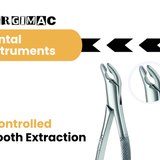
Root Tip Extraction Forceps help you remove fractured roots with precision. Learn how to select, use, and care for the best forceps for your dental practice.
The quality of an extraction is often measured by what you leave behind: healthy, intact bone. When a root fractures, the instrument you choose next is critical. Using bulky, standard forceps risks iatrogenic damage and a traumatic recovery for your patient. This is where a specialized root tip extraction forceps is essential. Their slender design allows for the gentle removal of fragments, preserving delicate socket walls and setting the stage for faster, more comfortable healing. This commitment to atraumatic technique is a cornerstone of modern patient care.
Key Takeaways
- Prioritize Atraumatic Extractions: Root tip forceps are designed for precision, not power. Their fine, narrow beaks allow you to grip fragments securely while minimizing damage to the alveolar bone, which is critical for preserving the site for future restorations or implants.
- Choose Instruments Designed for Control: Look for forceps with features that enhance your control, such as finely serrated tips, corrosion-resistant stainless steel, and ergonomic handles. Collections like SurgiMac's Pro Series and Air Series provide the durability and balance needed for delicate, tactile work.
- Follow a Deliberate Procedural Sequence: A successful retrieval depends on a clear plan: start with radiographic assessment, ensure excellent visualization, and use slow, controlled movements. Always be prepared to make the clinical judgment call to leave a small, asymptomatic fragment if removal poses a greater risk.

What Are Root Tip Extraction Forceps?
Root tip extraction forceps are specialized dental instruments designed for a very specific and often delicate task: removing root fragments that have fractured and remained in the alveolar socket during an extraction. When a tooth crown breaks away, leaving the root behind, these tools become essential for completing the procedure with minimal trauma to the surrounding bone and soft tissue. Unlike standard forceps built for removing whole teeth, root tip forceps are engineered for precision and finesse in tight spaces.
Their primary function is to securely grasp small, often slippery, pieces of root without crushing them or damaging the socket walls. Successfully retrieving these fragments is crucial for preventing post-operative complications like infection, delayed healing, and pain. Having a dedicated set of root tip forceps in your armamentarium ensures you are prepared for these common clinical challenges, allowing you to perform cleaner, more predictable extractions and provide a better experience for your patients. Think of them not as a tool of force, but as an instrument of precision for retrieving what’s left behind.
How Do These Specialized Forceps Work?
The effectiveness of root tip forceps lies in their unique design, which prioritizes visibility and grip. They typically feature long, slender beaks that allow you to reach deep into an empty socket while maintaining a clear line of sight. This slender profile is critical for navigating the confined space of the alveolus without obstructing your view or applying unnecessary pressure to the surrounding bone structure.
The tips of the beaks are delicate and precisely machined, often with fine serrations or grooves. This textured surface provides a secure, positive grip on the root fragment, minimizing the risk of slippage during retrieval. Some models also incorporate a spring-loaded mechanism in the handle, which helps maintain gentle, consistent pressure and provides excellent tactile feedback, allowing you to feel the fragment and guide it out with controlled movement.
Root Tip vs. Standard Forceps: What's the Difference?
While both are essential tools for exodontia, comparing root tip forceps to standard extraction forceps is like comparing a pair of fine-tipped tweezers to pliers. They are designed for entirely different stages and scenarios of a procedure. Standard extraction forceps are robust instruments with broad, strong beaks designed to engage the crown of an intact tooth and use leverage to luxate it from the socket. Their purpose is to transmit significant force to break the periodontal ligament and remove the entire tooth.
In contrast, root tip forceps are built for finesse, not force. Their delicate, pointed beaks are specifically shaped to access and grasp small, retained fragments deep within the socket after the crown is gone. Using standard forceps to retrieve a root tip can cause iatrogenic damage, such as fracturing the buccal plate or damaging adjacent structures. Having both types available ensures you can apply the appropriate amount of force and precision needed for each unique clinical situation.
What Types of Root Tip Forceps Are Available?
Choosing the right root tip forceps is a lot like selecting any precision tool: the best one depends entirely on the job at hand. The oral cavity presents unique challenges, with variations in access, visibility, and patient anatomy. Because of this, root tip forceps are not a one-size-fits-all solution. They are specifically designed with different beak angles, handle shapes, and tip configurations to match the location of the root fragment, whether it's in the maxillary or mandibular arch. Understanding these variations is the first step toward making extractions more predictable and less traumatic for both you and your patient. Having a well-rounded selection of dental instruments ensures you are prepared for any clinical scenario that comes your way.
Mastering Upper Arch Extractions
When working on the maxillary arch, you need instruments designed to navigate its specific anatomy. Upper arch root tip forceps are engineered with precisely angled beaks that allow you to reach and securely grip root fragments without your hand or the instrument handle obstructing your line of sight. These specialized forceps provide the leverage and access needed to engage fragments that are often tucked away in the posterior regions of the upper jaw. Their design ensures you can apply controlled force directly along the long axis of the tooth, facilitating a clean extraction while minimizing pressure on adjacent structures.
Precision Tools for the Lower Arch
In contrast, lower arch forceps are built for the unique challenges of the mandible. These instruments typically feature beaks that are angled at or near 90 degrees to the handles, providing a direct and efficient transfer of force for grasping root tips in the lower jaw. This design allows you to maintain a comfortable and stable wrist position while achieving a firm, positive grip. High-quality forceps are crafted from durable materials like premium-grade stainless steel, ensuring they can withstand the rigors of daily use and sterilization. The SurgiMac Pro Series instruments, for example, are built for this kind of long-term reliability and clinical performance.
Understanding Tip Angulation
The angulation of the forceps' beaks is more than a minor design detail—it's a critical feature that dictates the instrument's function and effectiveness. The primary goal is to gain access to a fractured root tip and apply controlled removal forces along its long axis, all while maintaining a clear line of sight. Different angulations are engineered to solve specific anatomical puzzles within the oral cavity. An instrument that works perfectly for an anterior tooth would be completely ineffective in the posterior mandible. Choosing the correct angulation allows you to work more ergonomically, reduces hand fatigue, and, most importantly, minimizes the risk of iatrogenic damage to the surrounding alveolar bone. It’s about matching the geometry of the tool to the geometry of the challenge.
Straight, 30, 45, and 90-Degree Options
Root tip forceps are available in several standard angulations, each suited for a different area of the mouth. Straight-beaked forceps are ideal for the anterior region, where direct, straight-line access is possible. As you move posteriorly, angled beaks become essential. Forceps with 30-degree or 45-degree angled tips are versatile workhorses, perfect for maxillary premolars and molars, as they help you work around the curvature of the arch. For the lower arch, especially in the molar region, forceps with beaks angled at 90 degrees are the go-to choice. This design allows you to apply apical pressure directly without your hand obstructing the field of view. Having a full suite of surgical instruments with these varied angulations ensures you’re prepared for any extraction scenario.
The Advantage of Spring-Loaded Forceps
For an added layer of tactile control, many clinicians prefer spring-loaded root tip forceps. These instruments feature a spring mechanism in the handle that provides a gentle, consistent closing pressure. This feature is incredibly helpful because it prevents you from applying excessive force that could crush a delicate root fragment, making a difficult situation even worse. The spring action gives you enhanced feedback, allowing you to feel the root tip and secure it with finesse. Often equipped with fine, grooved tips, these forceps are ideal for retrieving small, fragile fragments with a secure yet delicate touch.
Forceps for Pediatric and Tight-Access Cases
Sometimes, the biggest challenge is simply a lack of space. Pediatric and narrow-tip forceps are designed for exactly these situations. With their thin, pointed beaks, these instruments can easily access tight interproximal areas or slip below the gumline to grasp fragments that standard forceps can't reach. They are essential for working with smaller pediatric dentition or in adult cases with crowding. Using a tool like the ones found in our Slim Series allows for a more conservative and minimally traumatic extraction, helping to preserve surrounding bone and soft tissue for better patient outcomes.
Versatility Across Dental and Surgical Specialties
The value of root tip forceps extends far beyond routine general dentistry. Their design for precision and minimal intervention makes them indispensable across multiple specialties. Oral surgeons rely on them for complex cases, ensuring that even the smallest fragments are removed without compromising surrounding structures. For periodontists, where the preservation of alveolar bone is paramount, these forceps are a go-to for atraumatic extractions that protect the integrity of the periodontium. The common thread is a commitment to tissue preservation and setting the stage for optimal healing, regardless of the procedure.
This versatility is especially critical in implant dentistry. A clean, intact extraction socket provides the ideal foundation for successful implant placement. By using root tip forceps, clinicians can avoid the bone-crushing forces of standard forceps, preserving the delicate architecture needed for immediate or future implant integration. This level of precision requires tools that are up to the task. Instruments like those in the SurgiMac Hexa Series are built for these demanding surgical and periodontal procedures, offering the ergonomic control and reliability needed to achieve predictable, high-quality outcomes in any specialty.
How to Choose the Right Root Tip Forceps
Choosing the right root tip forceps is essential for a successful and atraumatic extraction. When a root fractures, the instrument you reach for can significantly impact the procedure's difficulty and the patient's healing process. The ideal forceps provide a secure grip on small fragments without damaging surrounding bone and tissue. It's the difference between a smooth retrieval and a complicated surgical intervention that requires laying a flap or removing bone. To ensure you have the best tool for the job, consider these four key features: tip design, beak shape, material quality, and ergonomics. Each element plays a critical role in the instrument's performance, giving you the control and confidence needed for delicate subgingival work.
A well-chosen instrument not only makes the procedure more efficient but also aligns with the principles of minimally invasive dentistry. By preserving as much of the patient's natural anatomy as possible, you set the stage for better healing and more predictable outcomes, whether the plan is for an implant, a bridge, or natural socket preservation. Making a thoughtful selection means you're better prepared for those unexpected moments, turning a potential challenge into a manageable task. In the following sections, we'll break down exactly what to look for in each of these four areas so you can confidently add the right root tip forceps to your clinical toolkit.
Why Jaw Configuration is Crucial
The most critical feature of root tip forceps is the design of their tips, or beaks. Unlike standard extraction forceps, these instruments have very fine, narrow jaws engineered for precision. This slim profile allows you to navigate deep into the socket and access tight spaces without obstructing your view. The primary function of the tips is to firmly grasp small, fractured root pieces that are otherwise difficult to retrieve. A well-designed pair enables you to secure a positive grip on the fragment, minimizing the risk of crushing it or causing additional trauma to the alveolar bone. This focus on precision supports a more conservative extraction technique.
Securing Your Grip: Beak Shape and Technology
The specific shape of the beaks is tailored for subgingival access. Root tip forceps feature thin, often pointed tips that can slide gently below the gum line to engage fragments that have broken off at or near the alveolar crest. The angulation of the beaks is also designed to align with the root surfaces of either maxillary or mandibular teeth. To further enhance performance, many high-quality forceps incorporate serrated or textured surfaces on the inner side of the beaks. This grip technology provides a secure purchase on the slippery root surface, preventing slippage as you apply rotational or tractional forces for a clean, efficient removal.
Exploring Bayonet, Spade, and Tapered Tip Designs
The tip design of your forceps should be chosen based on the specific clinical scenario you're facing. A bayonet tip, with its distinct offset angle, is invaluable for accessing posterior maxillary roots. This design allows you to reach deep into the socket while keeping the handle out of your line of sight, dramatically improving visibility. Spade tips offer a slightly broader surface area, providing a more substantial purchase on larger fragments where precision is less critical than a firm hold. For the most delicate work, a tapered tip is your best friend. Its fine, pointed design allows you to access tight spaces and securely grasp small, fragile pieces without causing further fracture, ensuring you can retrieve fragments with minimal disruption.
The Role of Advanced Coatings for Enhanced Grip
Beyond the physical shape of the beaks, advanced coatings play a significant role in the performance of modern root tip forceps. While internal serrations provide a baseline level of grip, specialized coatings can take your control to the next level. These coatings are engineered not only to enhance grip on slippery root surfaces but also to improve your overall visibility during the procedure. For instance, a matte finish can dramatically reduce the glare from your overhead light, which is a common challenge in the wet environment of the oral cavity. The SurgiMac Titanium Black Series is a perfect example, featuring a non-reflective coating that enhances contrast and allows you to see fragments more clearly, leading to a more efficient and less traumatic extraction.
Ensuring Safety: Material Quality and Sterilization
The longevity and reliability of any surgical instrument depend heavily on its material. For root tip forceps, premium surgical-grade stainless steel is the industry standard. This material provides the necessary hardness to maintain a sharp, precise beak edge and the durability to withstand the forces of an extraction. More importantly, high-quality stainless steel is corrosion-resistant, which is essential for instruments that undergo repeated sterilization cycles. Forceps from SurgiMac's Hexa Series are crafted from corrosion-resistant stainless steel, ensuring they maintain their structural integrity and performance after countless runs through the autoclave, protecting both your investment and your patients.
Comfort and Control: Why Ergonomics Matter
A successful extraction requires tactile sensitivity and control, which can be compromised by a poorly designed instrument. Ergonomics are not a luxury; they are a core component of procedural success. Look for forceps with a balanced weight and a handle that fits comfortably in your hand to reduce muscle fatigue during challenging or lengthy procedures. Features like textured, non-slip grips provide stability even when wearing gloves. SurgiMac’s Air Series instruments are a prime example of ergonomic design, offering flawless balance and a lightweight feel that allows you to work with greater precision and less strain, making the instrument feel like a natural extension of your hand.
Considering Instrument Length and Weight
The length and weight of your forceps are more than just personal preferences; they directly influence your control and visibility during a procedure. Longer, slender instruments are essential for reaching deep into a socket, especially in the posterior regions, without your hand or the instrument itself blocking your view. This is where a design like those found in our Slim Series truly shines, as its compact, ergonomic profile is built for navigating confined spaces. The weight of the instrument contributes to its balance. A well-balanced tool provides better tactile feedback and reduces hand fatigue, allowing you to maintain steady, controlled movements throughout the extraction process.
Understanding Cost vs. Value in Professional Instruments
It can be tempting to focus on the initial price tag when purchasing new instruments, but true value is measured in performance and longevity. A high-quality instrument is an investment in your practice and your patients. A well-chosen tool makes the procedure more efficient and supports minimally invasive dentistry by preserving the patient's natural anatomy. This sets the stage for better healing and more predictable outcomes for future restorations. Investing in forceps made from premium materials, like the durable, corrosion-resistant stainless steel used in our Pro Series, means you get a reliable tool that withstands repeated sterilization and maintains its integrity over time, ultimately providing a better return than a cheaper alternative that fails or needs frequent replacement.
How to Use Root Tip Extraction Forceps Correctly
Successfully removing a fractured root tip requires more than just a good instrument; it demands a careful and methodical approach. Following a clear sequence of steps ensures the procedure is as atraumatic as possible, preserving surrounding bone and tissue while minimizing patient discomfort. From initial assessment to the final application of force, each phase is critical for a predictable and successful outcome. By mastering this technique, you can handle these common clinical challenges with confidence and precision.
Start with a Thorough Assessment
Before you even pick up an instrument, your first step is a thorough clinical and radiographic assessment. Reviewing radiographs is essential for understanding the root tip’s size, shape, and exact location relative to critical structures like the maxillary sinus or inferior alveolar nerve. A comprehensive radiographic evaluation30001-5/fulltext) serves as your procedural roadmap, helping you anticipate challenges and plan the most efficient path for removal. This initial planning phase is non-negotiable for preventing complications and ensuring a smooth extraction.
Get a Clear View for Precise Placement
You can't remove what you can't see. Achieving clear and direct visualization of the root fragment is paramount. This often requires excellent lighting, magnification, and effective retraction of soft tissues. The American Association of Endodontists highlights that proper visualization and magnification are key to precise forceps placement. For enhanced visibility, instruments like those in the SurgiMac Titanium Black Series are designed with a non-reflective finish to reduce glare. Once visualized, the beaks of the forceps should be carefully guided along the root surface to achieve a firm, positive grip as apically as possible without damaging adjacent structures.
Use Controlled Force to Protect Tissue
Once the forceps are securely placed, the goal is to use slow, steady, and controlled force. Avoid abrupt, jerking motions, which can fracture the fragile root tip or cause unnecessary trauma to the surrounding alveolar bone. The key is to apply gentle, deliberate movements, using wrist and forearm pressure rather than finger strength. As noted in Dental Clinics of North America, these controlled techniques00001-2/fulltext) are fundamental to preserving tissue. Instruments with ergonomic handles, like those in our Hexa Series, provide a secure, non-slip grip that facilitates this level of control and minimizes hand fatigue during delicate procedures.
Know When to Leave a Root Tip in Place
Sometimes, the most prudent clinical decision is to leave a small, asymptomatic root tip in place. If a fragment is deeply embedded, immobile, and its removal would risk significant damage to vital structures like nerves or the sinus floor, observation may be the better course of action. Clinical guidelines published in the British Dental Journal support this conservative approach, advising clinicians to weigh the risks of extraction against the benefits. The decision to leave a root tip should be based on sound clinical judgment, documented thoroughly, and communicated clearly to the patient, including the plan for future monitoring.
Managing Patient Comfort and Expectations
Managing patient expectations begins with communicating a commitment to their comfort. When a root fractures, patients are often anxious about what comes next. Explaining that you have specialized tools designed for a gentle, minimally invasive retrieval can immediately build trust and alleviate fear. Successfully removing a fractured root tip with a precise instrument like a root tip forcep ensures the procedure is as atraumatic as possible. This careful approach not only preserves the surrounding bone and tissue for better long-term outcomes but also significantly minimizes post-operative discomfort and speeds up the healing process, turning a potentially stressful event into a demonstration of your practice's dedication to patient-centered care.
Proper Care and Maintenance of Your Forceps
Your instruments are a direct extension of your clinical skill, and their performance relies on meticulous care. The longevity and reliability of root tip forceps begin with their construction. Premium surgical-grade stainless steel, like that used in our Pro Series, is the standard for a reason: it provides the hardness needed for a precise beak edge and the durability to withstand repeated use. However, even the highest quality materials require proper maintenance to ensure safety and effectiveness. Proper care is a multi-step process that protects your patient, your instrument, and your practice. It starts the moment the procedure ends and continues through cleaning, inspection, and sterilization.
The first and most critical step is immediate cleaning after use to remove all bioburden. Debris left to dry on an instrument can be difficult to remove and may interfere with sterilization. When handling contaminated instruments, always wear appropriate personal protective equipment, such as MacSafe disposable gloves. Follow a strict protocol of either manual scrubbing with a pH-neutral detergent and a soft brush or using an ultrasonic cleaner. Pay close attention to hinges, serrations, and other complex surfaces where debris can hide. After cleaning, thoroughly inspect each instrument under magnification and good lighting. Look for any signs of wear, corrosion, or damage to the tips. A compromised instrument should be removed from circulation immediately, as it can fail during a procedure or cause iatrogenic injury.
Finally, proper sterilization is non-negotiable for patient safety. Autoclaving is the most common and effective method for dental instruments. Ensure you follow the manufacturer’s guidelines for both the sterilizer and the instrument itself regarding cycle times, temperature, and pressure. Overloading the autoclave or using improper settings can lead to incomplete sterilization or damage the instruments. Once sterilized, store your forceps in a clean, dry environment to prevent contamination. By integrating this disciplined approach to care and maintenance, you ensure your root tip forceps remain a reliable and precise tool for every procedure.
Protecting Your Investment and Warranty
High-quality dental instruments are a significant investment, and protecting that investment goes hand-in-hand with proper maintenance. Most manufacturer warranties are contingent upon correct use and adherence to care guidelines. Using an instrument for a task it wasn't designed for, such as applying excessive force or using root tip forceps as elevators, can cause damage that voids the warranty. Similarly, as the IM3 Vet resource notes, improper cleaning or sterilization methods can lead to corrosion or material fatigue, which are typically not covered. Always review the Instructions for Use (IFU) provided by the manufacturer. Following these protocols not only ensures your instruments perform as expected but also secures your eligibility for warranty claims, safeguarding the value and longevity of your clinical toolkit.
Equip Your Practice with the Right Forceps
Choosing the right instruments is just as important as mastering the technique. The forceps you use can directly impact procedural success, tissue preservation, and your own physical comfort. A well-made root tip forcep feels like an extension of your hand, allowing you to work with confidence and precision. A poor one can lead to frustration, longer procedure times, and an increased risk of complications like damaging adjacent structures. This choice directly affects the patient experience and their perception of your practice.
Think of it as an investment in your practice's efficiency and your own well-being. High-quality instruments reduce hand fatigue during long or difficult procedures, which is a critical factor in maintaining clinical focus and preventing musculoskeletal strain over a long career. They also tend to have a longer lifespan, providing better value over time compared to cheaper alternatives that may need frequent replacement. When you’re ready to add to your toolkit, it’s helpful to know which instrument lines are designed for the specific challenges of root tip removal. It's also key to find a supply partner who understands your needs and can provide the reliable dental equipment and supplies that help you deliver exceptional care.
Why Clinicians Trust the Pro and Hexa Series
When you need instruments that deliver consistent performance, our in-house collections are designed to meet the highest clinical standards. The SurgiMac Pro Series is crafted from premium-grade stainless steel, offering exceptional balance and control for delicate procedures like teasing out a fractured root tip. Their precision-engineered beaks provide a confident grip with minimal force. For more demanding extractions, the Hexa Series features ergonomic hollow handles and non-slip grips. These instruments are built for durability and control, ensuring you can apply firm, steady pressure without worrying about slippage or hand fatigue. Both series are designed for easy sterilization and long-term reliability in a busy clinical setting.
A Curated Selection of Trusted Brands
We understand that every clinician has their preferred instruments, which is why we stock a wide range of trusted brands alongside our own. Many dentists rely on manufacturers known for their long history of quality and innovation. For example, Hu-Friedy instruments are widely favored for their proven longevity and performance in various clinical applications, including extractions. By offering a curated selection of top-tier brands, we make it easy for you to find the exact tools that fit your working style and procedural needs. Having access to a diverse catalog ensures you can equip your practice with the best instruments available, all from a single, reliable source.
What to Look for in a Dental Supply Partner
Your relationship with a supplier should go beyond just placing orders. A true partner provides high-quality products, exceptional customer service, and a comprehensive selection that helps your practice run smoothly. Look for a supplier who offers a wide range of dental instruments and supplies, giving you the flexibility to find what works best for you. A reliable partner also understands the importance of quality and stands behind their products. They should be knowledgeable and ready to help you find the right tools for your specific clinical challenges. Ultimately, the right supplier acts as an extension of your team, committed to helping you deliver excellent patient care with confidence.
Frequently Asked Questions
Q: Can I just use my standard extraction forceps to remove a broken root tip?
A: It’s not recommended. Standard extraction forceps are designed to grip and luxate intact teeth using significant leverage and force. A small root fragment requires much more precision. Using regular forceps can easily crush the fragment or damage surrounding bone and soft tissue. Root tip forceps are specifically designed with finer beaks and improved access to securely grasp delicate fragments deep within the socket while minimizing trauma.
Q: Do I really need separate forceps for the upper and lower arches?
A: Yes, arch-specific forceps are important because maxillary and mandibular anatomy require different angulations and mechanics. Upper forceps are shaped to improve access and visibility in the maxilla, especially in posterior areas, while lower forceps are designed to apply force more directly to mandibular teeth. Using the correct forceps improves control, efficiency, and patient safety during extractions.
Q: What's the most common mistake clinicians make when trying to retrieve a root tip?
A: The most common mistake is using excessive force too quickly. Root tip retrieval should be approached with patience and controlled movements rather than brute strength. Excessive pressure can fracture the fragment further or damage the surrounding socket. Good visualization, adequate lighting, and gentle teasing or rotational motions are usually much more effective than aggressive pulling.
Q: Besides the beak design, what feature makes the biggest difference in daily use?
A: Ergonomics and instrument quality make a major difference over time. A well-balanced, lightweight forceps design improves tactile control and reduces hand fatigue during long procedures. High-quality stainless steel construction is also important because it resists corrosion, maintains alignment, and withstands repeated sterilization cycles without losing performance.
Q: If I have to leave a root tip behind, what are the potential long-term issues?
A: In some situations, leaving a very small, stable root fragment is safer than attempting aggressive removal near important structures like the sinus or inferior alveolar nerve. Many retained fragments remain asymptomatic and become encapsulated in bone. However, there is still a potential risk of future infection, chronic inflammation, cyst formation, or complications with future prosthetic or implant treatment. Proper documentation, patient communication, and long-term monitoring are essential whenever a fragment is intentionally retained.
Related Articles
Tags
Blog posts
-
, by SurgiMac A Clinician's Guide to Absorbable Suture Material
-
, by SurgiMac A Clinician's Guide to Dental Composite Resin Kits
-

, by SurgiMac How to Disinfect with Metrex CaviWipes Correctly
