
What Is a Tungsten Carbide Bur? A Complete Guide
- , by Talha Azeem
- 17 min reading time
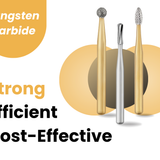
Tungsten carbide bur options deliver sharper, longer-lasting cutting for dental procedures. Learn how to choose burs that improve efficiency and patient comfort.
There’s a significant difference between grinding away tooth structure and slicing through it with clean, predictable precision. Grinding generates more heat, causes more vibration, and can result in rougher margins that compromise the final restoration. A premium tungsten carbide bur is engineered to slice, not grind. Its incredibly hard and sharp flutes remove enamel and dentin efficiently, giving you unparalleled control and tactile feedback. This leads to cleaner, smoother preparations, less thermal stress on the pulp, and a more comfortable experience for your patient. Below, we’ll examine why the anatomy of a tungsten carbide bur makes it the superior choice for restorative procedures.
Why Do Tungsten Carbide Burs Outperform and Outlast?
Tungsten carbide burs use ultra-hard tungsten carbide particles that stay sharp 3x longer than regular carbide burs while cutting through tooth structure more efficiently. The superior material composition creates sharper, more durable cutting edges.
Most dentists waste money replacing dull burs too frequently. Quality tungsten carbide burs reduce replacement costs while improving cutting performance.
We've found that investing in quality tungsten carbide burs saves both time and money. Read this complete guide to understand why these premium tools deliver superior value for your practice.
The Anatomy of a Tungsten Carbide Bur
To appreciate why tungsten carbide burs are a clinical workhorse, it helps to understand their design. From the material composition to the shape of the head, every element is engineered for a specific purpose. A bur isn’t just a single piece of metal; it’s a sophisticated tool where the head, neck, and shank work together to deliver precise and efficient performance. Understanding this anatomy allows you to select the perfect instrument for any procedure, ensuring clean preparations and predictable outcomes. Let's break down the key components that define a bur's function and durability.
Material Properties and Manufacturing
The performance of a tungsten carbide bur begins at the microscopic level. The materials used and the way they are fused together determine the tool's hardness, strength, and lifespan. Unlike simple steel instruments, tungsten carbide burs are a product of advanced material science, where a careful balance of properties is required. The manufacturing process is just as critical, as it ensures that the bur can withstand the intense rotational speeds and forces of a dental handpiece without failing. This combination of superior materials and precision engineering is what sets premium burs apart from the rest.
Composition and Hardness
Tungsten carbide is a composite material, not a pure metal. It consists of fine particles of tungsten carbide—a compound nearly as hard as diamond—held together in a binder matrix, typically cobalt. This structure gives the bur its exceptional hardness, allowing it to cut through enamel and dentin with minimal pressure and heat generation. The incredible hardness is also responsible for its superior edge retention, meaning the bur stays sharper for much longer than traditional steel burs. This translates directly to greater clinical efficiency, as you can complete preparations faster and with more precision, reducing chair time for your patients.
The Risk of Brittleness
There is a trade-off for extreme hardness: brittleness. While tungsten carbide is incredibly strong under compressive forces, it can be susceptible to fracture if subjected to sudden, sharp impacts or excessive lateral pressure. This is why proper clinical technique, such as using a light touch and letting the bur do the work, is so important. High-quality manufacturing also plays a crucial role in minimizing this risk. A well-made bur has a uniform distribution of tungsten carbide particles and a strong binder matrix, which helps prevent the formation of micro-cracks that could lead to premature failure or breakage during a procedure.
Advanced Manufacturing Processes
The connection between the tungsten carbide head and the steel shank is a critical point of potential failure. To create a durable and safe instrument, manufacturers use advanced joining techniques. A specialized silver welding or brazing process is often employed to fuse the two parts together seamlessly. This modern method creates a bond that is far stronger and more resilient than older techniques, effectively preventing the head from detaching under the stress of high-speed rotation. This secure joint also ensures concentricity, meaning the bur spins perfectly on its axis, reducing handpiece vibration and allowing for smoother, more accurate cutting.
Physical Characteristics and Types
Beyond the material itself, the physical design of a bur dictates its clinical application. The shape of the head, the pattern of the cutting blades (or flutes), and the type of shank are all intentionally designed to perform specific tasks. Whether you're gaining initial access, removing old restorative material, or finishing a preparation, there is a bur with the right geometry for the job. Choosing the correct combination of these features is key to working efficiently and achieving the best possible clinical results. It ensures you can remove tooth structure precisely where needed while preserving healthy tissue.
Common Bur Shapes and Their Clinical Uses
Tungsten carbide burs are available in a wide array of shapes, each tailored for a specific function. Round burs (sizes ¼ to 8) are perfect for initial entry and creating retention features, while pear-shaped burs (like the 330) are ideal for cavity preparations. Fissure burs, both straight and tapered, are used for sectioning teeth or creating smooth, parallel walls. Inverted cone burs excel at producing undercuts for retentive preparations. Having a versatile selection of dental burs and diamonds on hand allows you to approach any restorative or surgical procedure with confidence, knowing you have the right tool to create the ideal form with precision and control.
Understanding Cut Types: Single vs. Double Cut
The flutes on a bur head can be arranged in different patterns, known as "cuts." A single-cut bur has one set of flutes that spiral in one direction, producing a smooth finish and offering excellent control for fine work. In contrast, a double-cut (or cross-cut) bur has a second set of flutes cut in the opposite direction, creating a more aggressive cutting action. This design allows for rapid removal of tougher materials, such as old amalgam restorations or metal alloys. While a double-cut bur removes material faster, it leaves a rougher surface, so a finishing bur is often required afterward.
Shank Types for Dental Handpieces
The shank is the part of the bur that fits into the dental handpiece, and it's crucial to match the shank type to your equipment. The most common type is the Friction Grip (FG) shank, designed for high-speed handpieces. The Right Angle (RA) or Latch-Type shank is used with low-speed contra-angle handpieces, common for caries removal and finishing. Finally, the Handpiece (HP) shank is longer and fits into the nose cone of a straight low-speed handpiece, often used for adjusting prosthetics or in surgical applications. Using the correct shank ensures the bur is securely held, rotates concentrically, and operates safely.
Tungsten Carbide vs. Standard Carbide: What's the Difference?
Tungsten carbide contains tungsten particles that are harder than regular carbide materials. This creates cutting edges that resist wear and maintain sharpness longer.
Tungsten carbide burs maintain cutting efficiency 4x longer than standard carbide burs in clinical use. The tungsten particles create microscopic cutting edges that stay sharp.
These long-lasting dental burs also cut more smoothly because the harder material doesn't deform under pressure. You get consistent performance throughout the bur's lifespan.
Tungsten Carbide vs. Diamond Burs: Slicing vs. Grinding
Choosing between tungsten carbide and diamond burs comes down to understanding their fundamental actions: slicing versus grinding. A tungsten carbide bur functions like a precision blade, designed to slice cleanly through tooth structure and create smooth, well-defined margins. It excels at cutting and shaping. In contrast, a diamond bur operates like a powerful grinding tool, using abrasive particles to wear away hard materials like enamel and porcelain. This distinction is critical because using the wrong bur can lead to inefficiency, excessive heat generation, and subpar clinical outcomes. Knowing when to slice and when to grind is key to mastering restorative procedures and achieving predictable results for your patients.
Tungsten carbide burs are renowned for their exceptional strength and sharpness, making them highly effective for cutting enamel, dentin, and even old metal restorations. Their efficient slicing action is a core principle of minimally invasive dentistry. By cutting cleanly, these burs generate less heat and vibration, which helps preserve more healthy tooth structure and enhances patient comfort during the procedure. This precise cutting ability makes them the ideal choice for tasks like cavity preparation, creating access openings for endodontic treatment, and sectioning teeth for extractions. Their durability ensures they maintain a sharp edge, providing consistent performance use after use.
Diamond burs, on the other hand, are composed of fine diamond particles bonded to a steel shank. Their mechanism is abrasion, not cutting. They are the go-to instrument for procedures that require significant reduction of hard tissues or materials. This includes preparing teeth for crowns and veneers, removing old ceramic restorations, and contouring enamel. The effectiveness of a diamond bur is determined by the size of its abrasive particles, or grit. Coarse grits are used for bulk reduction, while finer grits are used for smoothing and polishing, giving you precise control over the final surface texture and finish of the restoration.
Ultimately, the decision to use a tungsten carbide or diamond bur depends entirely on the clinical task. For precise cutting, shaping cavity preparations with smooth walls, or removing metal, a tungsten carbide bur is the superior instrument. When you need to perform bulk reduction of hard tooth structure or adjust tough ceramic materials like zirconia, a diamond bur is the indispensable tool. A well-equipped dental practice needs a comprehensive inventory of high-quality burs and diamonds to handle the full spectrum of restorative and surgical challenges with confidence and efficiency.
Understanding the Superior Lifespan of Tungsten Carbide Burs
The tungsten carbide matrix resists wear from repeated cutting cycles. Each flute maintains its sharp edge even after extensive use on hard tooth structures.
Dental burs with superior lifespan reduce replacement frequency by 60% compared to standard options. This dramatic improvement cuts your instrument costs significantly.
The harder material also resists chipping and fracturing that plague softer carbide burs. You get reliable performance case after case.
How the Right Bur Can Shorten Patient Appointments
Efficient cutting tools maintain their sharpness throughout procedures. Sharp burs cut faster and require less pressure, reducing patient discomfort and procedure time.
Tungsten carbide burs cut 40% faster than worn standard burs while generating less heat. The sharp edges slice through material instead of grinding.
These durable rotary instruments also vibrate less during cutting. Reduced vibration improves patient comfort and gives you better control.
How Reusable Tungsten Carbide Burs Impact Your Bottom Line
Re-usable high-speed burs withstand multiple sterilization cycles without losing sharpness. The tungsten carbide material doesn't degrade from heat sterilization.
Quality tungsten carbide burs can be sterilized and reused 50+ times while maintaining cutting efficiency. This makes them extremely cost-effective for busy practices.
Proper cleaning and sterilization protocols extend bur life even further. Following manufacturer guidelines maximizes your investment.
Versatility in Action: Cutting Through Enamel, Dentin, and More
Tungsten carbide excels at cutting both enamel and dentin efficiently. The hard material maintains performance across different tooth densities.
Tungsten carbide burs cut through sclerotic dentin 2x faster than standard burs without dulling. This makes difficult cases much easier to manage.
The consistent cutting action also prevents the grabbing and pulling that occurs with dull instruments. You get smooth, controlled cutting every time.
Applications Beyond Dentistry
The exceptional performance of tungsten carbide burs isn’t limited to the dental operatory. The same properties that make them indispensable for cutting through enamel and dentin—incredible hardness, heat resistance, and durability—also make them a top choice in other high-precision fields. Understanding how these tools perform in different demanding environments can give you a new appreciation for the instrument in your hand. The versatility of tungsten carbide is a testament to its superior engineering, which is why we ensure our collection of burs and diamonds meets the highest standards for clinical performance and reliability.
Industrial Metalworking
In the world of industrial metalworking, tungsten carbide burs are essential for tasks that demand both power and precision. According to industry experts, these are "high-performance rotary cutting instruments...ideal for cutting, shaping, drilling, and finishing hard materials like metal, alloys, [and] acrylics." Machinists, engineers, and fabricators rely on them for grinding, deburring welds, and shaping components made from hardened steel and other tough alloys. The same bur that allows you to efficiently prepare a tooth for a restoration is trusted to shape metal parts where failure is not an option, proving its strength and resilience under extreme pressure.
Jewelry Making and Crafts
On the other end of the spectrum, tungsten carbide burs are celebrated for their ability to perform delicate, intricate work. Jewelers and artisans use small-headed tungsten carbide burs for the fine details that define their craft. These tools help them "make precise details and smooth out...custom jewelry," from carving intricate patterns in precious metals to setting gemstones with exacting accuracy. This application highlights the incredible control and finesse that tungsten carbide offers. The same precision you rely on for margin refinement or detailed anatomical carving is mirrored in the creation of fine jewelry, where a single slip can ruin a valuable piece.
Minimizing Heat for Better Patient Outcomes
Sharp tungsten carbide burs generate less heat because they cut efficiently instead of grinding. Less heat means better patient comfort and reduced pulp irritation.
Sharp tungsten carbide cutting edges produce 30% less heat than worn standard burs. This thermal advantage protects tooth vitality during procedures.
Reduced heat generation also means less water irrigation needed. You get better visibility and faster procedures with less thermal stress.
Recommendations for Optimal Use and Longevity
Following Speed Guidelines (RPMs)
Operating your handpiece at the correct speed is crucial for getting the most out of your tungsten carbide burs. Each bur is engineered to perform optimally within a specific RPM range, and deviating from it can compromise both efficiency and safety. Using the recommended speed ensures the bur's flutes cut cleanly rather than grind, which requires less pressure and reduces procedure time. This efficient cutting action is also key to minimizing heat generation, protecting the pulp and enhancing patient comfort.
Exceeding the recommended RPMs can cause premature wear, dulling the cutting edges and shortening the bur's lifespan. Conversely, running a bur too slowly can lead to stalling or chattering, resulting in a less precise preparation. By simply following the manufacturer's guidelines for your specific burs and diamonds, you maximize your investment. This practice not only extends the life of the instrument but also ensures consistent, predictable performance for superior clinical outcomes.
How to Properly Clean and Sterilize Tungsten Carbide Burs
Proper cleaning removes debris that can dull cutting edges. Ultrasonic cleaning followed by proper sterilization maintains bur sharpness.
Clean tungsten carbide burs maintain 90% of original cutting efficiency after 50 uses. Proper maintenance maximizes your tool investment.
Regular inspection helps identify worn burs before they affect performance. Replace burs when cutting efficiency drops noticeably.
Purchasing and Packaging Considerations
Once you've decided on the right type of tungsten carbide bur for your procedures, the next step is to consider your purchasing strategy. How you buy your burs—whether sterile or non-sterile, individually or in bulk—can significantly impact your practice's efficiency, inventory management, and overall budget. Making an informed choice here ensures you not only have the right tools but also that you're sourcing them in the most cost-effective and clinically sound way. Let's look at the key factors to weigh when stocking your practice.
Sterile vs. Non-Sterile Options
Your choice between sterile and non-sterile burs often comes down to balancing convenience with long-term cost. Sterile, single-use burs offer the ultimate in convenience and safety, guaranteeing a perfectly sharp, fresh cutting surface for every patient. This approach completely eliminates reprocessing labor and removes any risk of cross-contamination, simplifying your infection control protocols. On the other hand, reusable non-sterile burs are an excellent investment for cost-conscious practices. High-quality tungsten carbide is engineered to withstand numerous heat sterilization cycles without degrading or losing its sharpness, making these burs a durable and reliable choice for daily use.
Individual Burs, Multi-Packs, and Kits
How you package your purchase can also streamline your workflow. Buying individual burs is ideal when you need to replace a single worn instrument or want to try a new shape without committing to a full pack. For your most frequently used burs, multi-packs are the most economical option. Since quality tungsten carbide burs can be sterilized and reused dozens of times, buying in bulk reduces the cost per use and simplifies inventory management. Many practices also find procedure-specific kits to be incredibly efficient, as they organize all the necessary burs and diamonds for a given treatment, saving valuable chairside time.
FAQ about Tungsten Carbide Burs
Q: How many times can I reuse tungsten carbide burs?
Quality tungsten carbide burs can be sterilized and reused 50+ times while maintaining good cutting efficiency with proper care and maintenance.
Q: Are tungsten carbide burs worth the higher initial cost?
Yes, they last 3-4x longer than standard burs and cut more efficiently, making them cost-effective despite higher upfront investment.
Q: Do tungsten carbide burs work with all handpiece speeds?
Yes, tungsten carbide burs work with both high-speed and low-speed handpieces, maintaining performance across different RPM ranges.
Q: How do I know when to replace tungsten carbide burs?
Replace burs when cutting efficiency drops noticeably, cutting becomes rough, or when flutes show visible wear or damage.
Q: Can tungsten carbide burs be resharpened?
Professional resharpening services exist, but most practices find replacement more convenient and cost-effective for maintaining consistent performance.
Why Tungsten Carbide Burs Belong in Your Practice
Tungsten carbide burs deliver superior cutting performance and extended lifespan compared to standard carbide options. These durable instruments reduce replacement costs while improving procedure efficiency.
The investment in quality tungsten carbide tools pays for itself through reduced bur purchases and faster procedures. Your patients also benefit from smoother, more comfortable treatments.
Ready to upgrade to longer-lasting, more efficient cutting tools? Explore our premium collection of Burs and Diamonds featuring the finest tungsten carbide burs for superior clinical performance.
Key Takeaways
- Prioritize Precision with Slicing Action: Tungsten carbide burs cut with a clean slicing motion, unlike the grinding of diamond burs, resulting in smoother margins, less thermal stress on the pulp, and greater control during preparations.
- Maximize Value with Superior Durability: The unique composition of tungsten carbide ensures the burs stay sharp through dozens of sterilization cycles, which reduces frequent replacement costs and delivers a better return on your investment.
- Extend Bur Life with Proper Care: To get the most from your instruments, always operate burs within their recommended RPM range and follow a strict cleaning and sterilization protocol to preserve cutting efficiency and ensure consistent performance.
Related Articles
Blog posts
-
, by SurgiMac A Clinician's Guide to Absorbable Suture Material
-
, by SurgiMac A Clinician's Guide to Dental Composite Resin Kits
-
, by SurgiMac How to Disinfect with Metrex CaviWipes Correctly
