
Large Cryer Elevators: A Dental Professional's Guide
- , by SurgiMac Dental Supply
- 17 min reading time
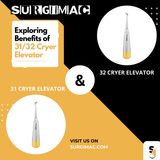
The Large Cryer Elevator offers dental professionals precise control and comfort for extractions. Learn how Surgimac tools support efficient, gentle care.
Some extractions are straightforward. Others test your skill and patience, especially when dealing with fractured roots or tricky impactions. Success in these moments isn't about more force—it's about smarter leverage. The right instrument makes all the difference for both you and your patient. This is precisely where the Large Cryer Elevator comes in. It's engineered to give you the control and power you need for clean, efficient lifts with minimal trauma.
At SurgiMac, we believe great patient care starts with reliable tools. Let's look at the features that make this elevator an essential instrument for any modern dental practice.

Getting to Know the 31 & 32 Large Cryer Elevator
The Large Cryer Elevator is designed to facilitate the removal of teeth, particularly in cases where teeth are impacted or not entirely visible. This instrument has a sharp, angled end that helps to dislodge teeth from their sockets while minimizing trauma to surrounding tissues. Its ergonomic design and precision engineering provide dental professionals with the comfort and efficacy needed to perform extractions smoothly.
How Cryer Elevators Work
At first glance, a Cryer elevator might seem like a simple tool, but its effectiveness lies in a brilliant application of physics. It’s not about brute force; it’s about precision and leverage. The instrument is designed to work with the body’s anatomy, not against it, allowing for the removal of roots and impacted teeth with controlled, predictable movements. Understanding the mechanics behind how this tool functions is key to using it effectively and safely in your practice. It transforms a potentially difficult extraction into a more straightforward procedure by using fundamental principles to achieve a complex goal.
The Mechanics of Leverage in Extractions
The Cryer elevator operates on the principle of a Class I lever, which is one of the most basic and effective ways to multiply force. Think of it like using a crowbar to lift a heavy object. In a dental extraction, the sharp, triangular tip of the elevator is placed between the tooth root and the surrounding bone. When you apply a rotational force to the handle, the instrument pivots on a fulcrum—typically the strong alveolar bone crest. This action multiplies the force you apply, creating a powerful lifting motion that pushes the tooth or root fragment out of its socket. This mechanical leverage is what allows for efficient removal without requiring excessive force from the practitioner.
Key Actions: Severing Ligaments and Expanding Bone
Beyond simply acting as a lever, the Cryer elevator performs two critical tasks simultaneously. First, its sharp, pointed tip is designed to slide into the periodontal ligament space to cleanly sever the fibers holding the tooth in place. As the instrument is worked around the root, it systematically cuts these connections. At the same time, the shape of the elevator gently expands the bony socket. This dual action of luxating and expanding creates the necessary space for the tooth to be dislodged. Using a well-maintained, high-quality instrument is crucial here, as a sharp and precisely angled tip makes these actions smoother and far less traumatic for the patient’s surrounding tissues.
Proper Positioning and Force Application
Effective use of a Cryer elevator depends entirely on proper technique and positioning. To create stable leverage, the instrument needs two solid points of contact. The working side of the tip engages the tooth or root that needs to be removed, while the back of the instrument rests firmly against a solid fulcrum, which should almost always be the alveolar bone. This creates a stable system for applying controlled rotational force. Using an adjacent tooth as a fulcrum is highly discouraged, as it can lead to unintended damage. This precise control is why so many professionals trust reliable instruments like those from SurgiMac, which are designed for optimal balance and tactile feedback during delicate procedures.
What Makes the Surgimac Large Cryer Elevator Stand Out?
Understanding the features of the Large Cryer Elevator is crucial for appreciating its benefits. Some key features include:
- High-Quality Material: Made from durable stainless steel, the Cryer Elevators resist corrosion, ensuring that the tool stays in good condition over time and can withstand frequent sterilization processes.
- Ergonomic Handle: The handles of the 31 & 32 Large Cryer Elevator are designed for optimal grip and comfort, allowing dental professionals to work for extended periods without experiencing fatigue.
- Precision Design: The carefully calibrated angles and edges of the elevators allow for easy maneuvering within the oral cavity, offering unparalleled control and accuracy during extractions.
- Versatile Use: These elevators can be employed for various extraction scenarios, making them a versatile tool in any dental practice.
Why This Elevator Belongs in Your Practice
Investing in the 31 & 32 Large Cryer Elevator brings several advantages, including:
Achieve Cleaner, More Efficient Extractions
Due to its design, the Cryer Elevator enhances the efficacy of extractions by providing reliable leverage, making it easier to remove teeth with minimal force. This leads to better overall patient outcomes and satisfaction.
Minimize Trauma for a Better Patient Experience
One of the most significant benefits of using the Large Cryer Elevator is its capability to minimize trauma to the surrounding tissues during extraction. With a design focused on precision, the instrument reduces the risk of damaging adjacent teeth and soft tissues.
An Ergonomic Design for Your Comfort
Dental professionals often perform complex procedures in challenging environments. The ergonomic handles of the Cryer Elevator offer improved comfort and reduce the strain on fingers and wrists, allowing for more extended periods of operation without discomfort.
Simplify Your Sterilization Process
The stainless steel construction of the 31 & 32 Large Cryer Elevator makes it easy to sterilize, which is crucial in maintaining infection control in a dental setting. Practitioners can ensure that the tools are always clean and ready for use, adhering to the highest standards of hygiene.
A Durable, Long-Term Investment
While there are various extraction tools available, the durability and effectiveness of the Large Cryer Elevator often make it a more cost-effective choice in the long run. It can withstand repetitive use and sterilization, reducing the need for constant replacements.
Using the Large Cryer Elevator in Your Daily Workflow
To get the most out of the 31 & 32 Large Cryer Elevator, dental professionals should consider the following practices:
- Proper Training: Ensure that all team members are proficient in the use of the Cryer Elevator to maximize its benefits during procedures.
- Regular Maintenance: Perform consistent inspections to check for wear and tear. Although made of durable materials, over time, instruments should be replaced if they show signs of damage.
- Stay Informed: Keep updated with best practices and advancements in dental tools that may complement the use of Cryer Elevators during extractions.
Common Applications for Dental Elevators
The Large Cryer Elevator is a versatile instrument, but it truly excels in a few key scenarios that dental professionals encounter regularly. Its specific design makes it the go-to tool for tasks that require both finesse and effective leverage. From complex root removals to preparing a tooth for forceps, understanding its primary applications helps you integrate it seamlessly into your extraction workflow. These common uses highlight why the Cryer elevator is a staple in so many dental practices for achieving predictable and efficient outcomes.
Removing Retained or Impacted Roots
The Large Cryer Elevator really shines when dealing with retained or impacted roots. Its sharp, angled tip is perfect for gaining purchase on root fragments that are otherwise difficult to access. For particularly stubborn cases, you might need to create small slots in the tooth or bone. This technique gives the elevator a solid point to apply leverage, which is a game-changer for dislodging teeth with complex or curved roots. Having dependable dental equipment and supplies in these moments is non-negotiable, as it allows you to work confidently and efficiently, minimizing chair time for the patient.
Loosening Teeth Before Forceps Application
One of the most fundamental uses for a dental elevator is to prepare a tooth for extraction with forceps. The instrument works by carefully severing the periodontal ligament fibers that anchor the tooth in its socket. At the same time, it gently expands the surrounding bone. This initial loosening, or luxation, is a critical first step. It makes the subsequent application of forceps much smoother and requires significantly less force. This not only preserves the integrity of the socket but also contributes to a more comfortable experience for the patient and less post-operative discomfort.
Advanced Clinical Techniques for Complex Cases
While the Cryer elevator is a workhorse for routine extractions, its value is even more apparent in complex cases. When faced with a challenging removal, pairing this instrument with advanced clinical techniques can make all the difference. These methods are designed to improve precision, reduce the force required, and ultimately preserve the surrounding anatomy. By incorporating strategies like tooth sectioning and using magnification, you can handle even the most difficult extractions with greater control and confidence, ensuring the best possible outcome for your patients.
Tooth Sectioning for Easier Removal
For multi-rooted teeth, a "divide and conquer" strategy is often the best approach. Tooth sectioning involves carefully cutting the tooth at the furcation to separate the roots. Once divided, each root can be treated as a single-rooted tooth, making removal much simpler. The Cryer elevator is then used to elevate each section individually. This technique dramatically reduces the amount of force needed for the extraction, which is a huge benefit for preserving the surrounding bone. It’s a precise method that helps prevent unnecessary trauma and sets the stage for better healing, especially when followed by careful suturing with a reliable product like MacSuture.
The Role of Magnification in Precision
Precision is everything in dentistry, and magnification tools are a key part of modern practice. Using dental loupes or a microscope allows for an incredibly detailed view of the surgical site. This enhanced visibility is invaluable when positioning an elevator. You can see exactly where the tip is placed, ensuring it engages the tooth correctly without harming adjacent structures. Magnification also helps you detect even the slightest movement, confirming that the tooth is luxating properly. Combining a high-quality instrument with clear visualization allows for more controlled and predictable outcomes in every extraction.
Is This the Right Tool for Your Dental Kit?
In the competitive field of dentistry, having the right tools can greatly enhance the quality of patient care provided. The 31 & 32 Large Cryer Elevator stands out as a robust and effective tool for dental extractions, ensuring that dental professionals can perform procedures with precision and comfort. By investing in these elevators, practitioners can expect improved outcomes and a better experience for both staff and patients alike.
To explore more about the 31 & 32 Large Cryer Elevator, visit our collection today!
Comparing Cryer Elevators to Other Dental Tools
While the Large Cryer Elevator is a powerhouse in any extraction kit, it’s important to know how it fits in with other instruments. Every tool has a specific job, and understanding the distinctions helps you work more effectively. Choosing the right instrument for the task at hand not only makes the procedure smoother for you but also improves the experience for your patient. Let's look at how the Cryer elevator stacks up against a couple of other common tools you'll find in a dental practice.
Cryer Elevators vs. Root Tip Picks
Cryer elevators are fantastic for gaining leverage and removing broken or sectioned roots, but they have their limits, especially with very small fragments. When you're dealing with a tiny root tip deep within a socket, a root tip pick is often the better choice. The Cryer’s triangular tip, while powerful, can be too thick to fit between a small root fragment and the alveolar bone. In contrast, a root tip pick has a much finer, more delicate point designed specifically to get into those tight spaces and gently tease out the remaining piece without causing unnecessary trauma.
Understanding the Difference Between Elevators and Luxators
The terms "elevator" and "luxator" are sometimes used interchangeably, but they describe tools with different primary functions. A conventional elevator, like the Cryer, is built to be robust. It’s designed to withstand the significant pushing and twisting forces needed to luxate a tooth and expand the alveolar bone. A luxating elevator, or luxator, is thinner and sharper. Its main purpose is not to apply heavy force but to delicately slide into the periodontal ligament space, severing the ligament and gently wedging the tooth from its socket. Think of the luxator as the precision cutting tool and the elevator as the leverage tool.
Considering Quality and Cost in the Market
When you're ready to purchase dental equipment and supplies, it’s tempting to look for the lowest price. However, with instruments you rely on daily, quality is a critical factor that directly impacts performance and longevity. High-quality Cryer elevators are crafted from surgical-grade stainless steel, which ensures they are durable, resistant to corrosion, and can withstand repeated sterilization cycles without degrading. This commitment to quality is something we stand by at SurgiMac, as it guarantees your tools remain reliable and safe for every patient, every time.
Investing in a premium instrument is an investment in your practice's efficiency and reputation. A well-made elevator provides better tactile feedback and holds its sharp edge longer, making procedures less strenuous and more predictable. When you pair a dependable extraction tool with superior closure materials, like our own MacSuture product line, you create a seamless workflow from start to finish. While the initial cost might be higher than budget alternatives, the long-term value of a durable, dependable tool from a trusted source is unmatched, saving you the cost and frustration of frequent replacements.
Key Takeaways
- Master Leverage for Efficient Extractions: The Large Cryer Elevator transforms difficult extractions by applying the principles of a lever. This allows you to use controlled, rotational force to cleanly lift teeth and root fragments, resulting in less trauma for the patient and less strain on you.
- Prioritize a Stable Fulcrum for Safety: Your technique is just as important as your tool. Always use the dense alveolar bone as a stable point of leverage for the elevator and avoid using adjacent teeth to prevent accidental damage and ensure a predictable procedure.
- Choose Quality for Consistent Performance: A well-crafted instrument from a trusted source like SurgiMac is a long-term investment in your practice. High-grade materials ensure durability through countless sterilization cycles and provide the precise tactile feedback needed for confident, controlled extractions.
Frequently Asked Questions
1. What's the real difference between using a Cryer elevator and a luxator?
Think of it this way: a luxator is primarily a cutting tool, while an elevator is a lifting tool. A luxator has a thinner, sharper blade designed to slide into the periodontal ligament space and sever the fibers with precision. A Cryer elevator is more robust, built to apply controlled rotational force to lift and remove a tooth or root fragment that has already been loosened. You often use the luxator first to create space, then follow with the elevator to apply leverage.
2. Is it ever okay to use a neighboring tooth for leverage with a Cryer elevator?
That’s a firm no. While it might seem convenient, using an adjacent tooth as a fulcrum is a major risk that can lead to fractures, luxation, or other damage to a healthy tooth. The proper and safe technique is to always use the dense alveolar bone as your fulcrum. This provides a stable and predictable point of leverage that protects the surrounding dentition and ensures the force is directed exactly where you need it.
3. My Cryer elevator seems fine, but how do I know when it's truly time for a replacement?
Look for subtle signs of wear that can impact performance. If the triangular tip has become rounded or dull, it won't engage the root as effectively, forcing you to use more pressure. You should also inspect the instrument for any small nicks, bends, or signs of corrosion that could compromise its integrity during a procedure. A high-quality instrument will last a long time, but it isn't invincible. Replacing it when it shows these signs ensures you maintain precision and control
4. For multi-rooted teeth, is tooth sectioning always necessary before using the elevator?
It isn't always required, but it's an incredibly effective technique for making a complex extraction much simpler and less traumatic. By sectioning a molar, you essentially turn one difficult extraction into two or three straightforward ones. This allows you to use the Cryer elevator on each individual root, requiring far less force and preserving the surrounding bone structure. It’s a great strategy to keep in your back pocket for stubborn or anatomically complex cases.
5. Why should I invest in a premium Cryer elevator instead of a cheaper alternative?
Investing in a high-quality instrument is about ensuring predictability and safety in your procedures. A premium elevator from a trusted supplier like SurgiMac is crafted from superior surgical-grade steel that holds its edge longer and provides better tactile feedback, so you can feel exactly what’s happening. This durability means it withstands sterilization without degrading. When you pair reliable instruments with other quality supplies, like our MacSuture line for closure, you build a workflow that supports better patient outcomes and gives you confidence in your tools.
Read More
Blog posts
-
, by SurgiMac A Clinician's Guide to Absorbable Suture Material
-
, by SurgiMac A Clinician's Guide to Dental Composite Resin Kits
-
, by SurgiMac How to Disinfect with Metrex CaviWipes Correctly
