
Cone Socket vs Simple Stem Mirror Head: Key Differences
- , by SurgiMac
- 22 min reading time
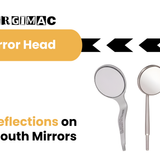
Get clear answers on cone socket vs simple stem mirror head, including compatibility, clinical benefits, and tips for choosing the right dental mirror system.
We’ve all been there: you open a box of new mirror heads, only to find they don’t fit your favorite handles. That frustrating mix-up almost always comes down to one simple detail: the cone socket vs simple stem mirror head attachment system. In the United States, one design is the undisputed industry standard, ensuring it works with most high-quality instruments. Understanding the difference is the first step to streamlining your inventory and preventing costly reorders. Let's clear up the confusion for good so you can always order with confidence.
Key Takeaways
- Recognize the fundamental design difference: Cone Socket mirror heads use a tapered, pressure-fit system for a wobble-free connection, while Simple Stem heads use a straight, screw-in thread. These two designs are not cross-compatible.
- Stick with the U.S. industry standard: For practices in the United States, Cone Socket is the standard system. Choosing Cone Socket mirror heads ensures they will fit the majority of high-quality handles from domestic suppliers.
- Verify your existing handles before ordering: To avoid purchasing incompatible parts, always check whether your current mirror handles are designed for Cone Socket or Simple Stem heads. This simple step saves time and ensures your inventory is always ready for clinical use.

The Anatomy of a Dental Mirror
Beyond the critical distinction between Cone Socket and Simple Stem systems, the quality of a dental mirror head is defined by its optical properties. The mirror itself is more than just a reflective surface; it's a precision tool designed to provide the best possible view of the intraoral environment. Two key features determine a mirror's clinical effectiveness: its shape, which influences magnification, and its coating, which dictates image clarity. Understanding these elements helps you select instruments that not only fit your handles but also enhance your diagnostic capabilities. A high-quality mirror minimizes eye strain and allows for more accurate and efficient procedures, making it an indispensable part of your daily toolkit.
The Science Behind the Reflection: Concave and Front-Coated Mirrors
Why Dentists Use Concave Mirrors
Dentists rely on concave mirrors for one primary reason: magnification. Unlike a flat mirror that produces a reflection of the same size, a concave mirror has an inwardly curved surface that converges light rays to create an enlarged virtual image. This makes the patient's teeth and gums appear larger, which is essential for identifying minute details that could be missed with the naked eye, such as early-stage caries, hairline enamel cracks, or subtle signs of periodontal disease. The ability to magnify images allows for greater diagnostic accuracy and more confident clinical assessments.
The Advantage of Front-Coated Mirrors
For maximum clarity, front-coated mirrors are the clinical standard. In a typical household mirror, the reflective layer is behind glass, which can create a faint double image or "ghosting" effect. In dentistry, this distortion compromises precision. Front-coated mirrors solve this by placing the reflective coating on the top surface of the glass. This design produces a single, crisp, and distortion-free reflection, ensuring the image you see is an exact representation of the clinical reality. This level of clarity is crucial for detailed procedures where every millimeter matters, from scaling to restorative work.
Cone Socket vs. Simple Stem: Which Mirror Head is for You?
When selecting dental mirror heads and handles, the two most common attachment styles you'll encounter are cone socket and simple stem. While they both achieve the same goal—providing clear intraoral visibility—their designs are fundamentally different, and knowing which is which is essential for ensuring your components are compatible. Understanding these distinctions will help you order the right supplies and maintain an efficient workflow in your practice. Let's break down the characteristics of each type so you can confidently identify and choose the right system for your clinical needs.
What Defines a Cone Socket Mirror Head?
The cone socket design uses a friction-fit mechanism to secure the mirror head to the handle. The handle features a tapered, cone-shaped opening, and the mirror head has a corresponding tapered shank. To attach it, you simply insert the mirror head into the handle and give it a slight twist. This action creates a tight, secure connection that holds the mirror firmly in place during procedures. Many clinicians prefer this design for its stability and the robust feel it provides. The pressure-based fit minimizes any potential for wobbling, ensuring a steady view.
Decoding the Simple Stem Mirror Head
Simple stem mirrors, sometimes known as European-style mirrors, use a more straightforward threaded system. The mirror head has a straight, non-tapered shank with external (male) threads. The handle, in turn, has a corresponding internal (female) thread. You attach the mirror by simply screwing the head directly into the handle until it is snug. This design is valued for its simplicity and ease of use, making it a popular choice in many dental practices. The direct threading provides a reliable and predictable connection every time you assemble your dental instruments.
A Side-by-Side Comparison
The most obvious visual difference is the shank of the mirror head. A cone socket mirror head has a distinct ledge or "lip" just before the threaded section, which helps it lock into the tapered handle. In contrast, a simple stem mirror head has a completely straight shank from the base to the threads. The most critical takeaway is that these two systems are not interchangeable. You cannot use a simple stem mirror head with a cone socket handle, or vice versa, as they simply will not fit together. Always double-check compatibility before purchasing to avoid frustration and unnecessary returns.
How Do Mirror Heads Attach to the Handle?
Understanding how a dental mirror head connects to its handle is crucial for ensuring stability and performance during clinical procedures. The two dominant systems in the United States are the Cone Socket and the Simple Stem. While they both achieve the same goal of securing the mirror, their attachment mechanisms are fundamentally different, impacting everything from stability to interchangeability. Knowing which system your practice uses is the first step to ordering the right components and ensuring your diagnostic tools function exactly as you need them to.
Securing a Cone Socket Mirror
The Cone Socket system uses a clever, tapered design to create a secure, pressure-fit connection. The mirror head has a smooth, cone-shaped socket, which fits over a matching tapered cone on the handle. To attach it, you simply place the mirror head onto the handle’s cone and give it a firm twist. This action locks the two pieces together, creating a tight and stable fit that resists wobbling. This design is favored in many practices for its reliability and the secure feeling it provides during examinations and procedures where a steady view is essential.
Connecting a Simple Stem Mirror
As its name suggests, the Simple Stem design is more straightforward. These mirror heads feature a straight stem with external (male) threads. The handle, in turn, has a corresponding internal (female) thread. You attach the mirror head by simply screwing it directly into the handle until it’s snug. This threaded system is widely used and familiar to most clinicians. High-quality handles, like those in the SurgiMac Air Series, are designed with precise threading to ensure a smooth and secure connection, providing excellent control and comfort during use.
Which Connection Offers More Stability?
When it comes to a firm, unwavering connection, the Cone Socket system generally has the edge. The pressure-locked, tapered design creates an exceptionally stable unit that minimizes any chance of the mirror head loosening or spinning during a procedure. This added security can be a significant advantage during delicate work where even the slightest movement could disrupt your view. While a properly tightened Simple Stem mirror is also secure, the direct-threaded connection can sometimes be more prone to loosening over time with repeated use and sterilization cycles.
Are These Mirror Heads Interchangeable?
It’s critical to remember that Cone Socket and Simple Stem components are not cross-compatible. You cannot use a Simple Stem mirror head with a Cone Socket handle, or vice versa—they simply won’t fit together. Attempting to force them can damage the threads or the socket, rendering the instrument useless. When ordering replacements or stocking up, always verify which system your practice uses to ensure you purchase the correct matching parts. You can explore a full range of compatible dental instruments to find the perfect setup for your needs.
Beyond the Basics: What Sets These Mirror Heads Apart?
When choosing between Cone Socket and Simple Stem mirror heads, it helps to understand the core differences in their design, performance, and common usage. These factors will guide you in selecting the right tools to maintain efficiency and precision in your practice.
Advanced Features for Clinical Excellence
Beyond the fundamental choice between Cone Socket and Simple Stem, today’s dental mirror heads offer advanced features designed to enhance clinical performance. These innovations aren't just minor upgrades; they are thoughtful improvements that address common challenges in daily practice, from maintaining a clear line of sight to improving procedural workflow. Investing in mirror heads with superior coatings or functional designs can lead to more accurate diagnoses, greater efficiency, and a longer instrument lifespan. When you select tools that work smarter, you can focus more on patient care and less on equipment limitations.
Rhodium Coating for Scratch Resistance
One of the most valuable features available on premium mirror heads is a rhodium-coated surface. Unlike standard mirrors that can easily be scratched by probes or scalers, rhodium provides a hard, protective layer that significantly increases durability. This scratch resistance is crucial for maintaining a flawless, distortion-free reflection over hundreds of sterilization cycles and procedures. A clear view is non-negotiable for accurate diagnostics, and a rhodium coating ensures your mirror provides a bright, true-color image every time. This feature is a hallmark of high-quality Pro Series instruments designed for longevity and reliable performance.
Double-Sided Heads for Maximum Visibility
For clinicians focused on efficiency, double-sided mirror heads are a game-changer. This clever design allows you to use one surface for reflection while the other simultaneously serves as a cheek or tongue retractor. This dual functionality eliminates the need to juggle multiple instruments, streamlining your workflow and saving valuable chair time. It is particularly effective for gaining clear access and visibility in the posterior regions of the mouth, where space is limited. By integrating retraction and reflection into a single tool, double-sided mirrors help you work more smoothly and maintain focus on the procedure at hand.
Understanding Common Mirror Head Sizes
Once you’ve settled on an attachment style and desired features, the final piece of the puzzle is selecting the correct size. Dental mirror heads are typically available in standard sizes, with #4 and #5 being the most common in U.S. practices. The size you choose impacts both your field of view and your ability to maneuver within the oral cavity. A larger #5 mirror provides a broader reflective surface, ideal for general examinations, while a slightly smaller #4 mirror can be better for reaching tight posterior areas or for use with pediatric patients. To avoid purchasing incompatible parts, always check whether your current mirror heads and handles match in both attachment type and size. This simple verification step ensures your inventory is always ready for clinical use.
How Design Impacts Clinical Use
The most immediate difference between Cone Socket and Simple Stem mirror heads is their physical design. A Cone Socket mirror head has a distinct shank with a tapered, cone-shaped end leading into the threaded section. You can often spot a small ledge just before the threads. In contrast, a Simple Stem mirror head features a completely straight shank with a uniform thread. This structural difference dictates how each head connects to its handle and is why they are not interchangeable. Understanding this is key to ordering the correct replacement heads for your instruments.
How Do They Perform in the Clinic?
In a clinical setting, design directly impacts performance. The Cone Socket system uses its tapered shape to create a secure, pressure-locked fit with a compatible handle. This connection minimizes wobble, providing a stable and reliable view during procedures. For clinicians who demand exceptional clarity and control, high-quality Cone Socket mirrors are the standard. SurgiMac’s Cone Socket Stainless Steel mirrors are designed for this purpose, ensuring a clear, distortion-free image. The stability of this design allows you to focus on the patient without instrument adjustments.
US vs. European Standards: What to Know
While both designs are used globally, there are clear regional preferences. In the United States, the Cone Socket mirror head is the predominant industry standard. Most U.S.-based dental schools, clinics, and suppliers stock Cone Socket systems, making it the practical choice for compatibility and easy sourcing. Simple Stem mirrors are more common internationally or in specific pre-packaged kits. Sticking with the U.S. standard ensures your mirror heads will be compatible with the wide range of high-quality dental instruments available from domestic suppliers.
Which Design Offers Better Durability?
The longevity of a mirror head depends on its material and construction. While high-quality mirrors are made from premium stainless steel to withstand repeated sterilization cycles, it’s best to view mirror heads as semi-consumable. Over time, autoclaving and daily use can lead to scratches or dulling of the reflective surface, compromising diagnostic clarity. It’s wise to keep extra mirror heads on hand for quick replacement. Investing in durable handles from trusted lines like our Pro Series is a great long-term strategy, while regularly replacing mirror heads ensures your tools perform at their best.
Instrument Care and Ergonomics
Properly caring for your dental instruments isn't just about keeping them clean; it's about protecting your investment and ensuring they perform reliably for every patient. The handle and mirror head are a team, and maintaining both is key to their longevity. Simple, consistent habits can prevent premature wear and tear, saving you from the frustration of dealing with a wobbly mirror or damaged threads mid-procedure. At the same time, paying attention to ergonomics can make a significant difference in your daily comfort and clinical precision. A well-designed handle reduces physical strain, allowing you to work more efficiently and comfortably throughout the day.
Best Practices for Instrument Longevity
To get the most out of your dental mirrors, a little preventative care goes a long way, especially at the connection point between the head and handle. One of the easiest ways to cause damage is by overtightening the mirror head, which can strip the delicate threads. Twist it until it feels snug, but avoid applying excessive force. Over time, you should also watch for signs of wear. If you notice the mirror head wobbles or spins easily even after being tightened, the threads are likely worn down. It’s best to replace the head as soon as the connection feels insecure to maintain the performance of your dental instruments.
The Importance of Handle Ergonomics
The handle of your dental mirror is a critical tool that impacts your comfort, control, and long-term musculoskeletal health. A well-designed handle reduces hand and wrist fatigue, allowing for greater precision during long procedures. Lighter handles with wider, textured grips are easier to hold, requiring less muscle force and reducing strain. Collections like our Air Series are crafted with these principles in mind. It's also smart to standardize with handles that fit the U.S. industry standard (Cone Socket) for easy compatibility. For specific tasks, you might prefer the compact design of the Slim Series or the robust feel of the Pro Series for more demanding work.
Choosing the Right Mirror Head for Your Practice
Selecting the right mirror head goes beyond just picking a size. It’s about ensuring compatibility with your existing equipment, matching the tool to the clinical task, and making a smart investment for your practice. With both Cone Socket and Simple Stem options available, making an informed choice ensures your instruments perform exactly as you need them to, every time. Let’s walk through the key factors to consider so you can confidently stock your operatories with the best tools for the job.
Start by Checking Your Existing Handles
Before placing an order, the first step is to take a look at the mirror handles you already use. The type of handle dictates which mirror head you need. If your practice is in the U.S. and you use premium mirror handles, Cone Socket is almost certainly your best fit. This design is the industry standard across the country, ensuring broad compatibility with most handles from various manufacturers. Taking a moment to confirm your current setup prevents the frustration of ordering incompatible supplies, saving you time and ensuring you have functional instruments ready for patient care.
Match the Mirror to Your Workflow
Different procedures demand different levels of precision. For detailed work like endodontics, cosmetic restorations, or placing orthodontic brackets, visual accuracy is paramount. This is where the type of mirror surface comes into play. Most dentists prefer front-coated mirrors for these tasks because they provide a single, crisp reflection without the "ghosting" effect common with rear-coated mirrors. When evaluating options, think about the primary use case. For routine exams, a standard mirror may suffice, but for procedures that require exacting vision, investing in high-clarity, front-surface dental instruments can significantly improve your precision and clinical outcomes.
Balancing Budget and Availability
It’s helpful to view mirror heads as semi-consumable items. Over time, they can become scratched or lose their reflective quality, impacting diagnostic clarity. Because they require periodic replacement, it’s wise to find a balance between performance and cost. You should always have extra mirrors on hand for quick and easy chairside replacement when one becomes compromised. Sourcing from a reliable supplier like SurgiMac ensures you can access high-quality dental equipment and supplies without delay. Planning ahead and ordering in sufficient quantities helps maintain clinical standards while managing inventory effectively.
Find Your Perfect Match at SurgiMac
At SurgiMac, we understand that clarity and reliability are non-negotiable. Our Cone Socket Stainless Steel Mouth Mirrors are designed specifically for dental professionals who demand high performance in their diagnostic instruments. Engineered for a sharp, distortion-free image, they are compatible with the standard Cone Socket handles used throughout the U.S. These mirrors perfectly complement our instrument collections, like the lightweight Air Series and the durable Pro Series, reflecting our commitment to providing dependable tools that support clinical excellence in every procedure.
Dental Mirror Heads: Fact vs. Fiction
When it comes to foundational tools like dental mirrors, it’s easy to assume one size fits all. However, the nuances between Cone Socket and Simple Stem designs can significantly impact your workflow, inventory management, and even clinical precision. Many dental professionals operate under common assumptions about these mirror heads, leading to purchasing errors and frustration when components don’t fit together. Let's clear the air on some of the most persistent myths.
Understanding the specific design, compatibility, and regional standards of your equipment is key to running an efficient practice. It ensures that when you invest in high-quality dental instruments, every component works together seamlessly. This knowledge not only prevents the simple headache of mismatched parts but also ensures your tools provide the stability and reliability you need for detailed patient care. Below, we’ll address four key misconceptions to help you make more informed decisions for your practice.
Myth: All Mirror Heads Are Interchangeable
One of the most common mistakes is assuming that any mirror head will fit any handle. This is simply not the case. Cone Socket and Simple Stem mirror heads are designed with fundamentally different attachment mechanisms. You cannot use a Simple Stem mirror head with a Cone Socket handle, or vice versa, because the threading and connection points are completely incompatible. Attempting to force them together can damage both the head and the handle, leading to unnecessary replacement costs. Always confirm the system your practice uses before ordering replacements to maintain a streamlined and functional inventory.
Myth: Is One Design Truly Better Quality?
While quality is often determined by the manufacturer rather than the design type, there is a strong preference in the U.S. market. Cone Socket mirrors are predominantly used in the United States and are often associated with higher-end, durable handles. The tapered, pressure-fit design provides a secure connection that many clinicians find more stable during procedures. If your practice invests in premium instruments, such as those in our Pro Series, you’ll find that Cone Socket heads are the standard and provide the reliable performance you expect. Ultimately, the "best" choice aligns with your existing equipment and regional industry standards.
Myth: One Style Is Used Everywhere
The preference for Cone Socket or Simple Stem mirror heads often comes down to geography. While Cone Socket mirrors are the standard across the United States, Simple Stem mirrors are much more common in international markets. This distinction is important for practices that may source equipment from global suppliers or for clinicians who have trained or worked abroad. Understanding this regional difference helps explain why you might encounter both types and ensures you order the correct components for your U.S.-based practice. It clarifies market standards and prevents confusion when stocking your operatories.
Why Threading Specifications Are So Important
The core difference between these two systems lies in their engineering. A Simple Stem mirror features a straight stem with male (outward) threads that screw into a handle with female (inward) threads. It’s a classic screw-in design. In contrast, a Cone Socket mirror head doesn’t rely on traditional threads. Instead, it uses a tapered, cone-shaped stem that fits securely into a matching handle, locking into place with friction and pressure. This design minimizes the chance of the mirror head wobbling or loosening during use, providing the firm stability needed for precise diagnostic and clinical work.
Frequently Asked Questions
How can I tell if my current mirror handles are Cone Socket or Simple Stem?
The quickest way to check is by looking at the mirror head’s shank—the part that connects to the handle. A Cone Socket mirror head has a tapered, cone-like shape leading to the threads. In contrast, a Simple Stem mirror head has a completely straight shank. If you only have the handle, look into the opening. A Cone Socket handle will have a smooth, tapered socket, while a Simple Stem handle will have visible internal threads like a standard screw.
Is one system more stable than the other during procedures?
Many clinicians find that the Cone Socket system offers superior stability. Its tapered, pressure-fit design creates an exceptionally secure connection that minimizes any chance of the mirror head wobbling or spinning during use. While a properly tightened Simple Stem mirror is certainly secure, the friction-locked design of the Cone Socket provides that extra measure of firmness that can be critical during detailed clinical work.
Why does it matter which one I choose if they both hold a mirror?
The main reason it matters is compatibility. Your mirror heads and handles must match to work together. Ordering the wrong type leads to unusable supplies, which can disrupt your workflow and cause unnecessary frustration. By sticking with the U.S. standard—the Cone Socket system—you ensure that your mirror heads will be compatible with the vast majority of high-quality handles, including durable options like those in our Pro Series.
Are Cone Socket and Simple Stem parts interchangeable?
No, they are not interchangeable under any circumstances. The two systems are engineered with completely different attachment mechanisms. A Simple Stem head will not screw into a Cone Socket handle, and a Cone Socket head will not fit into a Simple Stem handle. It’s essential to confirm which system your practice uses before purchasing new components to avoid ordering incompatible parts.
Since Cone Socket is the U.S. standard, is it easier to find compatible parts?
Yes, that’s a major advantage. Because Cone Socket is the established standard in dental practices and schools across the United States, you will find a much wider and more reliable selection of compatible mirror heads and handles from domestic suppliers. This simplifies the process of sourcing and stocking your operatories and ensures you can always find high-performance instruments that fit together perfectly.
Keep Reading
Tags
Blog posts
-
, by SurgiMac A Clinician's Guide to Absorbable Suture Material
-
, by SurgiMac A Clinician's Guide to Dental Composite Resin Kits
-

, by SurgiMac How to Disinfect with Metrex CaviWipes Correctly
