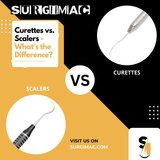
Understand the curette vs scaler debate, including key differences, clinical uses, and tips for choosing the right dental instrument for periodontal care.
On your instrument tray, a curette and a scaler might look similar, but their subtle design differences are everything. This isn't just about choosing any tool; it's about precision. The entire curette vs scaler debate comes down to their specific roles above and below the gumline. One has a sharp, pointed tip for supragingival calculus, while the other features a rounded toe for safely cleaning subgingivally. Grasping these distinctions is the key to providing effective and safe periodontal therapy for every patient.

Spotting the Difference: Curettes vs Scalers
Both curettes and scalers are designed to tackle plaque and calculus (that pesky tartar!), but they each have their own specialties:
-
Scalers: Think about these as the excavators of your dental products. With their pointed tip and triangular cross-section, they are good at tackling supragingival calculus – the stubborn deposits visible above the gum line. They're particularly adept at removing plaque and calculus from the tooth's crown and interdental spaces. Common types include sickle scalers, with their pointed tip and sharp cutting edges such as SurgiMac's 204SD Scaler, and Jacquette scalers, designed for interdental spaces which we will discuss later in detail such as SurgiMac's U-15 Towner/30 Jackuette Scaler
-
Curettes: These are the gentle explorers, that go just below the gum line to deal with subgingival calculus. Their rounded toe and semi-circular cross-section allow them to explore the delicate subgingival areas with finesse, removing hidden deposits and smoothing root surfaces. Gracey curettes, with their area-specific design, are masters of precision, while universal curettes offer versatility for various surfaces. SurgiMac offers universal curettes for your practice such as the 13/14 Columbia University Curette by Air Series, one of our finest brands when it comes to curettes.
Scalers: The Supragingival Specialists
Scalers are designed for the removal of supragingival calculus, the hard deposits that form on the visible surfaces of teeth. Their pointed tip and triangular cross-section make them ideal for this task.
Types of Scalers
-
**Sickle Scalers:** These are the efficient for supragingival scaling, featuring a pointed tip and two sharp cutting edges. They're effective for removing moderate to heavy calculus deposits from the facial and lingual surfaces of teeth.
-
**Anterior Sickle Scalers:** Designed for use on anterior teeth.
-
**Posterior Sickle Scalers:** To be used on posterior teeth with longer shanks and angled blades.
-
**Jacquette Scalers:** Made for interproximal spaces (between teeth), featuring a straight or slightly curved blade.
-
Hoe Scalers: These have a beveled blade and are used to remove heavy calculus deposits, often in combination with ultrasonic scalers.
-
Chisel Scalers: These feature a straight blade and are primarily used for removing supragingival calculus on anterior teeth.
-
Files: These instruments have multiple cutting edges and are used for smoothing rough surfaces or removing tenacious calculus.
Curettes: The Subgingival Explorers
Curettes are for subgingival calculus removal and root planing. They are designed with rounded toes and semi-circular cross-sections to travel along the delicate subgingival environment with precision.
Types of Curettes
-
**Gracey Curettes:** These are area-specific curettes designed to adapt to specific tooth surfaces. They have an offset blade and are ideal for fine scaling and root planing.
-
Anterior Gracey Curettes: Designed for anterior teeth.
-
Posterior Gracey Curettes: Adapted for posterior teeth with specific angles for different surfaces (mesial, distal, facial, lingual).
-
**Universal Curettes:** These curettes have a face perpendicular to the lower shank and can be used on all tooth surfaces. They offer versatility but may not provide the same level of precision as Gracey curettes.
-
After-Five Curettes: Similar to Gracey curettes but with a longer terminal shank, designed for deeper periodontal pockets.
-
Mini-Five Curettes: Smaller versions of Gracey curettes, ideal for accessing tight spaces or for use on pediatric patients.

Key Differences between Curettes and Scalers
| Feature Curettes Scalers |
| Tip Shape |
Rounded |
Pointed |
| Cross-Section |
Semi-circular |
Triangular |
| Primary Use |
Subgingival calculus removal and root planing |
Supragingival calculus removal |
| Blade Angles |
Offset blade (Gracey curettes) |
Two cutting edges |
| Examples |
Gracey curettes, universal curettes, After-Five curettes |
Sickle scalers, Jacquette scalers, hoe scalers |
Why Sharpness Matters
You know how frustrating it is to work with a dull knife in the kitchen? Well, the same applies to your dental instruments. Dull instruments make your work challenging, cause your patients more discomfort, and even jeopardize your treatment outcome. That's why SurgiMac considers precision and sharpness our number one priority when it comes to scalers and curettes. Sharp curettes and scalers are critical for proper periodontal care. Dull instruments can:
-
Decrease efficiency: Use excess force and time to remove calculus.Increase patient discomfort: Such an action results in more tissue trauma and sensitivity.
-
Increase patient discomfort: Causing more tissue trauma and sensitivity.
-
Compromise treatment outcomes: Failing to completely remove calculus, potentially leading to disease progression.
Technique Matters Too
Proper techniques by both curettes and scalers should be used to optimize treatment results without complications. These include:
-
Adaptation: Properly adapting the instrument to the tooth surface to avoid any tissue damage.
-
Angulation: Offers maximum angulation for performing the calculus removal procedure.
-
Stroke: A controlled and overlapping stroke is used to ensure proper cleaning.
Curettes and Scalers: Why They Matter?
Curettes and scalers are of prime importance in the prevention and treatment of periodontal disease, which is a chronic inflammatory disease affecting the gums and other supporting structures of the teeth. Such instruments thus enable effective clearance of plaque and calculus.
-
Prevent gingivitis: Early stage gum disease characterized by inflammation and bleeding.
-
Control periodontitis: Advanced gum disease that can lead to tooth loss and other health complications.
-
Promote overall health: It was also found that periodontal disease is associated with other systemic conditions, like heart disease, diabetes, and stroke. In addition, patients have used curettes and scalers for good oral health in return for healthier lives.
Choosing the Right Tool for Your Practice
Selecting the appropriate curettes and scalers is essential for achieving best results and ensuring patient comfort during dental procedures. SurgiMac recognizes the importance of providing a diverse selection to meet the unique needs of every dental professional. Our comprehensive range of curettes and scalers are carefully crafted for precision, durability, and ergonomic comfort. We understand that the right tools can significantly enhance your efficiency and the quality of care you provide.
Soft Tissue Debridement and Surgical Uses
Beyond removing calculus, curettes play a vital role in soft tissue management. Their rounded toe and curved blade are specifically designed for soft tissue debridement—the careful removal of diseased tissue and bacterial toxins from the periodontal pocket lining. This process is fundamental to non-surgical periodontal therapy. Unlike a sharp-tipped scaler that could damage delicate tissues, a curette allows you to gently clean subgingivally, reducing inflammation and creating an environment where the gums can heal and reattach to the tooth root. This precise action is critical for managing gingivitis and halting the progression of periodontitis.
Effective debridement and root planing directly impact patient outcomes, helping to preserve teeth and support overall health. For these delicate procedures, the quality of your instrument is non-negotiable. You need a tool that offers superior tactile sensitivity and control. The ergonomic designs found in collections like our Slim Series reduce hand fatigue during longer procedures, while the premium steel of the Pro Series ensures the sharpness needed for efficient and thorough cleaning. Using the right curette not only makes the procedure more effective but also enhances patient comfort and promotes faster healing.
Specialized and Surgical Curettes
While universal curettes are workhorses for routine care, some clinical situations demand instruments with a more specific design. Specialized and surgical curettes are engineered to handle complex dental needs, particularly in surgical settings or for intricate procedures. Surgical Curettes, like the Lucas curette, are built for strength and precision. They are sharper and more robust, allowing you to effectively remove unhealthy granulation tissue or bone fragments from a surgical site. Their design helps you work within the complexities of the area while minimizing trauma to surrounding tissues. For these demanding applications, instruments like those in our SurgiMac Hexa Series provide the necessary durability and ergonomic control for advanced surgical work.
Specialized Curettes are tailored for very specific tasks where precision is paramount. Miller curettes, for example, are known for their accuracy in cleaning tight spaces during surgical interventions. This principle of specialization also extends to material and design. The SurgiMac Titanium Black Series, for instance, features instruments with a non-reflective finish to reduce glare and improve visibility—a critical advantage during delicate procedures. Having the right specialized instrument is essential for achieving the best possible outcomes, especially where traditional curettes may not be sufficient. Utilizing the correct tool ensures thorough debridement, which ultimately leads to better and more predictable patient healing.
Specialized Scalers for Specific Needs
Just like you wouldn't use the same bur for every type of preparation, you need a variety of scalers to effectively tackle calculus in different areas of the mouth. Having the right tool for the job not only makes your work more efficient but also improves patient outcomes. While sickle scalers are the go-to for moderate to heavy supragingival calculus on facial and lingual surfaces, other designs address more specific challenges. For instance, Jacquette scalers are specifically designed with a straight or slightly curved blade to access those tight interproximal spaces between teeth.
For particularly stubborn, heavy ledges of calculus, a hoe scaler's beveled blade is perfect for dislodging large deposits, often used before finer scaling. Chisel scalers, with their straight blade, are used with a push motion to break up calculus on the smooth surfaces of anterior teeth. Finally, don't forget about files. These instruments have multiple cutting edges that are excellent for crushing tenacious calculus or smoothing rough surfaces after initial scaling. Having a full range of these specialized dental instruments ensures you're prepared for any clinical challenge that comes your way.
Instrument Design: The Importance of Material and Ergonomics
The effectiveness of a dental instrument goes far beyond its working end; its very construction dictates performance, clinician comfort, and longevity. Choosing an instrument is an investment in your practice’s efficiency and your own physical well-being. The material composition and handle design are two of the most critical factors to consider. High-quality materials ensure the tool can withstand repeated sterilization and maintain a sharp edge, while ergonomic design minimizes the hand and wrist fatigue that can accumulate over a long day of procedures. When both of these elements are optimized, you get an instrument that feels like a natural extension of your hand, allowing you to perform with greater precision and confidence.
Why High-Grade Stainless Steel Matters
The foundation of any reliable dental instrument is the material it’s made from. High-grade stainless steel is the industry standard for a reason: it’s durable, corrosion-resistant, and can be honed to an exceptionally sharp edge. As noted by dental supply experts, an ideal instrument should be "lightweight, durable, rust-resistant, strong, easy to shape, and environmentally friendly." This is why at SurgiMac, our instruments, such as those in the high-performance Pro Series, are crafted from premium stainless steel to guarantee clinical reliability. For practices focused on sustainability, our Eco Series instruments are made from recyclable stainless steel, offering exceptional quality while supporting environmentally responsible practices.
Ergonomic Handle Design for Clinical Comfort
Repetitive motion and sustained grips are a daily reality in dentistry, making ergonomics a crucial factor in preventing musculoskeletal strain. Instruments with "comfortable, rounded, and tapered handles" can significantly reduce hand and arm fatigue, helping to prevent conditions like carpal tunnel syndrome. This principle is at the core of our instrument design. For instance, the Air Series offers an incredibly lightweight feel and perfect balance for effortless handling. The Hexa Series features ergonomic hollow handles with a non-slip grip, ensuring maximum control even during demanding surgical procedures, while the Slim Series provides a compact, comfortable design for detailed work.
Choosing Instruments for Precision and Reduced Fatigue
The right instrument does more than just feel good in your hand; it directly contributes to better clinical outcomes. When an instrument is well-balanced and ergonomically designed, it reduces the micro-fatigue that can compromise your precision. This is why "using the right type of curette for the right job improves patient comfort and treatment success." For enhanced focus during delicate procedures, the Titanium Black Series features a specialized coating that reduces glare and improves contrast, allowing for superior visibility and tactile sensitivity. This thoughtful design allows you to work more accurately and efficiently, benefiting both you and your patient.
Proper Technique and Patient Safety
Even the most masterfully crafted instrument is only as effective as the clinician wielding it. Proper technique is the bridge between a high-quality tool and a successful patient outcome. It ensures that calculus is removed efficiently while protecting the surrounding soft tissues and preserving the integrity of the tooth structure. Mastering the correct adaptation, angulation, and stroke for each instrument is fundamental to periodontal care. This not only leads to a cleaner, healthier oral environment for the patient but also minimizes discomfort and prevents iatrogenic damage, reinforcing the trust and confidence your patients place in your care.
Preventing Tissue Trauma and Enamel Damage
A primary goal during any scaling procedure is to remove harmful deposits without causing unintended harm. This requires a deep understanding of your instrument's design. The rounded toe of a curette, for example, is specifically shaped for safe subgingival work, while the sharp, pointed tip of a scaler is intended for supragingival use only. Adhering to best practices, such as "properly adapting the instrument to the tooth surface to avoid any tissue damage," is non-negotiable. By respecting the design and intended use of each tool, you can effectively debride tooth surfaces while protecting the delicate gingival tissues and preventing scratches or gouges in the enamel.
Matching the Instrument to the Task
In periodontal therapy, there is no one-size-fits-all solution. The diversity of tooth anatomy and the nature of calculus deposits demand a varied toolkit. As we’ve discussed, "selecting the appropriate curettes and scalers is essential for achieving best results and ensuring patient comfort." Using a universal curette might be suitable for general debridement, but accessing deep, narrow pockets on the distal surface of a molar often requires an area-specific Gracey curette. Similarly, tackling a heavy bridge of supragingival calculus on the mandibular anteriors is a job for a sturdy sickle scaler. Having a comprehensive selection of curettes and scalers allows you to choose the perfect tool for every unique clinical scenario.
Instrument Maintenance and Longevity
Your dental instruments are a significant investment, and proper maintenance is key to protecting that investment and ensuring they perform at their peak for years to come. A well-maintained instrument is not only more effective clinically but also safer for the patient and more comfortable for the clinician to use. The two cornerstones of instrument care are maintaining a sharp working edge and following rigorous sterilization protocols. Neglecting either of these can lead to decreased efficiency, compromised patient outcomes, and a shorter lifespan for your valuable tools. Establishing a consistent maintenance routine is a simple step that pays dividends in performance and durability.
The Importance of a Sharp Working Edge
A sharp instrument is arguably the most critical factor in effective calculus removal. As we’ve emphasized, "sharp curettes and scalers are critical for proper periodontal care." A dull edge will burnish calculus rather than removing it, leaving behind a smooth but still-present deposit that can harbor bacteria and contribute to inflammation. Working with a dull instrument also requires you to apply more pressure, which increases patient discomfort and your own physical strain. Starting with high-quality instruments provides a durable edge that, with proper care, can be maintained for consistent, effective performance throughout the life of the instrument.
Best Practices for Sharpening Instruments
To keep your instruments in optimal condition, you should "sharpen your tools often, ideally after each use or at least once a day." Regular, light sharpening is far more effective than infrequent, heavy sharpening, as it preserves the original shape and integrity of the blade. The goal is to restore a fine, sharp cutting edge by removing a minimal amount of metal. Using a quality sharpening stone and maintaining the correct angle between the stone and the instrument face is essential. For those looking to refine their technique, resources from organizations like the American Dental Hygienists' Association offer valuable guidance on proper sharpening protocols.
The Basic Dental Examination Toolkit
Before any scaling or restorative work begins, a thorough examination sets the stage for an accurate diagnosis and effective treatment plan. This initial assessment relies on a core set of diagnostic instruments that allow you to visualize and assess the state of the patient's oral health. These tools are the eyes and ears of the dental professional, providing critical information about everything from potential caries to the health of the periodontium. While the full instrument tray may vary depending on the procedure, a few essential tools are present in nearly every dental setup, forming the foundation of a comprehensive oral evaluation.
The Four Essential Diagnostic Instruments
Nearly every dental appointment begins with the same fundamental set of tools. According to dental education resources, "every basic dental exam uses four main tools: a mirror, a probe, a periodontal probe, and tweezers." The mouth mirror provides indirect vision and retracts soft tissues, while the explorer, or probe, is used to detect caries and calculus with tactile sensitivity. The periodontal probe is indispensable for measuring pocket depths and assessing gingival health. Finally, cotton tweezers or pliers are used to handle small items like cotton rolls or articulating paper. These four instruments work together to provide a complete picture of the patient's oral condition, guiding the next steps in their care. You can find these essentials within our broad collection of dental instruments.
Other Common Tools in a Dental Setup
Beyond the basic diagnostic kit, a well-equipped operatory includes a range of supplies to support various procedures and ensure patient safety. Proper infection control is paramount, which is why every setup should include personal protective equipment like high-quality disposable gloves and lab coats, such as those from our MacSafe line. If the treatment plan calls for restorative work, you'll need materials for taking accurate impressions. Our AlgiMac alginate is perfect for preliminary models, while the MacImpress VPS material ensures flawless final impressions for crowns and bridges. These supporting products are just as crucial as the primary instruments for delivering comprehensive, high-quality care.
Frequently Asked Questions
What is the difference between curettes and scalers?
Both curettes and scalers are designed to remove plaque and calculus from teeth, but they have key differences:
-
Shape: Curettes have a rounded toe and a semi-circular cross-section, making them ideal for working below the gumline (subgingival) and adapting to the curves of the tooth. Scalers have a pointed tip and a triangular cross-section, better suited for removing deposits from the visible parts of the teeth (supragingival).
-
Function: Curettes are primarily used for subgingival calculus removal and root planing, smoothing the root surfaces to promote healing and prevent further gum disease. Scalers are primarily used for supragingival calculus removal, focusing on the visible parts of the teeth.
-
Application: Curettes are typically used for finer, more delicate procedures below the gumline, while scalers are used for heavier calculus removal above the gumline.
How do you use scalers and curettes?
Proper technique is crucial for both instruments:
-
Adaptation: The instrument should be adapted closely to the tooth surface to avoid tissue damage.
-
Angulation: The correct angle between the blade and the tooth is essential for effective calculus removal.
-
Stroke: Use controlled and overlapping strokes to ensure thorough cleaning.
-
Lateral Pressure: Apply firm but controlled lateral pressure against the tooth to engage the calculus deposit.
What are two basic types of curettes?
-
Gracey Curettes: Area-specific curettes designed with an offset blade to adapt to specific tooth surfaces. They are ideal for fine scaling and root planing.
-
Universal Curettes: These curettes can be used on all tooth surfaces, offering versatility.
You can explore a vast collection of SurgiMac's Hand Scaling Instruments by clicking here: Hand Scaling Instruments
What is a Gracey curette used for?
Gracey curettes are specialized instruments designed for subgingival calculus removal and root planing. Their unique design allows for precise adaptation and effective removal of calculus deposits below the gumline, promoting healing and preventing further attachment loss.
Why is proper sterilization of curettes and scalers important?
Proper sterilization is crucial to prevent the transmission of infections between patients. These instruments come into contact with blood and saliva, which can harbor various pathogens. Sterilization eliminates these microorganisms, ensuring that the instruments are safe for use.
How often should I sharpen my curettes and scalers?
Sharpening your curettes and scalers regularly is essential to maintain their effectiveness and prolong their lifespan. Ideally, you should sharpen your instruments after each use, or at least once a day, depending on the volume of patients you see. Sharp instruments require less force to remove calculus, reducing the risk of burnishing the deposit and causing patient discomfort.
What are the benefits of using ergonomic curettes and scalers?
Ergonomic curettes and scalers are designed to promote proper hand positioning and reduce strain on the muscles and joints of the hand and wrist. This can help to prevent hand fatigue, carpal tunnel syndrome, and other musculoskeletal disorders that are common among dental professionals. Ergonomic instruments can also improve efficiency and precision, allowing for more comfortable and effective scaling and root planing.
How do I choose the right curette or scaler for a specific procedure?
Choosing the appropriate curette or scaler depends on several factors:
-
Location of Calculus: Determine whether the calculus is located supragingivally (above the gumline) or subgingivally (below the gumline).
-
Tooth Surface: Consider the specific tooth surface being instrumented. Gracey curettes are area-specific, while universal curettes can be used on all surfaces.
-
Accessibility: Evaluate the accessibility of the area.
-
Patient Factors: Consider the patient's age and oral health status.
-
Personal Preference: Ultimately, the best instrument is the one that feels comfortable and effective in your hands.
Useful Links
General Information and Resources
-
The Battle of the Dental Instruments - Understanding the Key Differences Between Dental Curettes and Scaler
-
Periodontal instrument characteristics - LM Dental
Instrument Maintenance and Routine Care
The Importance of Routine Care and Maintenance for Dental Equipment - Eclpise Dental
Choosing the Right Instruments
Explore some of the Curettes and Scalers by SurgiMac
SurgiMac Scalers and Curettes
Key Takeaways
-
Select the Right Tool for the Job: Use pointed scalers for visible, supragingival calculus and rounded curettes for safer, more effective subgingival cleaning. This core difference is fundamental to preventing tissue damage and achieving thorough results.
-
Invest in Quality Instrument Design: The material and ergonomics of your instruments directly influence your clinical performance. High-grade steel maintains a sharp edge longer, while comfortable handles reduce hand fatigue and improve your precision.
-
Make Instrument Sharpening a Routine: A sharp edge is non-negotiable for effective calculus removal. Frequent, light sharpening prevents burnishing, requires less pressure, and leads to better patient outcomes and comfort.
Related Articles