

Periodontal Probe Types and Markings: A Clinician Guide
- , by SurgiMac
- 21 min reading time
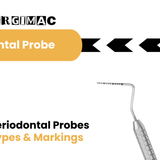
Get a comprehensive guide to periodontal probe types and markings. Choose the best precision diagnostic instruments for your dental practice today.
Reading a periodontal pocket wrong by just one millimeter can lead to a false clinical result. Every dental professional needs a set of reliable tools to track gum health with total precision.
Need precise and durable clinical tools for your practice? Explore SurgiMac's Surgical and Dental Instruments Collection and equip your team with surgical-grade precision probes today.
Periodontal probe types include distinct manual and automated tools made to measure pocket depth, assess gum health, and detect bleeding. The most common designs used in dental offices are the Williams, Michigan, and UNC15 probes. These tools vary by their specific millimeter markings and calibration styles. For example, Williams probes often feature markings at 1, 2, 3, 5, 7, 8, 9, and 10 millimeters. The UNC15 probe provides a full 15-millimeter scale for deep pocket measurement. These tools are vital because healthy gum pockets typically range from 1 to 3 millimeters. Any deeper measurement shows a risk of disease. Accurate, engraved bands help doctors track health changes with high precision over time according to academic research on probe calibration .
Choosing the right tool for each patient needs a clear look at how these tools differ in shape and use. Knowing these differences is the best way to keep high medical standards. We will now look at What Are the Main Periodontal Probe Types in Clinical Use? to see how each tool works. The comparison begins with.
What Are the Main Periodontal Probe Types in Clinical Use?
The primary periodontal probe types in clinical use are the Williams, Michigan, UNC15, Nabers, and WHO (CPITN) probes. These instruments vary by their millimeter marking intervals, tip thicknesses, and physical shapes to serve standard pocket exams, furcation analysis, and community screening needs with clinical accuracy.
Periodontal probes are vital tools for any dental practice. These thin, rod-like tools help the staff check the health of gum tissue. By measuring the space between the tooth and the gum, dentists can find signs of disease early. A healthy gum pocket usually ranges from 1 to 3 mm in depth. Choosing the right periodontal probe types is key to getting precise data for patient care.
Common Manual Probe Designs
Most dental offices use manual probes every day. These tools have clear lines marked on the tip to show depth in millimeters. Many standard periodontal probes , like the Williams probe, have marks at 1, 2, 3, 5, 7, 8, 9, and 10 mm. This helps a lot when checking gum health. The tip of a manual probe is about 0.6 mm thick. This small size lets it slide gently into the gum line without causing pain.
Other popular manual designs include the Michigan and Marquis probes. The Michigan probe often has marks at 3, 6, and 8 mm. The Marquis probe uses color bands to show 3 mm blocks. These visual aids make it easier for the staff to read results fast. Using color-coded periodontal probes can reduce eye strain. It also helps prevent errors during a busy day in the clinic.
Specialized Probes for Deep Pockets
Some cases need more detail than a basic probe can give. The UNC-15 probe is a top choice for research and deep pockets. It has marks for every millimeter up to 15. For checking the area where roots branch out, dentists use a curved tool called a Nabers probe. This design makes it easier to reach tricky spots that a straight probe cannot hit. Studies show that engraved bands are often the most accurate way to mark these tools.
Special probes are also made for patients with dental implants. These are often made of plastic or titanium to avoid scratching the metal surface. It is very important to use the right material to keep the implant safe. For screening large groups of people, the WHO probe is common. It has a small ball on the end and a specific color band to show if more care is needed. These diverse tools ensure that every patient gets a proper check-up.
Electronic and Computerized Systems
New tech has brought better ways to measure gum health. Electronic probes can record data directly into a computer. This removes the need for a second person to write down numbers. It also helps to keep the pressure of the probe the same every time. Using the same force makes the test more reliable. While these systems cost more, they can save time in a fast-paced clinic. They work well with other precision dental diagnostic tools to give a full view of oral health.
No matter which type is used, the goal remains the same. Accurate data helps create the best plan for the patient. High-quality tools lead to better health outcomes. Most dental experts say that using consistent markings is the best way to track health over time. This makes sure that small changes in the gum do not go unseen by the dentist.

Understanding Periodontal Probe Markings and Measurement Systems
Periodontal probe markings use standardized millimeter measurement systems, such as Williams (1-10mm with specific drops) and UNC15 (continuous 1-15mm). These lines are applied via laser etching, painted color-coded bands, or engraved bands, where engraved bands provide the highest clinical accuracy and durability over time.
Periodontal probes are key tools that help dental teams check gum health. These thin metal tools use fixed systems to show depth in the mouth. Most standard periodontal probes have marks in steps of one to three mm. These lines show how deep the gap is between the tooth and the gum. Healthy gum pockets usually measure between one and three mm deep. If the probe goes deeper, it may mean there is a sign of gum disease.
Common Depth Systems and Marking Steps
There are many kinds of probes on the market today. Each probe type uses its own set of marks to guide the dentist. For example, the Williams probe has marks at one, two, three, and five mm. It also has marks at seven, eight, nine, and ten mm. Other tools, like the WHO-CPITN or Michigan probes, use other plans to track depth. The CPWD probe design has marks at 1, 2, 3, 5, 7, 8, 9, and 10 mm. These systems help find root issues and see how gum disease grows.
The width of the probe tip is also very big for a good check. Most manual probes have a width of about 0.6 mm. This thin size lets the tool slide into tight spots without pain. Using color-coded periodontal probes can make it easy to read these small marks fast. Some probes, like the UT3/4, have clear marks at 3, 6, 9, and 12 mm. This helps the team work more quickly during a busy day.
Comparing Marks: Color-Coded vs. Engraved Bands
How the marks are put on the tool changes how well it works. Makers use three main ways to mark these tools:
- Color bands using paint or plastic.
- Etched lines made with lasers.
- Engraved bands cut into the metal.
Tests show that the way these marks are made can change how exact the tool is. One study found that the mean error of different probe sets varied by a small amount. The error range was from 0.06 mm to 0.22 mm. This shows why picking a high-quality tool is a must for any clinic.
Probes with engraved bands often give the best results. A study found that these tools had the highest level of precision . They also have the thinnest marks. Painted marks can be thick and may wear off after use. Engraved marks stay clear and sharp even after many cleaning cycles. This helps dental pros get the same depth reading every time they see a patient. Clear marks also help reduce mistakes when the dentist records the data.
Surgical-Grade Options for Clinical Precision
Dental teams need tools that provide steady and firm data. It is highly advised that dental experts use tools with clear and steady marks. Using high-quality stainless steel tools keeps the probe thin and strong. Most surgical-grade tools use laser etching or engraving to keep the tips smooth. This design helps the tool fit better on all sides of the tooth. A smooth tip also makes the check more comfortable for the patient. A good clinical check of gum health depends on the quality of the probe used in the chair.
Comparing Common Manual Probes: Williams, Marquis, and UNC-15
Williams, Marquis, and UNC-15 probes differ in their marking intervals and clinical purposes. The Williams probe uses uneven markings (1-10mm omitting 4 and 6). Marquis features 3mm color-coded bands for fast screening, and UNC-15 has continuous 1mm marks for high-precision surgical measurements.
Choosing the right dental diagnostic instruments is vital for clinical success. Periodontal probes vary in their marking styles and millimeter intervals, which can affect the speed and precision of your exams. While some probes use simple etched lines, others feature color-coded bands to help you quickly read pocket depths.
Key differences in marking styles
Most manual standard periodontal probes feature colored markings in 1-mm to 3-mm steps. These markings help dentists find healthy periodontal pockets , which typically measure between 1 mm and 3 mm. Research shows that probes with engraved bands often provide the best marking accuracy because they have very thin marking widths (NIH) .
The design of the probe shank also plays a role in how well the tool fits in the mouth. A working end that meets the shank at an angle larger than 90 degrees can help you reach all tooth surfaces with ease. Using high-quality tools like color-coded periodontal probes ensures that your measurements stay consistent across different patients.
Millimeter markings and applications
Each probe type serves a specific purpose based on its marking system. For example, the Williams probe is a classic choice for general use, while the UNC-15 is preferred for its high-precision millimeter markings. Understanding these variations helps you pick the best tool for every diagnostic task.
| Probe Type | Marking Intervals | Visual Style | Primary Use |
|---|---|---|---|
| Williams. | 1, 2, 3, 5, 7, 8, 9, 10 mm. | Etched or thin lines. | Standard pocket depth exams. |
| Marquis. | 3, 6, 9, 12 mm. | Color-coded bands. | Quick screening and triage. |
| UNC-15. | Every 1 mm up to 15 mm. | Thin lines or bands. | Research and precise surgery. |
Consistency in your probe choice is key for tracking patient health over time. Since studies have found that mean inaccuracies in markings can vary between 0.06 mm and 0.22 mm, sticking with one reliable brand is a good idea (NIH) . Choosing precision dental diagnostic tools will help you maintain the high standards your patients expect.
Specialized Diagnostic Probes: Nabers, WHO/CPITN, and Plastic Implant Probes
Specialized diagnostic probes include Nabers probes for assessing root furcations, WHO (CPITN) probes with 0.5mm ball tips for gentle community-wide screening. And plastic implant probes designed to measure tissue pocket depth around titanium implants without scratching sensitive surfaces.
Specialized tools like the Nabers and WHO probes play a key role in clinical exams. These tools help find issues that standard probes might miss. Using the right tool for each job helps you get a clear view of your patient's health. For instance, precision dental diagnostic tools make it easier to find and treat gum disease early.
Nabers probes for furcation
The Nabers probe has a curved end to reach into furcation areas. This shape lets the tool fit into the small gaps where roots split. Many clinicians use these probes to find and grade bone loss between roots. A probe end that meets the shank at an angle over 90 degrees helps it adapt to all tooth surfaces more easily. This design is vital for finding hard-to-reach root defects.
WHO probes and screening
The WHO probe, also known as the CPITN probe, is a standard tool for quick screenings. It has a small 0.5 mm ball tip that helps prevent tissue hurt. The markings on these tools often use engraved bands for high accuracy during exams. These probes are the main choice for the Community Periodontal Index of Treatment Needs. They help teams check many patients in a short time with good results.
Plastic implant probes
Implant-safe probes are made of plastic to protect sensitive titanium parts. Metal tools can scratch the surface of an implant, which may lead to more bacteria growth. Using a plastic probe keeps the implant surface smooth while you check pocket depth. These probes often have clear codes like color-coded periodontal probes to make reading depths fast and simple.
How to use specialized probes
Using these tools in a set way helps keep your data clear and your patient safe. Follow these steps for the best results in your clinic:
- Pick the right probe for the task, such as a Nabers probe for furcation checks or a plastic probe for implants.
- Insert the tip of the probe into the sulcus with a light touch to avoid hurting the gum tissue.
- Walk the probe around the tooth or implant to find the deepest part of the pocket.
- Check the markings on the probe to see the depth in millimeters.
- Record the readings in the patient's chart for each site you check.
- Look for signs of bleeding or root roughness while you use the tool.
Getting the right tools is the first step toward better patient care. You can find many dental diagnostic instruments online to fill your kits. High-quality probes give you the data you need to plan successful treatments.
Clinical Significance of Accurate Periodontal Pocket Depth Readings
Accurate periodontal pocket depth readings are clinically significant because they distinguish healthy gum tissue (1 to 3 mm) from active periodontal disease (4 mm or deeper). Precise measurements allow dental professionals to detect early attachment loss and formulate effective, product-led therapeutic treatment plans.
Periodontal pocket depth readings are a vital part of every dental exam. These measurements help you find and track gum disease in your patients. By using a reliable standard periodontal probe , you can get the precise data you need for a good clinical plan. Accurate readings ensure you detect early signs of bone loss and tissue damage before they become severe.
What do the readings mean for health?
A healthy gum pocket typically measures between 1 and 3 mm in depth. These shallow readings show that the tissue is firm and tightly attached to the tooth. According to clinical standards , pockets in this range are easy for patients to keep clean at home. When readings stay within this limit, it often means the patient has good oral hygiene and healthy bone support.
Depths of 4 mm or more are a sign of trouble. These deeper pockets often mean the gum tissue has pulled away from the tooth due to plaque and tartar buildup. At this stage, patients may need more than just a standard cleaning to stop the spread of disease. You might need to use periodontal curettes and probe types together to treat these deep areas effectively.
The need for precise dental tools
The accuracy of your readings depends on the quality of your instruments. Some studies in academic journals show that probe markings can vary by as much as 0.22 mm between different sets. This variation might seem small, but it can lead to the wrong diagnosis in borderline cases. Using tools with engraved bands or clear color codes helps reduce these errors and keeps your data consistent.
Reliable dental diagnostic instruments are essential for any modern clinic. When you have tools that are easy to read and hold, you can work faster and with more confidence. High-quality probes with narrow diameters also make the process more comfortable for your patients. This helps build trust and makes it easier for them to return for regular care and follow-up exams.
Ready to upgrade your diagnostic instruments? Shop SurgiMac's Air Series Probes for lightweight, ergonomic designs that maximize patient comfort and clinical control.
Best Practices for Handling, Calibration, and Maintaining Dental Probes
Best practices for dental probe maintenance include daily gentle manual cleaning, autoclave steam sterilization in dedicated cassettes to protect delicate tips. And monthly calibration checks against a known metric scale to ensure precise millimeter accuracy and prevent diagnostic errors.
Proper care is vital to keep your tools working well over time. Many periodontal probe types need precise handling to stay useful in the clinic. If a tip becomes worn or bent, it can lead to wrong readings during a check. This makes it hard to track gum health and could change a patient's care plan. To prevent this, you should set up a clear path for cleaning and checking each tool.
Maintaining Probe Accuracy and Calibration
The markings on a probe must be clear and exact. Research shows that errors in markings can vary from 0.06 mm to 0.22 mm across other sets of tools. This small change can affect how you judge pocket depth. When lines are painted on, they may fade after many uses in a hot machine. This makes it hard to see the right depth during a busy day. Tools with engraved bands are often the most exact. They show a sharp shift between the metal parts, which helps you get a true reading.
Using color-coded periodontal probes can also help reduce mistakes. Bright lines make it easy to see the depth even in dark spots in the mouth. However, even the best tools need a fixed check. You should compare your probes to a known scale to make sure the marks stay in the right place. If you find a tool that is off by a large amount, you should replace it right away to keep your tests fair.
Cleaning and Sterilization Steps
Cleaning your tools well is the first step in care. You must remove all debris from the tip before you put it in a machine for heat. Use a soft brush and a mild soap to clean the metal. Do not use harsh pads that could scratch the surface. Scratches can hold onto germs and make the tool harder to keep clean later. A rough surface can also make the probe stick to the gum tissue, which hurts the patient.
After you clean them, you must dry the tools fully. Leaving water on the metal can lead to spots or rust. Once they are dry, place them in bags for the steam machine. Make sure the tips do not touch other hard tools in the tray. This prevents the thin ends from bending or breaking. When the tips stay sharp and straight, they fit better against the tooth for a more exact test.
Ergonomic Design and Clinical Comfort
Doing many gum tests in one day can lead to hand pain. To help with this, you should use tools that are easy to hold. SurgiMac offers the Air Series and Slim Series to help prevent pain. These standard periodontal probes have light handles that feel good in the hand. A light tool gives you more control and lets you feel small changes in the root surface. This helps you find health issues faster.
A good handle design also helps you keep the right angle. A probe tip that meets the handle at an angle of more than 90 degrees helps the tool fit all parts of the tooth. This makes the job easier for the dentist and more comfy for the patient. By choosing the right tools and caring for them well, you can ensure your clinic gives the best care. Good tools like these make daily tasks much easier for the whole team.
Frequently Asked Questions
What are the different types of periodontal probes?
Dentists use many types of probes to check gum health. Common designs include the Williams and Marquis probes. Each tool has its own pattern of marks to measure pocket depth. For example, reports show that standard hand probes use marks in 1 to 3 millimeter steps. Some probes work best for deep pockets. Others help find bone loss or plaque around the teeth during a normal checkup.
What is the healthy pocket depth measured by periodontal probes?
When your dentist checks your gums, they look for a specific number. For most people with healthy gums, the probe will show a depth between 1 and 3 millimeters. Based on data from Henry Schein , these small numbers mean your gums are firm and healthy. If the numbers are higher, like 4 or 5 millimeters, it may show that a pocket has formed. This is often a sign of early gum disease that needs expert care to fix.
Why are color-coded markings used on dental probes?
Color-coded marks help dental pros read depths much faster. These bright bands often appear at 3, 6, 9, and 12-millimeter marks on tools like the UNC15 probe . By using colors, the expert can see the depth of a gum pocket without squinting at tiny lines. This leads to a faster exam and helps keep your records accurate. High-quality marks are vital for tracking changes in your gum health over time and planning the right care.
Are periodontal probes always accurate?
While probes are vital tools, their accuracy can vary. Research on PubMed shows that some probes may have small errors in their marks. These errors can range from 0.06 to 0.22 millimeters. To get the best results, dentists often pick tools with engraved bands because they are very precise. Using well-made tools helps your dental team find small changes in your gums. This stops big problems that might need deep cleaning or surgery.
Are you ready to find the best dental tools for your clinic today?
Using old tools or reading probe marks poorly can lead to bad patient data, which slows down your work and makes tracking health hard. You can avoid these risks and ensure every measurement is spot on by getting a new kit for your dental team right away. Every day you wait with old gear is a day you might miss key details in a check-up, so take this small step now.
Ready to source premium-quality dental diagnostic instruments and clinical supplies? Call 646-866-7634 to talk to a dental expert. Our team is ready to help you find the right tools for your office today.
Tags
Blog posts
-
, by SurgiMac A Clinician's Guide to Absorbable Suture Material
-
, by SurgiMac A Clinician's Guide to Dental Composite Resin Kits
-
, by SurgiMac How to Disinfect with Metrex CaviWipes Correctly
