Compare CaviWipes and Super Sani-Cloth disinfecting wipes for clinical use. Find out which disinfecting wipes best fit your dental or medical practice.
When it comes to infection control, not all disinfecting wipes are created equal. Two of the most trusted names are CaviWipes (SKU: 13-1100) by Metrex and Super Sani-Cloth Germicidal Disposable Wipes (SKU: Q55172) by PDI Healthcare. While both are powerhouses against pathogens, their differences in formulation and contact time can impact your workflow. And since safety is just as important as efficacy, proper handling with PPE like our MacSafe gloves is non-negotiable. We'll compare these two industry leaders to help you decide which is the right fit for your clinic's needs.
Understanding Surface Disinfection in a Clinical Setting
Before comparing specific products, it’s important to have a solid grasp of the fundamentals of surface disinfection. In a dental practice, where patient safety and infection control are non-negotiable, using the right product in the right way is critical. The terms "cleaning," "sanitizing," and "disinfecting" are often used interchangeably in casual conversation, but in a clinical context, they have distinct meanings. Understanding these differences ensures you are meeting the required standards for patient care and protecting your practice from cross-contamination. A proper infection control protocol relies on this foundational knowledge, guiding your team to select the appropriate methods for every surface, from the front desk to the operatory.
Cleaning, Sanitizing, and Disinfecting: Key Differences
Let's break down the terminology. Cleaning is the most basic step; it involves physically removing visible debris, dirt, and germs from a surface, but it doesn't necessarily kill them. Sanitizing takes it a step further by reducing the number of bacteria to a safe level, as judged by public health standards. However, disinfection is the goal in a clinical setting. According to the University of California Cooperative Extension (UCCE), "Disinfecting uses chemicals to kill specific germs." This process is designed to eliminate or inactivate nearly all pathogenic microorganisms on inanimate surfaces, making it the essential standard for areas involved in patient care. For dental instruments and operatories, simple cleaning or sanitizing is not enough to prevent the transmission of pathogens.
Common Active Ingredients in Hospital-Grade Wipes
The effectiveness of a disinfecting wipe comes down to its active ingredients. These are the chemical agents responsible for killing viruses, bacteria, and fungi. While many consumer-grade wipes are available, clinical environments require hospital-grade disinfectants with proven efficacy against a broad spectrum of pathogens. The specific formulation determines a wipe's kill time, material compatibility, and overall performance. Familiarizing yourself with the primary active ingredients will help you make an informed decision when selecting supplies for your practice, ensuring you choose a product that aligns with your specific infection control needs and the surfaces you need to treat.
Quaternary Ammonium Compounds
Quaternary ammonium compounds, often called "quats," are a common and highly effective active ingredient in many hospital-grade disinfectant wipes, including Super Sani-Cloth. As noted by the UCCE, many top brands use these compounds to "remove 99.9% of germs." Quats work by disrupting the cell membranes of microorganisms, leading to their rapid destruction. They are valued for their broad-spectrum antimicrobial activity, relative stability, and low corrosivity on many common surfaces found in a dental office. Their cleaning ability combined with their disinfecting power makes them a go-to choice for one-step cleaning and disinfection protocols in busy clinical settings.
Alternative and Plant-Based Ingredients
In recent years, wipes with alternative and plant-based active ingredients have gained popularity, particularly for household use. Brands like Seventh Generation note that their wipes "use ingredients from plants, like essential oils, to kill germs." While these products can be effective for general-purpose cleaning in non-clinical settings, they typically do not meet the rigorous efficacy standards required for disinfecting medical and dental equipment. For a dental practice, it is crucial to rely on EPA-registered, hospital-grade disinfectants that have been tested against clinically relevant pathogens like MRSA, HIV, and TB to ensure patient and staff safety.
Fundamental Safety Protocols for Handling Disinfecting Wipes
While disinfecting wipes are essential for maintaining a safe clinical environment, they are powerful chemical products that require careful handling. Adhering to fundamental safety protocols is just as important as achieving effective disinfection. These chemicals are formulated to destroy microorganisms, and that potency means they can pose risks to your team if used improperly. Following manufacturer guidelines for use, storage, and disposal is critical for protecting your staff from potential health hazards like skin irritation or respiratory issues. Establishing clear safety procedures ensures that your infection control efforts don't come at the expense of your team's well-being, creating a culture of safety throughout your practice.
EPA Classification: Why Disinfectants Are Considered Pesticides
It might be surprising to learn, but as the UCCE points out, "Disinfectant wipes are considered pesticides by the EPA (Environmental Protection Agency)." This classification isn't because they are used on pests in the traditional sense, but because they are specifically formulated to destroy or inactivate living organisms—in this case, microscopic germs, bacteria, and viruses. This designation underscores their chemical potency and the importance of using them exactly as directed. The EPA registration number on a product's label confirms that it has been reviewed and approved for its claimed efficacy and that its safety instructions are adequate to protect users when followed correctly.
Protecting Your Team: Health Risks and Proper Ventilation
The active ingredients in disinfectant wipes can pose health risks if not handled with care. The UCCE warns that "ingredients like bleach and certain other chemicals in wipes can irritate eyes, skin, and cause asthma." To mitigate these risks, it is essential to "make sure there is good airflow (ventilation) when using these products." Using wipes in a well-ventilated area helps disperse chemical fumes and reduces the concentration of airborne irritants. Training your staff to be aware of these potential hazards and to follow proper usage protocols is a key component of a comprehensive workplace safety program in any dental clinic.
Personal Protective Equipment (PPE) for Safe Handling
Using personal protective equipment (PPE) is a non-negotiable safety measure when handling chemical disinfectants. The UCCE advises that "some wipes require you to wear special gloves." It's crucial to consult the product's Safety Data Sheet (SDS) to determine the specific PPE required. At a minimum, wearing high-quality MacSafe nitrile gloves protects the skin from direct chemical contact. Furthermore, you should "always wash your hands with soap and water after using disinfectant wipes, even if you wore gloves." This simple step provides an additional layer of protection, removing any residual chemical traces and ensuring personal safety after the task is complete.
A Critical Warning: The Dangers of Mixing Cleaning Chemicals
One of the most critical safety rules is to never mix different cleaning or disinfecting products. The UCCE gives a stark warning: "Mixing disinfectants with other cleaners or hand sanitizers can be very dangerous and even deadly." Combining certain chemicals, such as those containing bleach and ammonia, can create toxic gases that can cause severe respiratory damage or worse. Always use one product at a time, as directed by the manufacturer. Ensure every member of your team understands this rule to prevent accidental and potentially tragic chemical reactions within your practice. A safe clinic is one where products are used effectively and correctly, one at a time.
A Closer Look at CaviWipes™ by Metrex
What Are CaviWipes™ and How Do They Work?
-
Product Manufacturer: Metrex, known for metrex caviwipes 13 1100 and caviwipes hp
-
Effectiveness: Suitable for hard non-porous surfaces
-
Variety of Configurations: Ready to use CaviCide spray, CaviCide liquid (gallons) and CaviWipes (canisters, flat packs, XL wipes and Metrex caviwipes bleach help meet your disinfection needs.
-
Stays Fully Saturated: Towelettes are designed to help optimize fluid capacity during use.
- Nonabrasive: For use on non-porous surfaces.
- Superior Surface Contact: Durable, nonwoven CaviWipes towelettes resist bunching up during use.
An In-Depth Guide to Super Sani-Cloth® Wipes
What Makes Super Sani-Cloth® a Top Choice?
-
Product Manufacturer: PDI Healthcare
-
Effectiveness: Against 32 microorganisms in 2 minutes, including super sani cloth germicidal wipes
-
EPA List Q: Super Sani-Cloth® Germicidal Disposable Wipe has demonstrated effectiveness against viruses similar to Monkeypox virus on hard, nonporous surfaces. Therefore, Super Sani-Cloth® Germicidal Disposable Wipe can be used against Monkeypox virus when used in accordance with the directions for use against Rotavirus, Strain WA on hard, nonporous surfaces. Refer to the CDC website for additional information.
Key Features and Clinical Advantages
- Super sani cloth plus wipes offer faster contact time
- Effectiveness against SARS-CoV-2 (COVID-19) and Candida auris
- Suitable for use with sani cloth germicidal disposable wipes
Ideal Applications in Healthcare Settings
- Use on various surfaces, including super sani cloth germicidal disposable wipe
- Real-life examples: bed railings, medical equipment
Proven Efficacy and EPA Registration
- EPA registration and standards
- Included in EPA List N
- Specific efficacy claims: bactericidal, tuberculocidal, virucidal, fungicidal
Sustainability and Dispensing Accessories
- PDI Healthcare’s commitment to sustainability includes reducing waste
-
Recommended replacement: Super Sani-Cloth X-Large (75 Count) SKU: P86984, PDI Sani-Cloth Plus (SKU: Q89072), Sani-Cloth AF3 (SKU: P13872) and Sani-Hand (SKU: P13472).
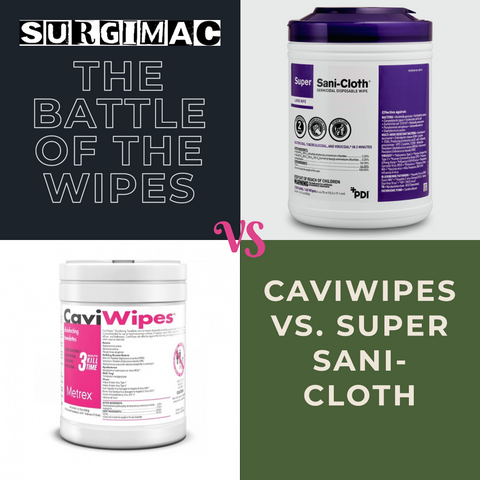
CaviWipes™ vs. Super Sani-Cloth®: Which Is Right for Your Practice?
Here's a face-off:
| Feature |
CaviWipes™ |
Super Sani-Cloth® |
| Effectiveness |
Varied Microorganisms |
32 Microorganisms |
| Contact Time |
3 Minutes |
2 Minutes |
| Coverage of Microorganisms |
Proven effective against SARS-CoV-2 on hard non-porous surfaces. |
effective against SARS-CoV-2, the virus that causes COVID-19 and Candida auris. |
| Manufacturer |
Metrex |
PDI Healthcare |
| Packaging Features |
Metrex caviwipes 160 count (Available in Flat pack (7' x9") - 45 Wipes per Pack) |
Super sani cloth wipes 160 count (Available in Softpack format features an easy-to-use, intuitive and portable design, which contains 80% less plastic and reduces overall waste footprint) |
CaviWipes Disinfection Protocol: Contact Time, Pre-Cleaning, and Surface Technique
When comparing CaviWipes vs. Super Sani-Cloth, product specs matter, but so does technique. To achieve true disinfection with CaviWipes, the surface must remain visibly wet for the full label contact time. In the current comparison, CaviWipes are listed with a 3-minute contact time, which means staff cannot simply wipe the surface and move on. If the area dries too quickly, use an additional wipe so the disinfectant stays active long enough to meet the kill claim.
It is also important to separate routine wiping from proper disinfection protocol. CaviWipes are designed as a one-step cleaner and disinfectant for hard, non-porous surfaces, but that only applies when the surface is not heavily soiled. If there is visible debris such as blood, saliva, or treatment residue, the best workflow is a two-step approach: use one wipe to remove bioburden, discard it, and then use a fresh wipe to disinfect the cleaned surface for the full contact time.
This distinction helps practices choose not just the right product, but the right process. Teams evaluating CaviWipes against Super Sani-Cloth should consider room turnover speed, surface size, and whether operatories frequently require pre-cleaning before final disinfection. A wipe that matches the clinical workflow—and is used with the correct wet-contact protocol—will deliver more reliable infection-control performance than product selection alone.
Super Sani-Cloth® Disinfection Protocol: Dwell Time and Application
One of the most significant advantages of Super Sani-Cloth® is its efficiency. These wipes boast a rapid two-minute contact time, making them effective against 32 different microorganisms in a short window. For true disinfection to occur, the treated surface must remain visibly wet for that entire two-minute period. This is a critical detail for busy dental practices where room turnover is constant. If a surface begins to dry before the dwell time is complete, you'll need to use another wipe to ensure it stays wet. This protocol guarantees that the germicidal disposable wipe has enough time to eliminate pathogens effectively, including tough-to-kill viruses and bacteria found in clinical environments.
Surface Compatibility: Materials to Avoid
While powerful, hospital-grade disinfecting wipes are not suitable for every surface. The chemical formulation in products like Super Sani-Cloth® is designed for hard, non-porous materials commonly found in clinical settings, such as stainless steel, laminate, and glass. You should avoid using these wipes on porous or sensitive materials like leather, vinyl, and uncoated wood, as the alcohol and other chemicals can cause drying, cracking, or discoloration over time. They are also not intended for use on electronic screens unless specified by the device manufacturer. For personal safety, always wear disposable gloves during use and never use surface disinfecting wipes on skin, as they are not formulated for that purpose.
Choosing the Best Disinfecting Wipes for Your Needs
CaviWipes and Super Sani-Cloth® Germicidal Disposable Wipes are essential in maintaining hygiene. Whether it's PDI Super Sani-Cloth (purple wipes) or cavi wipes, these products offer reliable disinfection. Explore both on SurgiMac's shop page for a cleaner healthcare environment.

The information provided in this article, including product features, comparisons, and related content, is intended for informational and educational purposes only. While the information is accurate to the best of our knowledge, SurgiMac strongly encourages readers to conduct their own research and consult with healthcare professionals to determine the most appropriate disinfection solutions for their specific needs and settings. SurgiMac is not responsible for any decisions or actions taken based on the information provided in this article.
Proper Storage to Maintain Efficacy
To ensure your disinfecting wipes deliver their full chemical power, proper storage is non-negotiable. The efficacy of wipes like CaviWipes and Super Sani-Cloth depends on the stability of their active ingredients. Storing canisters in a controlled environment, ideally between 68-77°F (20-25°C), prevents the disinfectant solution from degrading due to heat or cold. It's also wise to keep them away from direct sunlight, as UV exposure can break down the chemical compounds, rendering the wipes less effective. A designated supply cabinet or a cool, dark storage room is the perfect spot to preserve their integrity and ensure they are ready for use when you need them most.
Beyond environmental factors, the packaging itself plays a critical role. Always ensure the canister lid is sealed tightly after each use. An improper seal allows the active ingredients, particularly alcohol, to evaporate, leaving you with little more than a dry towelette. Before opening a new canister, check that the protective foil seal is fully intact. This guarantees the wipes are saturated and have not been compromised during shipping or prior storage. Following these simple steps ensures that every wipe you pull provides the consistent, reliable disinfection your practice depends on for patient and staff safety.
Correct Disposal of Used Wipes and Canisters
Once a disinfecting wipe has been used, it can't simply be tossed into the nearest trash can. In a clinical setting, used wipes are often contaminated with bioburden like saliva or blood, classifying them as regulated medical waste. Proper disposal isn't just a best practice—it's a matter of compliance with local, state, and OSHA regulations. Used wipes must be placed in designated, clearly labeled biohazard containers to await professional disposal. This protocol is essential for maintaining a safe and compliant infection control program and protecting waste handlers from potential exposure to pathogens.
It's also crucial to remember that disinfecting wipes are not flushable. Flushing them can cause severe plumbing blockages and damage to municipal water treatment systems. For empty canisters, check your local guidelines for plastic recycling programs, but ensure they are completely empty before disposal. Adhering to correct disposal procedures demonstrates your practice's commitment to both public health and environmental responsibility. Always handle used wipes and waste containers while wearing appropriate PPE, such as MacSafe nitrile gloves, to minimize cross-contamination risk.
Additional must read articles:
- Disinfectant Wipes for Surfaces: Keeping Your Environment Clean and Safe
- Concerned about emerging pathogens & Monkeypox?
- SurgiMac's recommended Surface Disinfectant Wipes For HAI Prevention
- How to Disinfect with Metrex CaviWipes Correctly
- How to Choose a Dental Disinfectant Wipe
Visit SurgiMac's shop page to explore the wide range of medical and dental products available.
Frequently Asked Questions
What's the most important factor to consider when choosing between CaviWipes and Super Sani-Cloth? The biggest practical difference is the contact time. Super Sani-Cloth wipes require the surface to stay wet for two minutes to be effective, while CaviWipes require three minutes. For a busy practice with quick room turnover, that extra minute can add up. Consider your clinic's workflow; if speed is a top priority, the faster contact time of Super Sani-Cloth might be a better fit.
Do I need to clean a surface before I use these disinfecting wipes? It depends on how soiled the surface is. Both products are designed as one-step cleaners and disinfectants for hard, non-porous surfaces that are not heavily contaminated. However, if you see visible debris like blood or saliva, you should use a two-step process. Use one wipe to clean away the bioburden, throw it away, and then use a fresh wipe to disinfect the surface for the full contact time.
Why does the surface have to stay wet for the entire contact time? The active ingredients in the wipes need that specific amount of time to destroy all the pathogens listed on the label. If the disinfectant evaporates and the surface dries before the full contact time is up, the process is incomplete, and you can't be sure that all germs have been eliminated. If you notice a surface drying too quickly, simply use another wipe to keep it wet for the required duration.
Can I use these wipes on my dental chairs or other sensitive equipment? You should be cautious. These are powerful hospital-grade disinfectants formulated for hard, non-porous surfaces like stainless steel, glass, and laminates. Using them on softer materials like vinyl or leather, which are common on dental chairs, can cause cracking or discoloration over time. Always check your equipment manufacturer's instructions for approved cleaning agents first.
Is it really necessary to wear gloves every time I use a disinfecting wipe? Yes, absolutely. These wipes are classified by the EPA as pesticides because they are designed to kill living organisms. The chemicals are potent and can cause skin irritation or other reactions with repeated exposure. Protecting your hands with quality nitrile gloves, like those from our MacSafe line, is a non-negotiable safety step for your team.
Key Takeaways
-
Match your disinfectant to your clinic's pace: Super Sani-Cloth offers a rapid 2-minute contact time perfect for high-turnover operatories, while CaviWipes require 3 minutes. Understanding this difference helps you balance clinical efficiency with effective infection control.
-
Follow the "visibly wet" rule for complete disinfection: For a wipe to work as intended, the surface must remain wet for the entire contact time listed on the label. A quick swipe isn't enough; if a surface dries early, you must re-wipe to ensure it stays wet and effective.
-
Prioritize safety when handling powerful chemicals: Always protect your team by using personal protective equipment, such as MacSafe gloves, and working in well-ventilated areas. Remember the critical rule: never mix different disinfecting products, as this can create hazardous chemical reactions.