
Choosing the Best Alginate Substitute Material
- , by Marketing SurgiMac
- 29 min reading time
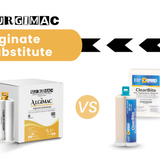
Compare AlgiMac and Defend to find the best alginate substitute material for accurate dental impressions, improved workflow, and reliable clinical results.
Every dental professional knows the feeling: the moment an alginate impression is taken, the clock starts ticking. That race to the lab before distortion ruins your hard work is a familiar source of stress and inefficiency. This time pressure is simply incompatible with a modern, streamlined workflow. The solution lies in moving beyond traditional materials. An advanced alginate substitute material, typically based on Vinyl Polysiloxane (VPS), eliminates this problem entirely by offering exceptional dimensional stability. This guide will compare two leading options, our own AlgiMac and Defend, to show you how to achieve predictable accuracy and reclaim control over your schedule.
The core dilemma for every dental professional is striking the perfect balance between cost-saving measures, chair-time efficiency, and absolute impression accuracy. Traditional alginate has long served as the staple, low-cost impression material, but its inherent lack of dimensional stability forces a frantic race to pour before distortion sets in. This time pressure is simply incompatible with efficient, complex restorative and orthodontic impression material protocols.
This expert guide, brought to you by SurgiMac, introduces the logical, stable evolution: advanced silicone replacement for alginate products. We analyze two top-tier options in the dental alginate substitute category, AlgiMac and Defend, to help you achieve predictable accuracy and optimize your workflow.
The Evolution of Dental Impression Materials
From Early Compounds to Modern Elastomers
The journey of dental impression materials reflects a constant drive for greater accuracy and efficiency. For decades, traditional compounds like alginate were the go-to for preliminary impressions, largely due to their low cost. However, their significant drawback is a well-known challenge in any practice: a lack of dimensional stability. This characteristic creates a time-sensitive rush to pour the model before distortion compromises the impression's integrity. As restorative and orthodontic procedures have become more complex, the need for materials that offer both precision and a more forgiving workflow has pushed the industry toward more advanced solutions.
In response, modern elastomers have become the new standard, offering superior performance and reliability. Advanced silicone materials, such as A-silicones or Vinyl Polysiloxane (VPS), provide highly accurate impressions that maintain their shape long after the patient has left the chair. This stability allows for delayed pouring and even multiple pours from a single impression. At SurgiMac, we developed our AlgiMac line to address this need directly. It combines the smooth mixing and rapid setting times you expect with the exceptional dimensional accuracy required for creating precise orthodontic models, study casts, and custom trays, streamlining your workflow without sacrificing quality.
Of course, it's important to recognize that there is no single "perfect" impression material for every clinical scenario. The best choice always depends on the specific application, from preliminary models to final impressions for complex restorations. While digital dentistry continues to shape the future, the evolution of physical impression materials provides clinicians with powerful tools. Advanced VPS formulations, like those found in our MacImpress Collection, deliver the exceptional tear resistance and detail reproduction needed for flawless, superior-fitting restorations, ensuring you can work with confidence and clinical consistency.
Overview of Dental Impression Material Types
Selecting the correct dental impression material types is the first step toward a successful restoration or appliance. The choice typically boils down to the required level of accuracy and dimensional stability.
Hydrocolloid Materials
Hydrocolloid materials are a foundational category in dental impression-taking, primarily composed of water-based colloids. They are classified into two main groups based on how they set: irreversible and reversible. The most common irreversible hydrocolloid is alginate, a go-to for preliminary impressions, study models, and fabricating custom trays due to its ease of use and cost-effectiveness. Products like our own AlgiMac offer fast-setting, high-precision results for these routine procedures. The other type, reversible hydrocolloid, is known as agar. While both capture fine details, their clinical workflows and physical properties are quite different, influencing which one you'll reach for in a given situation.
Agar (Reversible Hydrocolloid)
Agar is a reversible hydrocolloid, meaning it transitions from a gel to a liquid (sol) state when heated and reverts to a gel upon cooling. This unique property allows it to be reused, though it requires specialized conditioning equipment to manage the precise heating and cooling cycles. According to the National Center for Biotechnology Information, while agar is non-toxic and affordable, its tendency to tear easily and the need for special equipment have made it a less common choice in modern practices. Despite its excellent accuracy and ability to capture fine details, the convenience and stability offered by irreversible hydrocolloids and VPS materials have largely superseded its use for most routine dental impressions.
Traditional Alginate (Irreversible Hydrocolloid)
- Pros: Very low cost impression material.
- Cons: Extremely poor stability. Must be poured immediately (within minutes) to prevent shrinkage or expansion, making it highly time-sensitive and prone to distortion. Not a durable dental impression material.
- Use: Often relegated to basic preliminary impressions where immediate pouring is possible.
PVS Impression Materials (Vinyl Polysiloxane)
- Pros: The gold standard for accuracy. Excellent dimensional stability, high tear strength, and ability to be poured multiple times days or weeks later.
- Cons: Higher cost and often requires a specific technique (e.g., putty/wash or monophase).
- Use: Crown impression material, implant impression protocols, and precise final impressions.
VPS Alginate Substitutes (The Hybrid)
- Pros: Offers the cost-effectiveness and medium viscosity of alginate, but with the high dimensional stability of a vinyl polysiloxane dental material. Eliminates the mess and technique sensitivity of hand-mixing. Ideal alginate substitute for study models.
- Cons: Not always suitable for the most demanding final impressions (e.g., full-arch implant impression protocols).
- Use: Preliminary impression material, orthodontic study model material, bleaching trays, and opposing models.
 AlgiMac
AlgiMac is engineered to be the ideal replacement for traditional alginate, prioritizing convenience, speed, and dimensional stability.
Origin and Composition
At its core, an alginate substitute is a modern dental material designed to overcome the limitations of traditional alginates. Most, including our own AlgiMac, are formulated from Vinyl Polysiloxane (VPS), also known as A-silicone. This advanced composition is the key to its superior performance. Unlike traditional alginate, which is prone to rapid dehydration and distortion, the silicone base provides exceptional dimensional stability. This means you can say goodbye to the frantic rush to pour models. The impression remains accurate for days, giving your lab the flexibility it needs without compromising the final result.
Key Handling Properties
One of the most significant advantages of a VPS alginate substitute is its smart setting properties. Many modern formulations are thermo-reactive, meaning they set quickly once in the patient's mouth due to body temperature, yet offer ample working time at room temperature. This dual-phase setting process reduces chair time and improves patient comfort by minimizing the time the tray is seated. Furthermore, these materials are delivered in automix cartridges, which eliminates the messy, inconsistent, and often bubble-prone process of hand-mixing powder and water, ensuring a void-free and predictable mix every single time.
Elastomeric Materials (Rubber-Based)
Elastomeric impression materials are a class of flexible, rubber-like polymers that are essential for capturing high-precision details in restorative dentistry. These materials are known for their excellent elastic recovery, allowing them to be removed from undercut areas without permanent distortion. They are the go-to choice for procedures where accuracy is non-negotiable, such as fabricating crowns, bridges, and implants. The main types include Polyvinyl Siloxane (PVS), Polyether, and Polysulfide, each offering a unique combination of handling characteristics, setting times, and hydrophilicity to suit different clinical situations and preferences.
Polyvinyl Siloxane (PVS/VPS)
Vinyl Polysiloxane is widely considered the gold standard for impression accuracy in modern dentistry. Its formulation provides outstanding dimensional stability, meaning the impression will not shrink or distort over time. This allows for delayed pouring—even weeks later—without any loss of detail. PVS also boasts high tear strength and the ability to be poured multiple times. For clinicians who demand the highest level of precision for crowns, bridges, and implants, a premium PVS like our MacImpress Collection is the ideal choice, ensuring flawless reproduction of intraoral details for superior-fitting restorations.
Polyether
Polyether materials are another popular choice, prized for their inherent hydrophilicity, or affinity for moisture. This characteristic makes them exceptionally effective in the moist oral environment, as they can displace fluids to capture crisp, clear margins even with slight moisture contamination. Polyether is known for its accuracy, excellent flow, and good elastic recovery. While traditionally more rigid than PVS after setting, modern formulations have improved flexibility, making them easier to remove from the mouth. They are a reliable option for a wide range of restorative procedures, especially in challenging, moisture-prone cases.
Polysulfide
As one of the original elastomeric materials, polysulfide has a long track record in dentistry. Its primary advantages are its high tear strength, excellent flexibility, and good detail reproduction in the presence of moisture. However, it comes with significant drawbacks that have led to its decline in popularity. Polysulfide has a long setting time, which can be uncomfortable for patients, and it produces a byproduct that gives it an unpleasant odor and taste. It can also be messy to handle and may stain clothing, making it a less convenient option compared to modern PVS and polyether systems.
Rigid Materials
Unlike flexible elastomeric materials, rigid impression materials set into a hard, unyielding state. Because they do not bend or flex upon removal, their use is primarily limited to capturing impressions of edentulous arches or for specific techniques like bite registrations where no undercuts are present. These materials are excellent for recording the fine details of soft tissues without distortion but will fracture if used in areas with natural teeth. The two most common types of rigid materials are Zinc Oxide Eugenol (ZOE) and impression compound.
Zinc Oxide Eugenol (ZOE)
Zinc Oxide Eugenol (ZOE) is a rigid impression material primarily used to take final impressions for complete dentures. It is known for its ability to capture extremely fine mucosal detail with minimal tissue compression, resulting in a well-fitting and stable denture base. However, ZOE is brittle once set and can be irritating to some patients due to the presence of eugenol, which may cause a burning sensation. Its use is highly specific, and it is not suitable for impressions of dentate arches or areas with significant undercuts.
Impression Compound
Impression compound is a thermoplastic material, meaning it can be softened with heat and hardened upon cooling. It is typically used for preliminary impressions of edentulous arches or for creating custom trays. While it can be reheated and reused, impression compound does not capture fine details as accurately as other materials and is prone to distortion as it cools. Its primary function is to provide a general shape of the arch, which is then refined with a more accurate "wash" material like ZOE for the final impression.
The Rise of Digital Impressions
The evolution of dental impression techniques has taken a significant leap forward with the advent of digital technology. Moving away from physical materials entirely, digital impressions utilize intraoral scanners to capture a precise 3D map of the patient's teeth and soft tissues. This technology eliminates many of the variables and potential errors associated with traditional materials, such as voids, tears, and dimensional distortion. The digital workflow streamlines communication between the clinic and the dental laboratory, allowing for faster turnaround times and more predictable outcomes for restorations, orthodontics, and implant planning.
Intraoral Scanners as a Modern Alternative
Intraoral scanners offer a modern, efficient, and comfortable alternative to traditional impression materials. By creating a direct 3D image of the mouth, these devices enhance patient comfort by eliminating the need for bulky trays and gooey materials that can trigger a gag reflex. The digital files can be sent to the lab instantly, removing shipping delays and reducing the risk of physical model damage. This technology also improves infection control by minimizing contact with potentially contaminated materials. As a key part of modern practice, scanners and other advanced tools are central to the high-quality dental equipment and supplies that define state-of-the-art care.
Key Features and Benefits
- Material: Vinyl polysiloxane alginate substitute (VPS).
- Speed: Fast set and features a short working time for quick turnover and reduced chair time. This makes it a great choice for quick-prep impressions.
- Handling: Comes in a 1:1 auto-mix compatibility system (8 $\times$ 50 mL cartridges). The delivery is smooth, non-drip consistency, providing a dust free alginate alternative.
- Stability: Its hallmark is high dimensional stability. Unlike traditional alginate, AlgiMac allows you to pour later without distortion, providing flexibility to ship to the lab or postpone pouring until the end of the day.
Clinical Applications
AlgiMac is a versatile, low-cost PVS-based impression material perfectly suited for:
- Preliminary impressions
- Orthodontic models and orthodontic impression material
- Study models
- Custom trays
- Impressions for bleaching trays
The simple, effective formulation and auto-mix VPS cartridges make it a practice favorite for routine dental molding material needs.
Defend Dental Alginate Substitute
Defend Dental Alginate Substitute is positioned as a premium alginate alternative that delivers high durability and reliability across a wider range of mid-level procedures.
Key Features and Benefits
- Material: Premium polyvinylsiloxane alginate substitute that is a durable dental impression material.
- Speed & Time: Features a reliable 2-minute working time and a very rapid 1-minute intraoral set time, leading to a fast total 3-minute impression time. This balance of working and set time enhances control.
- Accuracy & Durability: Offers high durability and accuracy, validated by a Durometer 50 (Shore A) rating.
- Handling & Packaging: Includes 6 $\times$ 50 mL cartridges plus 12 mixing tips.
Scannable Impressions for Digital Workflows
For practices integrating digital dentistry, the ability to scan a physical impression is a crucial link between traditional methods and modern technology. Traditional alginate is unsuitable for this purpose due to its rapid distortion. In contrast, VPS-based substitutes are engineered for the hybrid workflow. Materials like AlgiMac provide outstanding dimensional stability, giving you the flexibility to scan the impression hours later without sacrificing accuracy. Because they are derived from highly precise PVS impression materials, the resulting digital models are exceptionally detailed and reliable. Many of these advanced materials can be scanned directly without contrast powders, streamlining the process and connecting your physical impressions to your digital design and fabrication systems.
Clinical Applications
Defend’s strength and accuracy make it ideal for:
- Provisional crowns
- Study models and orthodontic models
- Sports guards and bleaching trays
- Opposing impressions that require stability
- Registrations
Head-to-Head Comparison: AlgiMac vs Defend
While both are excellent VPS alginate substitute products, their specifications reveal distinct areas of advantage for the dental professional.
Feature |
AlgiMac VPS Alginate Substitute |
Defend Dental Alginate Substitute |
Primary Use |
High-volume, fast-set stability |
Durability, fast set, wider application range |
Set Time (Intraoral) |
Fast set (Very short working time) |
1-minute intraoral set time (2-minute working time) |
Viscosity/Variations |
Single, easy-to-use consistency |
Single, easy-to-use consistency |
Dimensional Stability |
High dimensional stability (Key Feature) |
High durability and accuracy |
Workflow |
Focus on speed, simplicity, and auto-mix VPS cartridges |
Focus on control (2-min work time) and durability (Durometer 50) |
Cost-Effectiveness |
Excellent low-cost impression material per cartridge |
Premium low cost alginate substitute |
Packaging |
8 x 50 mL cartridges (tips separate) |
6 x 50 mL cartridges (12 tips included) |
Accuracy and Detail Reproduction
When it comes to impressions, accuracy is non-negotiable. Both AlgiMac and Defend are vinyl polysiloxane-based, which is the gold standard for capturing fine details. For routine applications like study models or bleaching trays, AlgiMac provides excellent surface detail, ensuring your appliances fit correctly. Defend, however, offers a slight edge with its higher durability and Shore A hardness rating. This makes it a more reliable choice for impressions that require both precision and strength, such as those for provisional crowns or opposing models where capturing occlusal anatomy without distortion is critical. Both materials provide a significant upgrade in detail reproduction compared to traditional alginate.
Dimensional Stability and Pouring Window
The greatest advantage of a VPS alginate substitute is the freedom it gives you. Traditional alginate forces you to pour the model almost immediately to avoid distortion. Both AlgiMac and Defend eliminate this time constraint entirely. Their superior dimensional stability means you can take an impression and set it aside, allowing you to pour models at the end of the day or even ship them to a lab without worrying about shrinkage or expansion. This stability is a game-changer for workflow efficiency, reducing stress and remakes. It transforms impression-taking from a frantic race into a controlled, predictable part of your clinical routine.
Material Usage and Impressions Per Cartridge
Choosing between these materials often comes down to your practice's specific needs and volume. AlgiMac is an excellent, cost-effective workhorse for high-volume preliminary tasks like orthodontic models and custom trays. It comes in a pack of eight 50 mL cartridges, maximizing the number of impressions per purchase. Defend is packaged with six 50 mL cartridges and includes mixing tips, offering convenience and suitability for a broader range of applications, including sports guards and bite registrations. By evaluating your most common procedures, you can determine which product provides the best value and clinical fit for your daily workflow.
Best Use Case Summary
- Choose AlgiMac When: Speed and pouring flexibility are the top priorities. It is the perfect, straightforward orthodontic study model material and preliminary impression material for practices looking to entirely eliminate traditional alginate.
- Choose Defend When: You need slightly more control over working time and a higher degree of durability dental impression material for appliances like sports guards or impressions needed for provisional crowns.
Real Clinical Scenarios: Choosing the Right Silicone Replacement for Alginate
Scenario 1: Orthodontic Records
- Goal: Capture stable, highly accurate orthodontic study model material for appliance fabrication (e.g., retainers, clear aligners).
- Recommended Material: AlgiMac
- Reasoning: Its high-dimensional stability ensures models are accurate even if poured days later. Its fast-setting properties and mint flavor improve patient comfort, especially in younger patients.
Scenario 2: Opposing Arch for a Crown Prep
- Goal: Obtain a stable opposing model that won't warp while the final PVS impression is poured at the lab.
- Recommended Material: Defend or AlgiMac
- Reasoning: Either VPS-based dental alginate substitute is superior to traditional alginate. Defend's high durability and accuracy may be preferred for complex cases or for mandibular movement registration, but AlgiMac is excellent for simple opposing models.
Scenario 3: Bleaching Trays and Sports Guards
- Goal: Take a high-detail impression for a custom appliance that requires a durable final mold.
- Recommended Material: Defend
- Reasoning: Defend is specifically listed as ideal for provisional crowns, study models, sports guards, and bleaching trays. The Durometer 50 (Shore A) rating ensures a durable final impression that resists tearing during removal.
Conclusion
The decision to transition to a dental alginate substitute is a commitment to superior patient care and an optimized practice workflow. By moving from a time-sensitive material to a stable, reliable silicone impression material, you eliminate a major variable of error.
As a trusted source for dental supplies. SurgiMac proudly offers both AlgiMac and Defend, alongside all the necessary mixing tips and accessories. Explore our full catalog of impression material to find the perfect fit for your clinical needs.
Frequently Asked Questions
What is the difference between alginate and alginate substitute?
Alginate is a hydrophilic, fast-setting material that loses accuracy quickly, while an alginate substitute (usually VPS) offers superior dimensional stability, tear strength, and long-term accuracy. Alginate substitutes maintain precision for days to weeks, making them a more reliable dental impression material.
When to use an alginate substitute instead of alginate?
Use an alginate substitute when you need higher accuracy, multiple pours, improved patient comfort, or when impressions must be stored or shipped without distortion. It’s ideal for orthodontic records, study models, and any case requiring long-term dimensional stability.
Is VPS better than traditional alginate?
Yes. A silicone impression material (VPS) is superior to alginate in every critical measure, including dimensional stability, tear strength, and flexibility. Alginate shrinks or swells within minutes of setting, while a VPS-based alginate substitute maintains its accuracy for weeks.
What is the best alginate substitute for orthodontic impressions?
AlgiMac is an excellent choice. Its fast set and 1:1 auto-mix system simplify the process, while its high dimensional stability guarantees an accurate orthodontic study model material without the immediate pour pressure.
Can alginate substitutes be poured multiple times?
Yes, since they are composed of vinyl polysiloxane dental material, they possess the excellent dimensional stability of PVS. They can be poured multiple times without distortion, greatly aiding lab production and reducing the need for retakes.
Which alginate alternative is best for bleaching trays?
Based on product details, Defend Dental Alginate Substitute is explicitly listed as ideal for provisional crowns, study models, sports guards, and bleaching trays, making it the recommended option for this appliance fabrication
How to avoid distortions with alginate substitute materials?
Follow the manufacturer’s recommended working/setting times, use consistent syringe and tray loading, and ensure full intraoral seating without movement. Allow the VPS to fully polymerize and avoid premature removal to maintain impression accuracy.
Discover More from Our Experts
- 5 Essential Mixing Techniques for Dental Materials
- How to Take a Perfect Triple Tray Impression
- Addition Silicone Impression Material: A Clinical Guide
Clinical Best Practices for Handling Impression Materials
Achieving a flawless impression goes beyond selecting the right material; it requires meticulous technique and an awareness of how environmental factors can affect the outcome. From the gloves you wear to your disinfection process, every step plays a critical role in ensuring the final restoration fits perfectly. Overlooking these details can lead to costly remakes and wasted chair time. By standardizing your handling protocols, you can minimize variables and produce consistently accurate results with materials like AlgiMac and Defend. This focus on process not only improves clinical outcomes but also streamlines your practice’s workflow, making every impression a predictable success.
The Importance of Proper Glove Selection
It may seem like a minor detail, but the type of gloves worn during the impression-taking process can directly impact the success of PVS materials. The issue lies in a chemical interaction that can prevent the material from setting correctly. This phenomenon, known as polymerization inhibition, can ruin an otherwise perfect impression, forcing a retake. Understanding this interaction is the first step to eliminating a common and frustrating source of error in restorative dentistry. By making a conscious choice in your personal protective equipment, you ensure your materials perform exactly as intended, every single time.
Avoiding Setting Inhibition with PVS Materials
The primary culprit behind PVS setting inhibition is sulfur, which is often used in the vulcanization process of latex gloves. When sulfur compounds on the glove's surface come into contact with the vinyl polysiloxane material, they interfere with the platinum catalyst that triggers the setting reaction. This results in a sticky, unset layer on the impression surface, rendering it useless. To avoid this, the clinical standard is to use non-latex gloves. Nitrile gloves are an excellent choice as they do not contain sulfur and will not interfere with the PVS setting chemistry. High-quality, powder-free disposable gloves from the MacSafe line provide reliable protection without compromising your materials.
Standard Disinfection Protocols
Proper infection control is non-negotiable in any dental practice, and all impressions must be thoroughly disinfected before being sent to a lab or poured in-house. However, the disinfection process itself can introduce dimensional changes if not handled correctly, particularly with water-based materials. Traditional alginates are highly susceptible to absorbing water from disinfectants, which can cause them to swell and distort. Conversely, leaving them exposed to air causes them to shrink. This is another area where VPS alginate substitutes demonstrate their superiority. Their hydrophobic nature makes them dimensionally stable, allowing them to undergo standard disinfection protocols without the risk of distortion that plagues traditional hydrocolloids.
Managing Pour Times and Set Times
One of the most significant workflow advantages of using a VPS alginate substitute is the freedom it provides from the ticking clock. Traditional alginate must be poured within minutes to avoid distortion, creating a rush that can disrupt the flow of a busy practice. With a dimensionally stable material like AlgiMac, that pressure is eliminated. You can safely set the impression aside and pour it at a more convenient time, or even ship it to a dental lab without fear of degradation. This flexibility allows you to batch your pouring tasks, manage your schedule more efficiently, and reduce the stress associated with time-sensitive materials, ultimately leading to a smoother and more productive day.
Essential Accessories for Accurate Impressions
While the impression material itself gets most of the attention, the accessories you use are just as important for achieving an accurate result. The impression tray, tray adhesive, and mixing tips all function as a system to support the material and ensure it captures every detail without distortion. Using a flimsy tray or skipping the adhesive can compromise even the most advanced PVS material, leading to inaccuracies that require a complete retake. Investing in quality accessories is a simple and effective way to protect your investment in premium materials and ensure your clinical work is precise from the very first step.
Impression Trays
The impression tray serves as the foundation for the entire procedure, providing the rigidity needed to support the material as it sets and during removal from the mouth. A tray that flexes will inevitably cause the impression to distort. Whether you choose rigid metal or high-quality plastic trays, the key is to ensure there is no give. The tray should also be sized correctly to allow for a uniform thickness of impression material around the teeth and soft tissues. An inconsistent material thickness can lead to uneven shrinkage and an inaccurate final model, so selecting the right tray from your dental equipment and supplies is a critical step for success.
Tray Adhesives and Cleaners
A tray adhesive is essential for creating a strong mechanical bond between the impression material and the tray. Without it, the material can pull away from the tray during removal from the mouth, resulting in a significant and often undetectable distortion. This is especially critical when using smooth plastic trays. Applying a thin, even layer of a PVS-specific adhesive to a clean, dry tray and allowing it to dry completely ensures the impression remains fully seated and stable. This simple step is one of the most effective ways to prevent costly errors and ensure the final impression is an exact replica of the patient's dentition.
Key Takeaways
- Embrace Stability for a Stress-Free Workflow: Upgrading from traditional alginate to a VPS substitute like AlgiMac removes the time pressure of immediate pouring. This allows for a more flexible and predictable clinical schedule without risking impression distortion.
- Select Your Substitute Based on the Procedure: Choose AlgiMac for routine, high-volume tasks like preliminary impressions and study models where speed and efficiency are key. Opt for Defend when you need enhanced durability for fabricating appliances like provisional crowns or sports guards.
- Master Your Technique to Guarantee Accuracy: Your material is only as good as your method. Prevent common failures by using nitrile gloves from the MacSafe line to avoid PVS setting inhibition, and always use a rigid tray with adhesive to ensure the impression is fully stable and distortion-free.
Related Articles
Tags
Blog posts
-
, by SurgiMac A Clinician's Guide to Absorbable Suture Material
-
, by SurgiMac A Clinician's Guide to Dental Composite Resin Kits
-
, by SurgiMac How to Disinfect with Metrex CaviWipes Correctly
